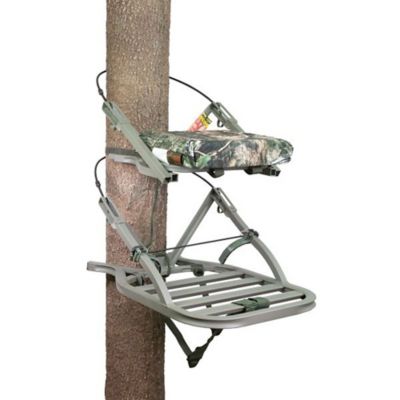
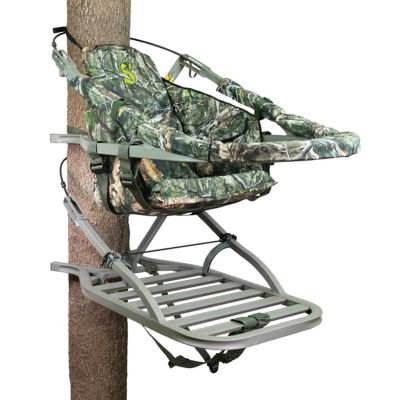
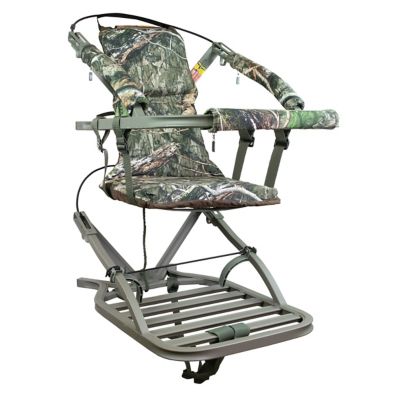
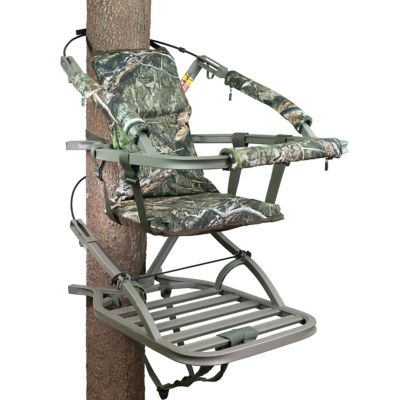
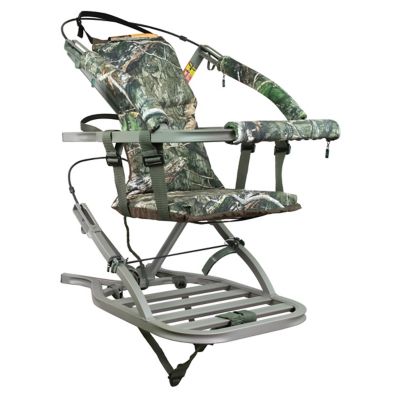
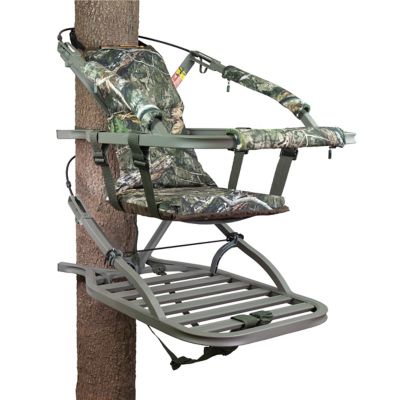
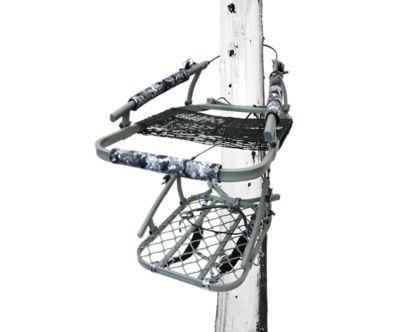
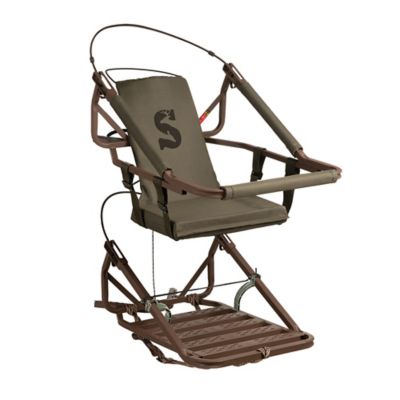
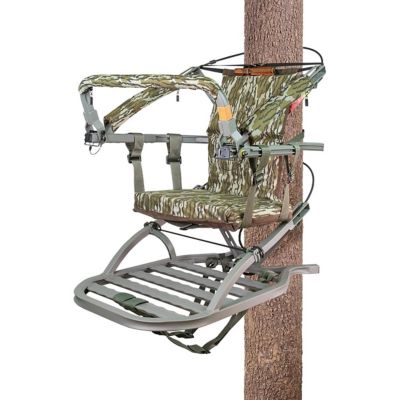
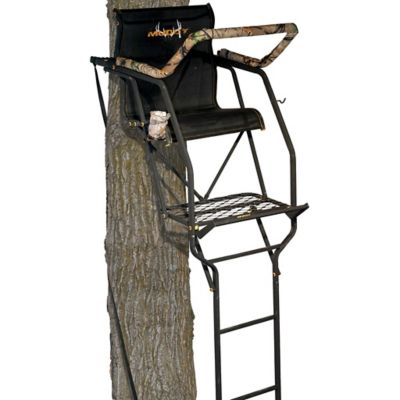
Lightweight climbing tree stands are portable hunting platforms that often combine aluminum frames, a two-piece design, and a compact carrying setup for hunters who walk to their hunting spots. Rather than staying in one location like a ladder stand, a climber travels with the hunter, making it a practical choice for reaching a different stretch of timber or moving between permitted hunting areas. A typical climbing stand has a lower foot platform and an upper seating section, with both sections gripping the trunk as part of the climbing system. Aluminum helps keep frame weight down, but the listed weight alone doesn’t tell the whole story. Seat cushions, carrying straps, attachment hardware, and other necessary equipment all contribute to the load heading down the trail. For a hunter crossing a creek bottom or walking a long fence line before reaching the woods, a balanced carrying position can matter as much as a few fewer pounds. Padded shoulder straps, a frame that nests neatly, and secure attachment points help keep the load manageable without loose pieces knocking together. The packed shape matters, too: a wide platform may provide welcome foot room at the tree while taking more care to maneuver through thick brush. Construction details deserve a close look alongside carrying weight, including frame joints, platform design, cables or gripping components, and the way the two sections secure together for transport. Tree compatibility is another defining consideration. Climbing stands generally require a healthy, living trunk within the manufacturer’s specified diameter range, with a suitable shape and bark surface. Branches along the climbing path can prevent access, so a climber isn’t the right match for every promising hunting location. Hunters who favor straight, unobstructed trunks may appreciate this style, while those working around heavily branched trees may need a different stand type. The best fit starts with the actual terrain, the trees, and the distance between the truck and the hunting spot—not simply the lightest number on a specification sheet.
Once the stand reaches the tree, fit and layout become just as important as packability. A seat that feels comfortable for a few minutes may feel quite different through a long, quiet sit overlooking a game trail. Seat width, back support, cushion thickness, and the relationship between the seat and foot platform all influence how naturally a hunter can settle in. Mesh seating can offer airflow and less cushioning material to carry, while padded seating provides a different feel and may need more attention during drying and storage. Platform dimensions should leave room for boots and a controlled change in position without encouraging a hunter to work near the edge. Body size, clothing, and mobility all affect that fit, so overall dimensions deserve more attention than a photograph can provide. Some designs support a sit-and-climb motion, while others rely on a different upper-frame arrangement; the climbing method needs to suit the hunter’s physical ability and follow the stand’s instructions. Bowhunters may look closely at clearance around the upper section, while firearm hunters may prefer a layout with a designated shooting support. Any rail or support serves only the purpose stated by its manufacturer and does not replace fall protection. A properly fitted, manufacturer-approved full-body fall-arrest harness and compatible connection system are essential, with the hunter connected to the tree from the ground until safely back on the ground. Weight capacity also means the total supported load, including the hunter, clothing, and equipment, rather than body weight alone. Clear instructions, secure adjustments, and components that can be checked before every outing matter more than squeezing extra gear onto the platform. Firearms and bows belong on an appropriate haul line rather than in hand during climbing, with firearms unloaded and handling kept consistent with the equipment instructions. A lightweight stand should make the walk more manageable without asking the hunter to compromise on fit, rated capacity, or the safety system.
Care between hunts helps protect the frame, fabric, and attachment components that make a climbing stand function as intended. Mud and grit can collect around moving connections, while damp straps and seat material need time to dry before storage. Cleaning methods should follow the manufacturer’s directions, especially around coated cables, gripping surfaces, and parts that depend on a particular amount of friction. Paint, lubricants, replacement padding, or other changes can affect operation, so alterations aren’t a substitute for an approved repair or replacement part. Before each outing, the stand deserves a close inspection for cracks, bent frame members, loose hardware, worn straps, damaged stitching, and any deterioration in cables or attachment assemblies. A part that looks questionable calls for taking the stand out of service until the manufacturer’s recommended correction is complete. Keeping the stand clean, dry, and secured during transport also helps prevent loose sections from rubbing against one another in the truck bed. At home, a storage spot away from persistent moisture, direct sunlight, and harsh chemicals helps protect both metal and fabric components. Carrying straps, securing straps, harnesses, and attachment parts may have different inspection or replacement requirements, so their individual instructions matter. For hunters on public land or leased ground, stand selection also goes hand in hand with rules about tree damage, attachment methods, removal deadlines, and where elevated hunting is permitted. Beyond the hunt, property owners tackling separate tree-access jobs can explore
Tree Climbing Equipment, while recognizing that hunting stands and tree-work systems have different purposes and requirements. As a gift for an experienced hunter, a climbing stand is worth matching to that person’s size, preferred hunting method, carrying distance, and existing safety equipment rather than choosing by weight alone. For everyday selection, the strongest combination is straightforward: manageable carrying weight, a comfortable layout, sound construction, compatible trees, and a complete safety setup that fits the hunter and the stand.