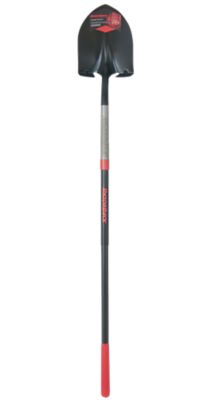
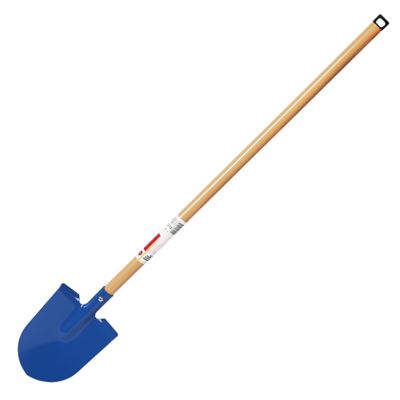
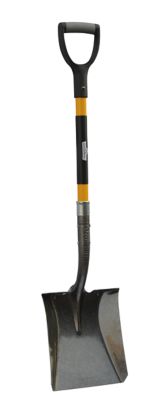
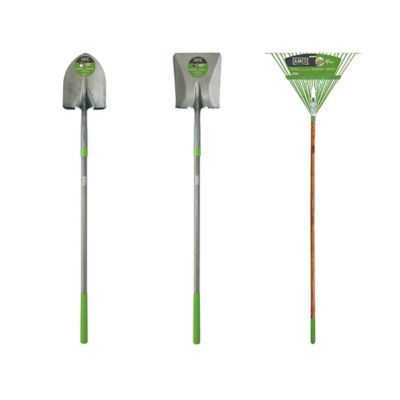
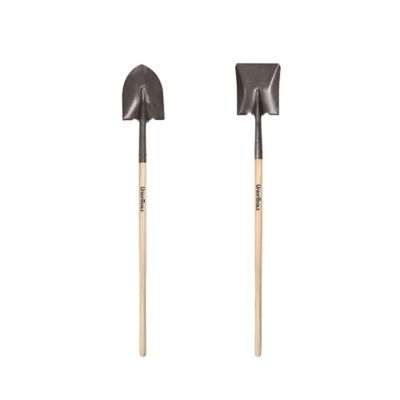
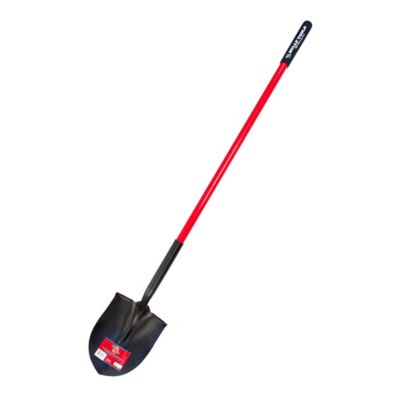
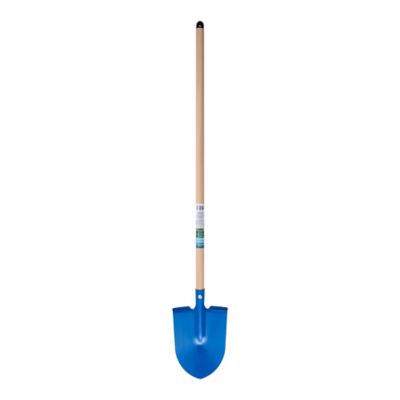
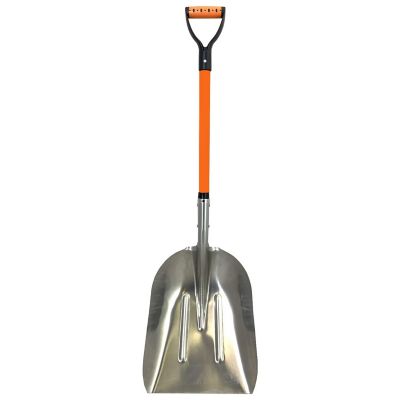
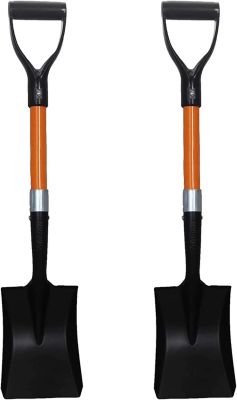
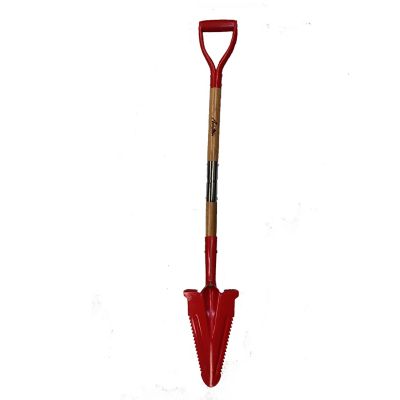
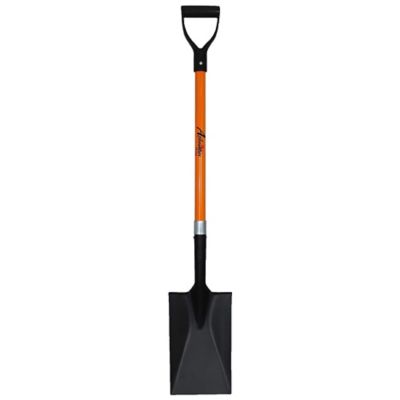
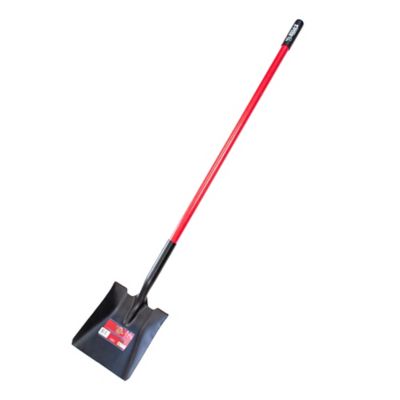
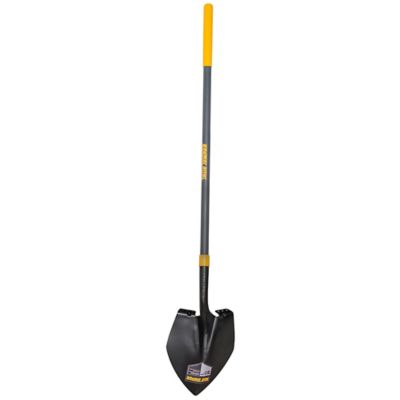
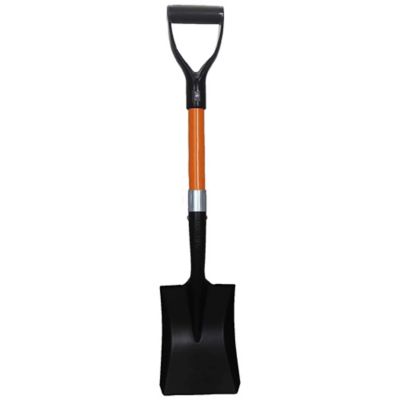
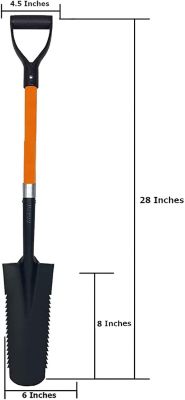
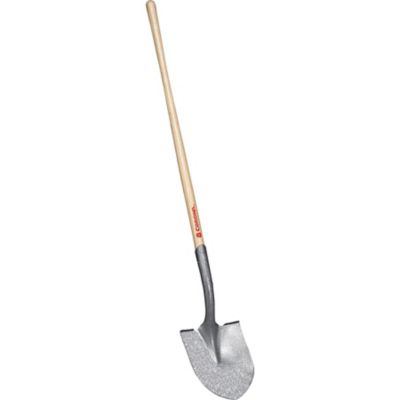
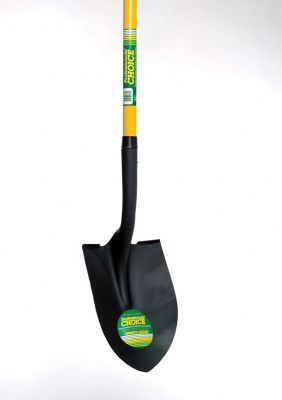
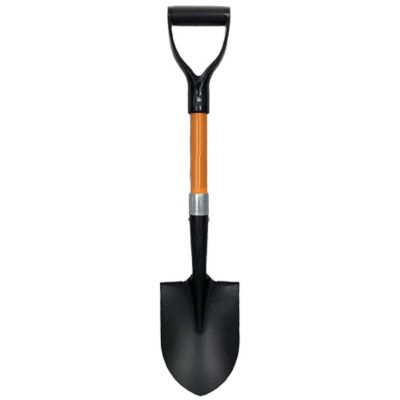
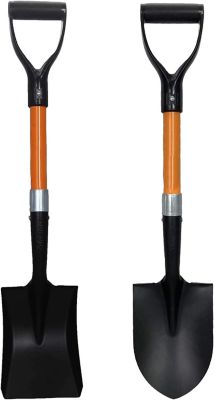
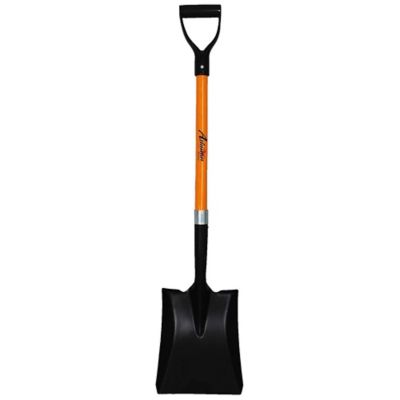
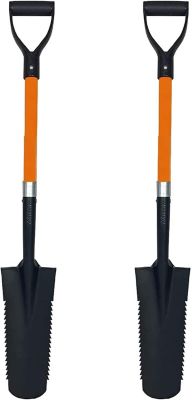
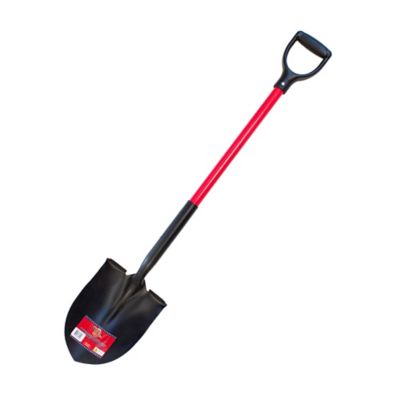
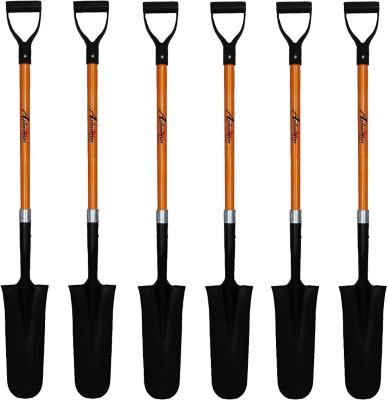
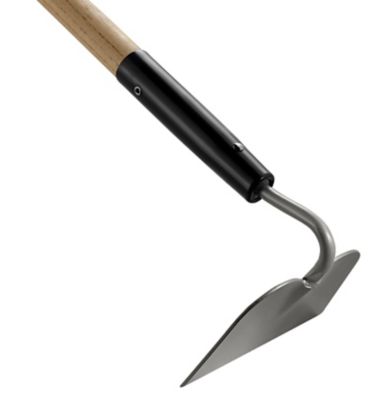
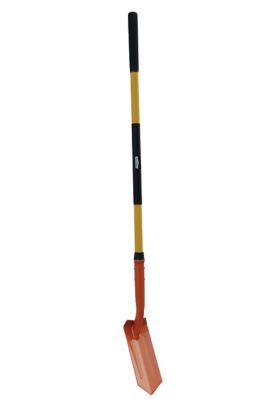
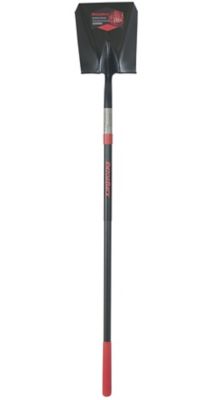
Landscaping shovels cover the digging, lifting and shaping jobs that come with looking after a yard, garden or acreage. The right shovel depends on the material being moved and the kind of cut the job calls for: a round-point blade suits general digging, a square-point blade handles loose material and cleanup, and a scoop carries larger loads of lightweight material. Round-point shovels have a tapered tip that helps start a hole and penetrate soil, while the curved blade holds dirt as it comes out. They fit everyday tasks such as opening planting holes, working around fence lines and removing soil along a new garden bed. Square-point shovels have a straighter cutting edge that works well for gathering loose dirt, spreading material and scraping a firm, flat surface. For mulch, compost or other lighter material, a broad scoop offers more carrying room, though that larger blade is not necessarily the best choice for breaking packed ground. Narrow trenching blades fit work around drainage channels and irrigation runs where a wide hole would mean extra digging and backfilling. A straight-edged spade can help define a bed or slice through turf, while a narrower transplanting shape makes it easier to work around a root ball. Small, fibrous roots may yield to a suitable sharpened edge, but thick woody roots call for a cutting tool rather than force on a shovel handle. These differences matter whether the work is a few holes beside a porch, a long planting row or a full day of landscape maintenance. Homeowners, grounds crews, gardeners and folks caring for larger properties may need different blade shapes for different parts of the same project. A blade that bites neatly into soil and one that carries a generous scoop serve separate purposes, and matching the shape to the work helps keep each load manageable.
Blade material, handle construction and overall fit make a noticeable difference once the digging starts. Steel blades are common for soil work because they can hold a working edge and stand up to repeated contact with compacted ground. Aluminum scoops generally weigh less and suit moving lighter loose material, but they are not a substitute for a digging blade when the ground is hard or full of stones. Blade thickness, reinforcing ribs, socket construction and secure handle connections all deserve attention, especially for repeated lifting. A broad blade may move more material at once, yet a full load of damp soil can be much heavier than a full load of mulch. Smaller blades can make more sense in tight beds or anywhere control matters more than volume. Handle choice is just as personal. Wood offers a familiar feel and some natural flex, while fiberglass handles may include shaped grips or cushioning at common hand positions. Neither material makes a shovel suitable for prying out large rocks or stumps. Handle length should suit both the person and the task.
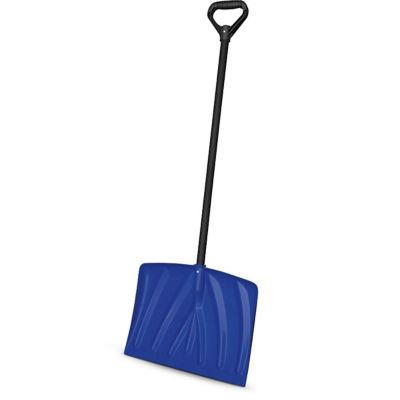
Long Handle Shovels offer reach and room to space the hands apart, which can be helpful when digging deeper holes or moving material from a standing position. Shorter handles with a D-shaped grip can provide close control around raised beds, narrow planting spaces and other confined areas. The grip opening should leave room for a gloved hand without crowding the knuckles, and the shaft should feel comfortable rather than forcing an awkward wrist angle. Wide foot steps can give a boot a more stable place to press when driving the blade into soil. Tool weight matters, too: a heavier shovel may feel steady in the cut, but that weight travels with every lift. For repeated work, a comfortable balance between blade size, handle length and carrying weight often matters more than choosing the biggest shovel.
Good care helps a landscaping shovel stay ready for the next stretch of work. Soil left packed around the socket or stuck across the blade can hide wear and hold moisture against metal, so a clean blade and dry storage are worth making part of the routine. A stiff brush can remove loose dirt, and stubborn buildup may need rinsing before the shovel is dried thoroughly. An appropriate light protective coating on exposed steel can help limit rust, following the tool maker’s care directions. Wooden handles benefit from checks for splinters, looseness and cracks; fiberglass shafts also need inspection for splits or damage rather than an assumption that they need no attention. A loose connection, bent blade or damaged grip deserves attention before another load goes onto the shovel. Maintaining a digging edge according to the manufacturer’s directions can help the blade enter soil without excessive force, while a scoop does not need the same cutting edge as a tool meant to slice into turf. Storage off the ground keeps the blade from sitting in moisture and keeps handles out of walkways. On the job, a shovel works best alongside the right supporting tools: a digging fork for loosening some soils, a mattock for tougher ground and a wheelbarrow or cart for moving material farther than a short toss. Before ground is disturbed, buried utility lines need locating through 811, with private irrigation lines and other property features identified separately. Around established plants, a narrower blade and controlled cuts can help limit disturbance to nearby roots. For a gardener setting up a tool shed, a new landowner taking on property chores or someone who enjoys keeping planting beds tidy, a well-matched shovel can make a practical gift. The most useful choice is the one that fits the person, the ground and the everyday jobs waiting beyond the back door.