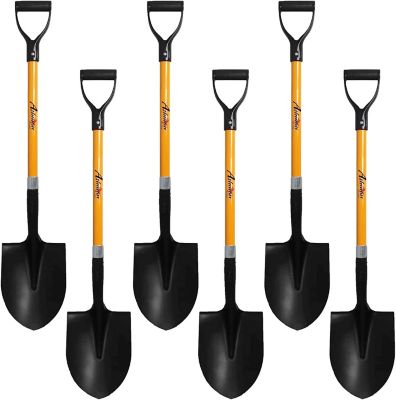
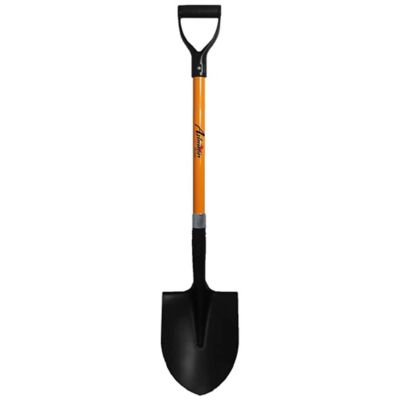
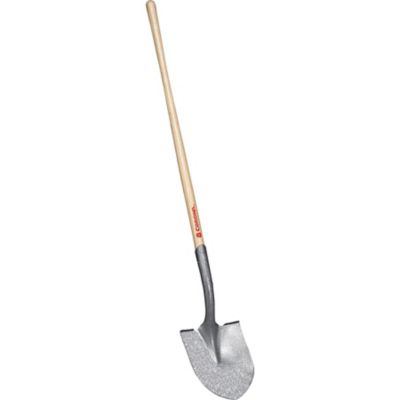
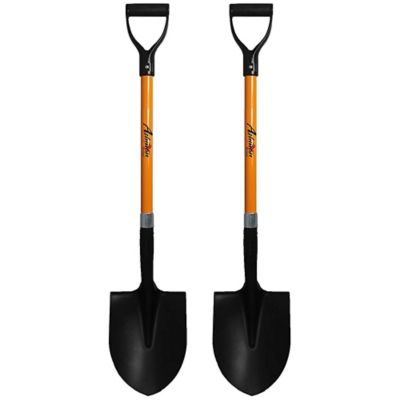
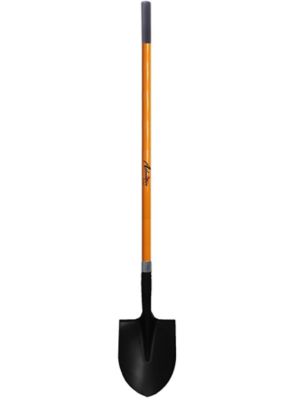
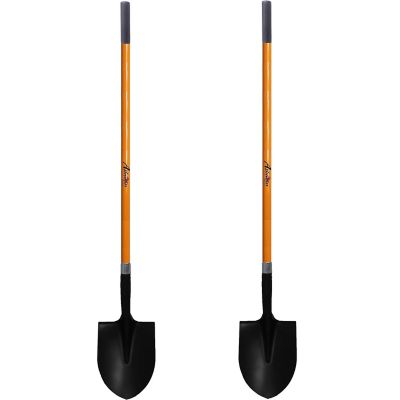
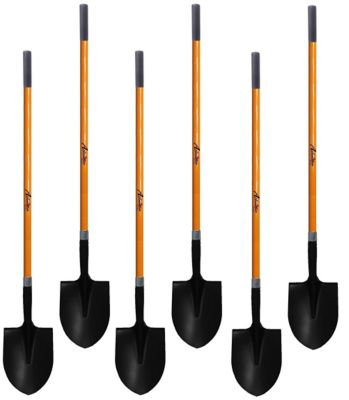
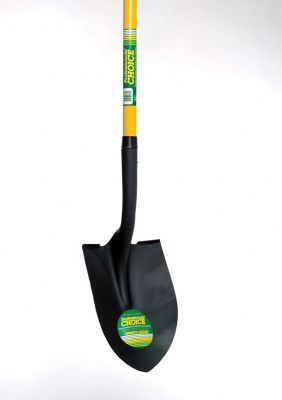
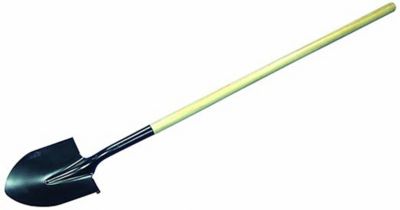
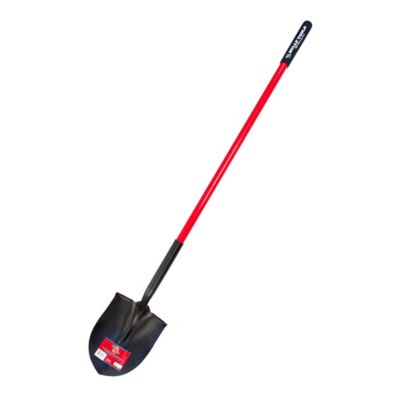
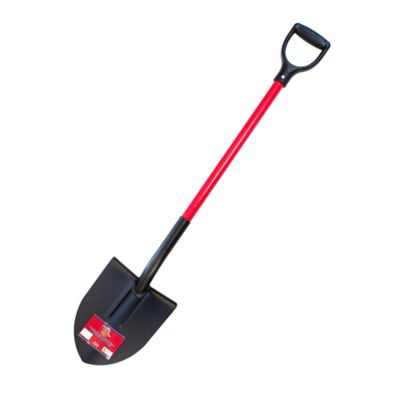
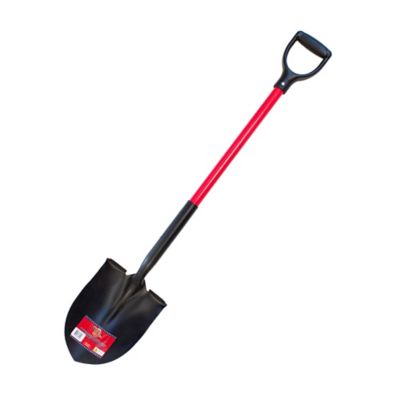
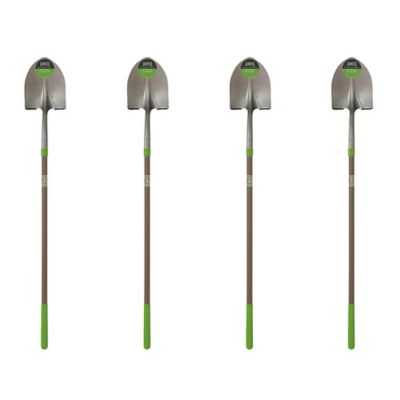
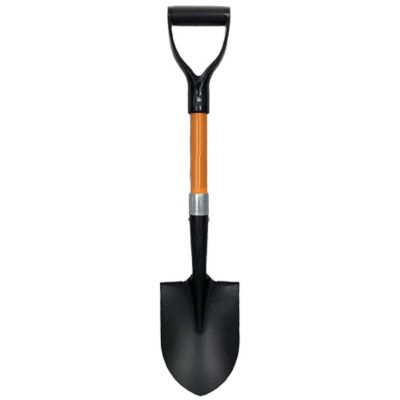
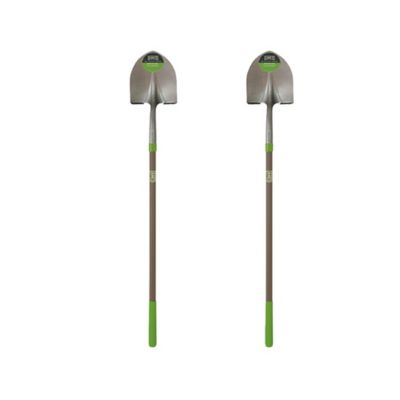
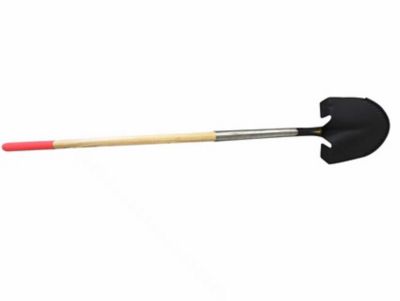
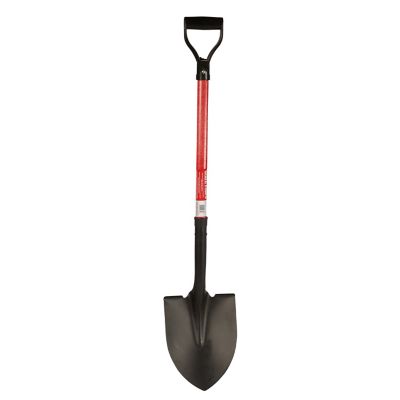
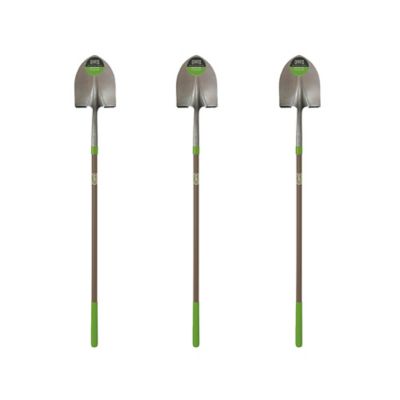
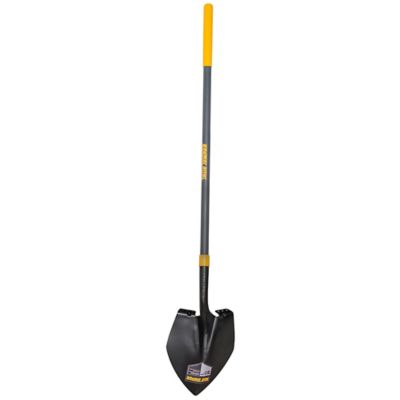
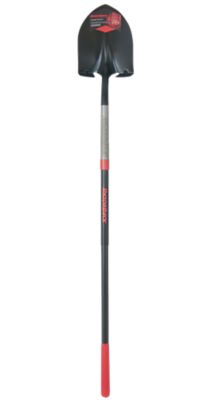
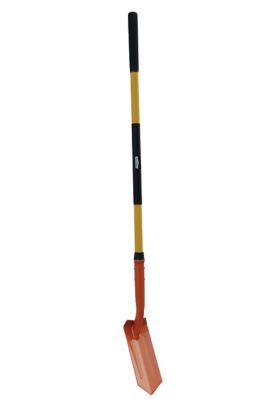
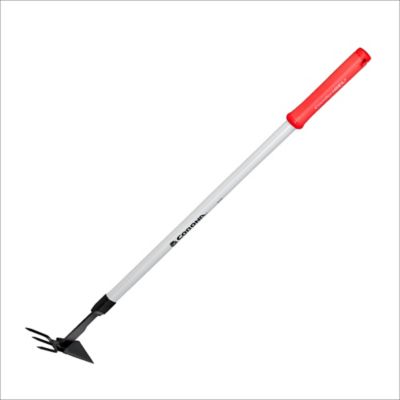
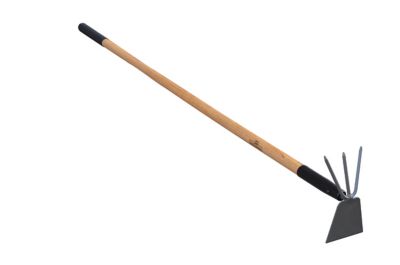
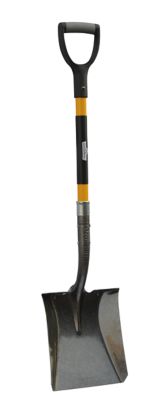
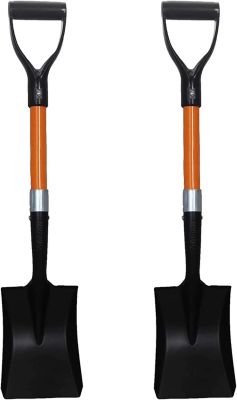
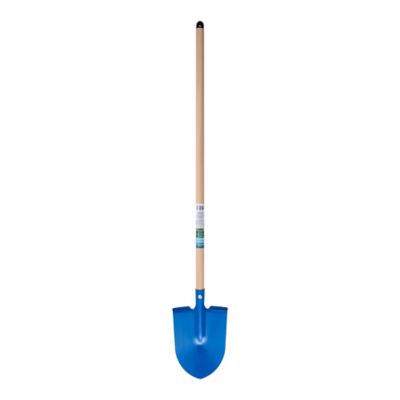
Round shovels are general-purpose digging tools with curved blades and tapered, pointed tips that help break into soil, open planting holes, and lift loose dirt. Often called round-point shovels, they get their name from the rounded blade profile rather than a completely circular shape. The point concentrates pressure at the leading edge, while the wider shoulders and shallow bowl help carry soil out of a hole. That combination makes a round shovel a practical tool around gardens, fence lines, barns, and acreage, where one job might involve turning over packed ground and the next might mean backfilling around a newly planted shrub. Compared with a square-point shovel, a round-point blade generally enters unbroken ground more readily, though it leaves a less squared-off edge. It also handles differently from a narrow trenching shovel or post-hole digger, each of which has a more specialized shape. For everyday property work, that middle-ground versatility is a big part of its appeal. Blade width, length, and curvature affect how the shovel feels in different ground. A narrower blade takes a smaller bite, which can help with dense clay or closely spaced planting areas. A broader blade carries more loose material per scoop but also creates a heavier load. A deeper bowl helps hold dirt during a lift, while a flatter profile can make slicing and shaping easier. Foot steps along the blade’s upper edge provide a place for a work boot when extra downward pressure is needed. Wider, turned steps generally give the sole more support than a thin blade edge. Round shovels can also cut through fine roots encountered during ordinary digging, but substantial woody roots call for a suitable cutting tool. Whether the project is setting a small shrub, clearing soil from beside a gate, or opening a shallow drainage channel, the blade’s shape matters as much as its overall size. Digging around a property also means accounting for buried utilities before ground is disturbed.
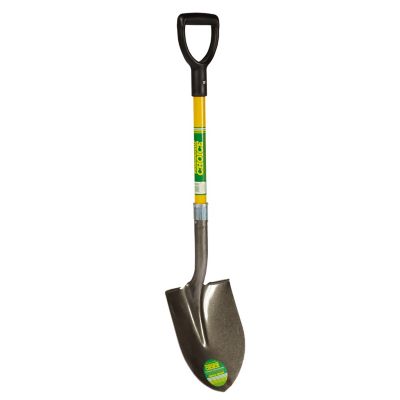
Handle length and construction make a noticeable difference over a full stretch of work. Long-handle round shovels provide reach and leverage, with room to change hand position as the hole gets deeper or the soil gets heavier. They suit many open-area jobs where there is space to move the shaft without bumping into a fence, wall, or nearby planting. Shorter shafts take up less room and can feel easier to manage beside raised beds or in other confined spaces. A D-grip gives the upper hand a defined place to hold and helps control the blade when lifting or turning a load. The opening should leave enough room for work gloves without crowding the fingers. Handle fit is not simply a matter of picking the longest shaft; body height, arm reach, lifting habits, and the job itself all play a part. A shovel that feels balanced with an empty blade can feel quite different once it carries dense soil, so total weight deserves attention alongside length. Hardwood handles offer a familiar feel and some natural flex, with grain condition and a smooth surface affecting comfort. Fiberglass shafts resist moisture absorption and may include cushioned gripping areas, though their weight and feel vary by construction. Steel shafts provide a rigid connection but can add weight, particularly on tools with substantial blades. The joint between the blade and handle is another important detail. Socket length, fasteners, and the way the shaft seats into the head all contribute to how securely the parts work together. On the blade itself, steel thickness, shaping, and heat treatment influence resistance to bending and edge wear. For comparable sheet steel, a lower gauge number generally indicates thicker material, but gauge alone does not tell the whole story. Reinforced shoulders and well-supported connections can matter just as much. Painted or coated surfaces help limit direct contact between bare steel and moisture, although digging naturally wears those finishes along the working edge.
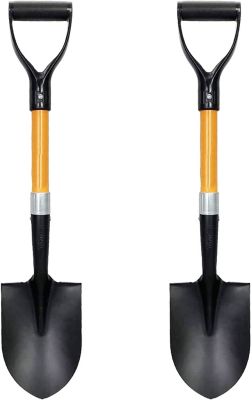
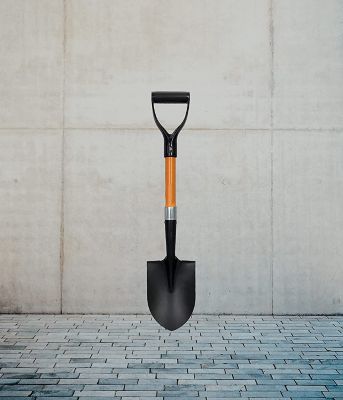
A round shovel earns its place through the ordinary jobs that keep a property running: loosening dirt around an old fence post, moving a few scoops of compost, backfilling a repair, or making room for a new planting. Gardeners may favor a manageable blade for working between established plants, while folks maintaining larger properties may put more emphasis on reach and a substantial head-to-handle connection. A compact tool can also be easier to carry between scattered work areas or store in a crowded shed. For confined planting areas and lighter digging tasks,
Small Shovels offer another size to consider alongside full-length round-point tools. Neither size replaces every digging tool, and matching the blade to the workload helps keep an everyday shovel from taking on jobs better suited to a digging bar, mattock, or other purpose-built tool. Prying against large rocks, for example, puts a different kind of strain on the blade and socket than lifting loosened earth. Care also plays a part in how long the tool stays ready for work. Soil left packed against the blade can hold moisture, and fertilizer residue can be hard on metal surfaces. Removing that buildup and letting the shovel dry before storage helps protect the head and connection. A light protective oil on exposed steel can help limit rust; any coating should suit the tool and its intended work. Wood handles benefit from occasional attention to rough spots and a suitable handle treatment, while cracks, splinters, loose fasteners, and movement at the socket deserve a closer look before another digging job. Hanging the shovel or storing it upright in a secure rack keeps the blade off the floor and makes the handle easier to inspect. With a comfortable grip, a blade matched to the ground, and straightforward care, a round shovel can remain a familiar part of the shed for years of planting, digging, and everyday chores.