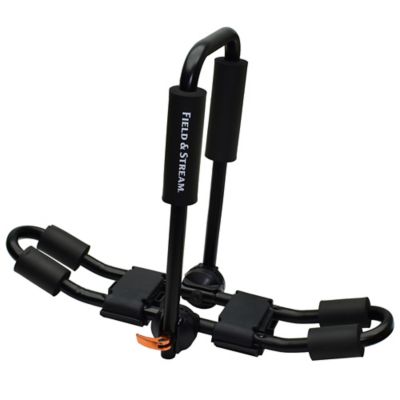
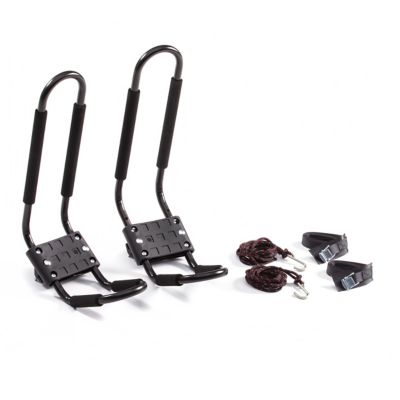
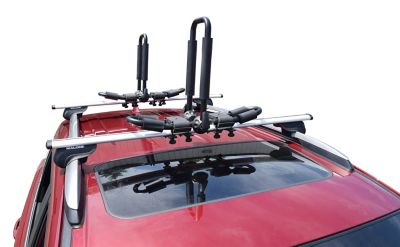
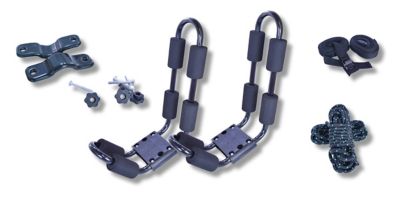
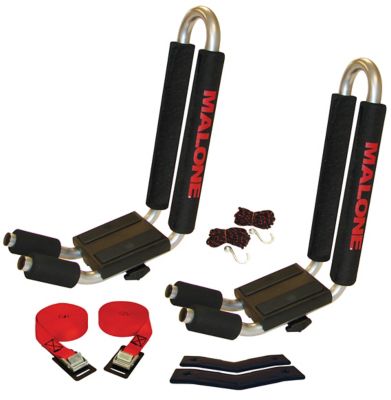
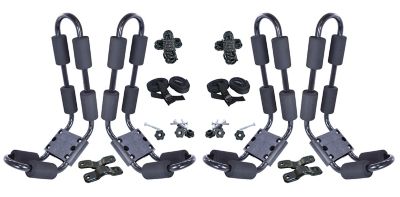
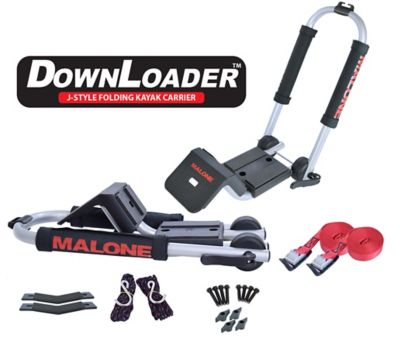
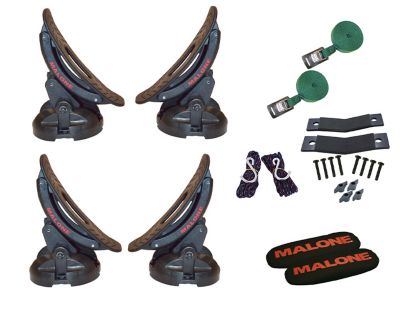
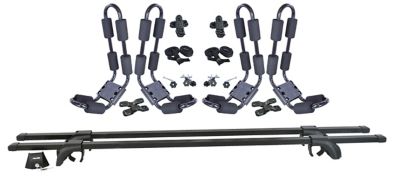
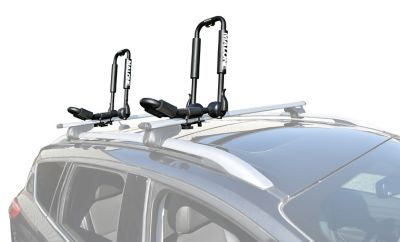
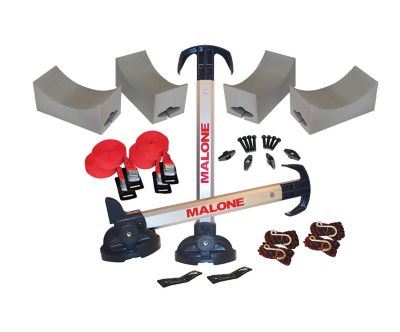
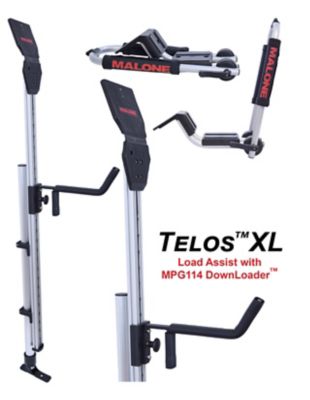
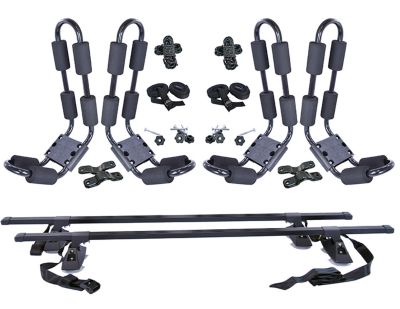
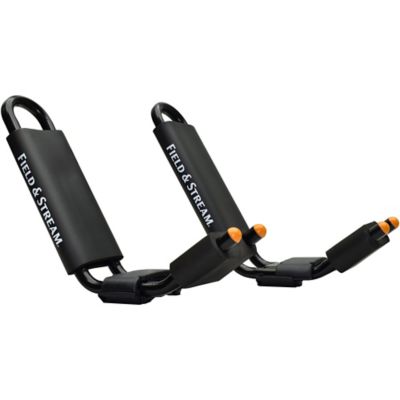
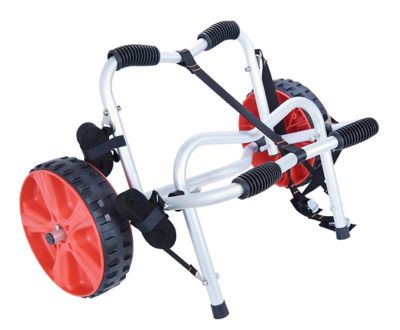
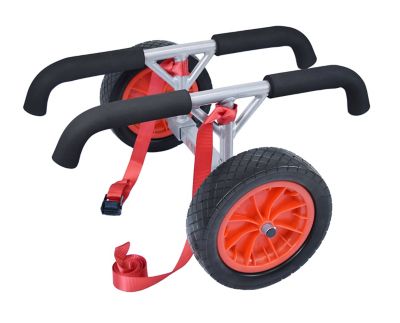
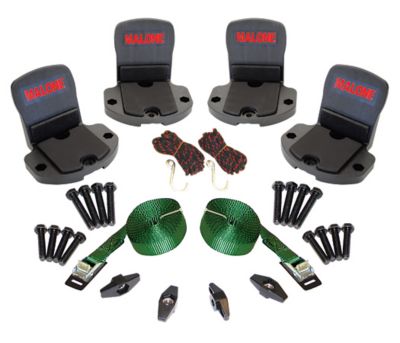
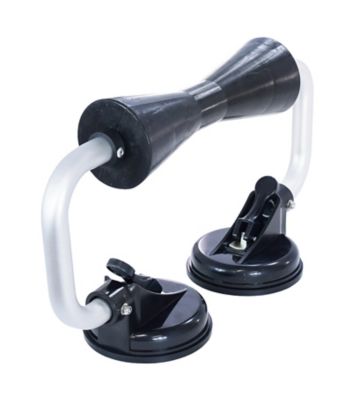
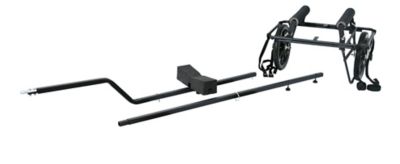
Kayak carriers for cars hold a watercraft on a vehicle’s roof so the trip to the boat ramp starts with a secure load and leaves room inside for passengers and gear. The main carrier styles are J-cradles, saddles, vertical stackers and foam blocks, each with a different way of supporting the boat. J-cradles have angled arms that carry a kayak tilted on its side, often leaving crossbar space for another carrier when the vehicle’s limits and rack dimensions allow. Saddle-style carriers support a kayak hull-down on shaped contact pads, spreading support across the bottom of the boat. Some pair with rear rollers or sliding surfaces that help move a kayak into position from behind the car. Vertical stackers provide upright supports for carrying compatible kayaks on their sides, making them worth considering for households that take more than one boat to the lake. Their boat capacity depends on the complete setup, not simply the number of kayaks that appear to fit across the roof. Foam blocks offer a removable support option for certain bare-roof or crossbar arrangements, but they still need the specified straps, tie-downs and vehicle fit. Most rigid kayak roof carriers attach to crossbars; raised rails running from front to back are not the same thing as a crossbar system. For a paddler heading to a quiet fishing spot, a couple hauling recreational boats or a family meeting friends at a river landing, the right carrier comes down to the car, the boat and how loading will work. A wide fishing kayak can call for a different support shape than a narrow touring kayak, while a tall vehicle can make loading reach just as important as carrier style. Roof transport also keeps the passenger area separate from a sandy hull and dripping cockpit, though paddles, life jackets and tackle still need their own secured space. These practical differences make kayak carriers more than a set of brackets: they connect the shape and weight of the boat to the vehicle carrying it.
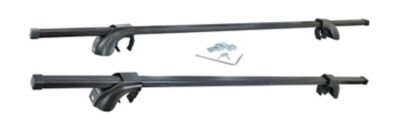
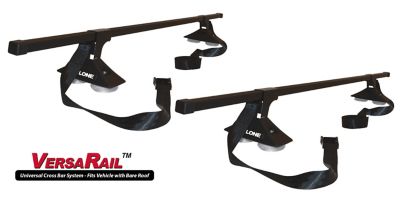
Fit starts with the vehicle’s year, make, model and roof configuration, then extends to the crossbars and kayak itself. A bare roof, flush rails, raised rails and factory mounting points can each call for different rack components, and a carrier does not replace a properly fitted base rack. Round, square, aerodynamic and factory crossbars vary in width, depth and attachment details, so a clamp that fits one bar may not fit another. Some carriers attach around the bars, while others fit compatible tracks with the specified hardware. Crossbar spread—the distance between the front and rear bars—also needs to fall within the carrier and rack requirements. Published load limits matter throughout the setup: the vehicle’s roof rating for travel, the rack rating and the carrier rating all apply, with the lowest applicable limit governing the load. Rack and carrier weight count toward the roof’s allowance, along with the boat and anything left attached to it. Hull width, hull shape and the carrier’s per-boat weight limit deserve the same attention, especially with fishing kayaks that have seats, pedal drives or other removable equipment. Those pieces may need to ride separately according to the boat maker’s instructions. Loading arrangements make a real difference at the driveway, too. A low car can put a J-cradle within comfortable reach, while a taller roof may make a compatible rear-loading or lift-assist arrangement more practical. Rollers and lift assistance can reduce the effort of positioning a boat, but they do not raise the roof’s load limit or remove the need for controlled handling. Side-loading needs room beside the vehicle; rear-loading needs room behind it and clearance around spoilers, antennas and the hatch. Folding carrier arms can reduce empty-rack height, but an installed rack can still affect garage clearance. For households weighing roof transport against a boat that packs down for the ride,
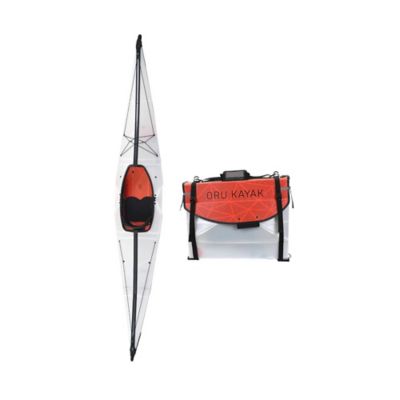
Easy To Transport Folding Kayaks For Small Cars offers another direction to consider. A folding boat’s packed dimensions still need to suit the cargo area, with enough space to secure it and keep the driver’s view clear.
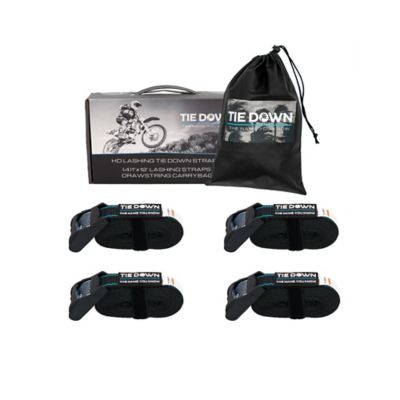
Materials and construction affect how kayak carriers handle repeated loading, road vibration and time around the water. Steel frames can provide substantial support, while aluminum designs may reduce the weight added to the roof; the actual load rating matters more than the metal alone. Protective finishes, corrosion-resistant hardware and well-fitted joints help a carrier stand up to regular trips. Rubber contact surfaces, padded arms and shaped foam cushions keep hard brackets away from the hull, although grit caught between a pad and the boat can still leave marks. Broad, properly positioned supports are especially important for hulls that can deform under concentrated pressure. Cam-buckle straps are common for securing kayaks because they allow controlled tension without the leverage of a cargo ratchet. Excessive tension can damage a hull, so straps need to hold the boat firmly without crushing it. Bow and stern lines help control movement at the ends of the kayak and supplement, rather than replace, the straps holding it to the carrier. Those lines need approved attachment points on both the boat and vehicle; plastic bumper covers, trim and unapproved handles are not substitutes. Buckle placement, strap routing and loose strap ends also matter, since a twisted strap or exposed buckle can rub against the boat or car during the drive. Following the carrier, rack, vehicle and kayak manufacturers’ instructions keeps those details tied to the actual equipment. Routine care is straightforward: remove sand from contact pads, rinse away salt residue where applicable, let straps dry before storage and inspect webbing for fraying or cuts. Cracked padding, loose fasteners and worn clamps deserve attention before another load goes overhead. Removable carriers can free the roof between trips, while folding designs let compatible hardware stay mounted with less height above the bars. For frequent paddlers and occasional lake visitors alike, a well-matched kayak carrier brings together sound hull support, manageable loading and secure attachment, making the drive from the driveway to the landing a more straightforward part of the outing.