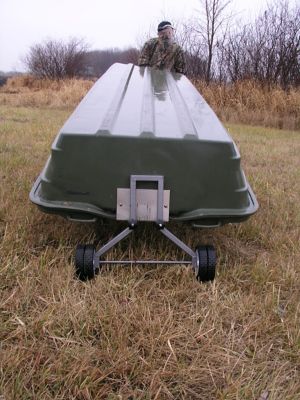
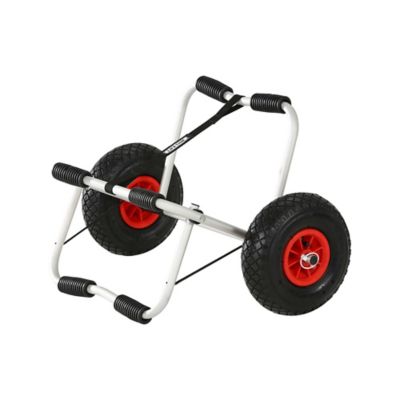
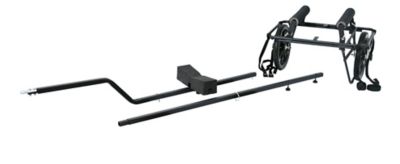
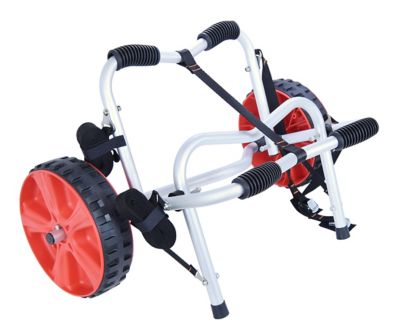
A kayak cart takes some of the strain out of getting a boat from the truck to the water, especially when the launch sits beyond a gravel parking area or down a long path. Rather than carrying the whole kayak, a paddler can support part of its weight on a wheeled frame and pull it by a suitable carry handle. That makes a cart a practical piece of gear for solo paddlers, couples sharing the hauling duties and families moving several boats between a storage shed and a nearby pond. The distance does not have to be far for the difference to matter. A wide kayak with a raised seat can feel awkward even on a short walk, while a narrow trail can leave little room for two people to carry opposite ends. Kayak carts come in different arrangements, including cradle-style frames that support the hull from underneath and scupper-style designs that connect through compatible drain openings on certain sit-on-top boats. The right match depends on the kayak’s shape, its weight and the ground between the unloading spot and the launch. For paddlers hauling
Fisherman Kayaks, rod holders, seating, tackle and other equipment can add to the load if they remain aboard during transport. A carrying-capacity rating needs to account for everything the cart will support, not just the boat’s listed empty weight. Removing loose gear can make the load easier to manage and keep tackle boxes or paddles from sliding around along the way. Carts are for moving boats over land at walking speed, not for towing behind a vehicle. They also do not eliminate every carry: steps, steep banks and deep ruts may still call for another person’s help. For regular trips to a farm pond, reservoir or public boat ramp, a well-matched cart can make the stretch between parking and paddling much less of a chore.
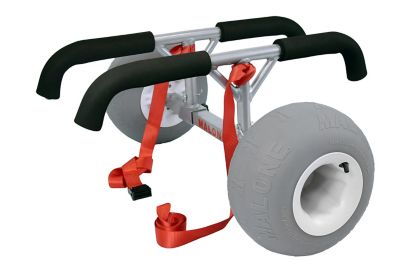
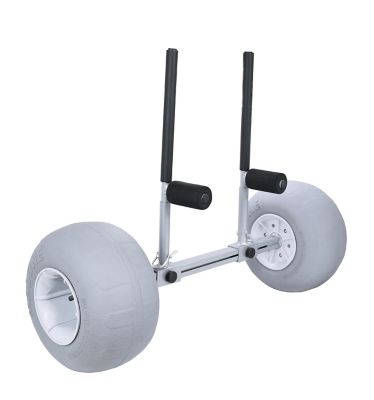
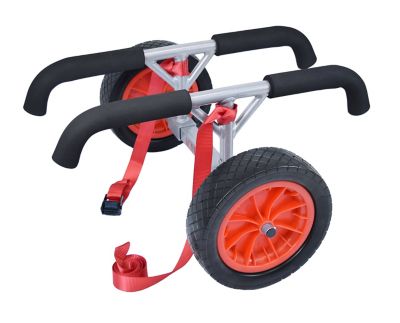
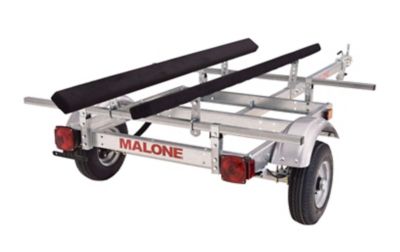
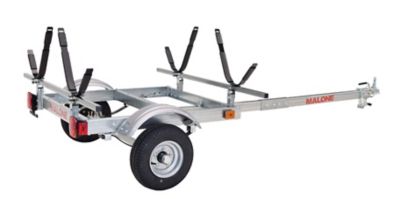
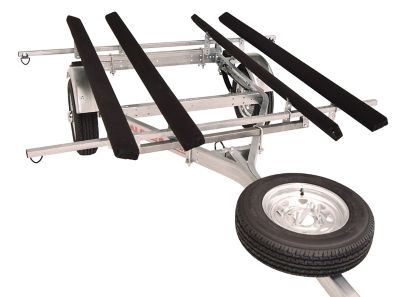
Frame construction, wheel design and hull contact all play a part in how a kayak cart handles that trip. Aluminum frames help keep carrying weight down, which matters when the cart has to ride inside the kayak after launching. Steel frames can add weight, and protective finishes need attention where scratches expose the metal underneath. Hardware deserves a close look, too, particularly around axle connections, folding joints and strap attachment points. Stainless steel components offer corrosion resistance, though saltwater exposure still calls for cleaning and care. Under the boat, padded supports help cushion contact and keep bare frame edges away from the hull. Support spacing matters as much as padding: a deep keel, a broad flat bottom and a pronounced channel underneath the kayak each meet a cradle differently. Adjustable supports can help accommodate those shapes, but the hull still needs to sit securely without rocking or resting on a small pressure point. Scupper-style carts require particular care with fit because not every drain opening is intended to support a transport load; the kayak manufacturer’s guidance should govern that choice. Wheels make another noticeable difference once the pavement ends. Wider tires generally spread the load across more ground, which can help on loose sand, while narrower wheels may suit firm paths and paved ramps. Tire diameter and axle clearance affect how readily a cart rolls past small stones, roots and uneven edges. Pneumatic tires need pressure checks and can develop punctures; airless designs avoid inflation chores but may feel firmer over rough ground. Neither style turns a heavily loaded boat into an easy pull through every surface. A sandy shoreline, a crushed-stone lane and a concrete launch each place different demands on a cart, so the usual route to the water is a better starting point than appearance alone. Wheel width also deserves attention where a path squeezes between fence posts or follows a narrow dock approach.
The details that seem small in the driveway often matter most at the launch. A cart that folds flat or has removable wheels may be easier to tuck into a vehicle alongside paddles, life jackets and the rest of the gear. If it will travel aboard the kayak, the folded dimensions need to work with the boat’s storage space, and loose parts need a secure place where they cannot shift or fall overboard. Straps should follow the cart maker’s attachment instructions, hold the boat against the supports and stay clear of the wheels. Excess strap ends can be gathered rather than left trailing along the ground. Tightening a strap enough to hold the kayak steady is different from cinching it so hard that the hull changes shape, especially when a boat will remain on the cart for a while. On the move, balanced placement helps keep the kayak from tipping or putting an unnecessary load on the person pulling it. Corners, slopes and transitions from gravel to concrete call for a slower pace, and the boat should be kept under control rather than allowed to roll ahead. Before paddling, the cart needs to come off the hull and be stowed or left in a suitable place ashore. After a trip, rinsing away sand, mud and salt helps keep grit from working into moving parts. Letting straps and padding dry before storage helps prevent trapped moisture, while occasional checks of fasteners, tires and contact surfaces can reveal wear before the next outing. Any lubrication should follow the manufacturer’s directions, since wheel and bearing arrangements differ. A kayak cart can also make a thoughtful gift for someone who spends plenty of time fishing or exploring local water, provided the boat’s weight, hull shape and transport needs are known. Those practical details are what make a cart a useful part of the routine, from rolling out of the shed to heading home after a day on the water.