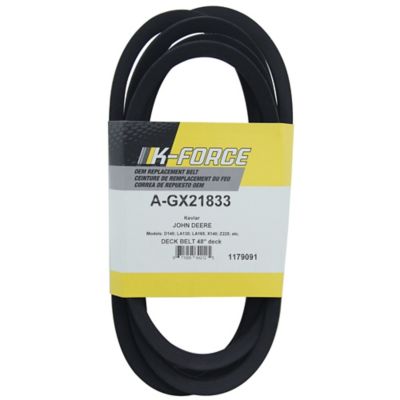
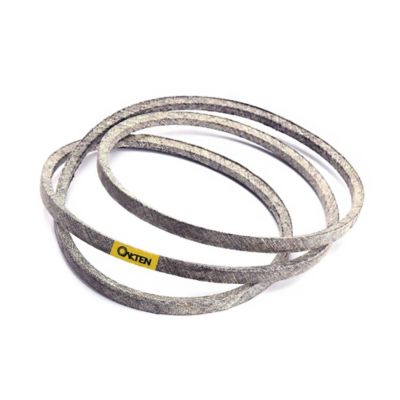
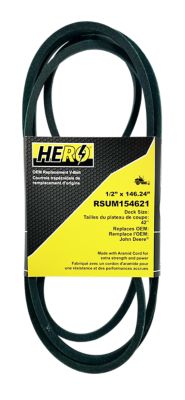
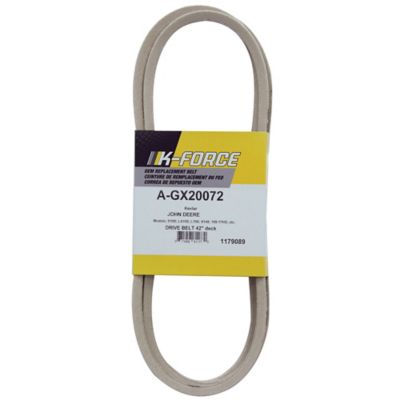
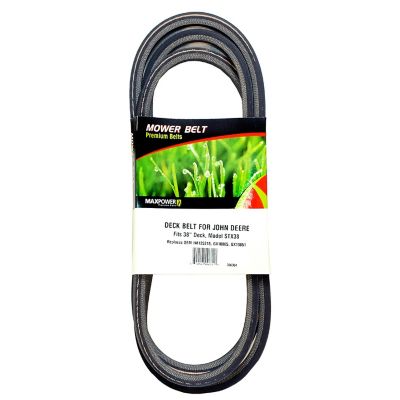
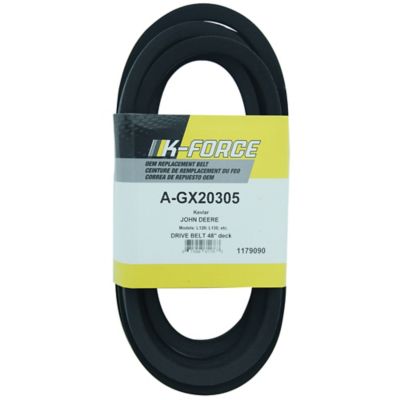
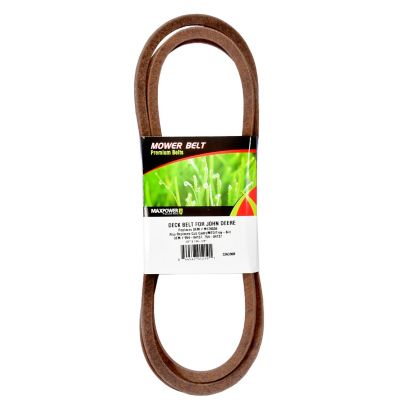
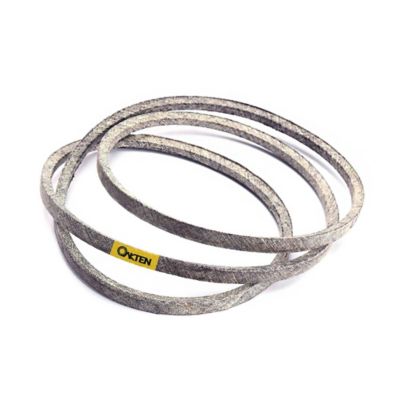
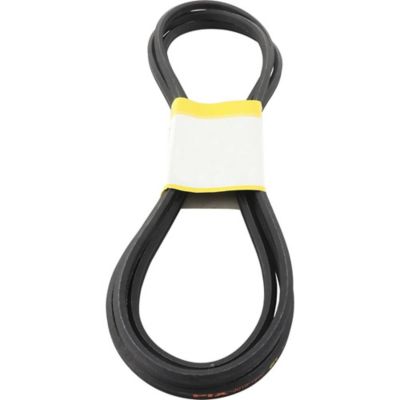
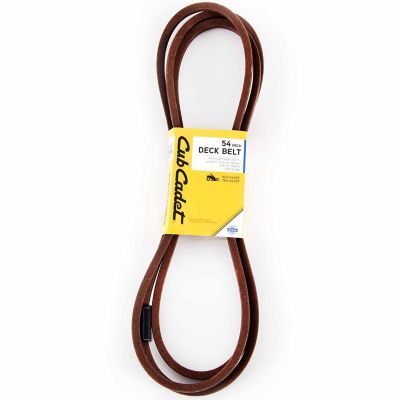
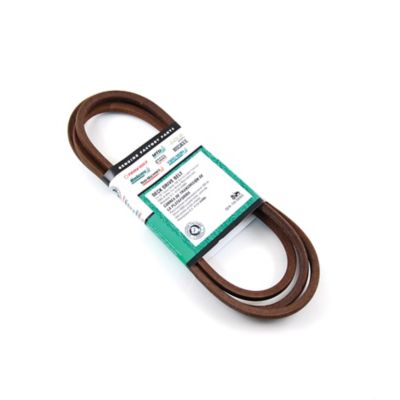
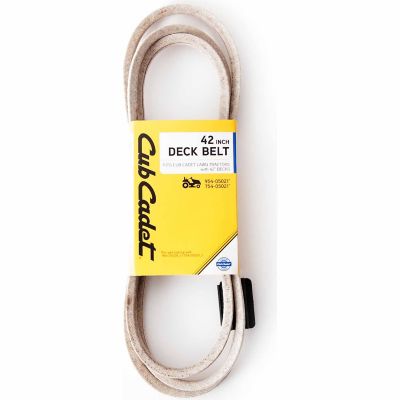
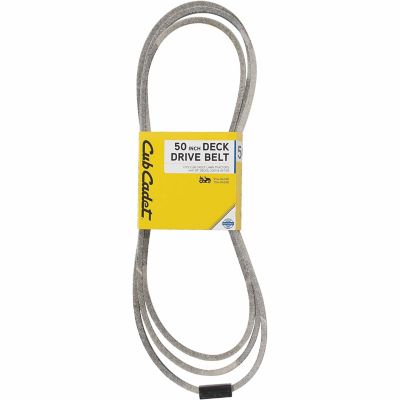
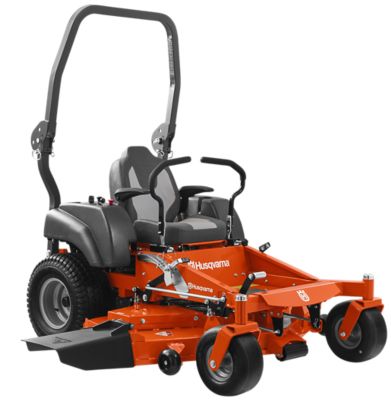
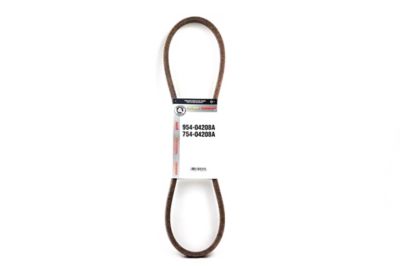
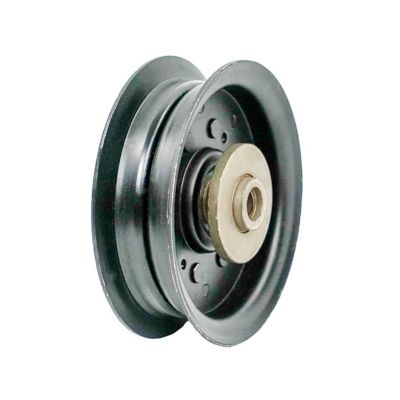
Mower deck belts transfer power to the pulleys that turn a mower’s blades, making them an important part of a steady, even cut. On many riding mowers, the deck belt serves a different purpose from the ground-drive belt, which helps move the machine. Those belts are not interchangeable simply because they look alike. The right replacement depends on the mower model, the cutting-deck configuration and the manufacturer’s specified belt number. Deck width alone does not establish compatibility: two mowers with the same cutting width can have different pulley arrangements, belt lengths or tensioning systems. A mower’s identification label, the deck identification information and the equipment manual provide a better starting point than appearance alone. This matters especially when a mower has a replacement deck or when similar-looking machines have different equipment beneath them. Belt length, width and cross-sectional shape all affect how the belt sits in the pulley grooves and how the tensioner takes up slack. A belt that is too long may slip or come off its path, while one that is too short can place excess load on bearings and other components. Even a small mismatch can interfere with blade engagement or keep the belt from seating as intended. For a homeowner cutting a few stretches around the house or a property owner maintaining a broad lawn beside the barn, that fit matters more than a close visual resemblance. Markings on an existing belt can help identify a replacement, but wear, stretching and missing lettering can make that information incomplete. The manufacturer’s replacement specification remains the stronger reference. Matching the belt to both the machine and its deck helps take the guesswork out of routine upkeep, whether the mower handles narrow passes along a driveway or long runs across an open yard. That match also accounts for details that are hard to judge by eye, including the belt profile and the way it engages each pulley under tension.
A mower deck belt has to bend around several pulleys while carrying the load of turning blades, so its construction matters just as much as its dimensions. Depending on the design, belts may combine a rubber or synthetic rubber body with polyester or aramid tensile cords and an outer fabric covering. The body provides flexibility and traction, while the cords help the belt hold its working length under load. A covering can help protect the belt’s surfaces as it travels through the deck’s drive path. Some applications call for a wrapped belt, while others specify a different profile or construction; the mower’s requirements determine the appropriate choice. Reinforcement alone does not make a belt suitable for every deck, and a heavier-looking belt is not automatically a better fit. Proper service life also depends on the condition of the parts around it. A rough pulley, a binding spindle, a misaligned bracket or a tensioner that no longer moves freely can wear out a replacement belt before its time. Cracks, frayed edges, exposed cords, missing sections and a shiny, glazed surface are signs that a belt deserves attention. Squealing, repeated slipping or a belt that keeps leaving its pulleys can point to belt wear, but those symptoms can also come from another deck component. Grass packed beneath covers and around pulleys can interfere with movement and hold debris against working parts. Routine cleaning and inspection, with the machine shut down and secured according to its manual, help keep those conditions from going unnoticed. Correct routing matters, too: the belt’s working surfaces must meet the proper grooved or flat pulleys, and belt keepers need their specified clearance. The routing diagram is the reference for that arrangement, rather than a path that merely seems to fit. A replacement belt works best as part of a sound, properly aligned deck system, not as a way to cover up a bearing or tensioning problem.
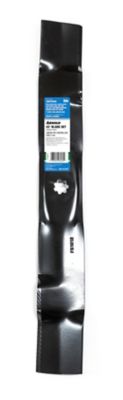
For folks who handle their own mower maintenance, deck belts are practical replacement parts that help keep regular property work on track. They belong to the cutting system, so their intended job is powering the deck within the mower’s operating limits—not making a lawn mower suitable for brush, hidden debris or ground it was never built to tackle. Thick grass and an overloaded deck can increase the demand on the belt, which is one reason mowing habits and equipment condition affect belt life. A sensible cutting height, an appropriate travel speed and a deck free of heavy buildup all support smoother operation. Blade condition belongs in that same picture. A bent blade, an unbalanced blade or a spindle that does not turn freely can add vibration and strain that a new belt will not solve. When cutting edges also need attention,
John Deere Lawn Mower Blades are a related part of cutting-deck upkeep. Keeping the whole assembly in mind makes more sense than treating each component as a separate fix. That approach is useful for anyone tending a farmhouse lawn, mowing around outbuildings or keeping shared grounds neat enough for everyday foot traffic. It also helps households with more than one mower, where belts that appear similar can easily get mixed up. Keeping replacement information with the correct equipment manual makes the next maintenance job less of a puzzle. A spare belt should stay clean and dry, away from direct sunlight, oil, solvents and sharp bends that can damage its structure before installation. Once fitted, it should follow the specified routing and tension requirements rather than being forced into place or altered to suit the machine. With the right fit and attention to the surrounding components, a deck belt can do its job without becoming the weak link in an otherwise well-kept mower. The result is straightforward: blades receiving power as intended and a machine ready for the next stretch of grass around the place.