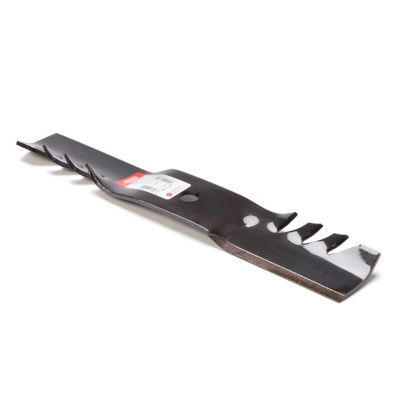
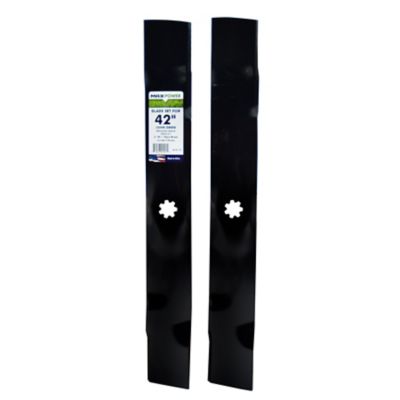
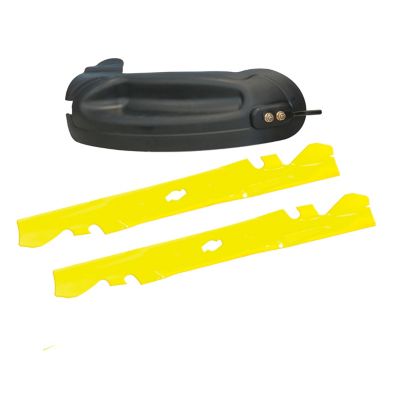
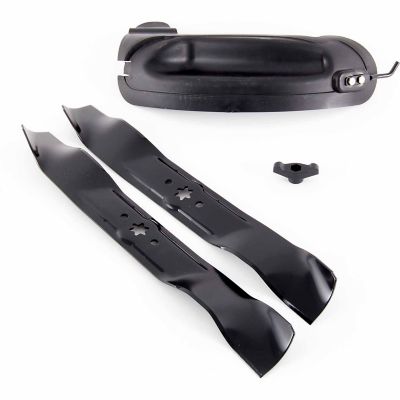
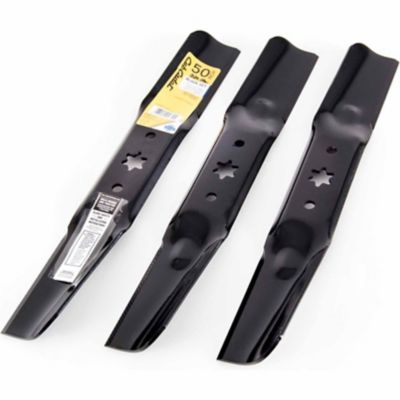
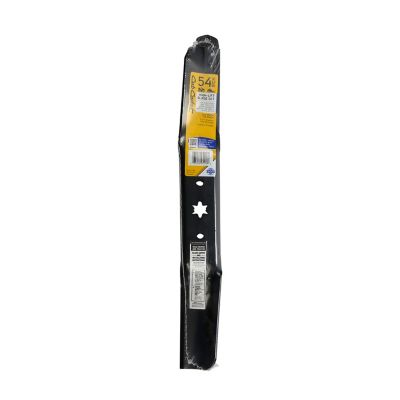
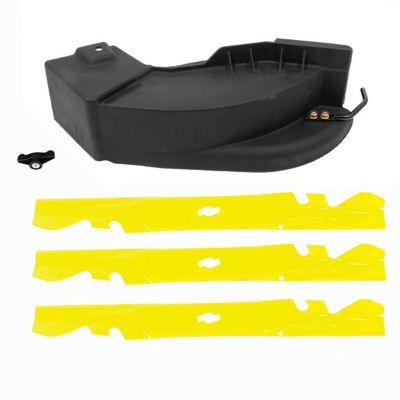
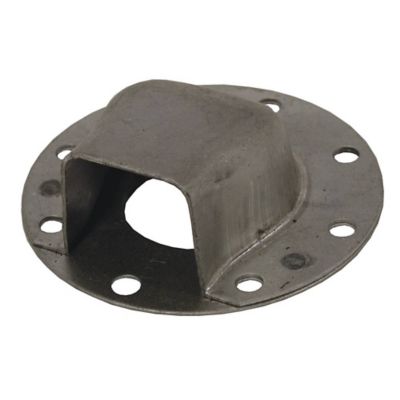
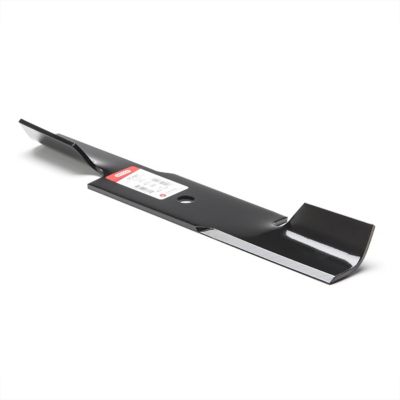
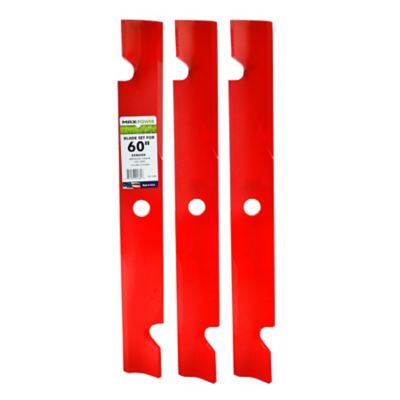
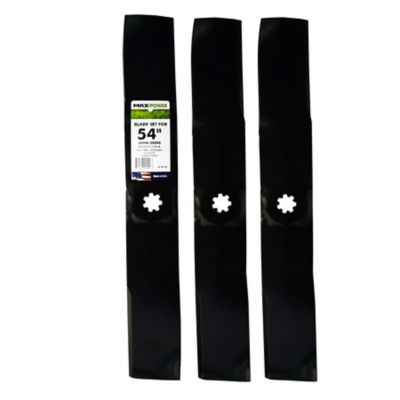
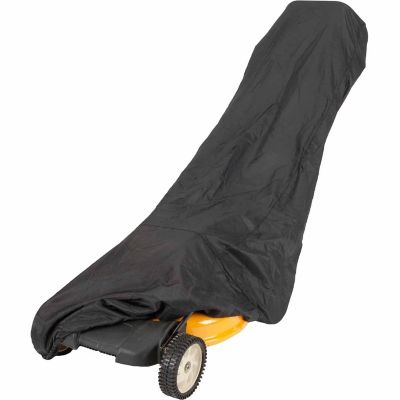
Lawn mower accessories help match a machine to the work around a home, acreage, or small farm, whether that means managing grass clippings or moving light loads across the yard. This category includes attachments that change how a mower handles cut grass, equipment for collecting lawn debris, and add-ons that support compatible hauling and lawn-care tasks. For someone mowing around a farmhouse, along a fence line, or between outbuildings, the best fit depends on both the machine and the job. Mulching equipment, for example, works as part of a coordinated cutting system rather than as a universal attachment. Compatible blades and deck components help recut clippings into smaller pieces that settle into the turf, where they break down and return nutrients to the soil. Bagging equipment collects clippings for removal, while side discharge spreads them outside the deck without collecting them. Those approaches serve different needs: a lawn beside a walkway may call for collecting clippings, while a broad stretch of grass may suit a compatible mulching setup. Switching between functions can require different components, and not every mower supports every configuration. Collection systems also vary in their attachment points, chute arrangement, capacity, and clearance around the machine. A larger collection setup can mean fewer stops to empty it, but it may take more room beside a shed door or between closely spaced trees. Deck width alone does not establish compatibility, since machines with similar cutting widths can have different housings, discharge openings, and mounting hardware. A mower’s model identification, serial information, and deck configuration give a much better starting point than appearance. Accessories matched to those details can support a cleaner mowing routine without adding equipment that gets in the way of everyday yard work. For households sharing mowing duties, straightforward controls and manageable collection containers can matter just as much as capacity, especially when one person handles the cutting and another takes care of unloading.
Beyond clipping management, compatible mower attachments can help with the smaller hauling and turf-care jobs that keep a property in shape. Tow-behind equipment may carry bagged material, move loose yard debris, distribute lawn treatments, or work the soil surface, depending on its design and the mower manufacturer’s allowances. Lawn tractors and zero-turn mowers do not necessarily accept the same equipment, and a hitch point by itself does not establish that a machine can safely pull a particular load. Rated towing limits, tongue weight, braking considerations, terrain restrictions, and attachment requirements all affect the match. A load that seems modest on level ground can change how a mower steers and stops on a slope, so the operator’s manual remains the reference for permitted work. Materials matter here, too. Steel offers rigidity for load-bearing frames and certain attachment bodies, while molded polymer can reduce weight and resist rust in collection containers or hauling beds. Each material has trade-offs: steel finishes need attention where scratches expose bare metal, and polymer components still need protection from impacts and loads beyond their rating. Wheels, axles, bearings, fasteners, and connection points deserve as much consideration as the main body because they carry the strain of repeated trips. For hauling near a barn or garden, bed shape and unloading access can make a noticeable difference. Low sides may ease loading, while a deeper container can help hold loose material within its rated capacity. Turf-care attachments have their own requirements. Aerating equipment is intended to relieve soil compaction, while dethatching equipment addresses excess thatch near the grass surface; neither function is interchangeable with ordinary mowing. Working width, transport position, ground clearance, and any permitted added weight affect how such equipment fits the property and the machine. The useful choice is the one sized for the actual task, not simply the largest attachment that can connect to a hitch. Gate openings, tight corners, and the space available for turning all count once the equipment leaves the shed.
Comfort, access, and upkeep also shape how well a mower accessory fits into a regular work routine. Operator-area additions should preserve clear access to controls, unobstructed visibility, and the ability to get on and off the machine as intended. Protective attachments need model-specific mounting provisions, and no guard or bumper makes a mower suitable for striking obstacles or pushing material unless the manufacturer expressly allows that work. Around trees, fence posts, and equipment parked beside a shed, the accessory’s outer dimensions matter as much as the mower’s original footprint. Extra width behind the seat or beside the deck can change the clearance needed for a familiar route. For a household managing a large yard, those small details can determine whether an attachment earns its storage space. Care requirements are another part of the fit. Grass residue, packed soil, and trapped debris can interfere with moving parts and hold moisture against metal surfaces. Cleaning methods should follow the accessory’s instructions, particularly around bearings, electrical connections, and coated surfaces. Fasteners, attachment pins, belts, and other connection components need inspection at the intervals specified by the manufacturer, with worn or missing pieces addressed before operation. Maintenance also calls for securing the machine against accidental starting and following its service directions. Dry storage, supported attachment positions, and a dedicated spot for removable hardware help keep equipment ready for the next job without a hunt through the toolbox. For replacement components rather than add-on equipment, browse
John Deere Lawn Mower Parts. A mower accessory can also make a practical gift for someone who takes pride in keeping the place tidy, provided the mower details and intended task are known beforehand. The strongest match comes down to a few everyday considerations: a connection designed for the machine, materials suited to the workload, controls that remain easy to reach, and care requirements that fit the owner’s routine. Those details help an accessory become a useful part of property upkeep rather than another piece of equipment sitting beside the shed.