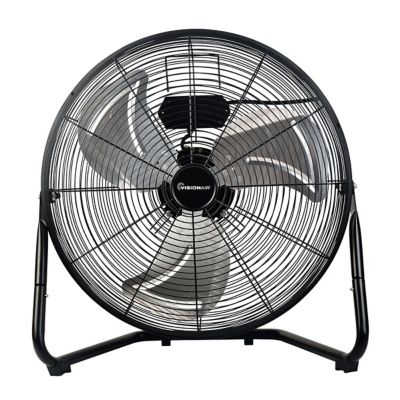
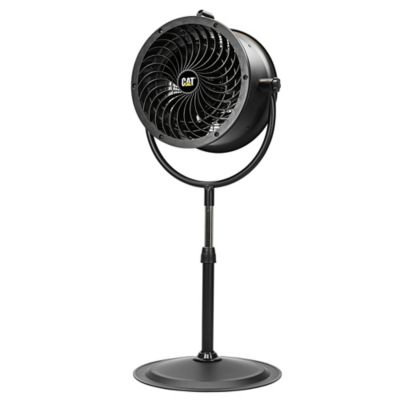
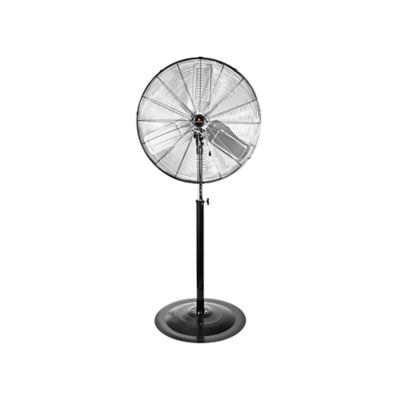
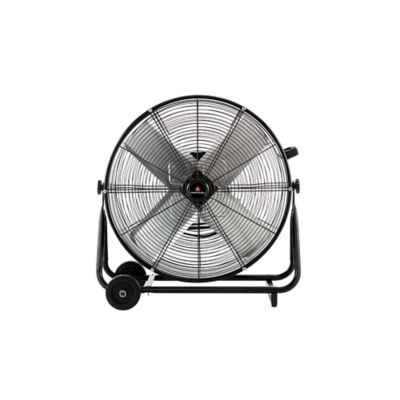
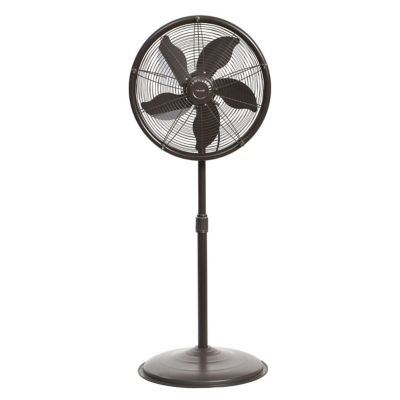
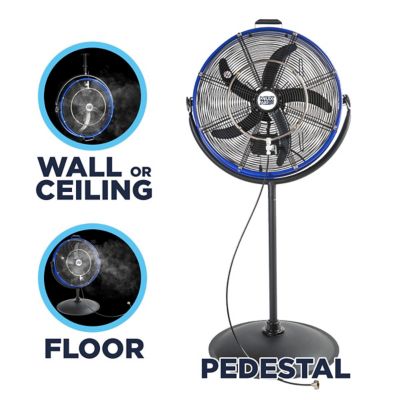
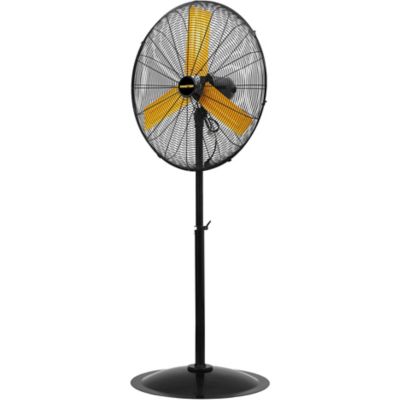
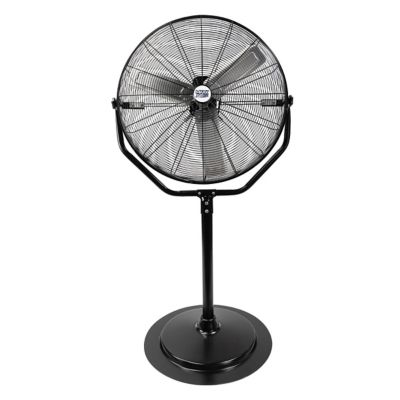
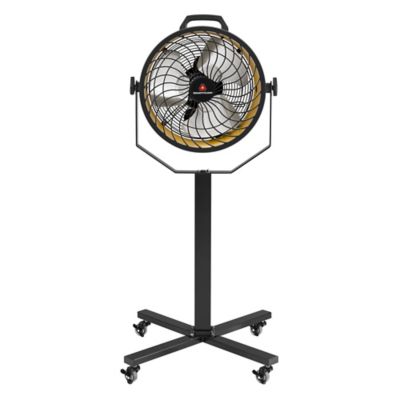
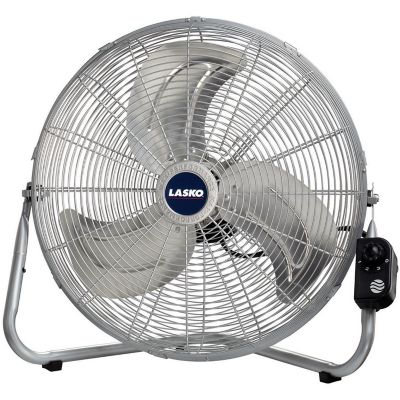
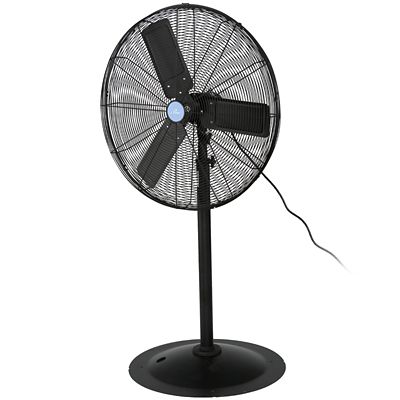
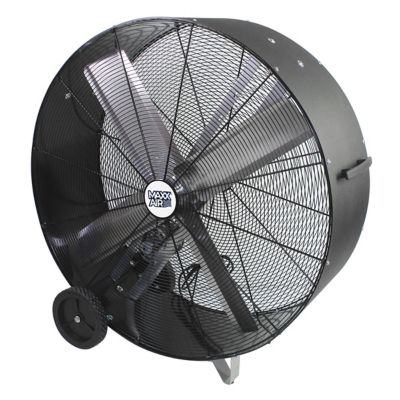
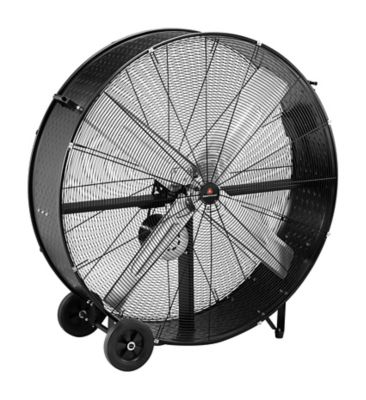
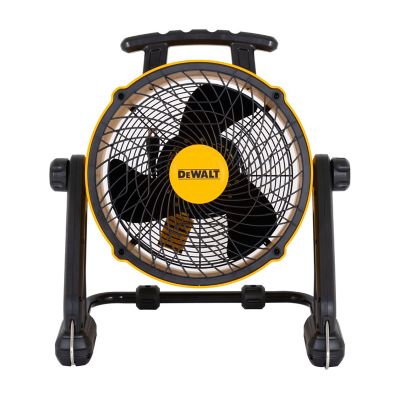
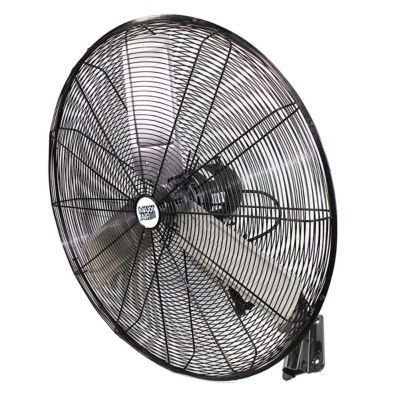
Heavy-duty pedestal fans move a strong stream of air through workshops, garages, warehouses, and other open work areas where a small household fan may fall short. Their raised fan heads send airflow across workbench height rather than keeping it close to the floor, making them a practical fit for equipment maintenance bays, packing stations, and busy shop spaces. A pedestal design combines a freestanding base, an upright support, and a guarded blade assembly, often with adjustable height and several speed settings. Many models feature steel guards, metal blades, and substantial bases built to handle the demands of a working environment, though construction varies by fan. The main job is air circulation: these fans help people feel cooler by moving air across the skin, but they do not lower room temperature like an air conditioner. Airflow is commonly listed in cubic feet per minute, or CFM, which describes the volume of air a fan moves over time. Higher CFM generally means more air movement, but that number alone does not tell the whole story. Blade design, fan diameter, operating speed, placement, and obstacles all affect how the breeze reaches a work area. A clear path across an open service bay is different from a narrow aisle lined with shelving and tractor attachments. Motor horsepower can help describe a fan’s power, but it is not a substitute for an airflow rating. For someone spending hours at a repair bench or sorting supplies in an outbuilding, the useful balance is enough reach to circulate air where the work happens without scattering paperwork or overwhelming nearby conversation. Heavy-duty pedestal fans suit property owners, mechanics, grounds crews, and warehouse teams who need an elevated source of airflow without mounting equipment to a wall or ceiling. Their freestanding layout also leaves room to rearrange a work area, provided there is a level spot, proper clearance, and a suitable electrical connection.
The way a heavy-duty pedestal fan fits a space matters as much as its motor size. Blade diameter gives a sense of the fan head’s scale, while the overall guard width and base dimensions determine how much room the unit actually occupies. A broad, weighted base helps resist tipping, but it still needs firm, level footing away from door swings, rolling carts, and foot traffic. Adjustable height allows the airflow to meet different tasks, whether that means reaching someone standing at a tool bench or directing air across a wider assembly area. A tilting head changes the vertical direction of the breeze; oscillation sweeps it from side to side. Stationary airflow keeps attention on one work position, while an oscillating pedestal fan can spread air movement across several nearby stations. Neither arrangement makes up for a blocked air path, so shelves, stacked boxes, and parked equipment remain part of the fit. Multiple speeds offer flexibility when a full-strength breeze is more than the job calls for. Lower settings may be more comfortable near loose packaging or during work that calls for talking with someone across a bench. Sound also deserves a place in the comparison, especially in enclosed shops where several machines already run at once. Published sound ratings, when provided, offer more useful context than blade size alone. For tighter work zones,
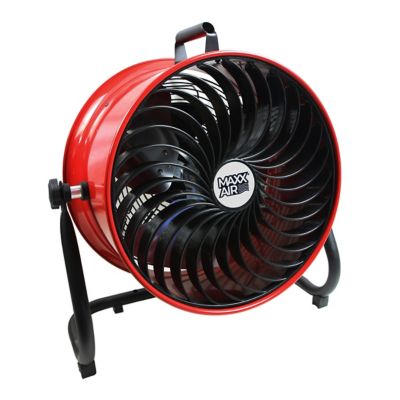
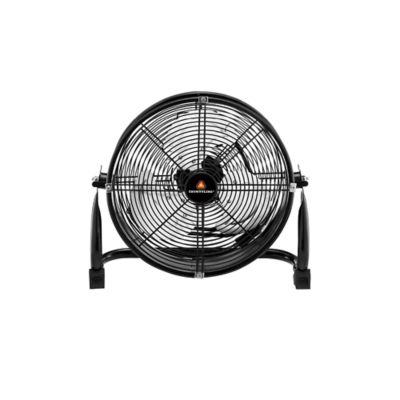
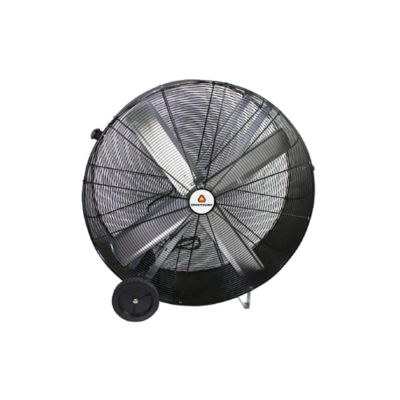
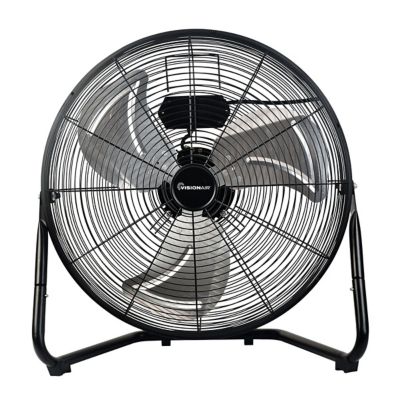
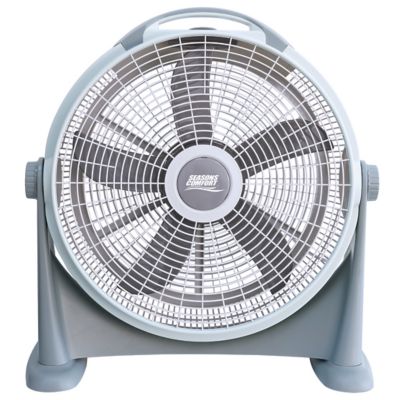
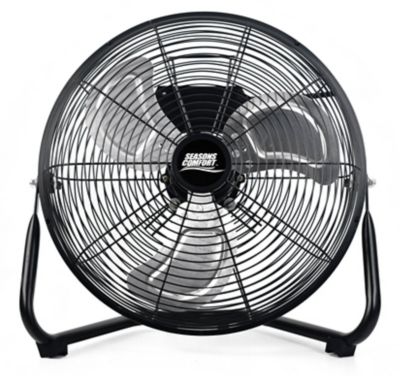
18 Inch High Velocity Fans offer a related size category to compare, with attention to each fan’s airflow, mounting style, and footprint. Fans with wheels can make repositioning easier, though movement should happen with the unit switched off and unplugged. Carrying points, adjustment knobs, cord storage, and accessible controls are small details that become noticeable over repeated workdays. A fan that fits neatly beside a bench, stays clear of the aisle, and directs air where people stand is often a better match than a larger unit squeezed into the wrong corner.
Construction and care help determine how well a heavy-duty pedestal fan holds up over time. Steel supports and guards provide a solid framework, and powder-coated finishes can help protect exposed metal when the coating remains intact. Metal blades are common in this category, but blade material alone does not establish performance or service life; motor design, assembly, operating conditions, and maintenance all play a part. Motor enclosures vary, too. An enclosed motor may offer protection suited to certain work environments, but that description does not automatically mean the complete fan is rated for rain, washdowns, combustible dust, or hazardous locations. A barn aisle, feed room, and welding area can present very different conditions, and a general-purpose fan is not a replacement for equipment specifically rated for those hazards. Likewise, circulation is not the same as ventilation. A pedestal fan can move air within a room, but it does not by itself provide fresh-air exchange, capture welding fumes, or remove airborne dust. Around sanding work, bedding, or loose feed, the airflow should not stir settled material into the breathing zone. Electrical requirements also belong in the everyday picture: the fan’s voltage, amperage, plug, and grounding requirements need to match the connection, with cords kept away from tires, sharp edges, water, and pinch points. Manufacturer instructions govern extension-cord suitability and operating limits. Routine care usually starts with disconnecting power before removing dust from accessible guards and surfaces as directed in the manual. A fan should never run with its guard removed, and cleaning should not send water into electrical components. Periodic checks of base fasteners, height locks, tilt hardware, and the power cord can catch wear before it becomes a bigger problem. New vibration, unusual noise, or a loose fan head calls for stopping operation and checking the cause. With the right placement, appropriate operating rating, and regular attention, a heavy-duty pedestal fan can serve as a straightforward piece of shop equipment, keeping air moving across the places where the day’s work gets done.