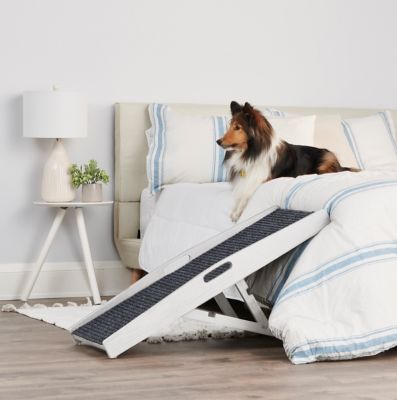
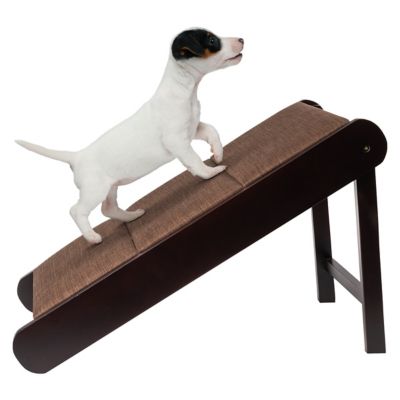
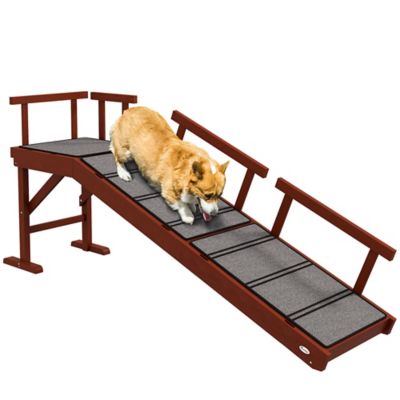
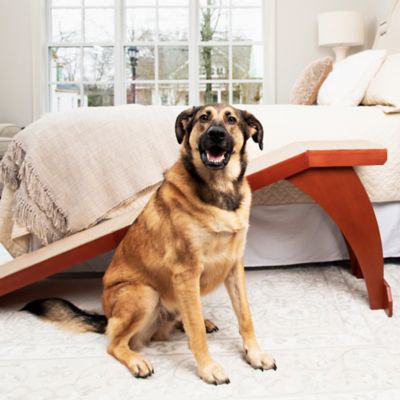
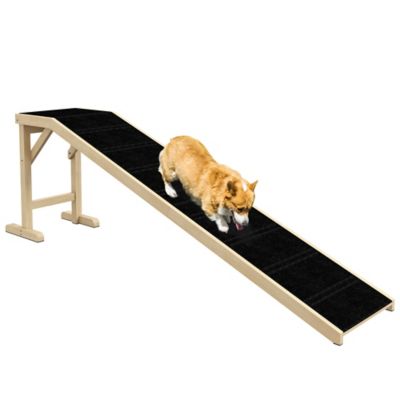
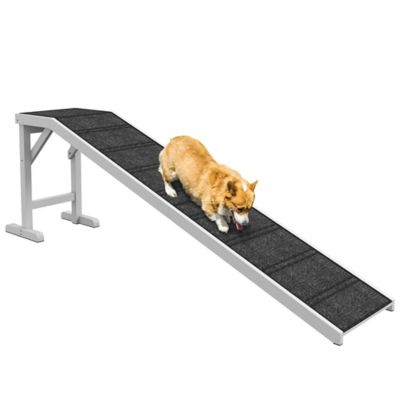
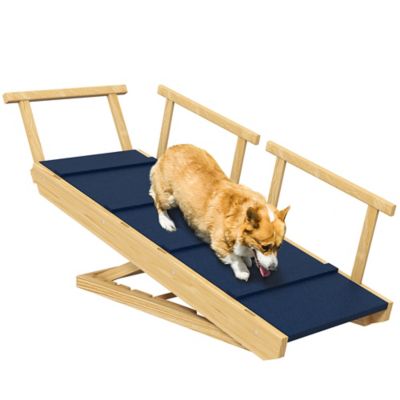
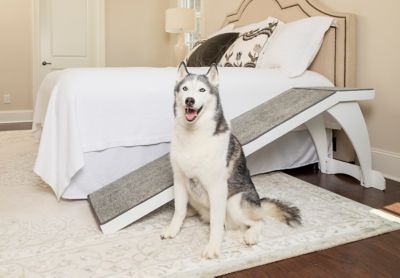
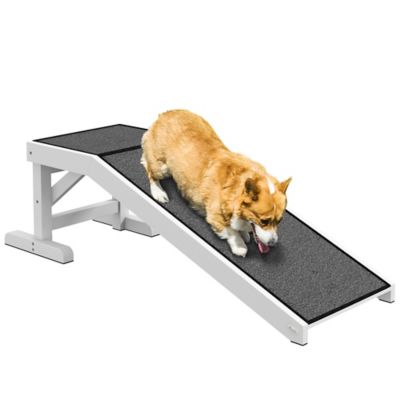
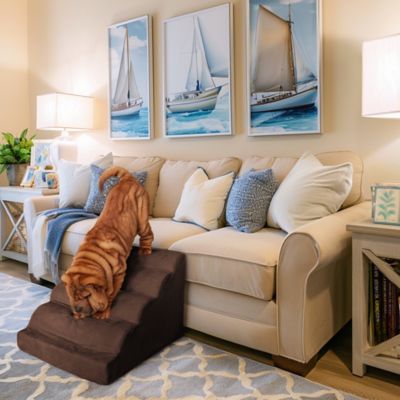
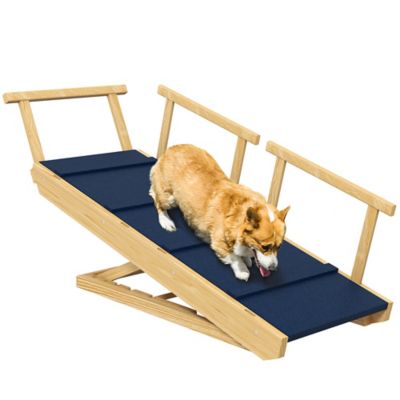
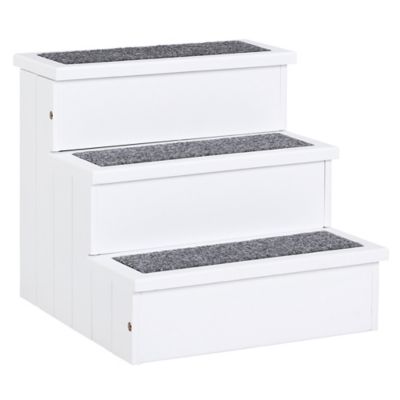
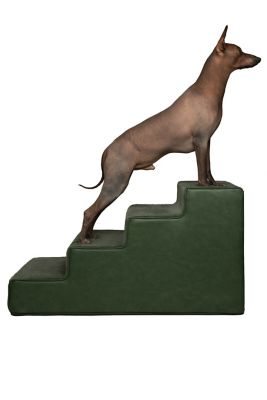
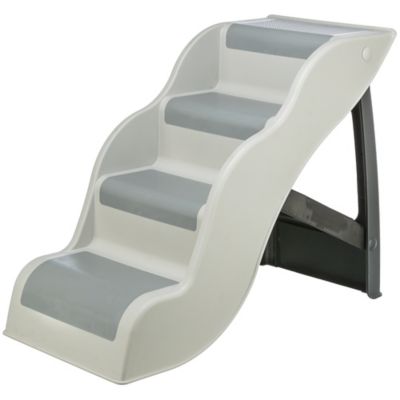
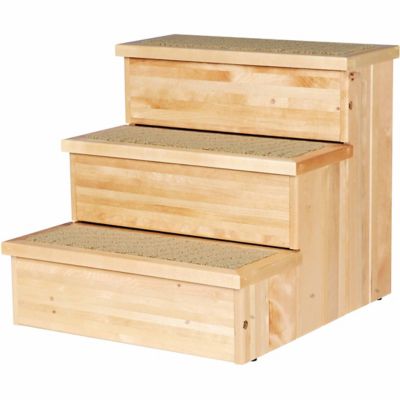
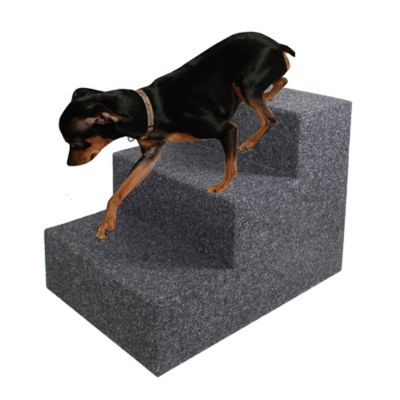
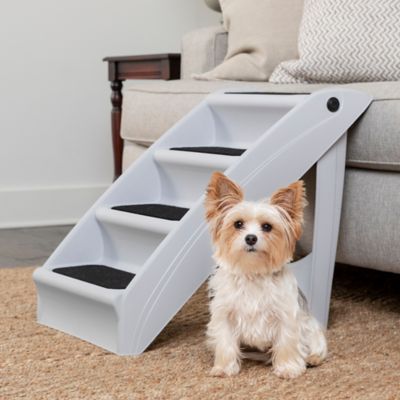
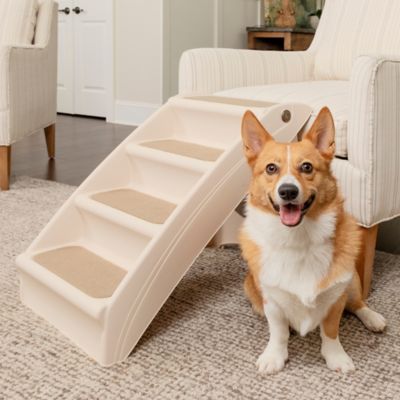
Indoor pet ramps for dogs provide a sloped path from the floor to a bed, couch, or other permitted resting spot, reducing the need to jump up or down. That can make a difference for a little dog facing a tall mattress, an older companion moving at a slower pace, or a short-legged pup whose favorite place is beside the family on the sofa. A ramp offers a continuous walking surface rather than separate steps, though the right fit still depends on the dog’s movement, confidence, and footing. For a dog with pain, a recent injury, or changing mobility, a veterinarian can help determine whether a ramp suits the situation. Around the house, furniture height and open floor space are just as important as the dog’s size. The distance from the floor to the furniture’s entry point determines the rise, while the ramp’s length helps determine how steep the climb will be. For the same height, a longer ramp creates a gentler slope but takes up more room. A short ramp beside a tall bed may save floor space while leaving a climb that feels too steep for a hesitant dog. Mattress compression and soft couch cushions also matter because the landing should not leave an awkward gap or ledge. Walking width deserves a close look, too: a dog needs room for a natural stance without feeling crowded along the edges. Space at the bottom lets the dog approach straight on instead of making a tight turn onto the incline. At the top, a clear landing gives paws somewhere steady to go. A bedside setup should also leave room for people to get in and out of bed without stepping over the ramp. These everyday details help an indoor dog ramp fit the whole household, whether it leads to a low loveseat in the den or a taller bed down the hall. A ramp works best as part of the room’s regular layout, not as an obstacle across a doorway or a busy walking path.
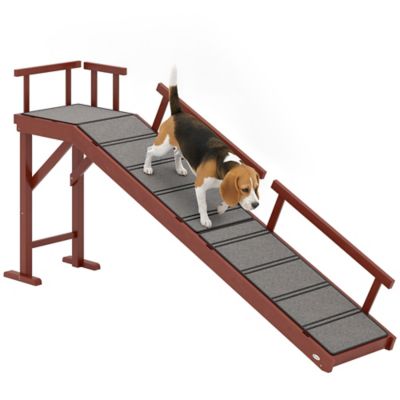
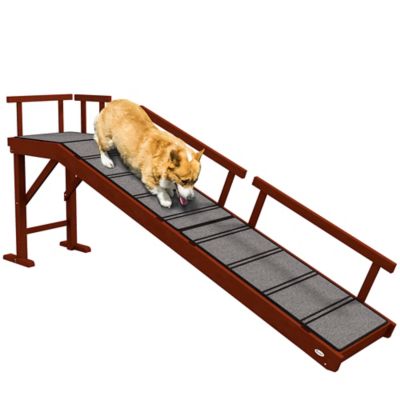
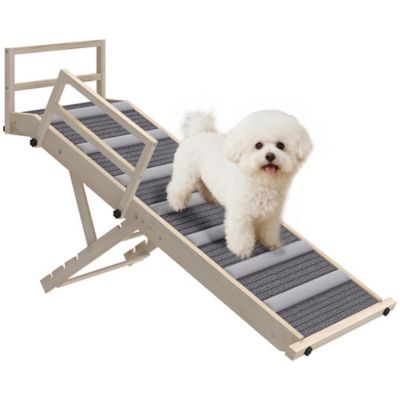
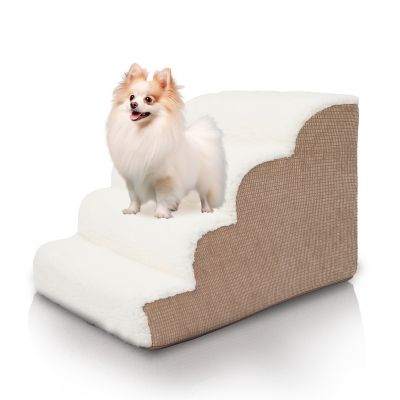
Materials and construction affect how an indoor pet ramp feels underfoot, how it sits on the floor, and how much attention it needs over time. Wood frames can blend with bedroom or living room furniture, while molded plastic designs may be easier to carry between rooms. Foam ramps offer a different feel, with a cushioned body and fabric covering; their firmness and stated weight limits still need to match the dog. On any style, the walking surface matters as much as the frame. Carpet, textured rubber, and fabric treads offer different textures, and the best match depends partly on the dog’s paws and comfort. A tightly secured surface should not bunch beneath a foot or shift during a climb. Raised crosspieces can provide footholds on some ramps, but their spacing and shape should suit the dog’s stride. Side edges may help define the walking path, though they do not replace supervision or proper placement. Underneath, nonskid feet can help limit movement on hard flooring when the ramp is positioned according to its directions. A ramp that rocks, slides, or flexes beyond its intended design needs attention before the dog walks across it. Weight capacity is a firm product limit, not something to estimate from appearance. The dog’s actual weight, the stated rating, and any restrictions on setup all belong in the comparison. The same attention to walking width, frame support, and weight limits matters when comparing
Pet Ramps For Large Dogs, particularly for a broad-chested companion or one that takes a wide stance. Adjustable ramps can serve furniture at different heights, provided each setting locks securely and keeps the slope suitable for the dog. Folding frames can make storage simpler, but hinges, braces, and latches should sit fully in position before each outing up the incline. A flat upper platform can offer a pause before stepping onto furniture, while other designs rely on a supported connection at the top. Each arrangement needs the support specified for that design.
Daily life puts indoor dog ramps through plenty of paw traffic, so easy care and sensible storage count for a lot. Shed hair, crumbs, and tracked-in grit can collect in carpet or fabric, especially in a household where the dog follows everyone from room to room. Regular vacuuming or brushing can keep those surfaces clear without leaving a slippery residue. Removable covers simplify cleanup when their care label permits machine washing, while other coverings call for spot cleaning and thorough drying. Wood surfaces generally need gentle cleaning without soaking, and plastic or rubber sections need cleaning methods suited to their material. Household polish and oily cleaners do not belong on a walking surface where paws need traction. An occasional look at screws, joints, feet, seams, and tread attachment can catch loosening hardware or worn patches before they become a bigger concern. Replacement parts or covers, where the design allows them, should match the ramp’s specifications rather than change how it supports weight. Storage deserves the same practical thinking. A folding ramp needs enough clearance beneath a bed or inside a closet, and its folded weight should be manageable for the person moving it. Carry handles and a secure folded position can make that chore easier, especially when the ramp shifts between a bedroom and a family room. For a ramp that stays out, a steady location helps the dog know where to approach. A hesitant dog may need a little time to investigate, with short, supervised practice and a treat or familiar cue rather than pressure to climb. Children and other pets should stay clear while the dog gets comfortable. Even a well-fitted ramp cannot prevent a dog from jumping off the side of a bed, so access and supervision still matter. With the right dimensions, footing, support, and care, an indoor pet ramp can become an everyday part of the home—a familiar route to a favorite nap spot and a place beside the people the dog wants to be near.