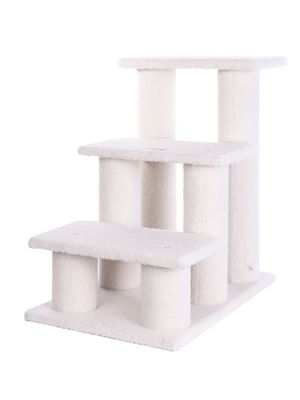
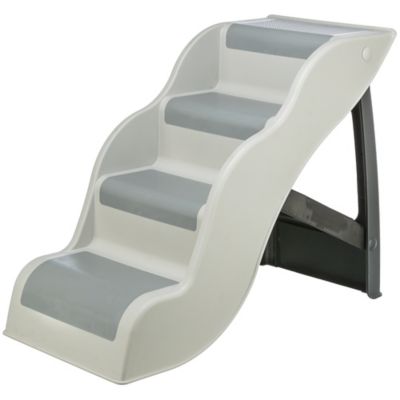
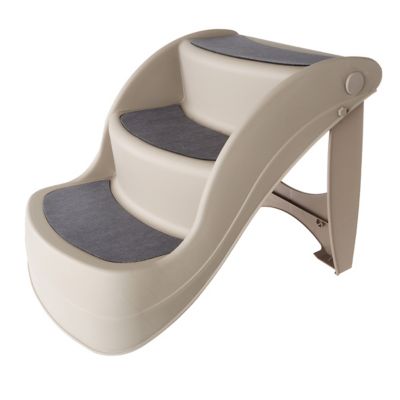
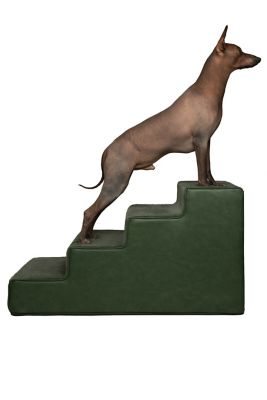
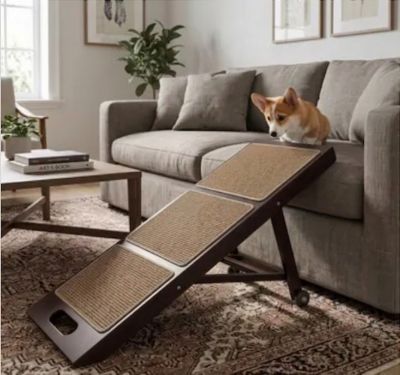
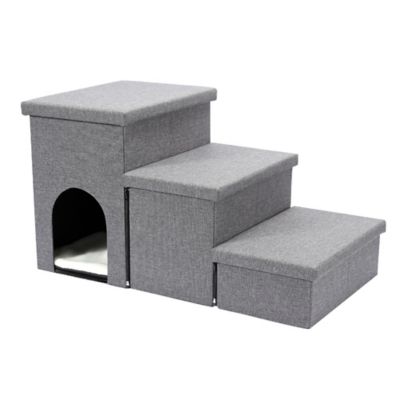
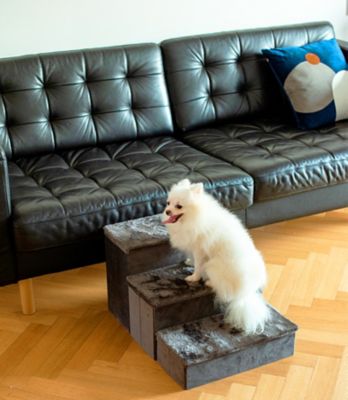
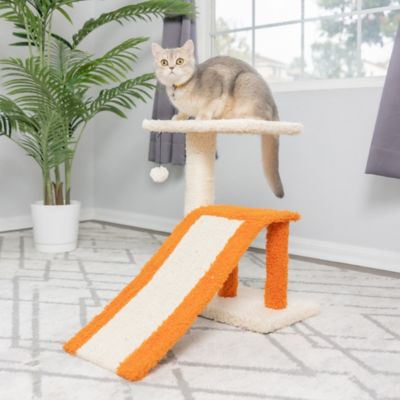
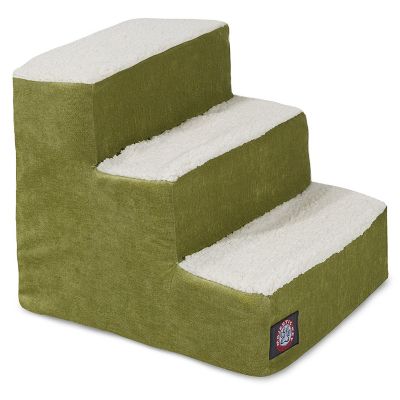
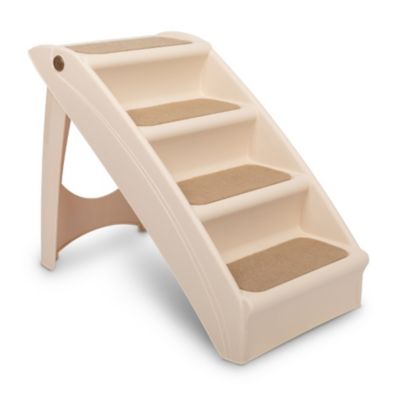
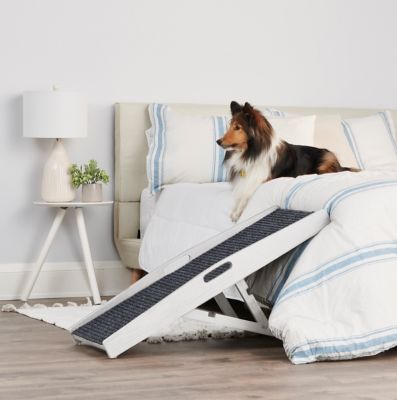
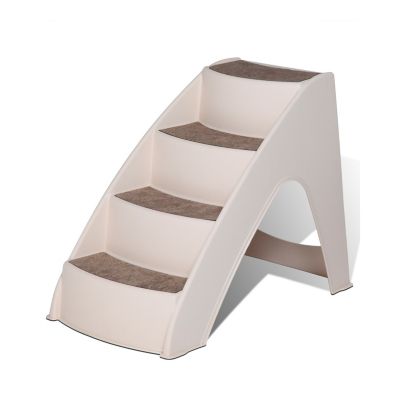
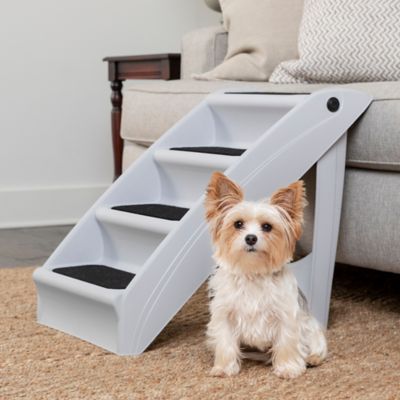
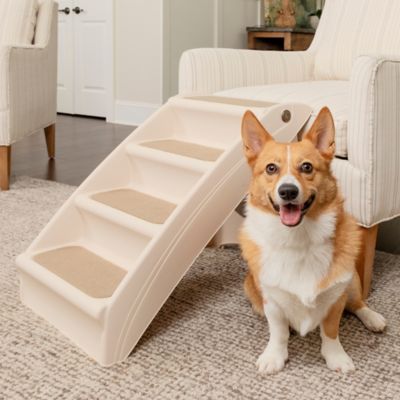
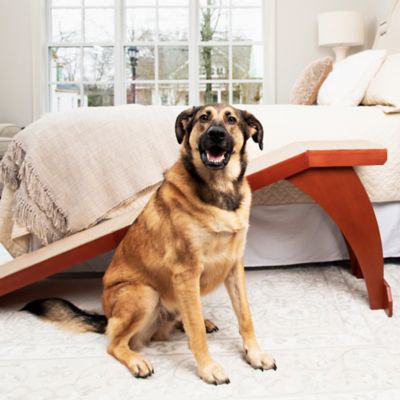
Cat ramps for older cats provide a sloped path to beds, sofas, and other raised resting spots, giving senior cats an alternative to jumping up or dropping down. A cat that once cleared the couch in a single bound may begin pausing at the edge, looking for a shorter route, or settling on the floor instead. A ramp can help keep favorite places within reach while reducing the need for those bigger jumps. That might mean an easier trip to the foot of the bed, a spot beside a familiar chair, or a window perch with a view of the bird feeder. For cats with arthritis or other mobility concerns, the right setup depends on their individual abilities and any recommendations from their veterinarian. The height of the destination and the amount of open floor space both matter when comparing ramps. A longer ramp generally creates a gentler incline at the same height, but it also reaches farther into the room. A short ramp may fit neatly beside a sofa while creating a steeper climb than an older cat can comfortably manage. Ramp length, climbing width, and the height of the upper end deserve attention together rather than as separate measurements. There should also be room at the bottom for the cat to approach without squeezing around a table leg, plus a clear place to step off at the top. A broad walking surface can give a bigger cat room to place all four paws and turn without crowding the edges. Ramps and pet stairs serve a similar purpose, but they ask cats to move differently: stairs involve separate steps, while a ramp provides a continuous slope. Neither design suits every animal. For a senior cat that hesitates at steps, a gradual ramp may be a better match for the way it moves around the house.
Materials and construction affect how a cat ramp feels underfoot, how firmly it sits, and how much care it needs. Wood frames can provide a substantial base, while molded plastic can be lighter to move between rooms. Fabric-covered panels offer another approach, with the support underneath playing an important role in how much the walking surface flexes. A ramp should feel steady as a cat shifts its weight, not rock from side to side or sag noticeably in the middle. Published weight limits matter even for a cat that looks small, and the rating should cover the animal’s full weight. In a home with several pets, another cat stepping onto the ramp may also be worth considering. Carpet, textured coverings, and other traction surfaces help paws find purchase, though the feel of the material matters as much as its appearance. A coarse or loose surface may catch claws, while a slick covering can leave a hesitant cat struggling for footing. Low, securely attached carpet and firmly fitted traction material are useful features to compare. Raised edges may help define the path, but they do not replace a suitable slope or a stable base. The underside matters, too: feet that grip the floor can help limit sliding, especially on smooth flooring. Folding designs can make storage simpler when floor space is tight, provided hinges and locking parts hold the ramp securely in its working position. Care requirements vary by material. Removable, washable covers can help with shed hair and small messes, while wipe-clean surfaces may simplify everyday upkeep. Cleaning directions should suit the whole ramp, including its frame and backing, rather than just the visible covering. Loose threads, lifting traction strips, exposed fasteners, and worn hinges are signs that a ramp needs attention before it stays in a cat’s daily path.
A good fit also comes down to the cat’s habits and the room it calls home. A ramp beside the bed needs to meet a firm landing area rather than disappear beneath a thick comforter or end against a shifting pillow. Beside a couch, the upper end should stay put as cushions compress and someone sits down. Around a window perch, the full route matters, including whether the cat has enough space to step onto the perch and turn around for the trip back down. The descent deserves just as much thought as the climb; a route that looks manageable from the floor can feel different to a cat looking down from above. Familiar placement can make a ramp less of a puzzle, especially for an older cat with limited vision. Some cats take to a new surface readily, while others spend time sniffing it, touching it with one paw, or watching another pet cross first. A calm location, a familiar blanket nearby, and a small reward can encourage interest without forcing the cat onto the slope. In a busy household, keeping the approach clear of toys, bowls, and foot traffic gives the cat more room to move at its own pace. For households also considering
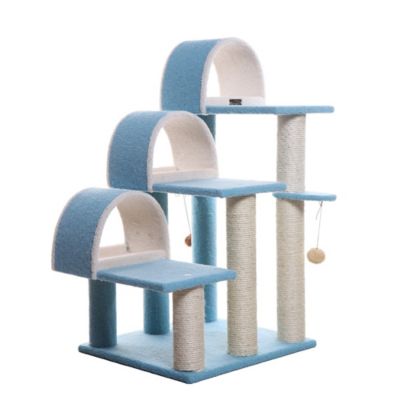
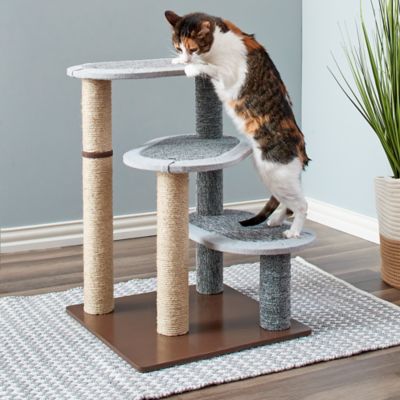
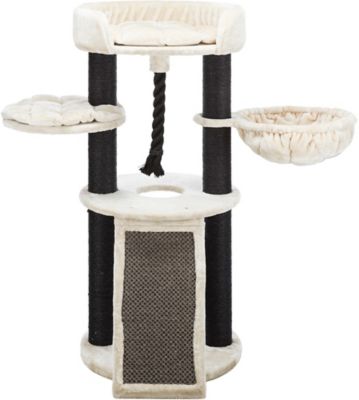
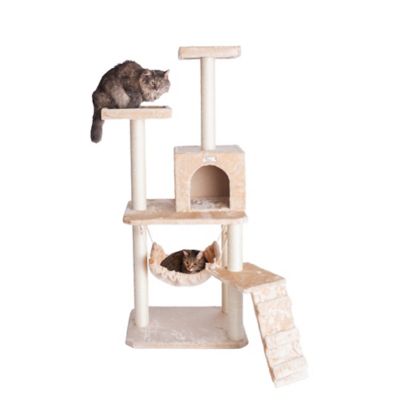
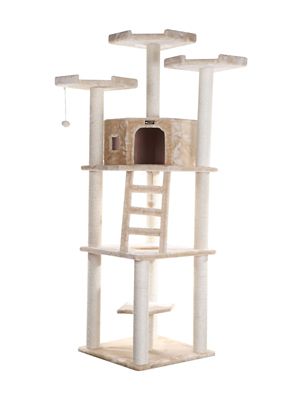
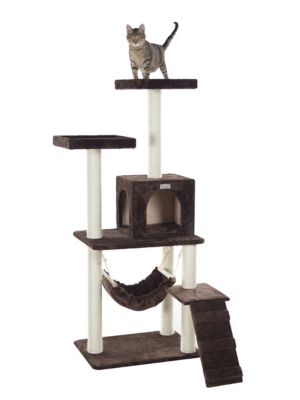
Cat Towers for Large Cats, accessible lower platforms and a steady base deserve attention alongside climbing height. A ramp only helps if the resting spot at the other end is suitable, too. These details also matter when choosing a ramp as a practical gift for someone caring for an aging companion; knowing the furniture height, cat’s size, and room layout makes the choice more personal and useful. While a ramp can support everyday access, sudden reluctance to jump, limping, or difficulty walking calls for veterinary attention. The aim is a steady, manageable route that lets an older cat stay close to familiar people and favorite resting places.