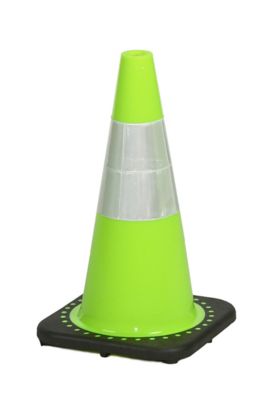
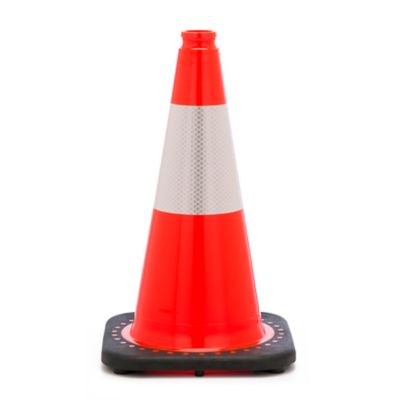
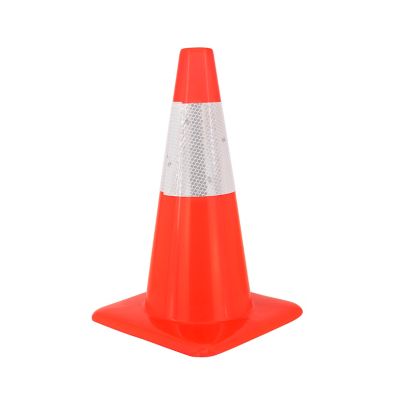
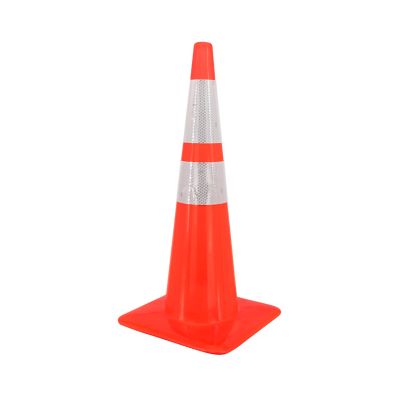
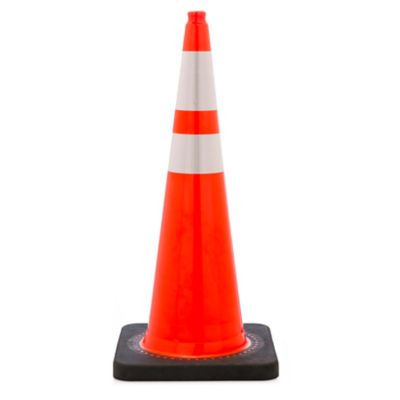
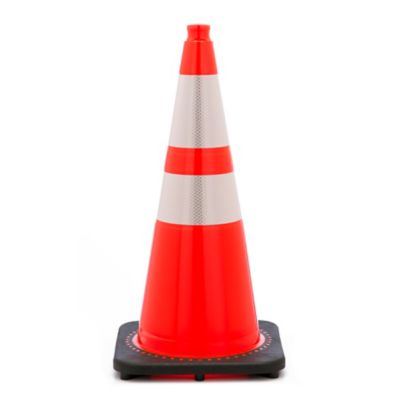
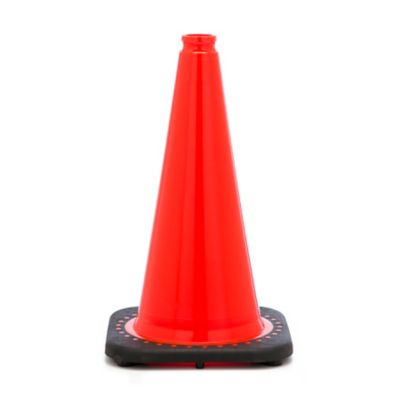
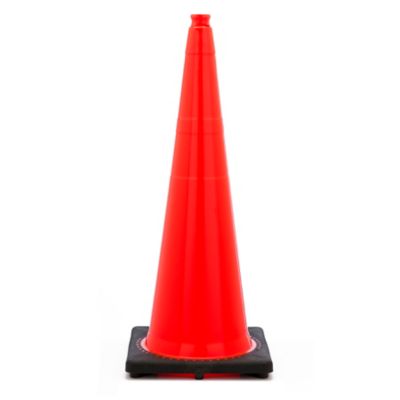
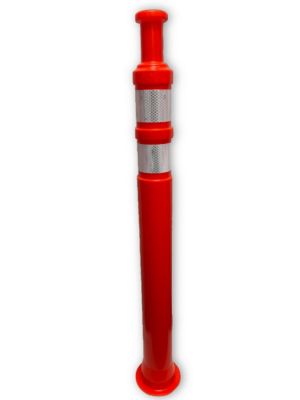
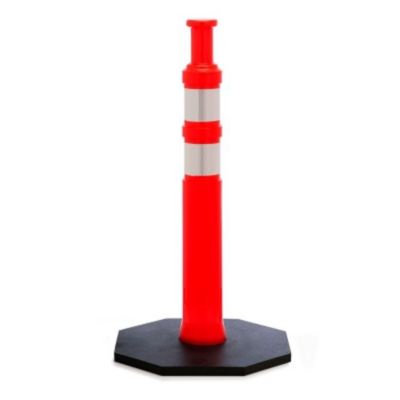
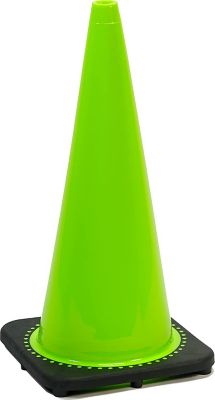
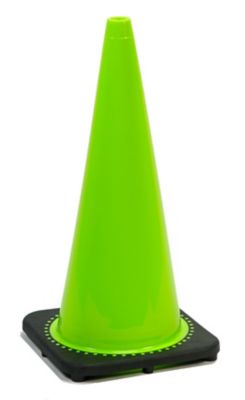
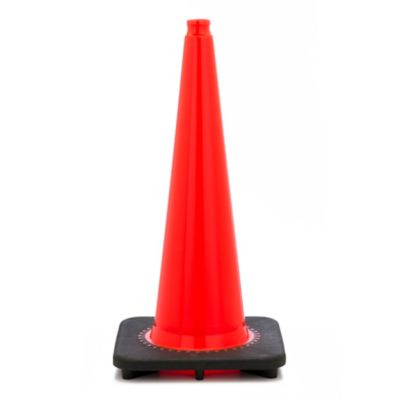
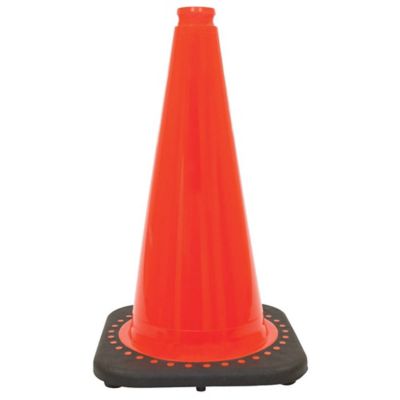
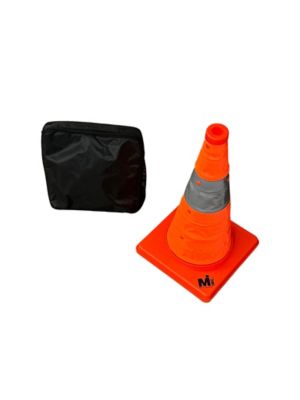
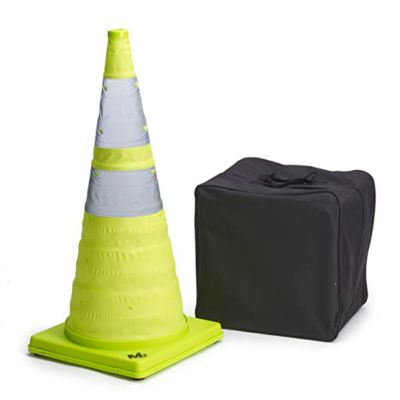
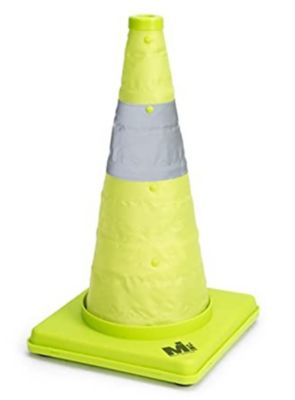
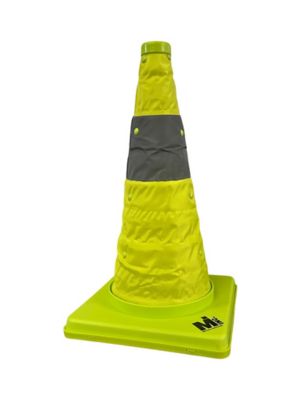
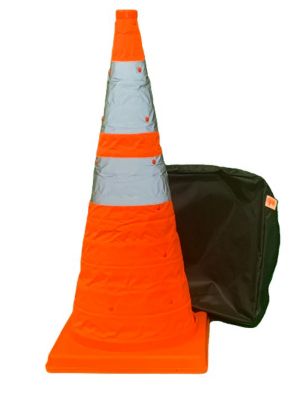
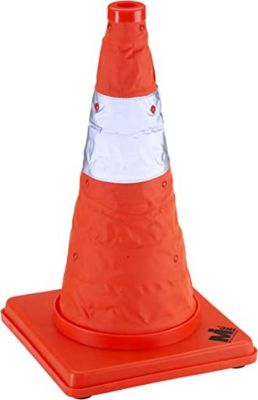
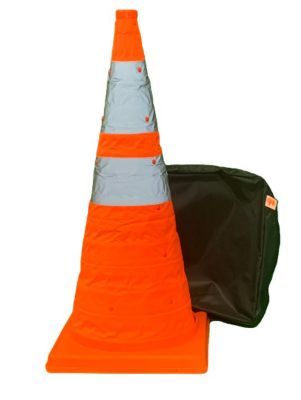
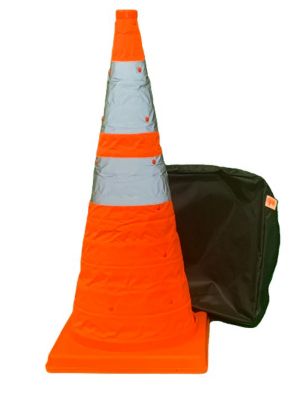
Heavy duty safety cones are made for the places where a lightweight marker will not hold up. They help call attention to changing traffic patterns, work areas, uneven pavement, equipment, spilled materials, and other hazards around farms, ranches, parking lots, shops, warehouses, construction sites, and public roads. A sturdy cone can make a work area easier to spot in bright daylight, gray skies, blowing dust, rain, or the low light that comes with the cooler months. Look for flexible PVC or rubber-style construction that can bend or bounce back if it is bumped, rather than cracking or staying flattened after an impact. A broad, weighted base also matters. Bases made with recycled PVC or rubber commonly range from about 7 to 15 pounds, giving the cone a better grip when wind moves across an open driveway or when traffic passes nearby. The right weight depends on the setting: lighter heavy-duty cones may suit a private lot or shop entrance, while heavier bases are better for exposed work zones, busy commercial areas, and places where gusts, passing vehicles, or rough pavement could send a marker sliding. In a gravel yard, a cone with a solid base can stand out against the ground while helping visitors steer clear of a trench, parked trailer, or backed-up farm equipment. Around a livestock area, cones can mark a temporary boundary without the time and expense of setting a permanent fence. They are also handy for delivery drivers, school or church parking crews, utility workers, road maintenance teams, event organizers, and homeowners who need a clear, portable way to keep people and vehicles away from a problem spot.
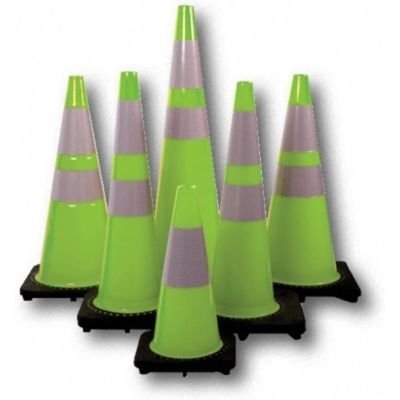
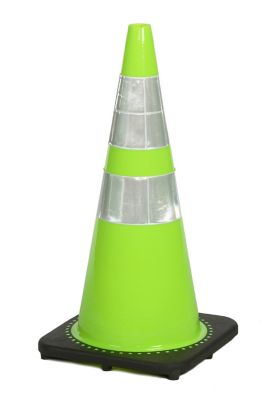
Height and visibility should match the speed and distance of approaching traffic. Smaller cones around 18 inches tall can work well indoors, in quiet parking areas, along private driveways, or wherever vehicles are moving slowly and people are close by. Cones around 28 inches tall are a common all-purpose choice for commercial parking lots, maintenance areas, roadwork, and everyday hazard marking because they provide a useful balance of visibility, portability, and stability. For high-speed traffic zones, wide-open properties, highway work, or locations that see strong weather, 36-inch cones with heavier bases offer a taller profile that is easier to notice from farther away. Reflective collars or bands are especially important when a cone may be used at dusk, overnight, in rain, or beside equipment that casts shadows. High-intensity reflective material sends light back toward approaching drivers, making the marker easier to pick out when headlights sweep across the work area. Many traffic cones use a combination of 4-inch and 6-inch reflective bands, although the best configuration depends on the height and intended use of the cone. Bright orange coloring helps during the day, while reflective bands add a second layer of awareness after sunset or under cloudy winter skies. Before placing cones near a public roadway, check the requirements for the location and type of work. Products intended for traffic control may be identified as meeting the Manual on Uniform Traffic Control Devices, commonly called MUTCD, and some applications may call for crashworthy testing such as NCHRP-350 specifications. Local, state, or jobsite rules can differ, so the cone itself should not be treated as a substitute for an approved traffic-control plan, barricades, warning signs, or trained personnel. For private property, focus on a stable base, easy visibility, and enough height for drivers and pedestrians to see the marker before they reach the hazard.
Consider how often the cones will be moved, where they will be stored, and what kind of abuse they may receive. A flexible, injection-molded design is useful on busy jobsites because it can bend when a tire brushes against it and return to shape instead of leaving a sharp broken edge. A heavy base helps keep the cone planted, but it also adds carrying weight, so crews who set out a long line of markers may prefer a balance between stability and portability. Handles or textured areas can make stacking and transport easier, especially when cones travel between a maintenance truck, barn, warehouse, or athletic field. Look for cones that stack neatly without sticking together and that can be wiped clean after sitting in mud, salt, dust, or road spray. Keeping reflective bands free of heavy grime helps preserve their visibility. Store cones upright or stacked in a dry area when practical, and inspect them before each use for cracks, deep cuts, missing reflective material, warped bases, or damage that could make them hard to see. A few cones kept in a pickup or service vehicle can be useful for a flat tire, fallen limb, disabled trailer, or sudden cleanup, while larger sets help mark a mowing route, loading zone, snow-clearing area, or temporary detour. They can be a practical gift for a new landowner, contractor, school maintenance crew, volunteer event team, or anyone outfitting a garage and work truck. Safety cones can also work alongside other durable jobsite supplies, including
Heavy Duty Rubber Hoses, where clear marking helps keep people and vehicles away from hoses stretched across a driveway or work area. Whether they are used beside a farm lane, at a busy shop, or around a roadside repair, heavy duty safety cones provide a simple, dependable visual reminder to slow down, stay clear, and give the work zone room.