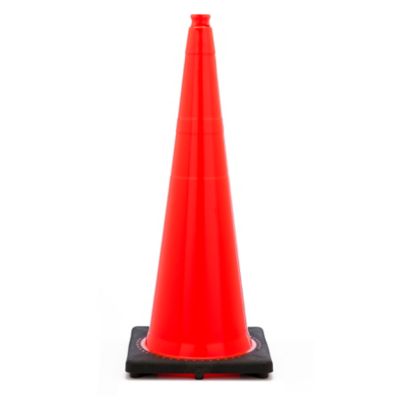
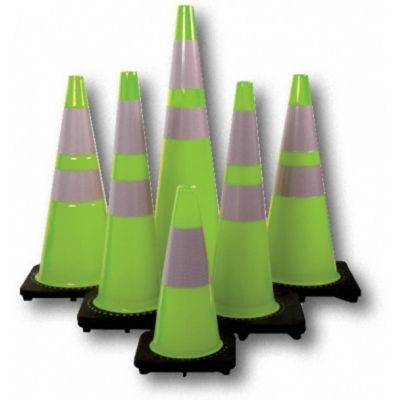
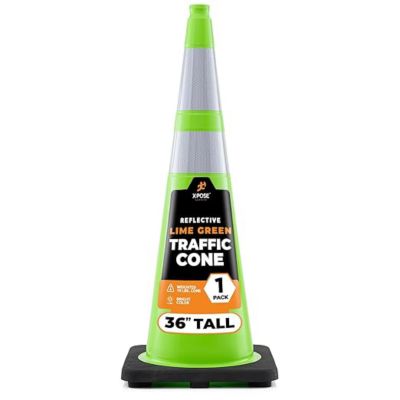
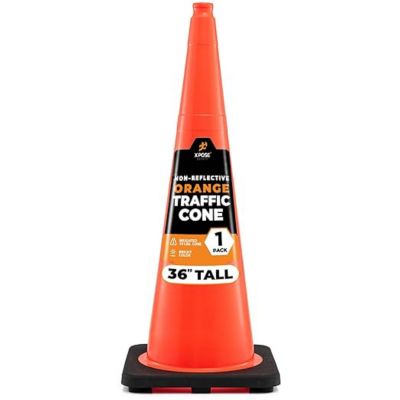
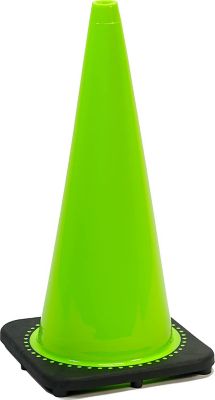
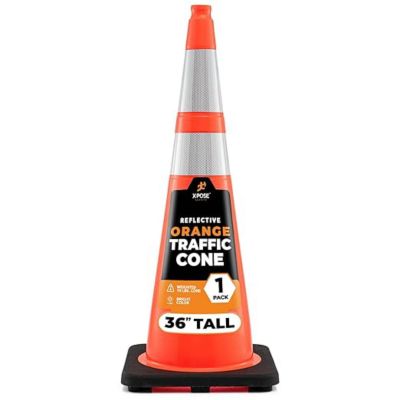
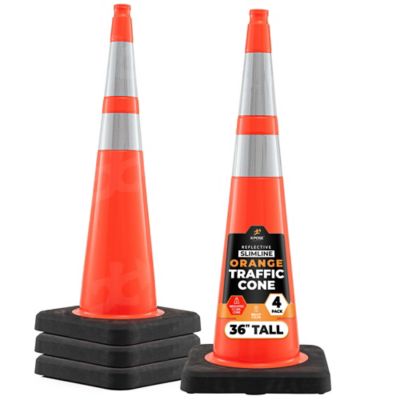
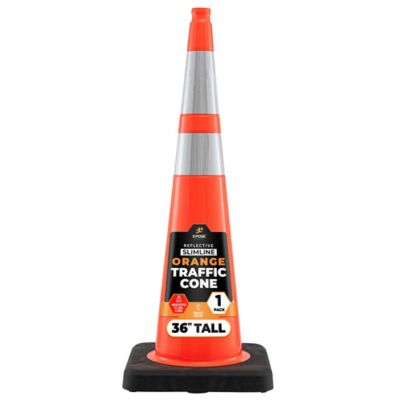
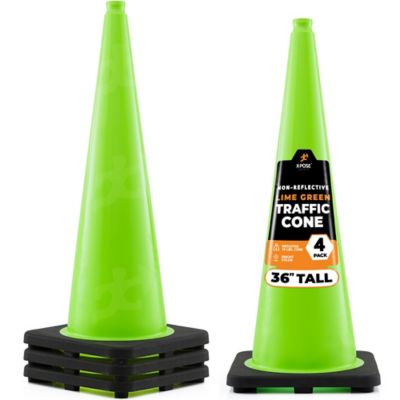
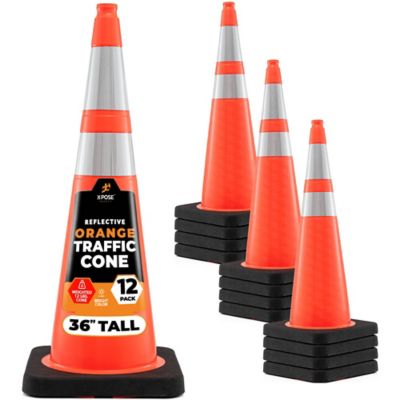
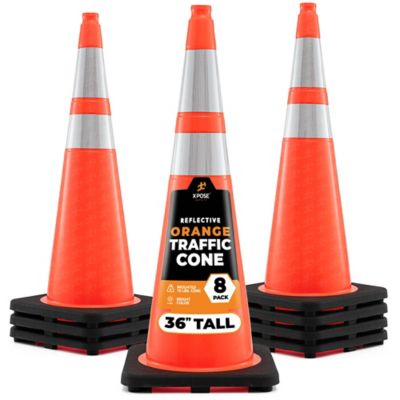
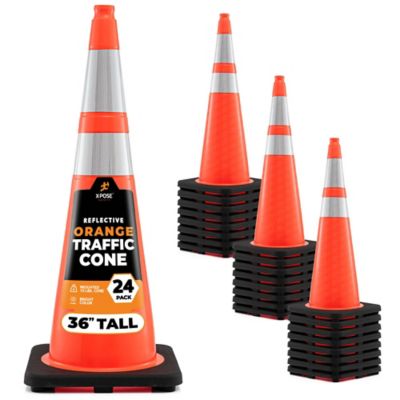
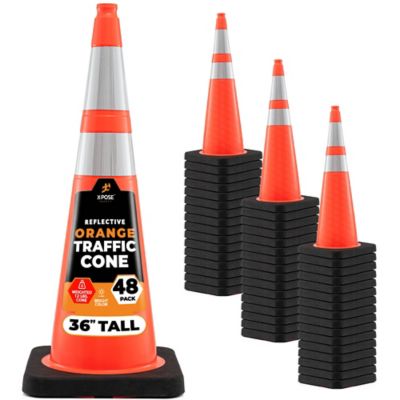
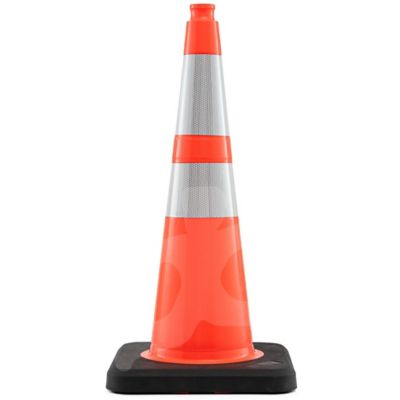
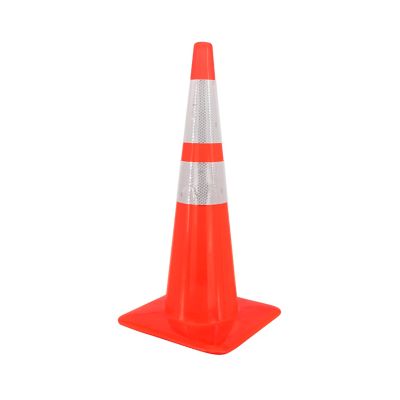
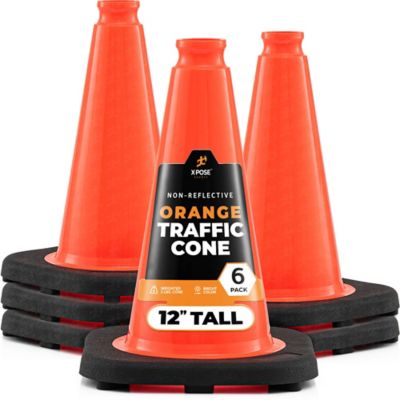
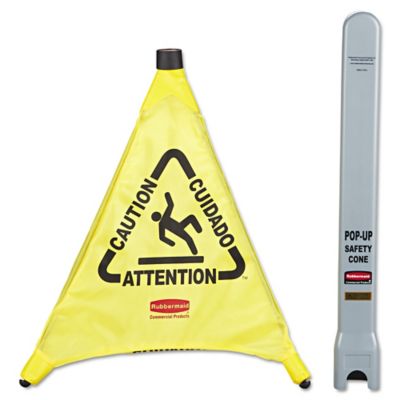
36-inch traffic cones stand 3 feet tall and provide a highly visible marker for temporary traffic control, work areas and restricted access points. Their taller profile helps draw attention to a boundary around a busy entrance, beside a loading area or along the edge of a maintenance project. Bright orange bodies are easy to recognize, while reflective bands on cones designed for nighttime applications return light toward headlights. The extra height can be helpful around pickups, farm equipment and trailers, although parked vehicles and other obstacles can still block a cone from view. On a farm or ranch, these cones can mark a driveway entrance during deliveries, separate a repair area from regular yard traffic or call attention to equipment near a travel path. At a shop, warehouse or community facility, they can help outline a loading space or signal that part of a parking lot is temporarily off limits. Their purpose is to communicate a clear warning and make an intended route easier to recognize; they do not physically stop vehicles or protect people from an impact. A useful layout gives drivers enough notice to understand where to go without forcing a sudden turn or stop. The setting matters just as much as the cone itself, especially where a long trailer needs room to swing through a gate or a delivery truck shares an entrance with pedestrians. For public-road projects, the required cone height, reflective treatment, placement and spacing depend on the applicable Manual on Uniform Traffic Control Devices, often called the MUTCD, along with state or local requirements and the approved traffic-control plan. A 36-inch height is not a universal requirement for every highway or interstate work zone, and height alone does not establish compliance. These taller cones serve a practical role wherever the job calls for a prominent temporary marker, with the final choice tied to the site, traffic conditions and intended application.
Materials and construction influence how 36-inch traffic cones handle repeated setup, transport and storage. Flexible PVC is common for cone bodies because it can bend rather than behave like a rigid post, while bases may incorporate rubber or other heavier materials to help the cone remain upright. Some designs have a one-piece body and base; others combine separate components. That difference can affect handling, balance and how neatly the cones nest together. A broad base spreads the footprint across the ground, but it also takes up more room beside a narrow walkway or inside a truck bed. Overall height does not tell the whole story, so base dimensions and total weight matter when matching cones to a work area and the people moving them. A cone that feels manageable for an occasional driveway closure may be a different proposition when a crew carries several at a time across a large property. Repeated lifting, dragging and stacking also put wear on different parts of the cone, particularly the lower edges, grip areas and reflective bands. A well-matched design balances portability with enough base weight for its intended setting. No cone stays upright under every condition, and an uneven or obstructed surface can keep the base from sitting flat. Reflective features deserve attention of their own: reflective sheeting sends light back toward its source, but it does not produce light by itself. Band placement, condition and visibility from approaching traffic all affect how well that feature performs. For work extending beyond daylight, the complete traffic-control arrangement may also require lighting or other devices. Handles, openings and accessory attachment points can make certain designs easier to move or incorporate into a larger setup, provided those features suit the application. Chains, signs and similar attachments must be compatible with the cone and must not turn a simple marker into an unstable assembly. The most practical fit supports the job without creating an extra obstruction.
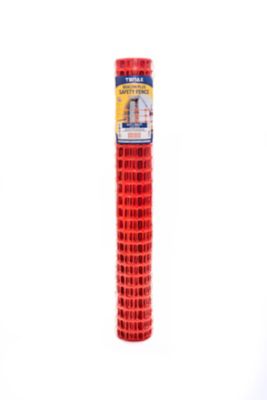
Everyday care helps keep traffic cones recognizable and ready for the next task. Dirt, grease and packed-on grime can dull an orange surface or cover reflective bands, especially around gravel yards, equipment shops and loading areas. Cleaning methods should follow the manufacturer's directions, with mild soap and water often suitable for routine surface dirt. Harsh chemicals, abrasive scrubbing and rough handling can damage some plastics or reflective materials. Inspection matters after a cone has been struck, dragged or caught beneath equipment: a split body, distorted base or peeling reflective band can affect its usefulness even when the cone still stands. A cone that leans into a travel path or has lost much of its visible surface no longer communicates as clearly as intended. Storage has a practical side, too. Nested cones occupy less floor space than cones spread individually across a shed, but the stack still needs a stable spot where it will not interfere with doors, tools or foot traffic. Keeping cones free of trapped debris makes separation easier and helps prevent grit from grinding against the surfaces. Around a working property, a consistent setup is often easier for drivers to understand than scattered markers with no clear boundary. A row beside a service area, for example, should make the closed section apparent without sending someone toward a ditch, fence corner or parked implement. Pedestrian access needs consideration as well, particularly near building entrances and shared loading spaces. Where a site calls for a more continuous visual boundary,
Safety Barricades may be part of the broader arrangement, depending on the work and applicable requirements. Cones and lightweight barricades are warning devices, not substitutes for protective barriers where impact protection is necessary. With suitable construction, visible markings and a layout that fits the property, 36-inch traffic cones offer a straightforward way to identify temporary boundaries and help keep everyday activity moving around the work.