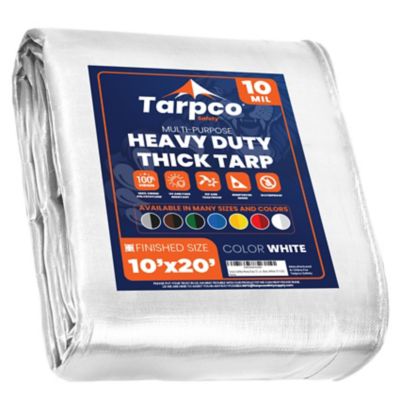
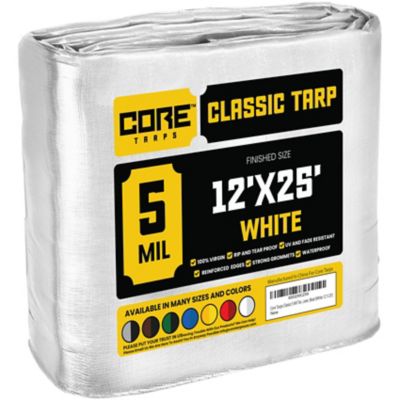
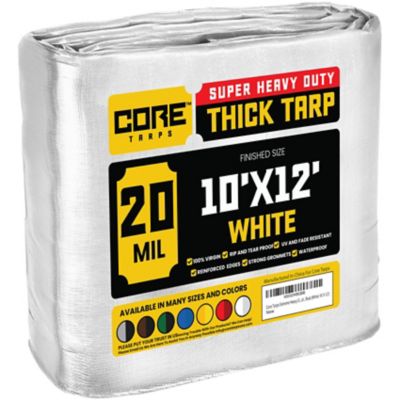
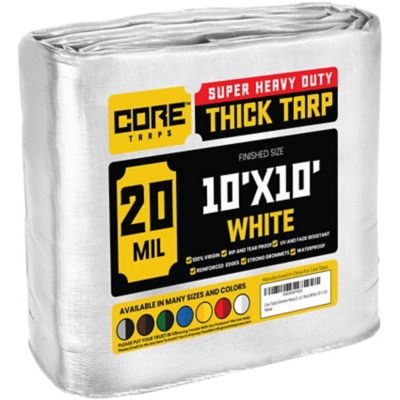
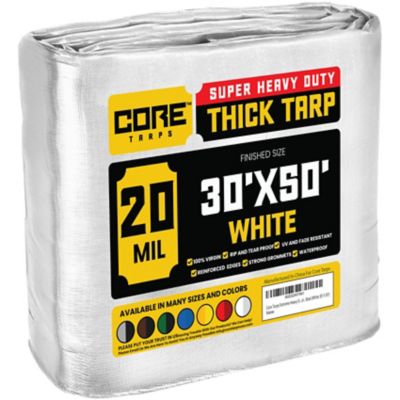
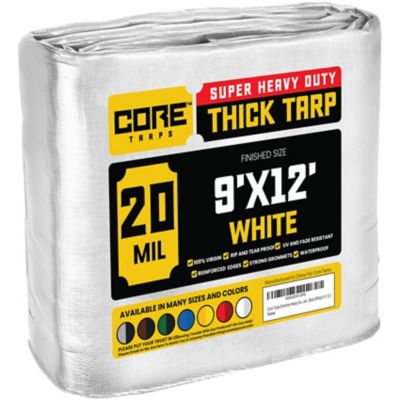
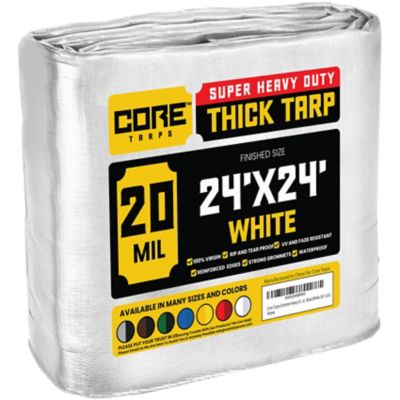
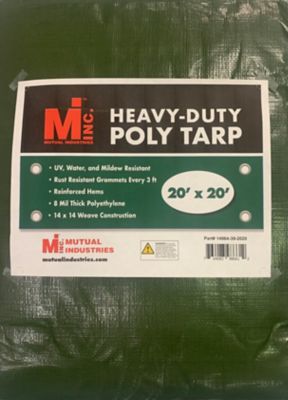
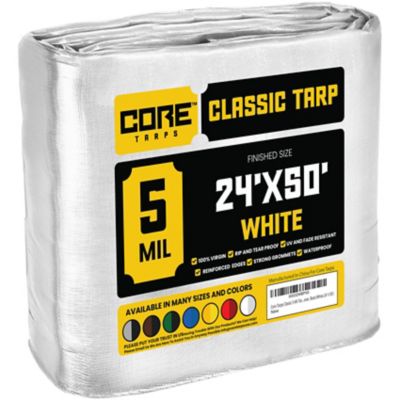
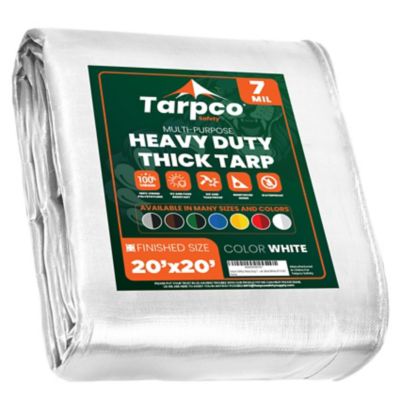
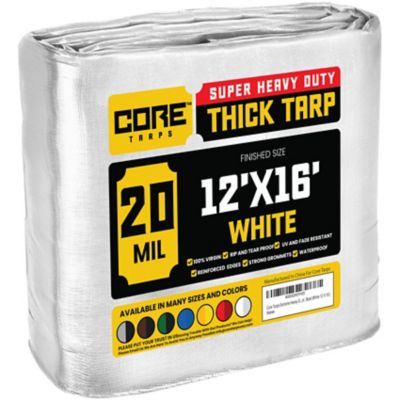
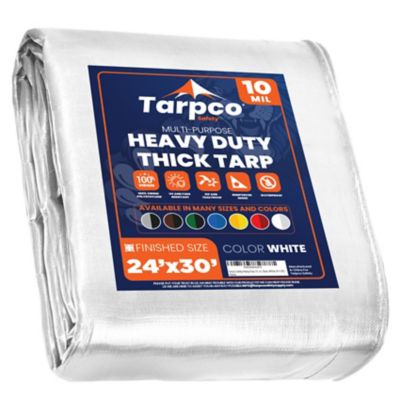
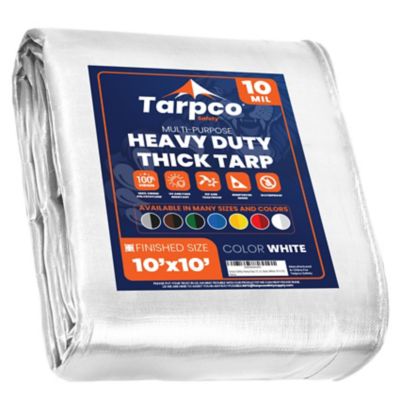
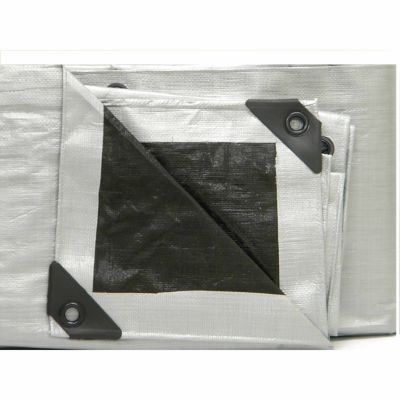
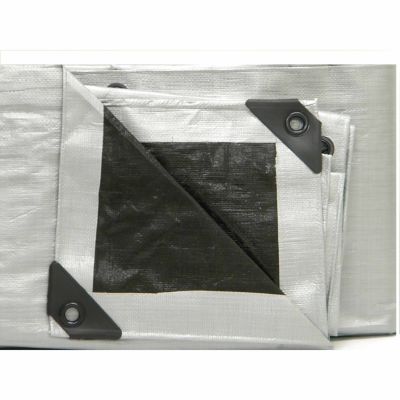
Heavy-duty white tarps provide a tough, flexible covering for equipment, building materials, boats, and outdoor work areas where protection from rain, dirt, and sunlight matters. Many are made from woven polyethylene with a laminated coating that helps keep water from passing through the fabric. The woven core supplies strength, while the outer layers form a barrier against the weather. White surfaces generally reflect more sunlight than dark surfaces, which can help limit heat buildup beneath a cover in direct sun. That makes white tarps a practical choice around a farmyard, at a jobsite, or over a boat parked beside the shed. Color alone does not establish a tarp’s temperature performance, opacity, or UV protection, though; those features depend on its construction and treatment. Heavy-duty polyethylene tarps often fall within a thickness range of about 10 to 20 mil, with one mil equal to one-thousandth of an inch. There is no single thickness standard for the heavy-duty label, so thickness is best considered alongside fabric weight, weave, reinforcement, and the intended application. A thicker sheet may stand up better to rubbing and repeated handling, but it can also be heavier to lift and less convenient to fold. Reinforced corners, rope-reinforced hems, and firmly seated grommets help a cover handle the strain of being secured over a load. Grommet material and spacing vary, and closer spacing can provide more places to distribute tension along an edge. For landowners covering a stack of fence boards, contractors protecting materials between workdays, or boat owners preparing for cooler weather, those construction details matter more than color alone. A white surface also makes mud, leaves, and other buildup easy to spot before the tarp is folded away. The right combination of fabric strength, water protection, and manageable weight makes a tarp useful for both occasional covering jobs and repeated chores around the property.
Fit has a big say in how well a heavy-duty white tarp performs. A cover needs enough length and width to reach over the top of the load, extend down the sides as needed, and leave room for secure attachment. A tarp that matches only the footprint of a mower or lumber stack may come up short once it passes over the highest point. Listed dimensions deserve a close look because some measurements describe the material before hemming, while others describe the finished cover. Square and rectangular shapes suit many common jobs, but extra fabric is not always helpful: loose edges can flap against painted surfaces, collect water, or catch the wind. Over a boat, a supported shape helps rain run off instead of gathering in a low spot between seats. Over stacked lumber, a sloped top and space for air movement can help keep water out without trapping as much moisture underneath. Waterproof fabric does not mean an entire covered setup is watertight; seams, grommet openings, exposed edges, and the direction of wind-driven rain all affect protection. White polyethylene tarps can also serve as temporary shade covers where the fabric and support system are suitable, although a general-purpose tarp is not automatically a rated canopy top. A replacement cover needs to match the frame dimensions and attachment layout, not simply stretch across the roof. Shoppers comparing material construction across colors can find related options among
Heavy Duty Poly Tarps. For farm equipment, utility trailers, and supplies waiting near a barn, attachment points should spread the pull rather than concentrate it at a single corner. Smooth supports and padding over sharp edges help reduce abrasion where the fabric meets a bracket, board end, or metal rail. Highway hauling puts different demands on a cover than stationary storage, so the tarp and fastening system need to be suitable for transport. A tarp does not replace proper cargo restraints, and loose fabric should never be left trailing from a load.
Long service life depends on more than the initial thickness of a heavy-duty white tarp. Sun exposure, flapping, sharp contact points, standing water, and repeated folding all place stress on the material. UV treatment can help slow damage from sunlight, but it does not make a tarp immune to fading, brittleness, or eventual wear. During the cooler months, fallen leaves and pockets of rainwater can add weight to an unsupported section, while snow and ice can put far more strain on a cover than its fabric or grommets can handle. General-purpose tarps should not be treated as load-bearing shelters or left to support an accumulation of snow. A pitched, properly supported arrangement sheds water more effectively than a flat sheet stretched across a wide opening. Around machinery, adequate clearance from exhaust parts and other hot surfaces is essential, and engines should be cool before covering. Polyethylene can melt or burn, so ordinary poly tarps belong well away from heaters, open flames, and welding sparks unless specifically rated for the exposure involved. Care is usually straightforward: loose dirt can be brushed away, and many poly covers can be cleaned with water and mild soap according to their care directions. Harsh solvents, abrasive scrubbing, and excessive heat can damage coatings. Even when the synthetic material resists rot, moisture and dirt left on its surface can encourage mildew growth, so a clean, fully dry tarp stores better than one bundled up damp behind the barn door. Folded storage out of direct sunlight and away from rodents helps protect the fabric between jobs. Occasional checks around hems, corners, and grommets can reveal small tears or thinning areas before a windy afternoon turns them into larger problems. For folks moving between seasonal chores, equipment storage, and outdoor repairs, the most practical white tarp is one that fits the load, handles the expected exposure, and remains manageable enough to spread, secure, clean, and put away without turning a simple covering job into a wrestling match.