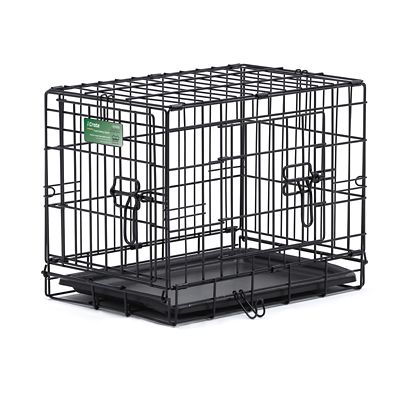
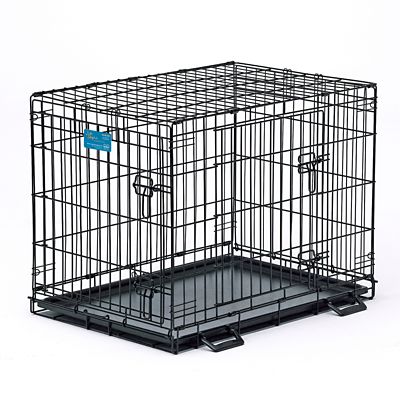
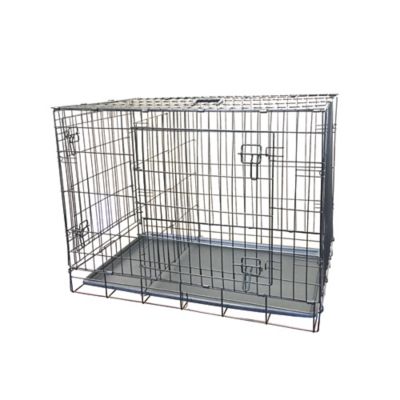
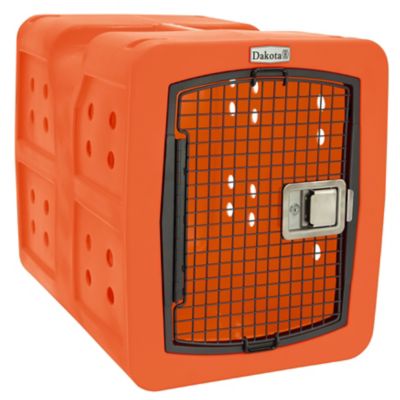
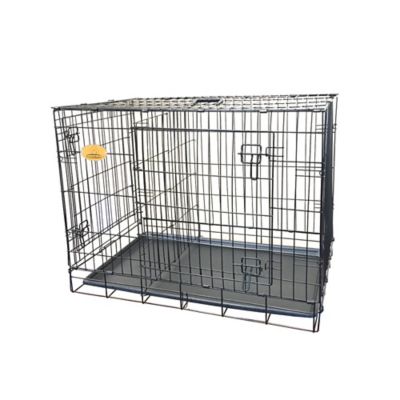
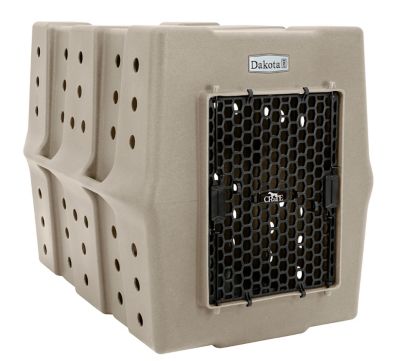
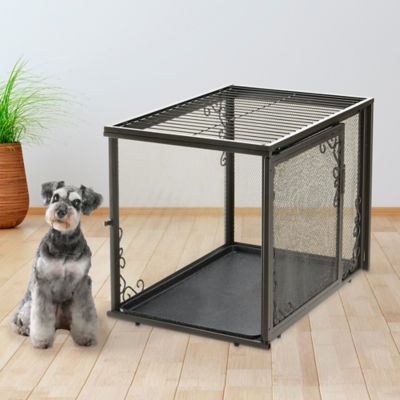
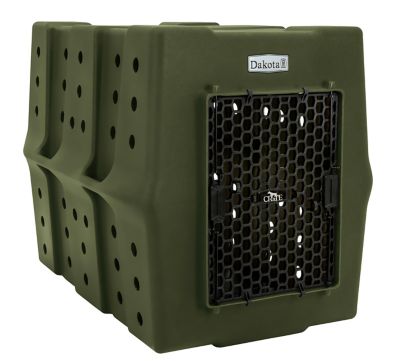
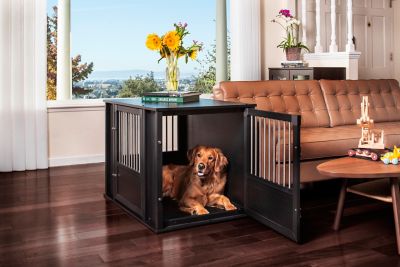
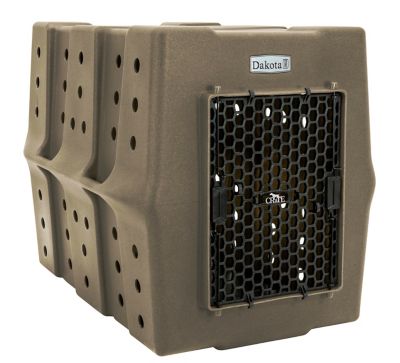
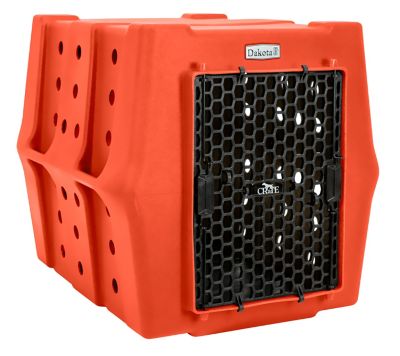
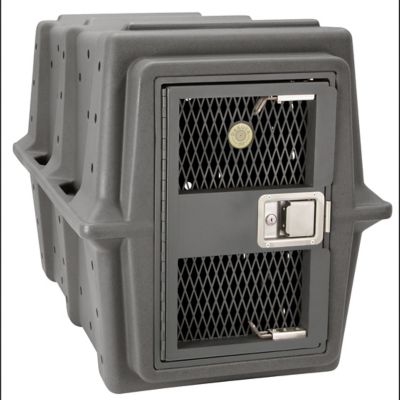
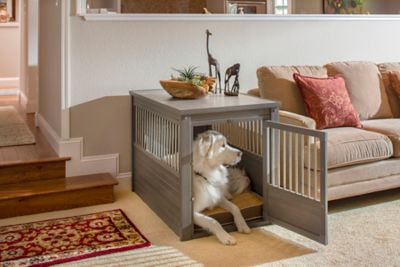
Heavy-duty dog crates give strong, active dogs a sturdy place to settle and help keep household routines running smoothly. For a big farm dog resting after a morning outside, a young working breed learning to relax indoors, or a full-grown companion that leans hard against a crate door, construction matters as much as size. This category often includes steel frames, welded bars, reinforced door panels, and substantial latches, with designs ranging from open-sided enclosures to more enclosed kennels. Each style brings a different balance of visibility, airflow, weight, and protection from everyday bumps. Open bars let a dog keep an eye on the room, while solid sections can limit distractions for dogs that settle better with less activity in view. Heavy-duty construction is about more than a tough appearance: connections between panels, door hinges, floor supports, and latch placement all affect how a crate handles regular wear. A well-matched crate can serve as a familiar resting spot in a busy house, a place for downtime when company comes over, or a separate space while muddy boots and feed buckets pass through the back door. It should never take the place of exercise, bathroom breaks, training, or time with the family. Strong construction also does not make a crate escape-proof, and a dog that bites bars or throws its weight against a door may need help with confinement distress rather than simply a heavier enclosure. For everyday use, a quiet indoor location away from constant foot traffic gives that sturdy frame a better chance of becoming a comfortable retreat. During the cooler months, a spot clear of drafty doors and direct heat keeps the surroundings more even. Heavy-duty dog crates suit households that need substantial construction, but the best match still comes down to the individual dog, the space at home, and the routine the crate needs to support.
Fit starts with the dog’s body, not just the weight listed on a crate description. A broad-chested dog, a tall dog with upright ears, and a long-bodied dog can weigh about the same and still need different interior dimensions. There should be enough room to stand naturally, turn around without squeezing, and lie down comfortably. Interior measurements matter because frames, trays, and sloped walls can take away space that the outside measurements suggest is open. Door height and width deserve attention, too, especially for an older dog that moves slowly or a large dog that needs room through the shoulders. A low entry can make stepping inside easier, while a raised threshold may require more effort from a dog with stiff joints. Floor design is another practical difference among heavy-duty crates. Solid floors provide continuous support, while grated floors require careful attention to opening size, paw comfort, and the manufacturer’s bedding recommendations. Any mat should fit flat without bunching against the door, and bedding needs to suit the dog’s chewing habits. For puppies, adjustable space can help a crate keep pace with growth when the design includes a compatible divider; a makeshift panel can leave gaps or unstable edges. Around the house, crate placement can be just as important as interior room. A large steel enclosure needs clearance for the door to swing, space for a tray to slide out, and a clear path for the dog to enter. In a mudroom, that might mean keeping it beyond the sweep of the back door rather than tucked into the busiest corner. Multiple access doors can offer more placement options, depending on the layout. Some designs have casters that make floor cleaning easier, but locking mechanisms matter whenever the crate is occupied. A stationary frame may be a better fit where movement is unnecessary. Substantial crates can be heavy to lift, so their assembled dimensions and weight deserve a look before planning to carry one upstairs or move it between rooms.
Materials and upkeep make a noticeable difference over the life of a heavy-duty dog crate. Steel bars and welded joints offer substantial structure, while powder-coated or other protective finishes help shield the underlying metal from moisture and everyday contact. Those finishes still need attention: a chipped area, a rough weld, or a bent latch can change how safely a crate functions. Regular checks around hinges, fasteners, tray edges, and door openings help catch small problems before the dog rubs against them or a closure stops seating properly. Removable trays can simplify cleanup after a wet walk across the pasture or an overturned water bowl, especially when they slide out without moving the whole frame. Smooth surfaces and reachable corners make it easier to clear away hair and dirt. Cleaning products should be appropriate for the crate’s material and safe for pet spaces when applied as directed, with surfaces rinsed if required and allowed to dry before the dog returns. Even a substantial metal crate belongs in the setting its manufacturer specifies; indoor construction should not be assumed suitable for an exposed porch, damp outbuilding, or long periods outside. For households that split time between home and the road, weight and portability become separate considerations. A crate that stays put beside the laundry room may be awkward to lift into a vehicle, and a strong frame alone does not establish crash protection. For setups centered on trips,
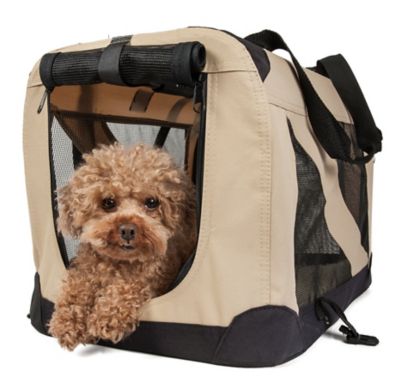
Travel Dog Crates offer another category to consider alongside vehicle space, ventilation, and manufacturer instructions for securing the enclosure. At home, the details are often simpler but no less important: a latch that closes fully, a floor that supports the dog comfortably, and enough breathing room around the crate. Paired with gradual, positive crate training and a sensible daily routine, those features help create a settled place for a dog to rest while the household carries on nearby.