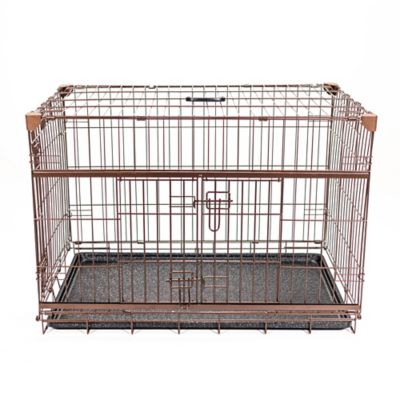
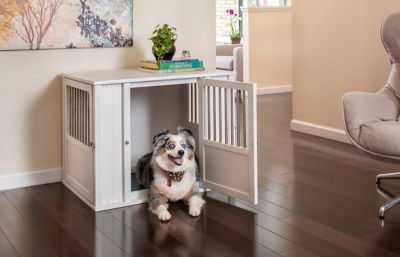
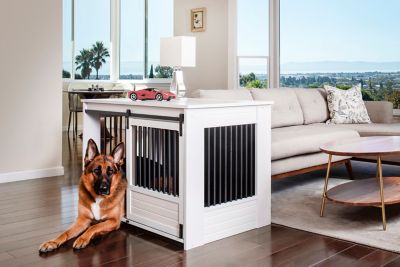
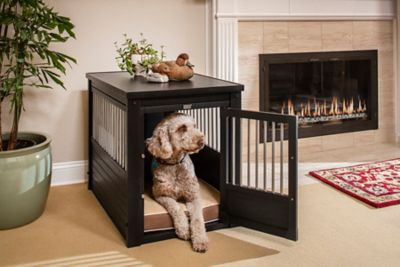
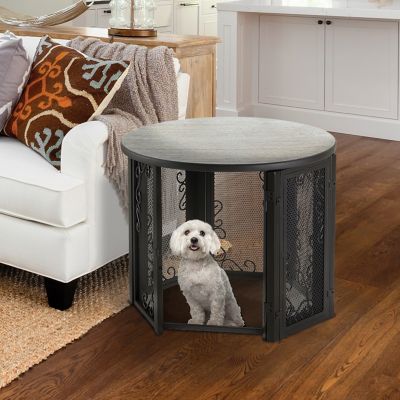
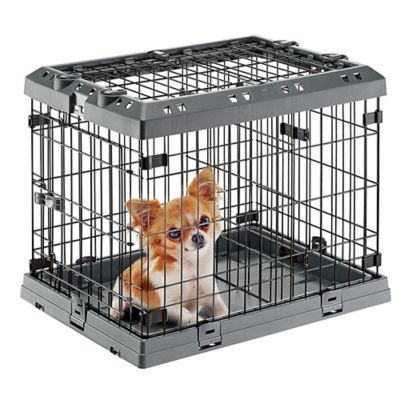
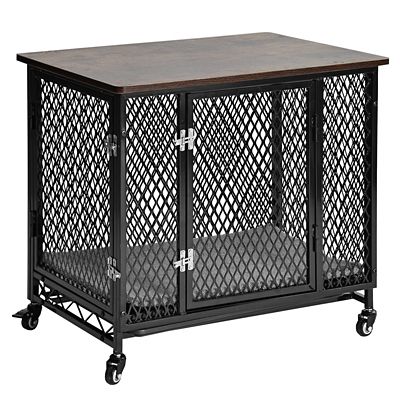
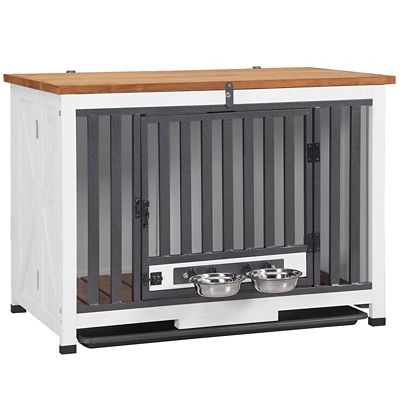
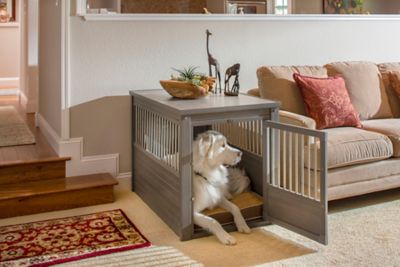
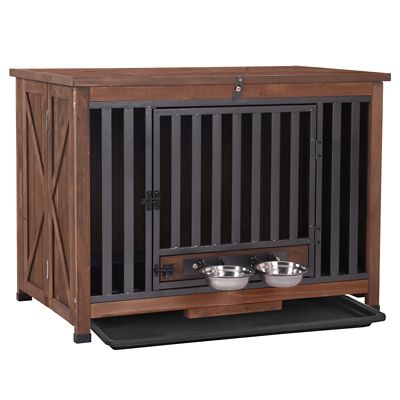
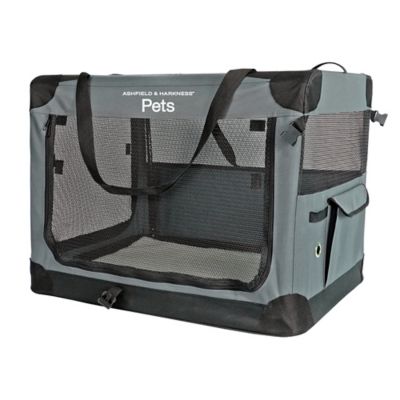
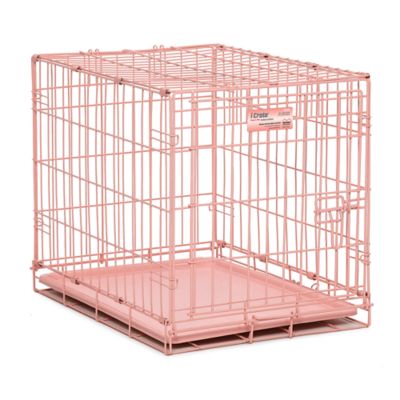
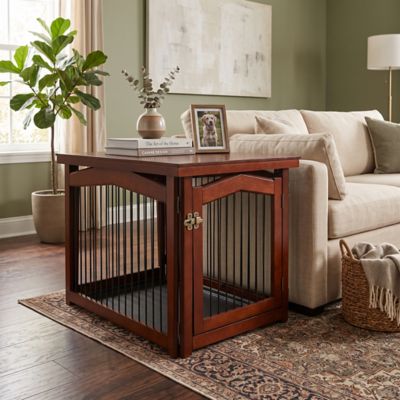
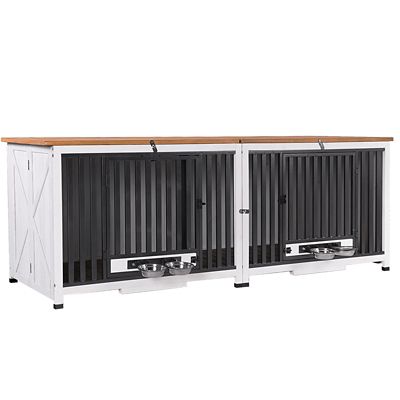
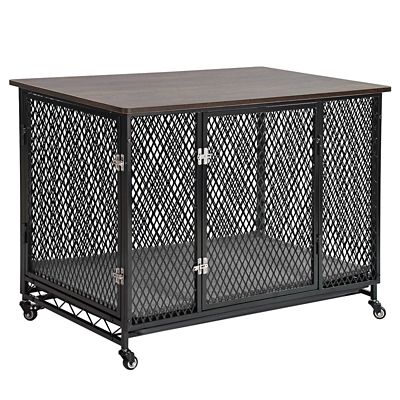
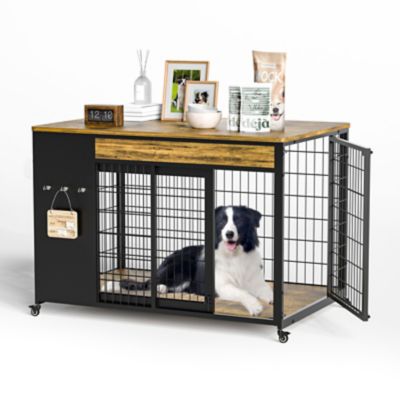
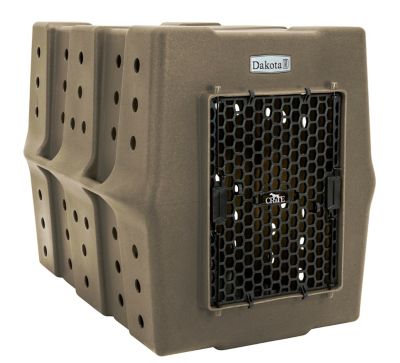
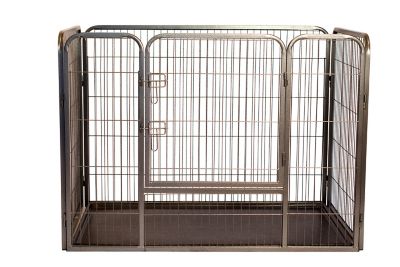
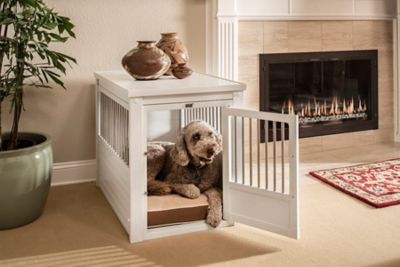
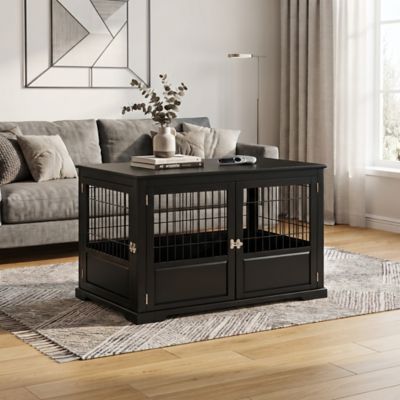
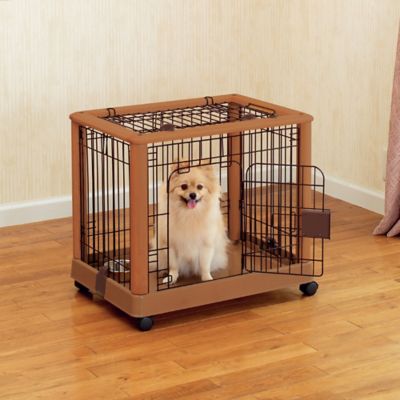
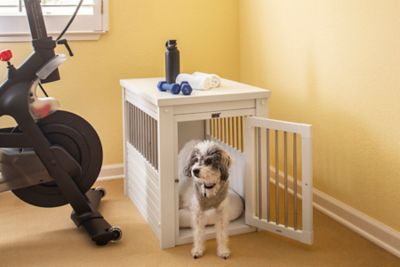
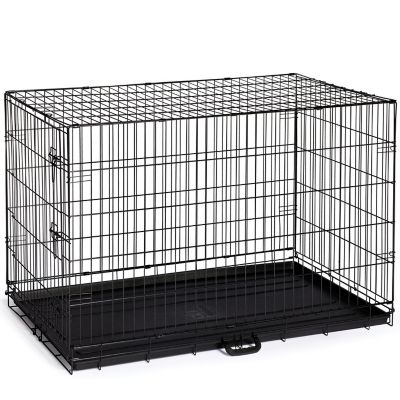
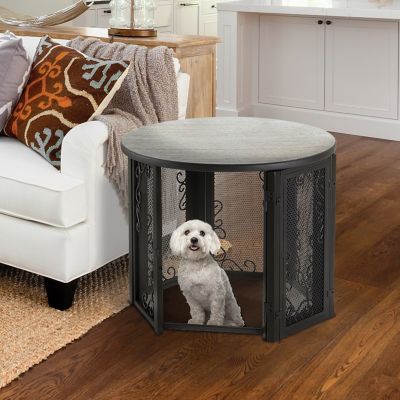
Furniture-style dog crates combine an indoor pet enclosure with the look of a side table, console or cabinet, giving a dog a resting spot that fits right into the room. Instead of standing apart from the furniture, these crates bring wood tones, metal frames, paneled sides and other design details into an everyday pet essential. Some have an open, airy look with widely spaced viewing areas, while others have more solid panels that create a sheltered feel. The difference goes beyond appearance: panel placement affects visibility and airflow, and the frame material matters when paws, teeth and routine cleaning enter the picture. Solid wood brings natural grain and character, while engineered wood can provide a consistent finish across larger panels. Metal bars and wire sections keep the enclosure open to the room, although their spacing and strength still need to suit the dog inside. Mixed-material designs can tie in with a wood coffee table, metal shelving or the cabinets along a mudroom wall. A flat top may also provide a place for a lamp or a few household belongings when the manufacturer permits that use and the load stays within its stated limits. Nothing on top should hang into the enclosure or give a curious dog something to pull through the bars. For a farmhouse living room, a compact den or a bedroom with little extra floor space, the appeal is having a crate that earns its place without taking over. Placement still matters more than matching the end tables. A level spot near family activity, away from cords and busy doorways, gives the dog company without putting the enclosure in the middle of foot traffic. When comparing
Nice Dog Crates, the best match brings together the look of the room, the space on hand and the habits of the dog who will settle inside.
Fit starts with the usable interior, not just the outside measurements or the breed pictured beside a crate. A dog needs enough room to stand naturally without crouching, turn around and lie down comfortably. Thick cushions, sloping walls, raised floors and interior framing can all change how much space remains, so a generous-looking cabinet does not always mean a roomy enclosure. A long-bodied hound and a tall, narrow dog may need different proportions even at a similar weight. For a growing puppy, a manufacturer-approved divider can help adjust the resting area as the dog gets bigger, provided the crate is designed for one. Door placement deserves just as much attention in a furnished room. A front-opening door may work beside a sofa, while a side entrance can make more sense along a wall. Two access points can offer flexibility, but every door needs enough clearance to open without striking furniture or blocking a walkway. Sliding and lifting doors have their own space requirements, pinch points and securing mechanisms to check. Latches should close fully and sit beyond easy reach of a persistent paw or nose. An attractive wood enclosure is not automatically suitable for a strong chewer, and a metal frame alone does not make a crate escape-proof. Dogs that bend bars, bite at doors or panic when confined need a different assessment than dogs that already nap comfortably behind a closed gate. Separate compartments also need separate sizing checks; a wide cabinet divided down the middle may have less room per dog than its overall footprint suggests. Each dog should have an appropriate resting area, without crowding or pressure from another pet. Furniture-style crates generally serve as household enclosures, not vehicle restraint systems, and casters do not change that intended purpose. Where wheels are part of the design, secure locks help keep the crate from shifting as the dog steps in or out.
Everyday care is where the details of a dog crate really show their worth. A removable tray can make stray hair, tracked-in dirt and the occasional accident easier to handle, while a wide doorway helps with reaching the back corners. Smooth interior surfaces leave fewer places for grime to collect, but seams, hinges and the edges beneath a tray still need attention. Wood and engineered-wood components often call for a lightly damp cloth rather than soaking, with spills wiped up promptly to protect joints and finishes. Metal sections may tolerate different cleaning methods, so the manufacturer's care directions should guide the choice of cleaner and how much moisture reaches the frame. Everything should be dry before bedding goes back inside. Washable bedding can make the space more comfortable for a dog that leaves fabric alone; a dog that shreds or swallows soft materials needs a different setup and advice from a veterinarian. Even a well-fitting enclosure benefits from regular checks for loose fasteners, rough edges, cracked panels and latches that no longer line up. A crate beside the couch may become a familiar place for a nap after a walk or a quiet break while the household gets supper ready. That comfort comes from a good fit and gradual, positive introductions, not from the furniture finish. An open door, a calm setting and short practice sessions can help a dog build a comfortable association before longer periods of confinement. Crates are not a substitute for exercise, bathroom breaks or time with people, and they should never serve as punishment. Collars, tags and harnesses can catch on crate hardware, so a snag-free setup matters. The right design leaves room for those daily routines: easy entry, sensible cleaning access, suitable ventilation and a resting area sized for the dog. A handsome finish is a welcome extra, but the real value is an enclosure that works comfortably for the dog and fits naturally into life at home.