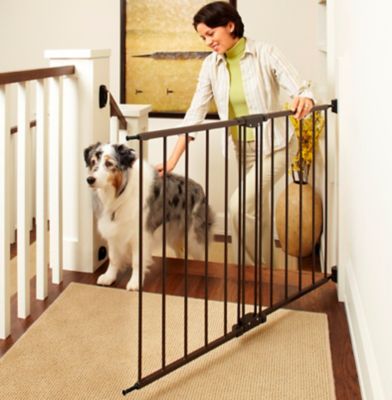
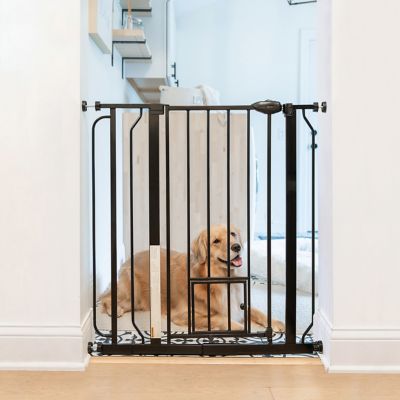
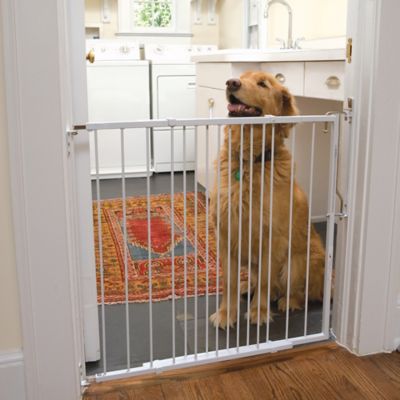
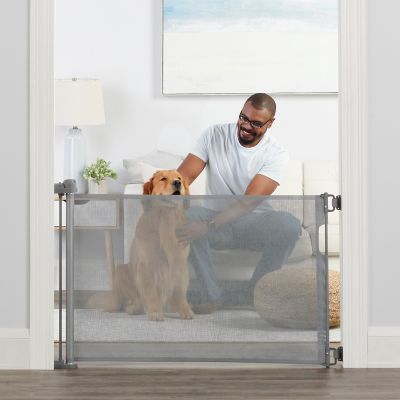
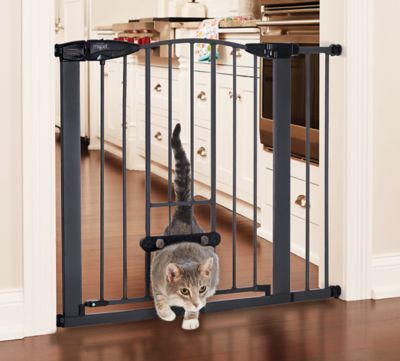
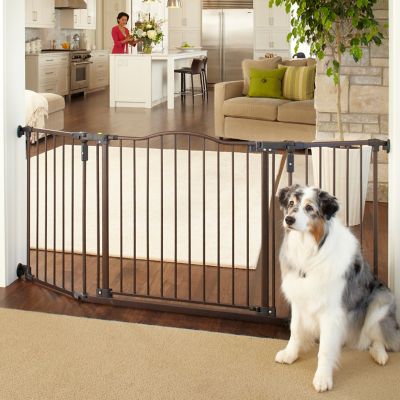
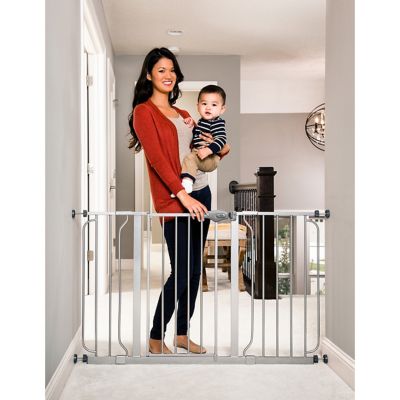
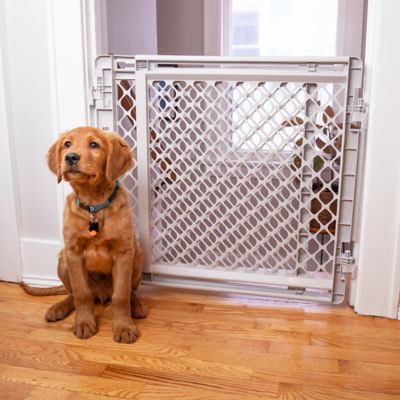
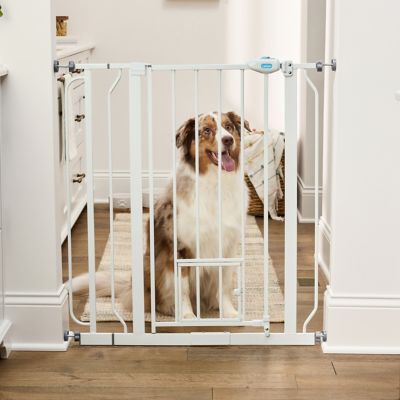
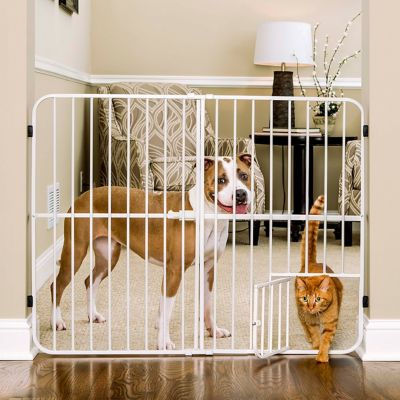
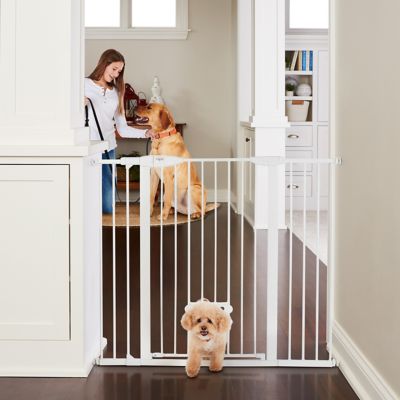
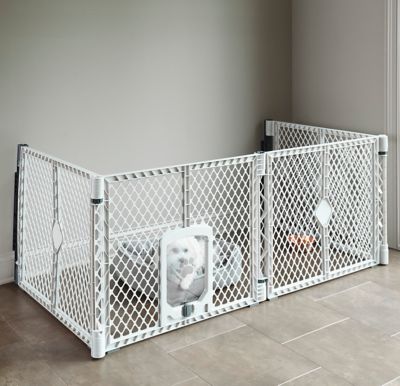
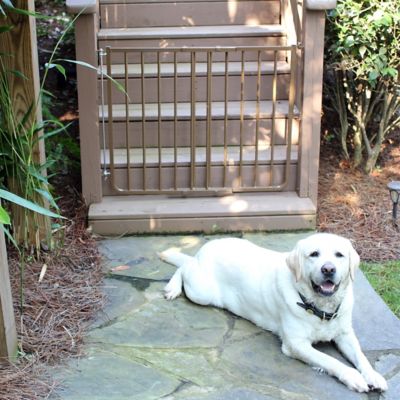
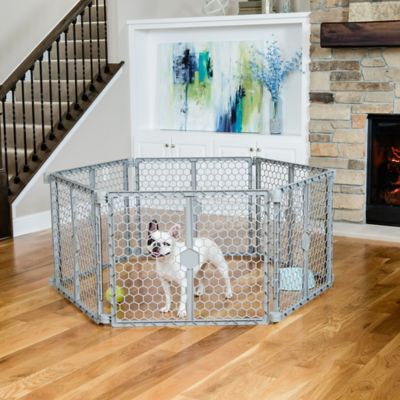
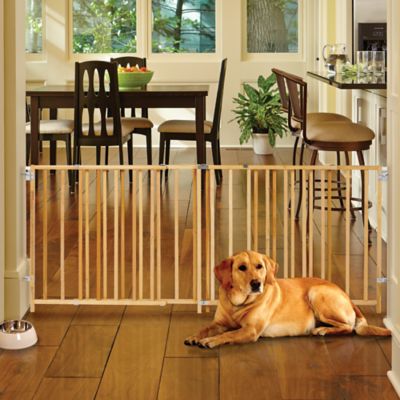
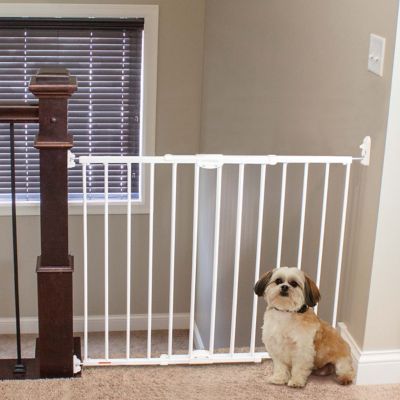
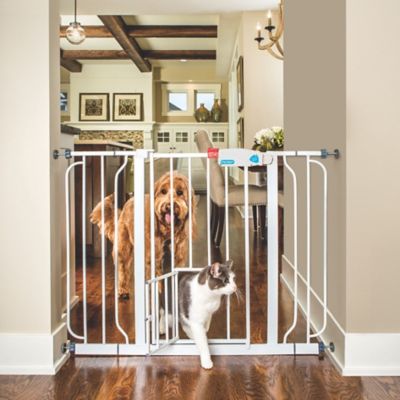
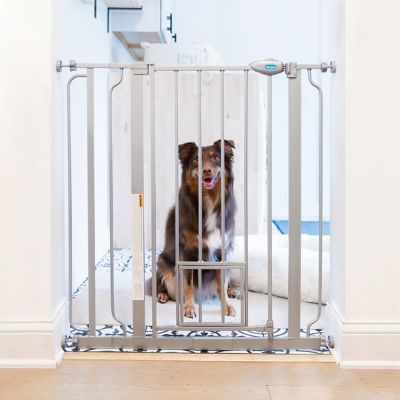
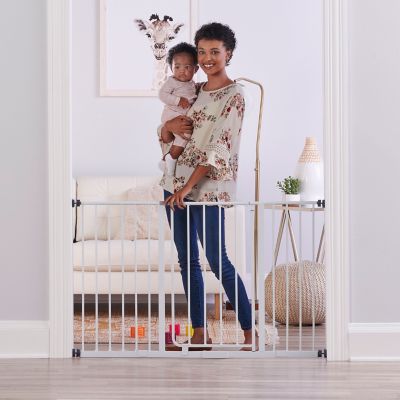
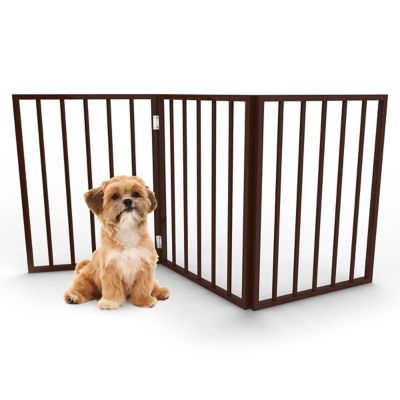
Hardware mounted pet gates are a dependable way to keep dogs, puppies, cats and other household pets in the right part of the home. Instead of relying on pressure against two walls, these gates attach directly to a doorway, wall, stair post or banister with screws and mounting hardware. That fixed connection helps prevent shifting when a large dog leans, jumps or pushes against the gate, making this style a practical choice for busy homes, energetic pets and areas where a loose gate could create a safety concern. They are especially well suited for the top of a staircase because they do not have a bottom threshold bar across the floor, which helps keep the walking surface clear and reduces the chance of tripping. A securely installed gate can also help separate pets from visitors, block access to rooms with fragile items, keep a curious puppy away from electrical cords and cleaning supplies, or give an older dog a quiet place to rest. Families with babies and pets may use one to create clear boundaries as children learn to move around the house, while farm and country households can use gates to keep dogs out of mudrooms, feed storage areas, workshops and entryways where boots and equipment come and go. As the weather warms and doors see more traffic, a mounted gate can help manage pets near open living areas without depending on a temporary barrier that gets moved aside and forgotten. During the cooler months, it can help keep animals away from woodstoves, drafty utility areas or rooms being used for seasonal storage.
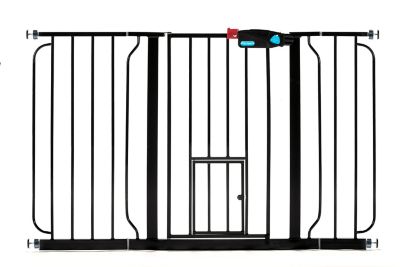
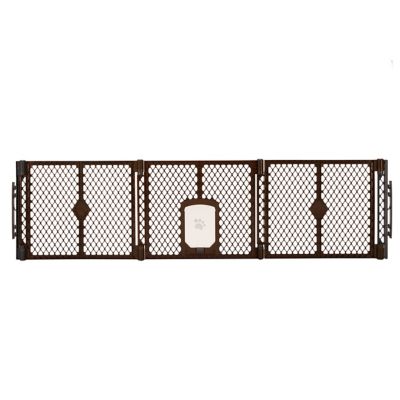
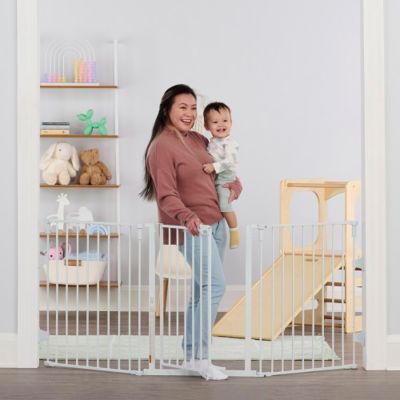
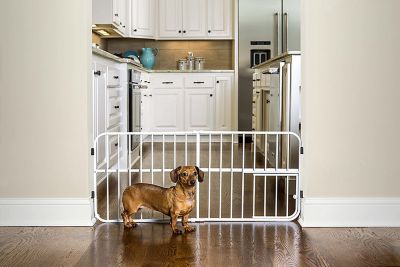
Before choosing a hardware mounted pet gate, measure the opening carefully at the places where the gate will be installed. Take measurements at the top, middle and bottom of a doorway or passage, since older homes, framed openings and stairways may not be perfectly square. Pay attention to whether trim, baseboards, banisters or uneven walls will affect the fit, and check the gate’s listed width range to see whether extensions or special mounting kits are needed. A narrow doorway may only need a standard panel, while a wide hallway, open floor plan or irregular opening may call for an extra-wide configuration with several connected panels. Consider the height as well as the width. A short barrier may work for a calm small dog, but an active dog that likes to jump, climb or test boundaries usually needs a taller gate, often 36 inches or more. Cats and small dogs may need closer-spaced vertical bars or a design that prevents squeezing through the lower opening, while larger pets need sturdy construction and enough clearance for comfortable passage. Walk-through doors are convenient in high-traffic spots because people can open them without stepping over the gate, and a self-closing or latch-style opening may be helpful when hands are full of groceries, laundry or feed. For an opening that only needs to be blocked now and then, a retractable mesh design can roll away when not in use, while rigid steel or wood construction may be the better fit for determined pets and everyday use. Shoppers comparing options for other parts of the home can also browse
Pet Gates For Doorways to find barriers suited to common doorway dimensions and household layouts.
Proper mounting matters just as much as the gate itself. Look for a solid wood doorframe, wall stud or sturdy stair post whenever possible, and follow the included instructions for pilot holes, bracket placement and latch alignment. If the gate must be attached to drywall, use heavy-duty wall anchors rated for the gate and the pressure a pet may apply; ordinary lightweight anchors may pull loose. Renters or anyone concerned about wall damage should check with the property owner before drilling, since hardware mounted gates leave permanent holes and may require careful removal later. On stairways, install the gate according to the manufacturer’s directions and keep the latch easy for adults to reach but out of a child’s or pet’s reach. Once mounted, open and close the gate several times, press gently against each corner and check that the hardware stays tight, the door swings in the intended direction and the latch catches fully. Recheck screws and brackets from time to time, particularly after a pet has repeatedly bumped the gate or after changes in household traffic. These gates can make a thoughtful, practical gift for someone bringing home a new puppy, adopting a rescue dog, preparing for a baby or settling into a new house, especially when paired with other everyday pet-care essentials. The most useful choice is one that matches the pet’s size and habits, the opening’s exact measurements and the mounting surface available, giving the household a steady boundary that works day after day.