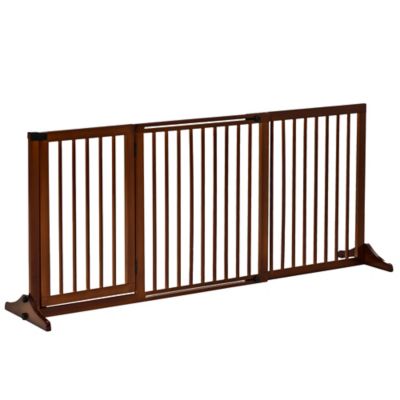
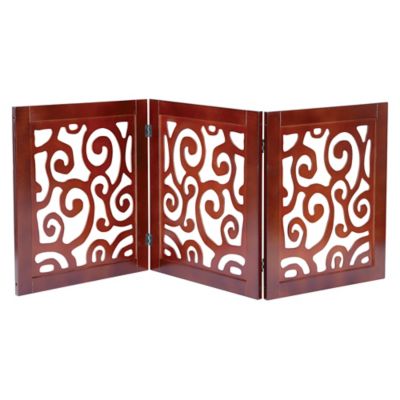
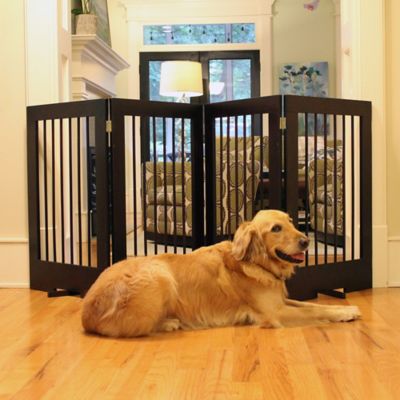
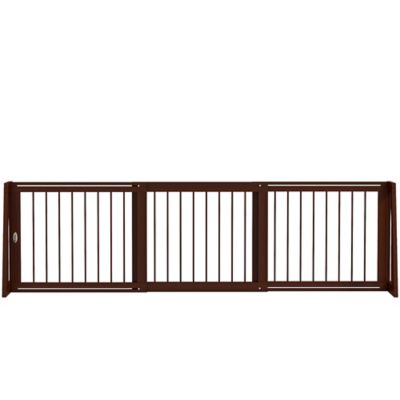
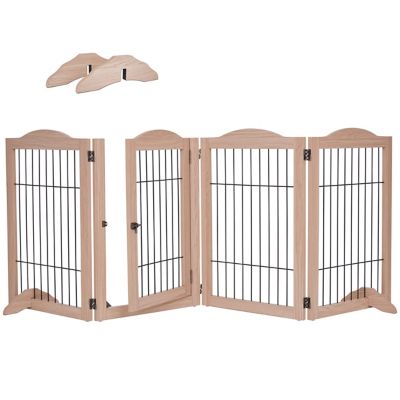
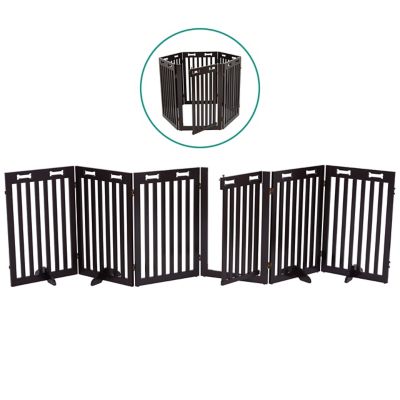
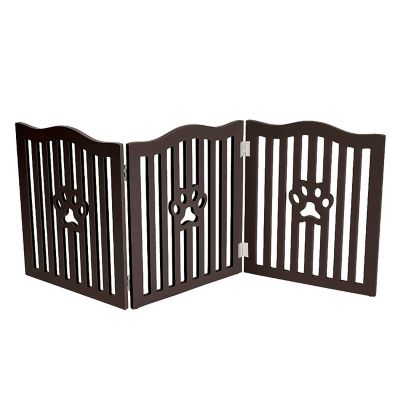
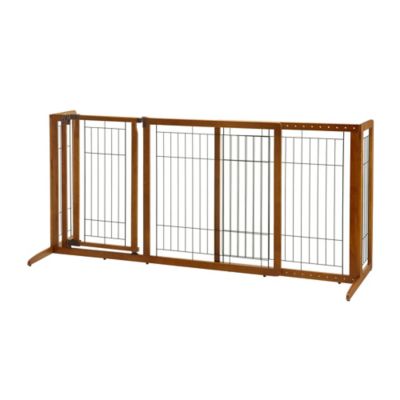
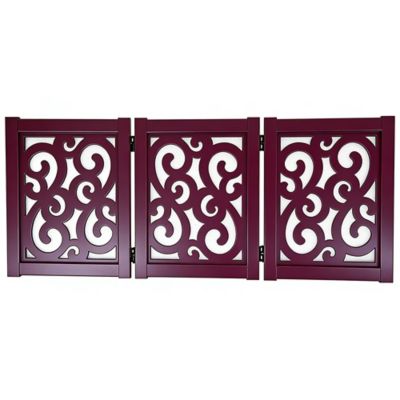
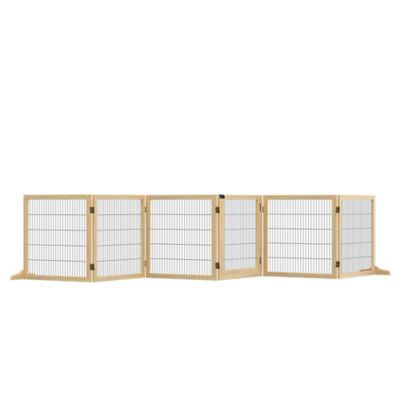
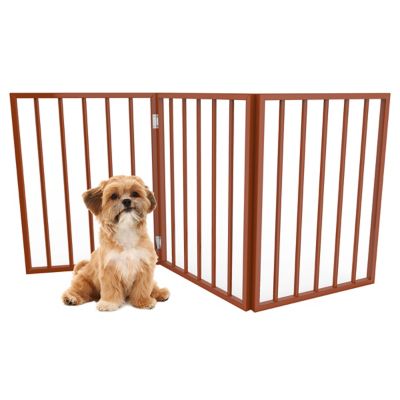
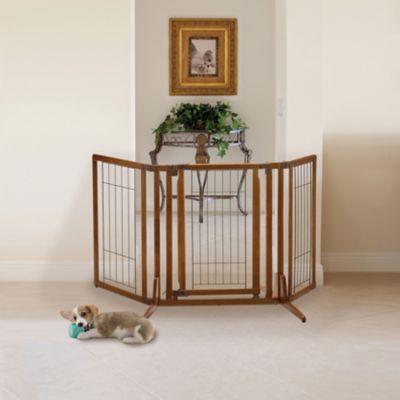
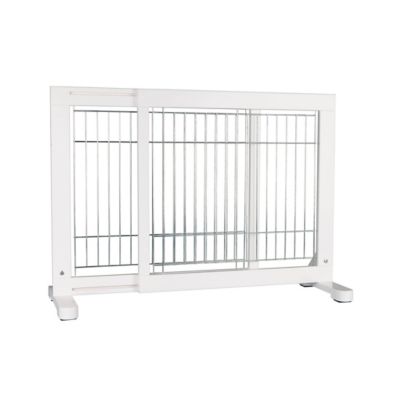
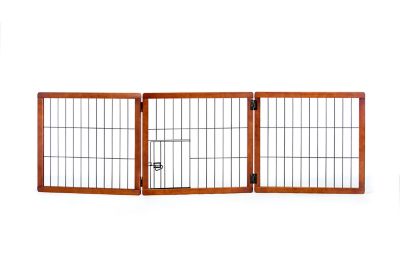
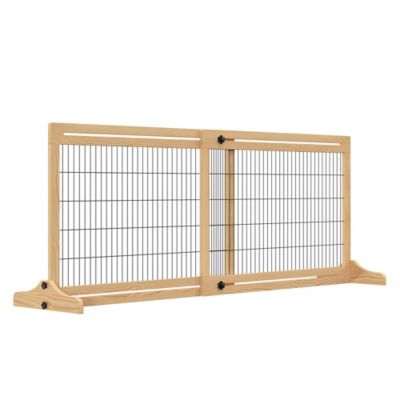
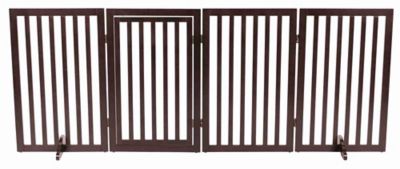
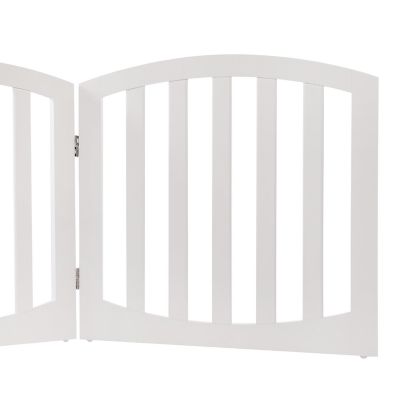
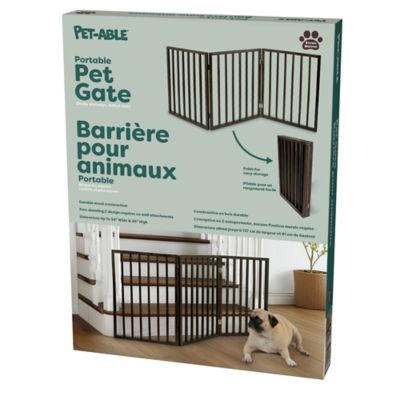
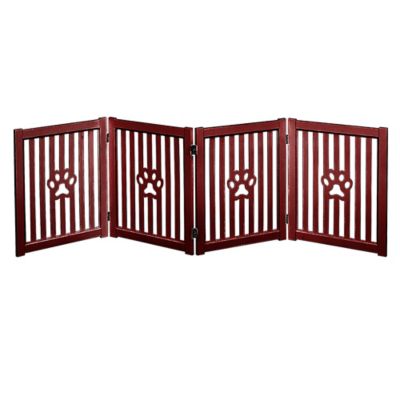
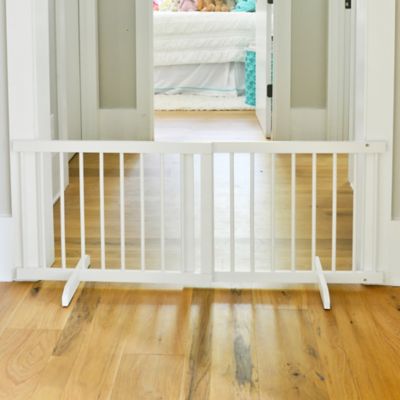
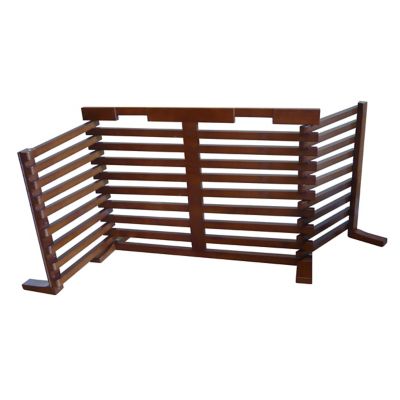
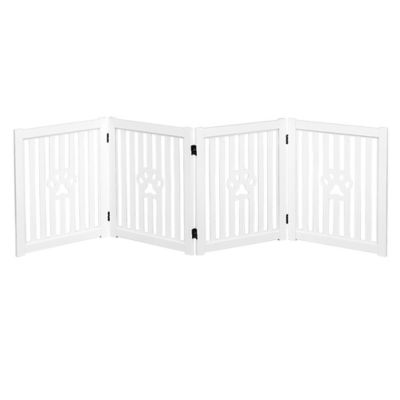
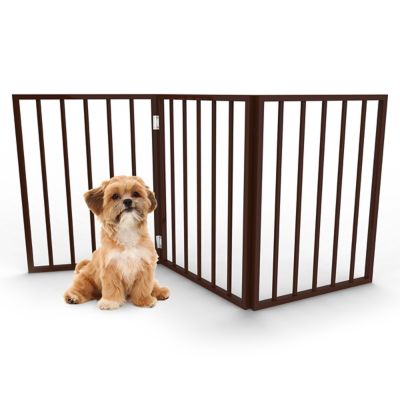
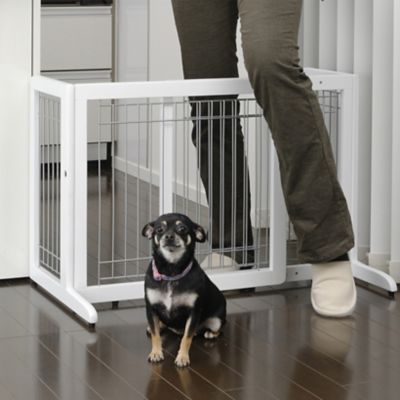
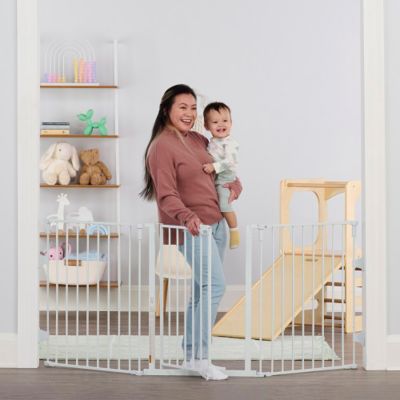
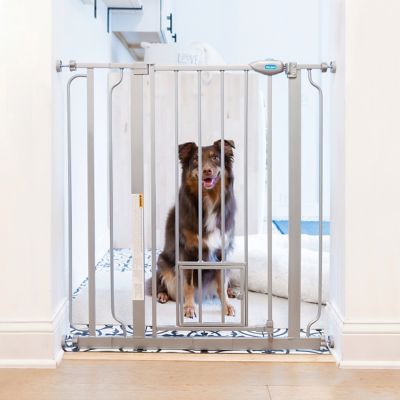
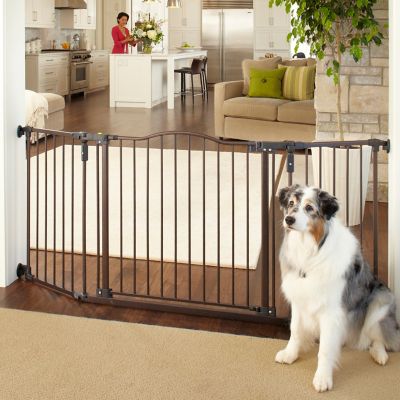
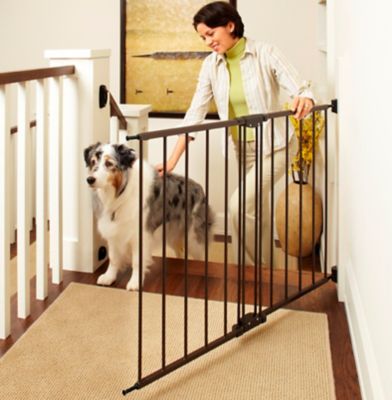
Freestanding wooden pet gates block off indoor doorways, hallways, and parts of a room without fastening to the wall or doorframe. Feet or angled panels hold the gate upright, so placing it across an opening typically takes no tools, drilling, or wall mounts, though some gates need assembly before they’re ready to set out. That makes a freestanding gate handy in a rental, around wood trim that’s best left alone, or in a house where the dog’s boundary moves throughout the day. A gate across the kitchen doorway can give a pup a clear place to wait while supper comes out of the oven. Later, the same gate can keep the dog out of the laundry room while a basket gets sorted on the floor. A straight gate with stabilizing feet makes sense where there’s a defined doorway, while hinged panels can turn a corner or stretch across a wider opening between living areas. Some folding styles tuck out of the way when the rooms can open back up. Slatted designs let a dog see what’s going on from the other side, which can be handy for a pet that settles better with the family in sight. The open design also makes it easy to check on a pup from across the room. Solid wood frames show off the grain, while painted or stained finishes can blend in with the baseboards, cabinetry, or flooring instead of looking out of place in a main living area. Wood weight can make a difference in day-to-day handling, too: A heavier frame may feel steadier on the floor, but a lighter one can be easier to carry between rooms. Either way, a freestanding gate is best thought of as a household boundary for a pet that respects it, not a barrier built to take the full weight of a dog that charges or leans against it.
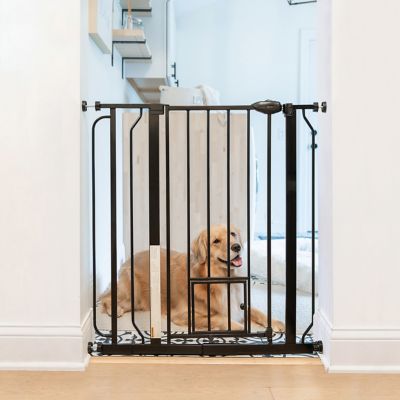
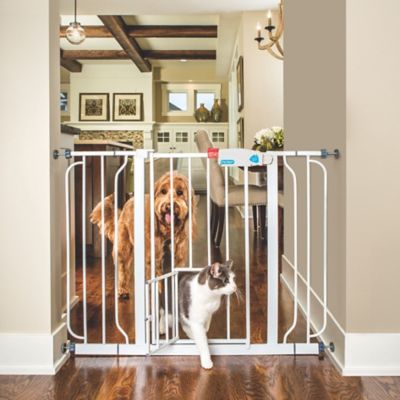
The right fit depends as much on the space around the opening as on the width of the opening itself. Baseboards can narrow a doorway at floor level, and a bench, boot tray, or door that swings inward can leave less room for feet or angled panels than it first appears. Check the gate’s span in its standing position, since a folding gate set in a zigzag covers less distance than the same panels laid flat. Leave room for the supports to sit fully on a level surface, rather than half on a rug or over the edge of a threshold, and keep them out of the path where people carry groceries or walk through with an armload of laundry. End gaps matter, especially with a small dog that can slip between the gate and the wall. Look at the space under the frame and between slats, too, since a puppy may be able to squeeze through an opening or get a head or paw caught where a larger dog wouldn’t. Height is just as practical a consideration: A gate that suits an older dog that’s content to stay put may not be tall enough for a young dog that likes to jump, or for a cat that can hop over it in one move. A walk-through style can make sense in a busy hallway, where stepping over a low panel again and again can become a trip hazard. On a walk-through gate, the latch should close fully and stay clear of inquisitive noses and paws. For a strong dog that pushes barriers or for a spot that needs a more secure installation, compare other
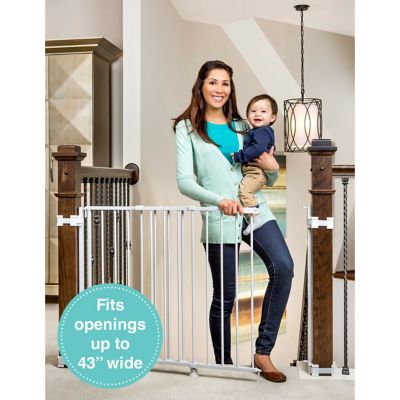
Pet Gates with mounted designs in mind. A freestanding wooden pet gate should not be placed at the top of stairs or relied on as a child safety gate.
How the gate holds up depends on the frame, hardware, finish, and what happens around it each day. Smooth edges and solid joints matter in a house where a dog brushes the corner on every pass or the gate gets folded and carried from room to room. Wood can pick up scratches from claws, dents from bumps, and tooth marks from a determined chewer. A dog that mouths the frame needs a different setup rather than a gate with loose finish or splintered wood within reach. On hinged gates, stiff movement, loose screws, or panels that no longer line up are worth noticing before the gate goes back across a doorway. Feet with floor pads can help protect finished wood or tile, but worn pads or a slick surface can change how steady the frame feels. A soft cloth will take care of most dust and pet hair. For muddy paw prints or dried drool along the bottom rail, follow the care directions for the finish and avoid soaking the wood. Dry off damp spots, especially around the feet and joints, where moisture can linger. Freestanding wooden gates can be a good fit for folks making room for a new puppy, keeping dogs apart during supervised mealtimes, or giving an older pet a quieter corner away from the busiest part of the house. They can make a thoughtful gift for someone bringing home a dog if the doorway dimensions and the dog’s size and habits are known. Even two dogs of similar size can treat the same gate differently: One might lie down beside it and watch dinner come together, while the other noses the end panel until it shifts. Matching the gate to the dog and the spot where it’ll stand makes it easier to set a boundary that works without getting in the way of the rest of the household.