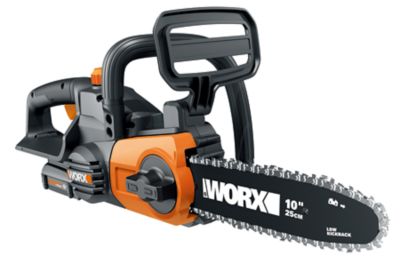
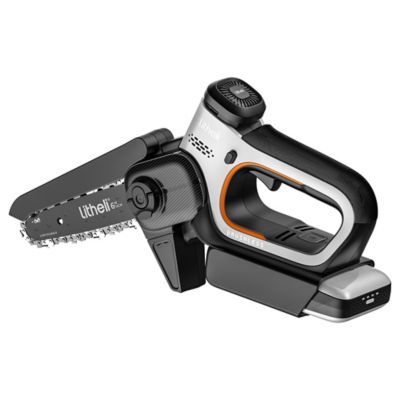
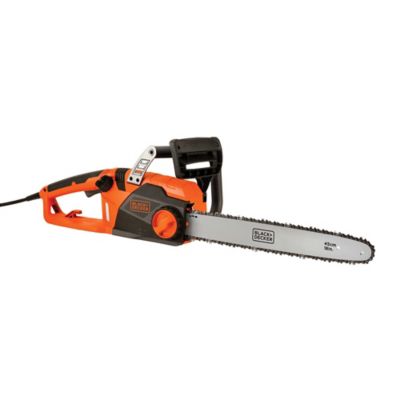
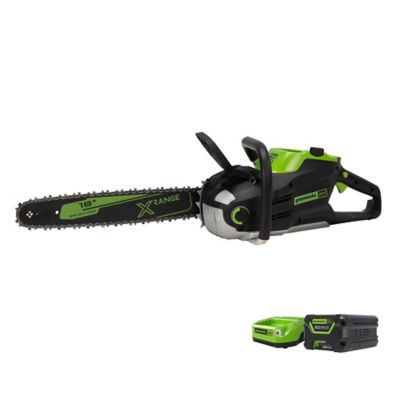
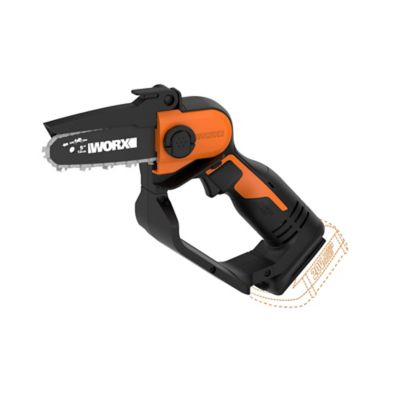
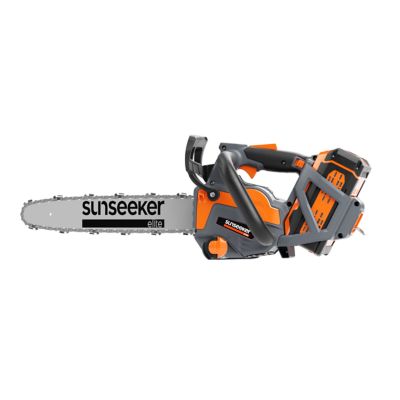
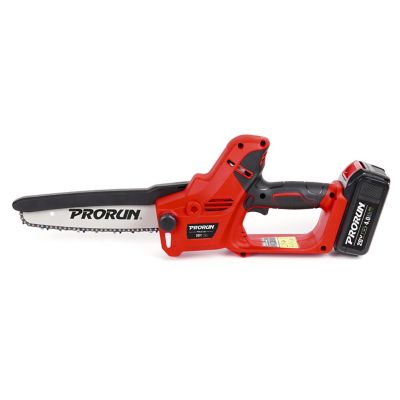
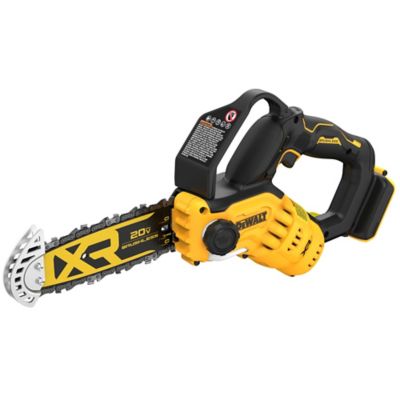
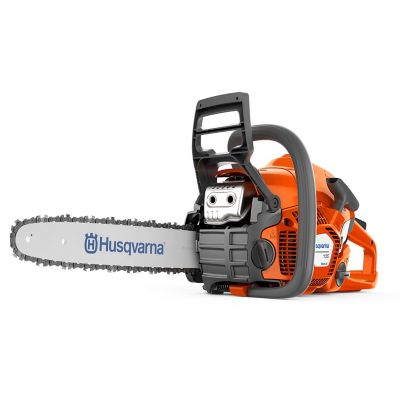
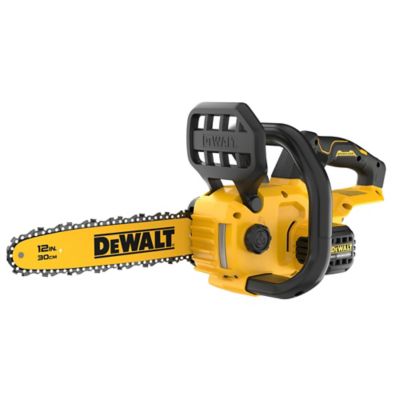
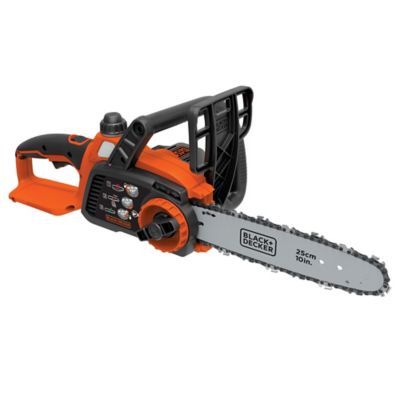
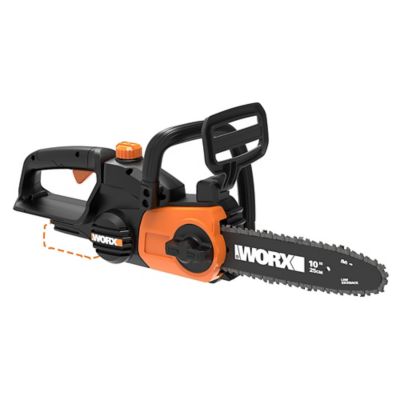
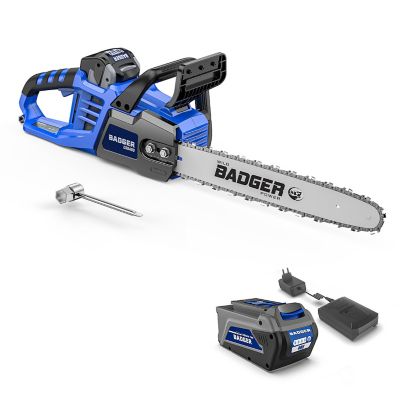
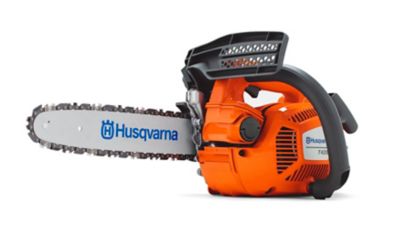
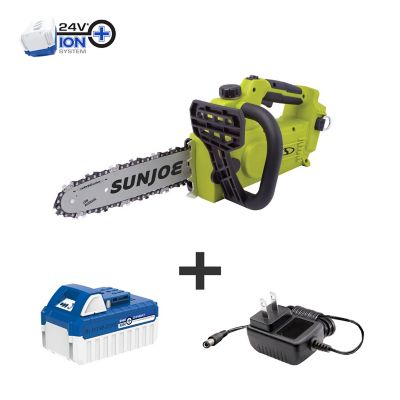
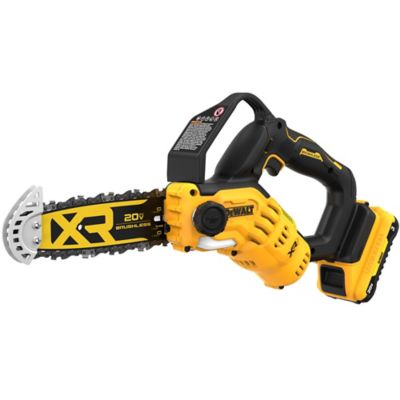
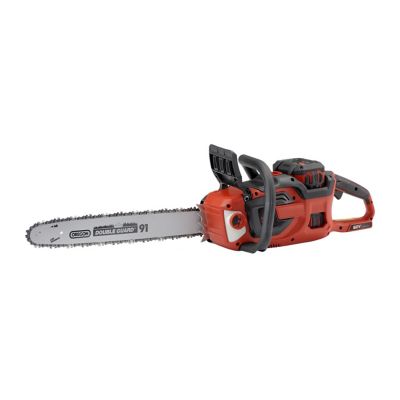
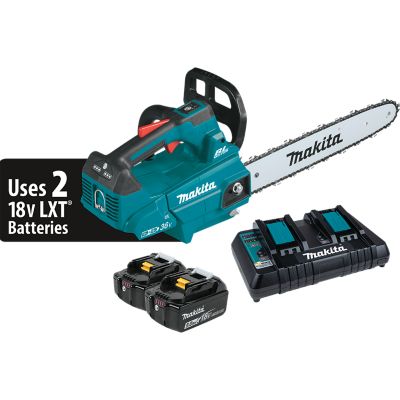
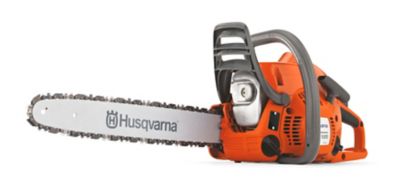
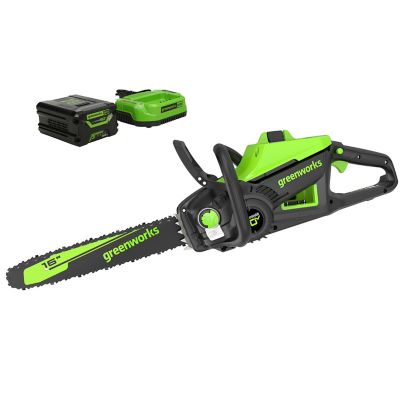
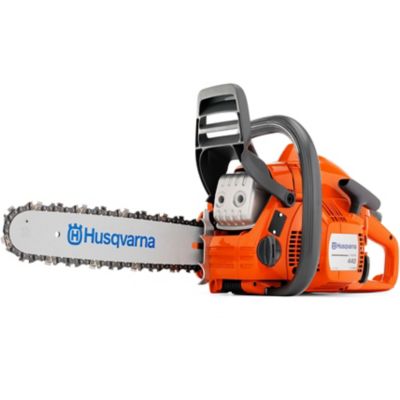
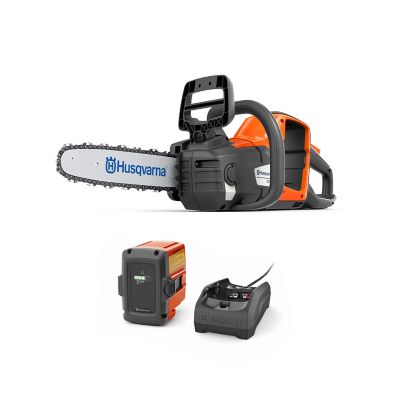
A handheld chainsaw brings powered cutting to smaller jobs around the yard, garden, and acreage without the size and weight of a full-size saw. Compact pruning models are generally built for trimming small limbs, cutting manageable pieces of fallen wood, and tidying woody growth where a pair of loppers would take more effort. Many run on rechargeable batteries, making them handy for scattered chores along a fence line or around an orchard, with no extension cord trailing through the grass. Short guide bars, often around 4 to 8 inches on compact models, help keep the tool manageable, though bar length alone does not tell the whole story. Cutting capacity depends on the manufacturer's rating, motor performance, chain condition, and the wood itself. A dry hardwood limb can put more demand on a saw than a similar-size piece of softer wood. These tools suit homeowners, gardeners, homesteaders, and landowners who regularly have small cutting jobs but do not need a larger chainsaw for every branch. During the cooler months, that might mean shortening sound fallen limbs for easier handling or clearing small woody growth beside a walking path. They are not a substitute for a properly sized saw and the right experience when the job involves felling trees, large logs, or storm-damaged limbs under tension. For shoppers interested specifically in compact battery-powered options, the
Cordless Mini Chainsaw page focuses on that part of the category. The practical appeal is straightforward: a smaller cutting tool can make routine property upkeep less cumbersome when its capacity matches the work. A saw that feels comfortable through several short cuts may be a better fit for regular pruning than a larger tool that is tiring to carry between jobs. For a gift recipient who already maintains trees or acreage, compatibility with an existing battery system and familiarity with powered cutting tools matter more than size alone.
The right fit involves more than the length of the bar. Overall weight, balance, handle shape, and space for gloved hands all affect how a handheld chainsaw feels during a stretch of yard work. Tool-only weight can be misleading when comparing battery-powered models, since the battery adds weight and may change the balance. A larger-capacity battery may extend working time, but it can also make a compact saw feel heavier, especially when moving from one supported branch to another. Battery voltage is not a direct measure of cutting performance, and runtime varies with wood hardness, branch diameter, temperature, and how heavily the motor is working. For someone with cordless tools already in the shed, matching the exact battery platform can simplify charging and storage; batteries with similar voltage labels are not necessarily interchangeable. Motor design is another consideration. Brushless motors can offer efficient operation and eliminate brush replacement, while actual performance still depends on the complete tool. A steel cutting chain and guide bar do the cutting work, while housings commonly combine molded polymer with metal components where the design calls for them. Gripping surfaces, sturdy handle construction, and a housing suited to outdoor chores are worth considering alongside motor specifications. Features such as an oil reservoir, accessible chain adjustment, and clear operating controls can make regular upkeep less of a chore. Some compact saws have automatic chain lubrication, while others require oil to be applied as directed in the manual. Automatic oiling still requires the correct lubricant and attention to the reservoir. Chain brakes, trigger lockouts, hand protection, and bar-tip guards vary by model, so safety equipment deserves a close look rather than an assumption based on appearance. A protective guard does not eliminate kickback or make an exposed chain safe to touch. For close-in pruning work, the useful combination is controlled handling, a clear view of the cut, and enough room to keep every part of the body away from the chain.
Keeping a handheld chainsaw ready for the next round of chores comes down to chain condition, lubrication, clean components, and sensible storage. A sharp, properly tensioned chain lets the tool cut with less strain; fine dust instead of chips, slower progress, or a need to force the saw can signal that something needs attention. Chain tension follows the manufacturer's specifications, since a chain that is too loose can come off the bar and one that is too tight can increase wear. Replacement chains must match the required pitch, gauge, and drive-link count, not simply the advertised bar length. That detail matters when keeping spare cutting parts on hand for regular property work. Before cleaning, adjusting, or replacing the chain, the power source needs to be disconnected according to the manual. Sawdust and oily debris can collect around the drive sprocket and bar groove, while dirt, wire, and hidden nails can quickly damage cutting teeth. Wood resting directly on the ground makes it easy for the chain to contact soil, so stable support and clearance beneath the cut matter. Safe operation also calls for secure footing, the manufacturer's specified grip, eye and hearing protection, suitable footwear, and appropriate chainsaw protective clothing. Small size does not make a powered chain harmless, and a compact saw is not a reason to cut overhead, work from a ladder, or hold a branch beside the moving chain. Bent limbs, hung-up branches, and wood carrying tension call for trained help rather than a quick cleanup attempt. Between jobs, a bar cover protects the cutting attachment during storage and transport, and a dry storage spot helps protect metal parts from corrosion. Batteries belong in the temperature range specified by their manufacturer, particularly when an unheated shed gets cold. With a sensible match between tool and task, a handheld chainsaw earns its place among the equipment that keeps a property manageable, from a few supported pruning cuts near the garden to small wood cleanup farther out by the fence.