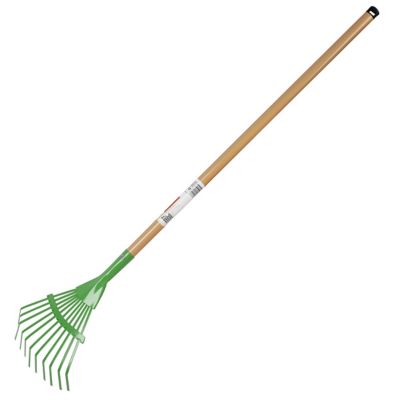
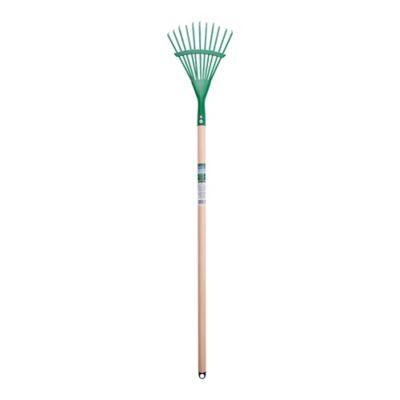
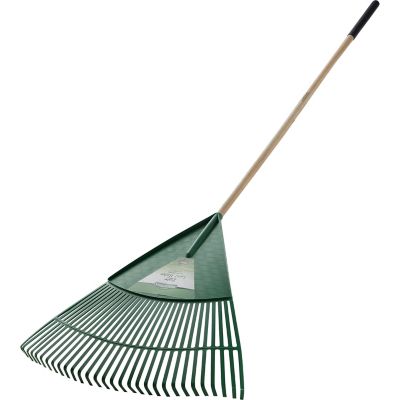
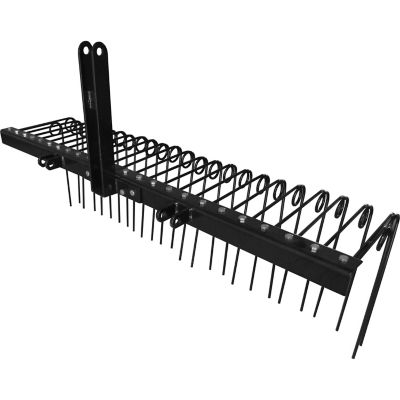
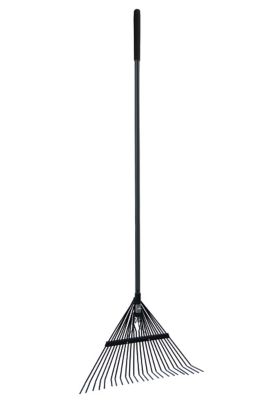
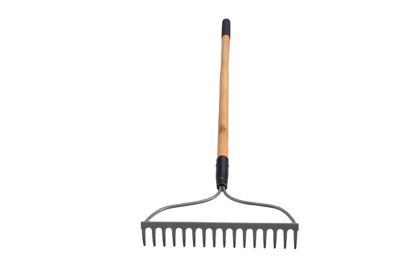
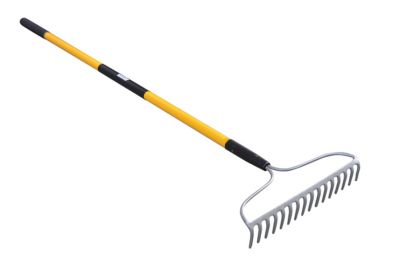
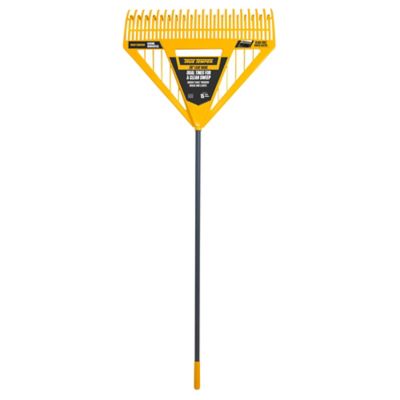
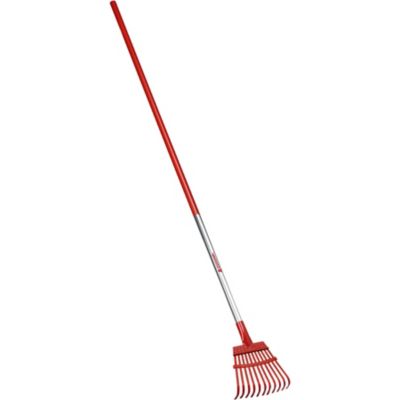
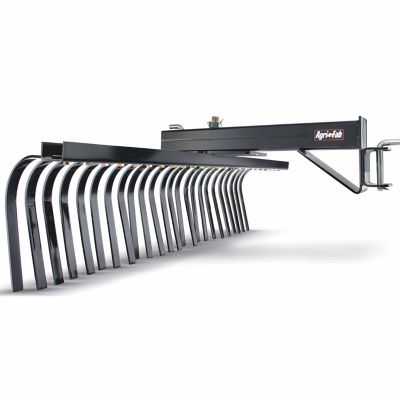
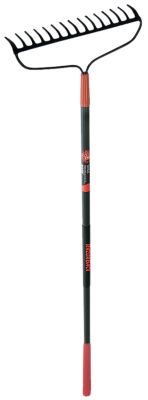
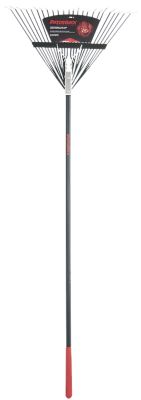
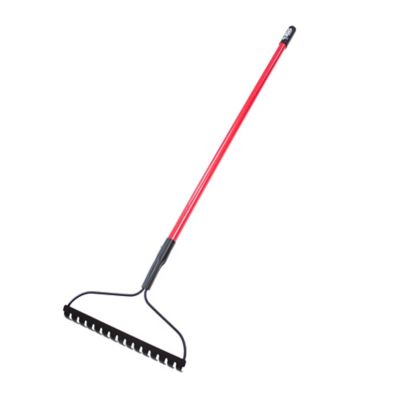
Green rakes are yard and garden tools with green heads, green handles or a combination of both. They can include broad leaf rakes, narrow shrub rakes and rigid garden rakes, with each shape suited to a different kind of cleanup or ground work. Green describes the color rather than a separate rake design, so head shape, tine spacing and handle construction say more about how the tool will work. A wide, fan-shaped head covers more ground when gathering leaves, grass clippings and other light yard debris. Flexible tines can travel over uneven lawn surfaces, while their spread helps collect material without moving much soil. A smaller shrub rake reaches into places where a broad head gets hung up, such as between foundation plantings, beside fence posts or around the edges of raised beds. That narrower reach can be handy for pulling leaves from beneath a hedge without dragging across every branch. A rigid garden or bow rake has a different role: its shorter, sturdier teeth work loose soil, gather small stones and spread materials such as mulch. Some garden rake heads also have a straight back edge that can help smooth loose soil. These differences matter around a property where the front lawn, vegetable patch and gravel-edged shed each call for a different touch. A flexible leaf rake is not a substitute for a soil-working rake, and a heavy garden rake can be too aggressive for light cleanup over grass. For homeowners, gardeners and folks tending acreage, the useful match is between the rake’s construction and the material being moved. A green finish may fit in with the rest of the tools in the shed, but width, reach and tine strength are what make the rake suitable for the chore.
Materials affect both the feel of a green rake and the work it can take on. Molded plastic or poly heads often keep leaf rakes light enough for repeated sweeping strokes across a lawn. Their broad fans can gather loose leaves without adding much weight to each pull, though compacted debris and rough dragging over stone can put more strain on the tines. Flexible steel tines offer another approach to lawn cleanup, with spring action that helps them move across the ground. Rigid steel heads are better suited to shifting loose soil and breaking apart small clods, provided the tool is designed for that work. A green coating on metal adds color and may help protect the covered surface, but scratches can expose the metal beneath. Handle materials matter just as much over a long stretch of work. Wood has a familiar feel and can offer a comfortable grip when its surface is smooth and sound. Fiberglass handles resist moisture absorption, while metal handles bring their own balance of weight and stiffness. The complete tool matters more than any one material: a light head paired with a comfortable handle may feel easier to manage than a heavier setup with a thick shaft. Handle length also changes the working position. A taller person may appreciate extra reach that limits bending, while a shorter handle can be easier to control in a tight planting bed. Grip diameter, any cushioned grip area and the weight at the head all influence how naturally the rake moves. A secure head-to-handle connection helps keep each stroke steady rather than allowing a distracting wobble. For shared chores, a manageable fit can make a bigger difference than extra width, especially when one person is clearing open lawn and another is working along a narrow garden border.
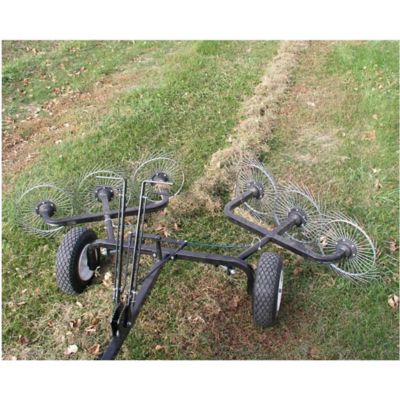
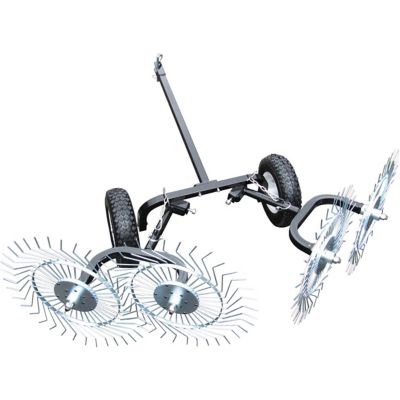
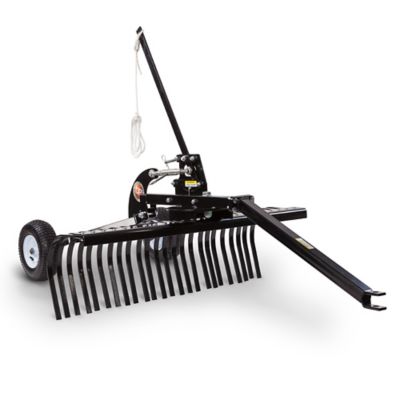
The best fit for green rakes also depends on what a typical load looks like. A loose scatter of leaves across grass calls for different tine spacing than a mat of clippings caught along a fence. Wider spacing lets some smaller material pass through, while closer spacing can gather finer debris but may collect more material between the teeth. An extra-wide head reduces the number of passes across an open area, yet it can feel awkward between trees or beneath low branches. Where a rake has an adjustable head, the locking mechanism and the stated working range are worth considering alongside its overall reach. People maintaining a small yard may get more benefit from easy handling and compact storage than from the broadest head. On a larger property, separate tools for lawn cleanup and garden soil can keep a lighter rake from taking on work beyond its design. Green yard rakes also differ from
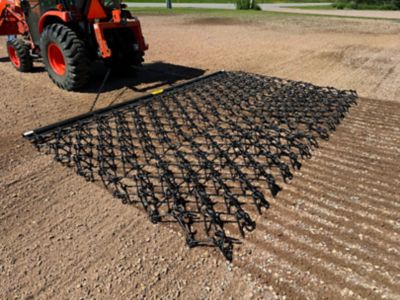
Hay Rakes, which gather cut forage into windrows for baling or further handling in the field. Keeping those jobs separate helps distinguish a yard tool from agricultural equipment. For a practical gift, a rake makes sense for a gardener, a new homeowner or someone setting up a tool shed, especially when its size suits the recipient and the ground they tend. Straightforward care helps protect that usefulness. Removing packed soil and tangled grass keeps the head clear; letting the tool dry before storage helps limit rust on exposed metal and moisture damage to wood. A sheltered spot out of prolonged sunlight can also help protect plastic components. Hanging the rake keeps its tines out of a walkway and reduces the chance of a bent tooth or stepped-on head. With the right shape, comfortable proportions and sound connections, a green rake can earn its place among the everyday tools that keep a yard and garden in order.