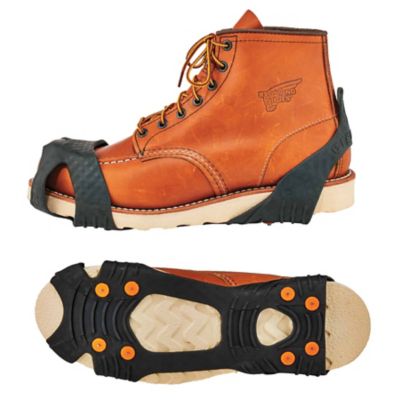
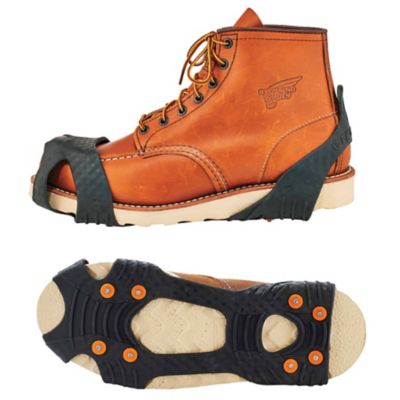
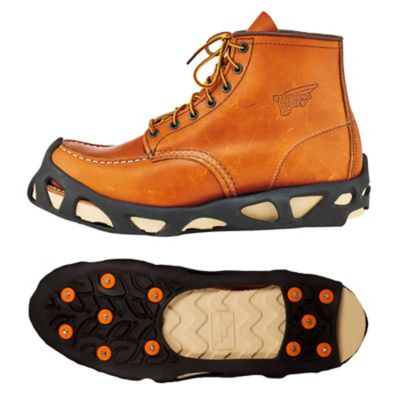
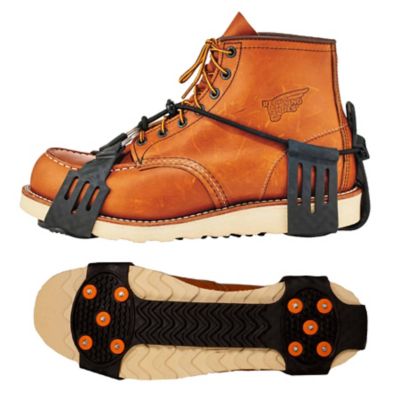
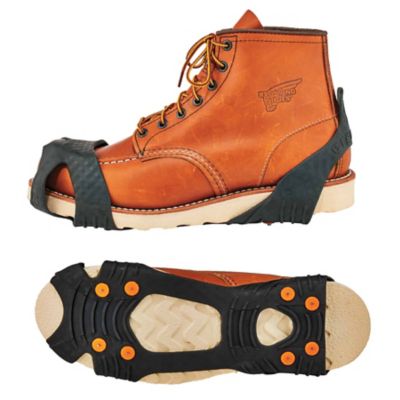
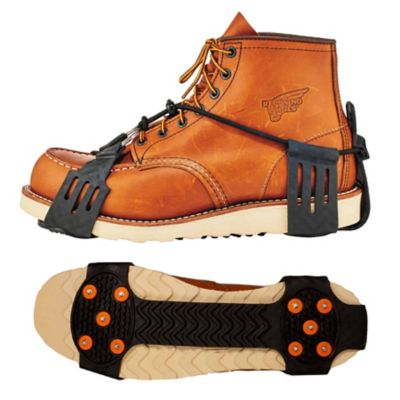
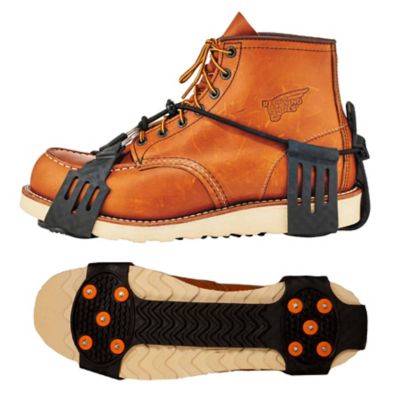
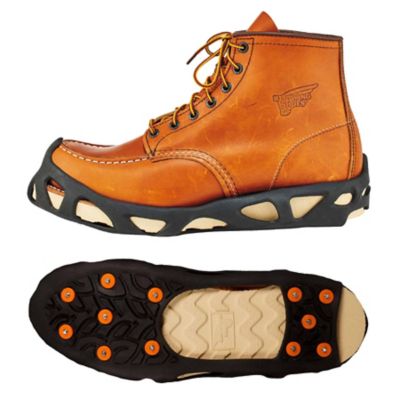
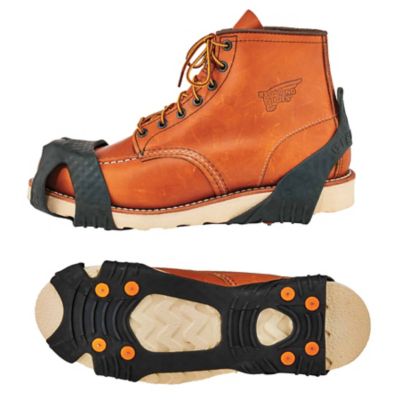
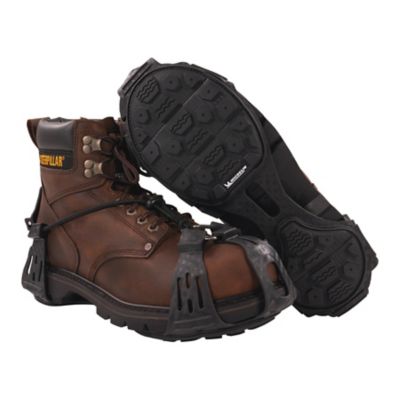
Full-foot ice fishing cleats add traction beneath both the heel and forefoot, helping anglers find their footing on slick stretches between the shoreline, shelter, and fishing hole. Unlike traction aids that cover only one part of a boot, full-foot designs spread their gripping points across more of the walking surface. That coverage matters when a morning on the ice involves hauling a sled, carrying a bait bucket, or making repeated trips back to the truck. The cleats work with winter footwear rather than replacing it, adding metal contact points beneath boots that already provide insulation, support, and protection from moisture. Depending on the design, those contact points may include steel studs, carbide-tipped spikes, or metal chains arranged under the sole. Stud length, spacing, and shape influence how a pair feels underfoot and how it engages hard ice or packed snow. More aggressive points can offer a stronger bite in suitable conditions, while shorter points may feel less pronounced beneath the boot. Neither arrangement fits every surface, so the intended terrain matters more than an imposing appearance. Rubber or other flexible harness materials stretch around the toe and heel, while some designs include straps that help hold the assembly in position. Flexibility in low temperatures is an important consideration because a harness that feels pliable indoors may behave differently out on a frozen lake. Manufacturer temperature guidance and material descriptions help clarify that distinction. Metal components also differ in their resistance to corrosion and everyday wear, especially around wet snow, slush, and gritty access paths. For anglers who spend hours standing near a hole, walking between tip-ups, or moving equipment across open ice, the balance of grip, weight, and underfoot comfort deserves attention. Full-foot coverage does not necessarily mean every inch of the sole carries metal; the placement of traction beneath the heel and ball of the foot helps define how each style performs.
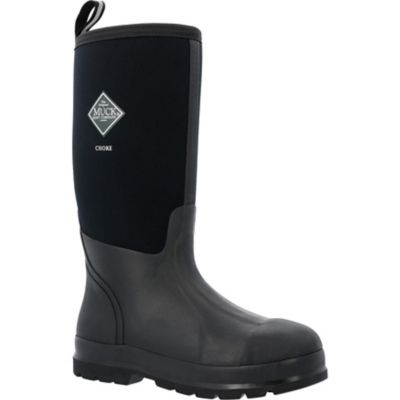
Fit starts with the boots that will actually go fishing. A heavily insulated winter boot can have a much wider toe, thicker sole, and larger heel than another boot carrying the same marked size. Manufacturer sizing charts, footwear recommendations, and sole measurements offer a better starting point than shoe size alone. A well-matched harness sits securely around the boot without pulling the toe upward, slipping off the heel, or squeezing the upper enough to affect comfort. The traction points should remain beneath their intended contact areas instead of rolling toward the sides during a step. Too much stretch can strain the harness and make installation a chore, while too little tension can allow the cleat to shift when the boot lifts out of crusted snow. Adjustable straps, pronounced heel tabs, and easy-to-grab attachment points can be helpful for anglers working with cold fingers or gloves. Any loose strap ends need a secure place away from moving equipment and snag points. Boot tread matters, too: deep lugs, broad heels, and heavily sculpted soles can change how a traction aid seats against the bottom. Checking compatibility before heading onto the lake helps prevent an awkward fit from becoming a distraction halfway to a shelter. Weight and flexibility also shape the experience over a longer walk. A rigid feel beneath the sole may be noticeable when kneeling beside tackle or settling onto a bucket, while a lighter assembly may be easier to tuck into a gear bag between outings. Those details are worth weighing against the traction needed for the fishing spot. Even with a secure fit, cleats do not eliminate slipping, and a steady pace with deliberate steps still matters. Metal points can slide on rock, smooth concrete, or other hard surfaces, and they can damage flooring. Removable designs make it easier to transition away from the ice, with cleats taken off before entering a vehicle or building.
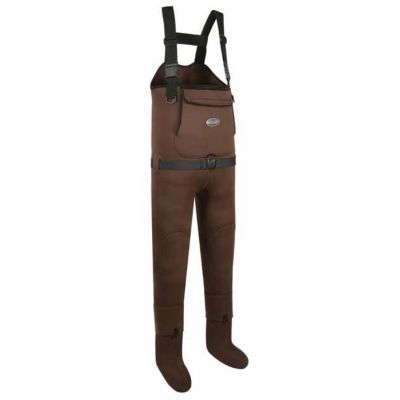
A little attention between trips helps keep full-foot ice fishing cleats ready for the next outing. Slush, road salt, sand, and lake debris can collect around studs, chains, and attachment points, so cleaning according to the manufacturer’s directions is part of routine care. Thorough drying before storage helps limit corrosion on metal parts and keeps damp gear from sitting together in a closed bag. Direct heat from a stove, heater, or hot vehicle vent can harm some flexible harness materials; room-temperature drying away from concentrated heat is generally a better fit unless the manufacturer specifies otherwise. Regular inspection can reveal split rubber, stretched openings, bent hardware, worn gripping points, or straps that no longer hold securely. Replaceable components can extend the service life of designs built for them, but replacement parts need to match the manufacturer’s specifications. A protective pouch or separate storage compartment also keeps exposed points away from gloves, spare socks, shelter fabric, and other gear riding in the same sled. For a gift, these cleats make the most sense for someone who already spends time ice fishing and has a familiar pair of winter boots. Knowing that boot’s size and shape makes the choice more thoughtful than guessing from everyday footwear. They can suit the angler who checks a few nearby holes as well as the one who walks farther with a loaded sled, though the walking distance and surface conditions should guide the selection. Anglers putting together equipment for other cold-water outings can also explore
Cold Weather Fishing Waders for fishing that involves appropriate wading conditions rather than travel over frozen water. Waders are not a substitute for flotation, and cleats do not establish whether ice can support a person or their equipment. Local ice information, suitable safety equipment, and sound judgment remain separate essentials. The right traction setup supports steadier footing, leaving less attention on shifting footwear and more on handling tackle, tending lines, and enjoying time on the ice.