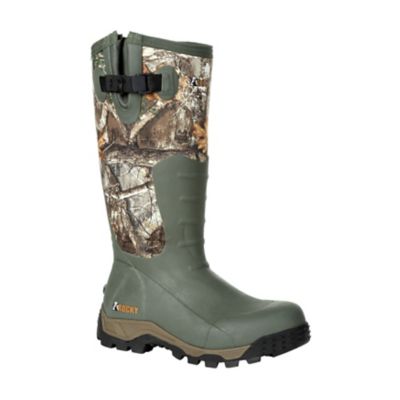
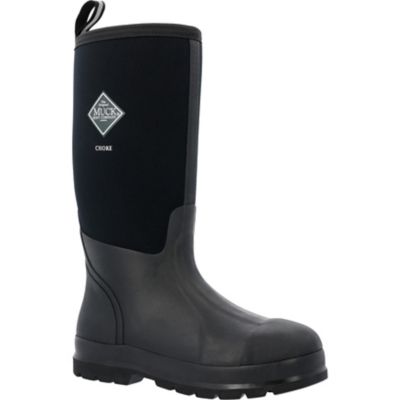
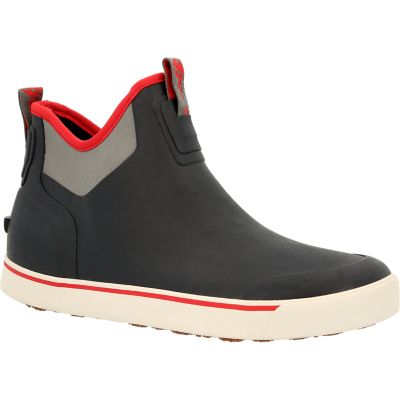
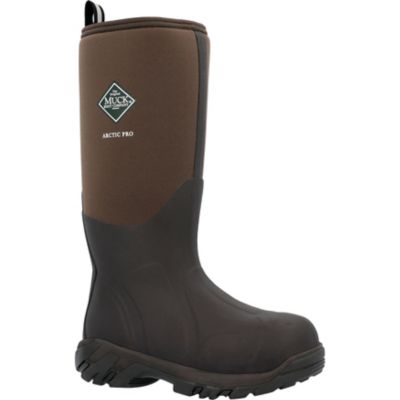
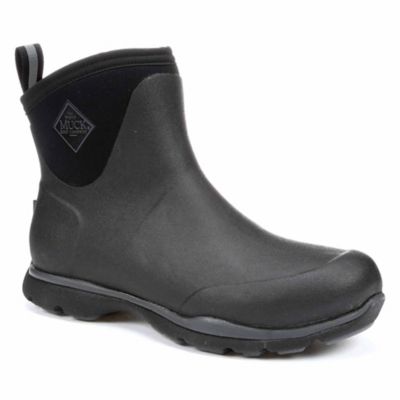
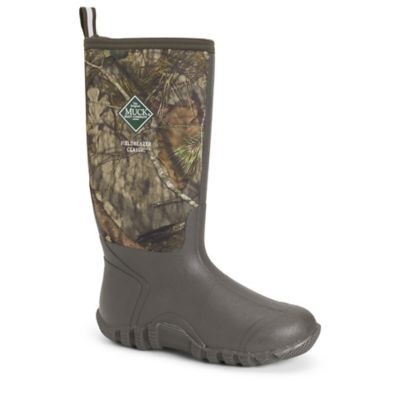
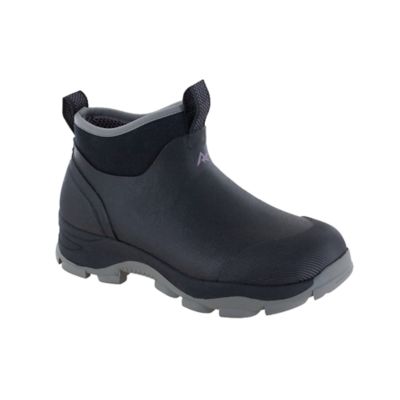
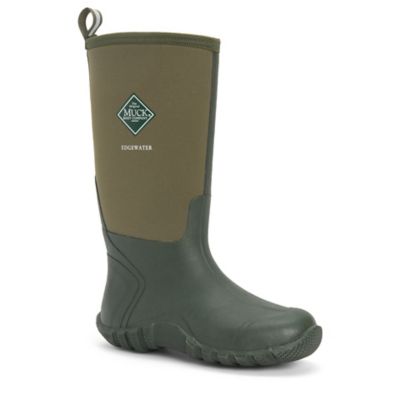
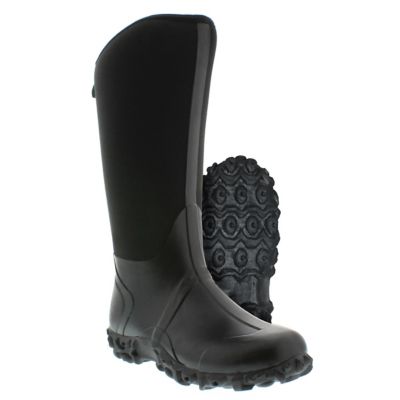
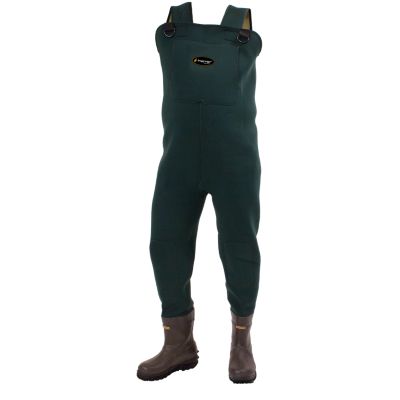
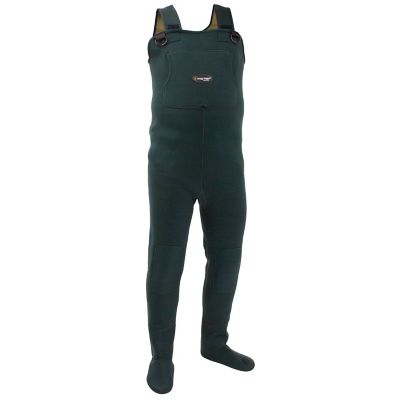
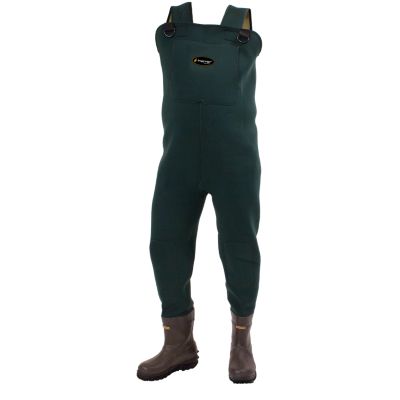
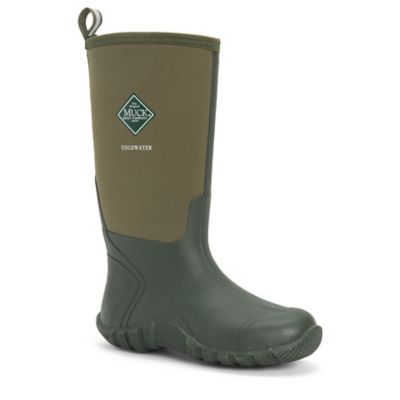
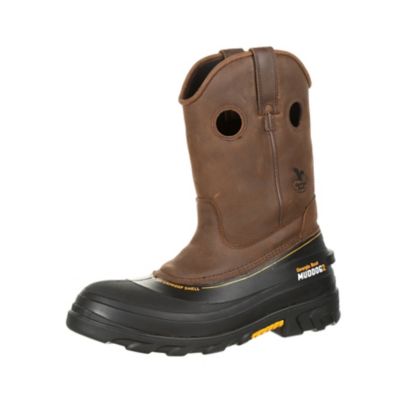
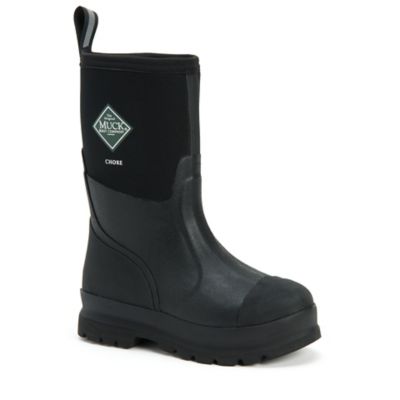
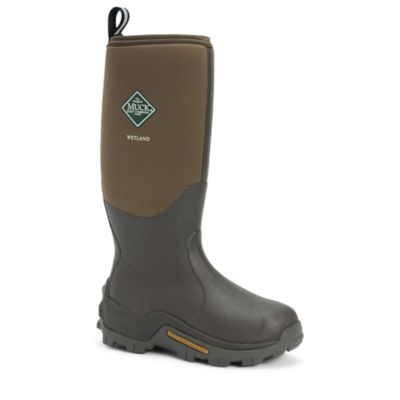
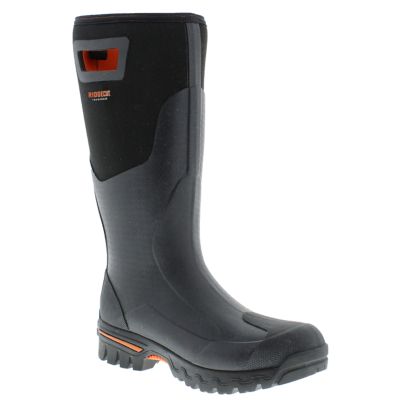
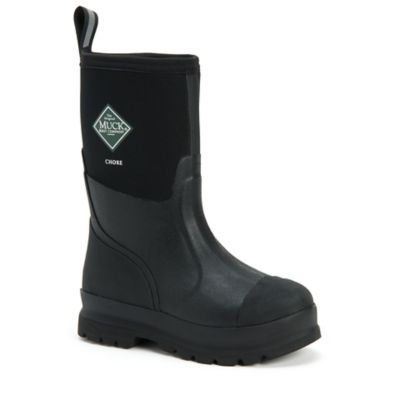
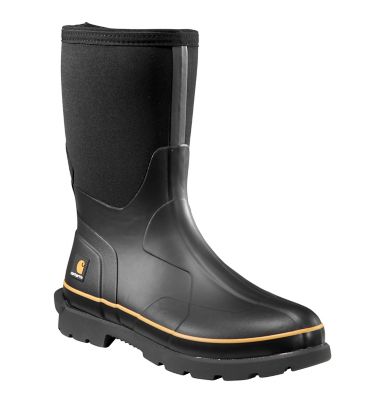
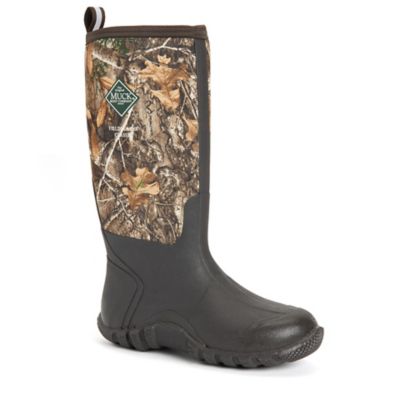
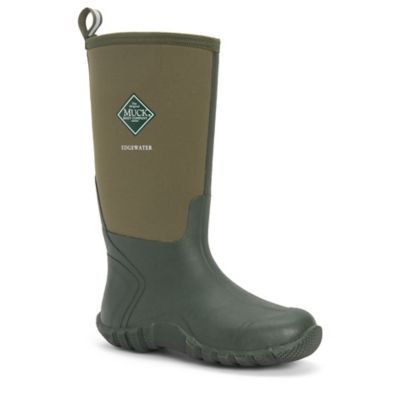
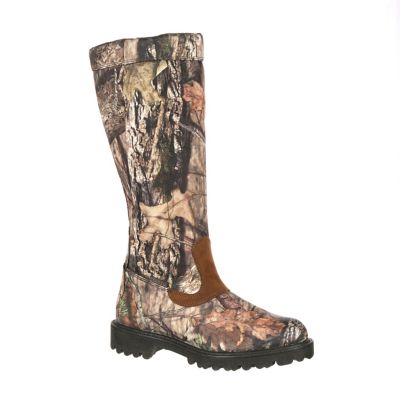
Neoprene fishing boots help keep feet dry, steady and comfortable when the day takes you from a muddy bank to a wet boat deck or into cool, shallow water. Made with flexible rubber-bonded neoprene, these boots are built to form a waterproof barrier while giving your feet and ankles room to move. Neoprene also provides insulation, making it a handy choice when the air turns cooler, the water stays cold or you are standing around waiting for a bite before sunrise. Different styles suit different kinds of fishing. Low and mid-height deck boots are easy to pull on and work well for boat fishing, dock work and rainy days around the farm. Their slip-resistant, non-marking rubber outsoles are made to grip wet surfaces without leaving dark marks behind. Tall insulated boots offer more coverage for marshes, shorelines, muddy banks and cold-weather outings, with thicker neoprene helping hold in warmth. For anglers who spend the day moving through streams and rivers, wading boots provide added support and protection over stockingfoot waders or neoprene booties. A sturdy upper helps guard against rough gravel, sticks and other sharp edges, while the sole is made to help manage slippery river rocks. Browse the related selection of
Boots With Neoprene to compare waterproof footwear for fishing, outdoor chores and wet-weather use.
The right pair starts with the kind of ground and water you expect to cover. For boat decks, ramps and general shoreline use, rubber soles with siping or a practical tread pattern offer a good balance of traction and versatility. If you fish rocky rivers, pay close attention to the outsole. Rubber lug soles are useful across a range of terrain and are often the more versatile choice for anglers who fish in several locations. Felt soles can provide extra grip on certain slick riverbeds, though regulations vary by location because felt may carry aquatic organisms from one waterway to another. Studded rubber soles can also help on challenging rock, but they may not be suitable for every boat deck, floor or shoreline. Check local rules and consider where you will wear the boots before choosing a sole. Height matters, too. A shorter boot is convenient for quick trips, launching a boat or walking across damp grass, while a tall boot helps keep water and mud out when you are stepping into deeper puddles, marshy ground or shallow water. Look for pull tabs, a roomy opening or a flexible shaft if you expect to take the boots on and off often. If the boots will be worn over thick neoprene stockingfoot waders, allow extra room and generally plan to go up in size rather than choosing a close fit. Fishing socks can be thicker than everyday socks, and cramped toes lose warmth quickly. A little space for your toes to move is helpful, but your heel should stay reasonably secure so the boot does not rub or slide with every step.
Neoprene fishing boots make a thoughtful gift for anglers, boat owners, hunters, campers and anyone who spends time outdoors in wet conditions. They are especially useful for a friend who fishes from a jon boat, walks a favorite creek, checks traps along a marsh or handles early-morning chores when the ground is soaked with dew. When choosing a pair as a gift, think about the recipient’s usual setting, the amount of insulation they may need and whether they wear waders. Lightweight deck boots are a practical choice for someone who spends time on a boat or dock, while taller insulated styles may be better for cold banks, muddy fields and late-season outings. Care after each trip can extend the life of the boots. Rinse away mud, sand, fish scales and saltwater with clean fresh water, paying attention to the soles and seams. Let the boots air dry in a well-ventilated spot away from direct sunlight, heaters and open flames, since excessive heat can dry out rubber and neoprene or affect the shape. Remove loose insoles when possible so moisture can escape from inside, and store the boots upright rather than folded over. Before the next trip, check the tread, seams, pull handles and upper for signs of wear. A clean, dry pair is more comfortable to pull on, less likely to develop an odor and ready for changing conditions as warm days give way to cooler mornings. Whether you are crossing a slick ramp, standing in a stream or working through wet grass, well-fitted neoprene fishing boots can make the whole outing feel more sure-footed and comfortable.