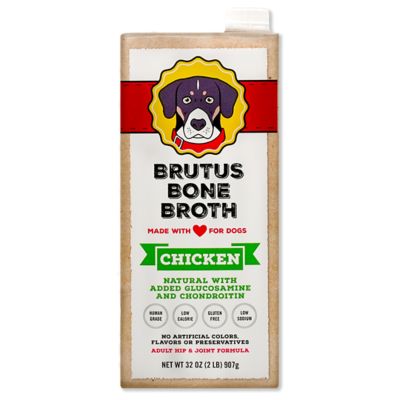
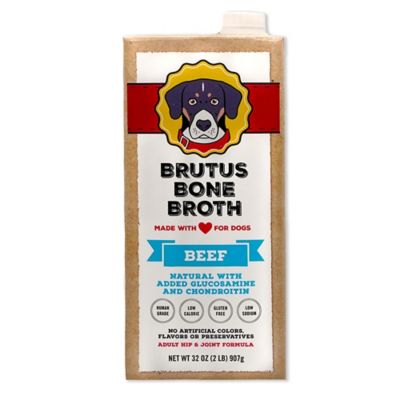
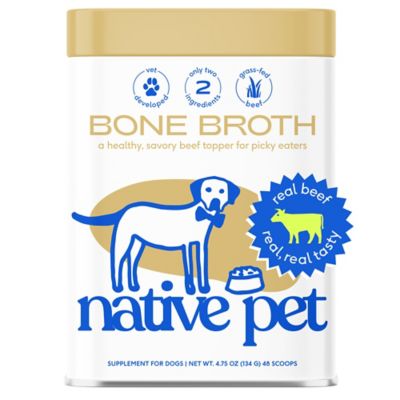
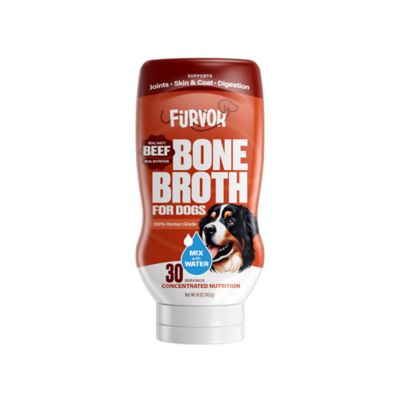
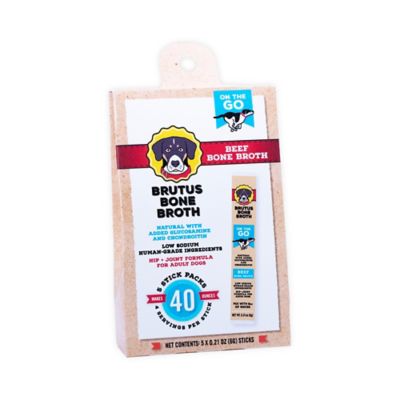
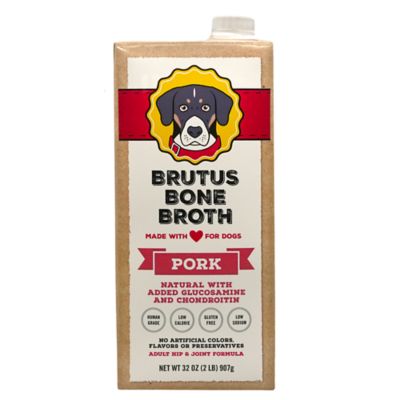
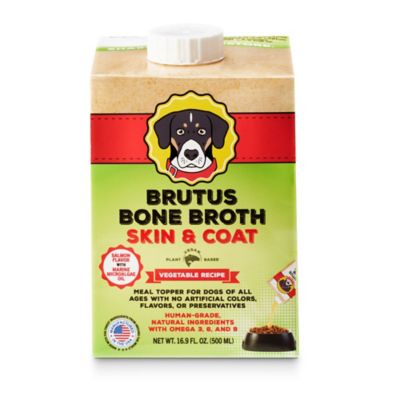
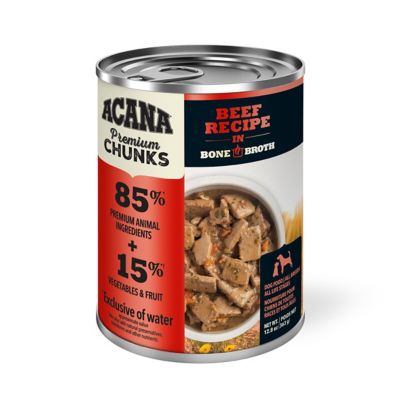
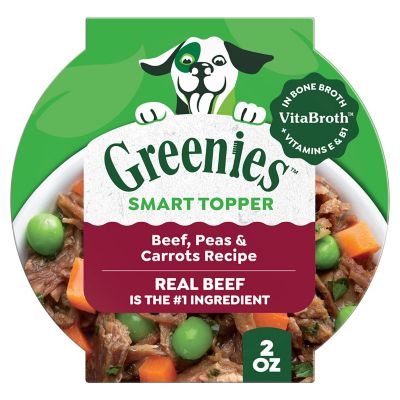
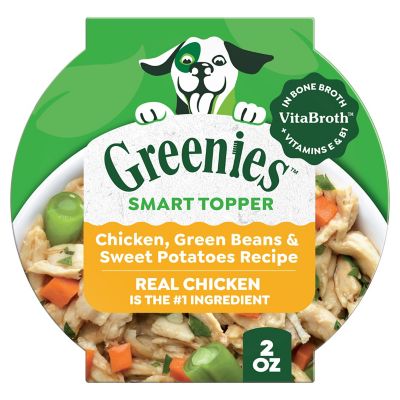
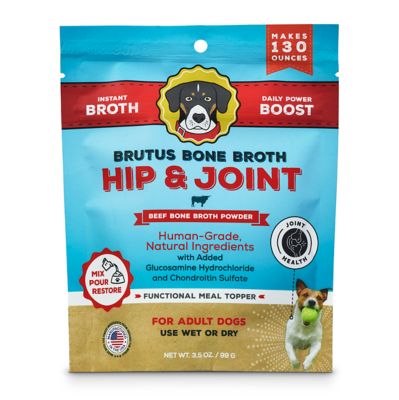
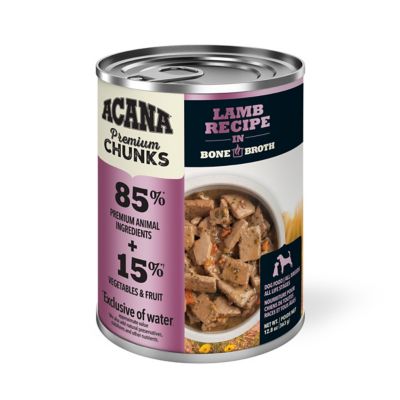
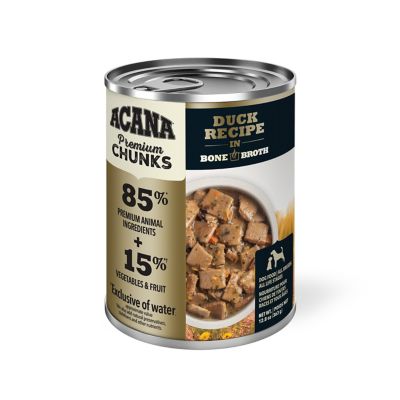
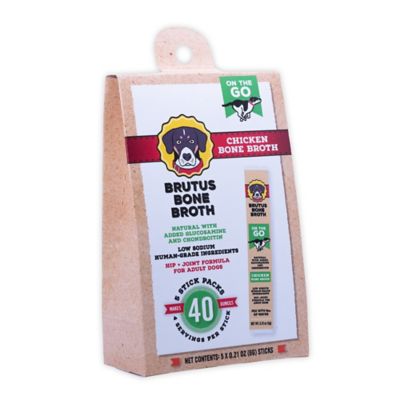
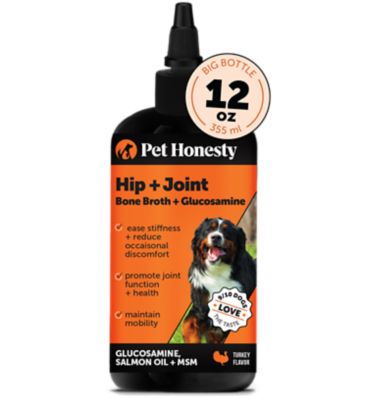
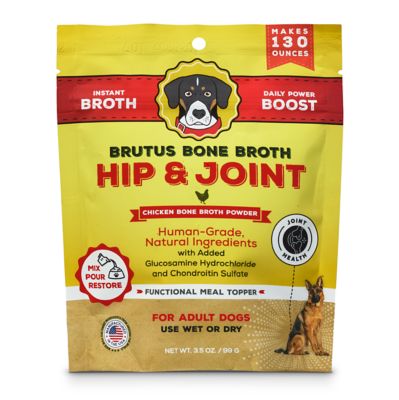
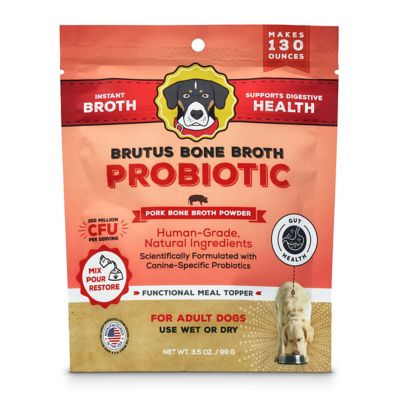
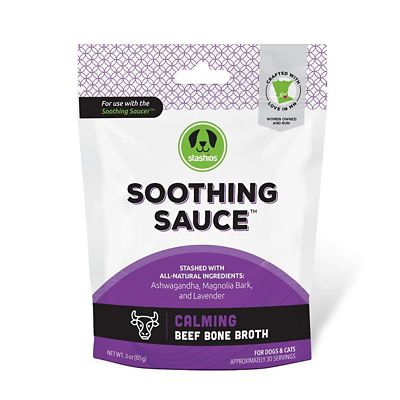
Dog bone broth is a simple way to add savory flavor and extra moisture to your dog’s daily routine. It can be poured over dry kibble, mixed into wet food, offered as a small drink, or frozen into bite-sized portions for a refreshing treat during outdoor time. Many dogs enjoy the meaty aroma, making broth a handy choice for picky eaters, older dogs, or pets whose appetite has dipped during a stressful stretch. It may also help make meals more appealing when a dog is adjusting to a new food or needs a softer, wetter texture. Bone broth commonly contains naturally occurring gelatin, collagen, and amino acids from simmered bones and connective tissue, though the exact nutrition depends on how it is made. These nutrients can complement a well-balanced diet and support everyday wellness, including normal joint and digestive function, but broth should be treated as a topper or supplement rather than a replacement for complete dog food. For dogs that spend the day working cattle, running the fence line, hiking the back forty, or simply keeping watch from the porch, a little broth can make a familiar meal feel extra satisfying. During the cooler months, some dogs also appreciate broth served slightly warm, much like a comforting, aromatic addition to dinner after a brisk walk. Let it cool to a safe temperature before serving, and remember that warm should mean gently heated, never hot.
Ingredient quality matters when choosing a dog bone broth. Look for a pet-safe formula made without onion, garlic, chives, leeks, grapes, raisins, or other ingredients known to be unsafe for dogs. Human broth, gravy, and soup stock may contain these ingredients along with excess sodium, pepper, rich fats, or seasonings that can upset a dog’s stomach, so they should not be used as a substitute for a broth made specifically for pets. A short, clearly listed ingredient panel is often easier to evaluate, especially if your dog has food sensitivities or you are trying to keep meals simple. Check the package for serving guidance, storage instructions, and whether the broth is ready to pour or needs to be diluted. Resealable packaging can be useful for households with one small dog, while larger containers may suit a multi-dog home or a working-dog kennel. Pay attention to calorie content as well. Toppers, treats, and other extras are generally best kept to about 10% or less of a dog’s daily calories, with the rest coming from a complete and balanced diet. A commonly used starting point is roughly 1/4 cup per 25 pounds of body weight per day, but that is only a general guideline, not a rule for every dog. Start with a small amount and watch for loose stool, vomiting, itching, or any other change. Dogs with pancreatitis, kidney disease, heart concerns, food allergies, prescribed diets, or other health conditions should have their veterinarian’s guidance before adding broth. Puppies, senior dogs, and pets recovering from illness may also need a more individualized feeding plan. For related ways to add supplemental nutrition to your dog’s routine, explore
Dog Protein Supplements.
Dog bone broth can fit into plenty of everyday routines. Stir a splash into breakfast before chores, use it to soften kibble for a dog with missing teeth or a tender mouth, or add a small amount to dinner when your companion needs encouragement to eat. It can be especially useful for dogs that do not drink enough on their own, since the savory flavor may encourage them to take in more fluid; fresh, clean water should still be available at all times. If your dog enjoys frozen treats, pour broth into a silicone mold or ice cube tray and freeze it for a slow, lickable snack. Supervise dogs with any treat, particularly enthusiastic chewers, and avoid serving frozen pieces that are too large for your dog to manage comfortably. Broth also makes a thoughtful gift for a neighbor with a new puppy, a friend caring for a senior dog, or a working-dog owner who likes practical additions to the feed room. Pairing it with a sturdy bowl, a food-storage container, or other everyday pet supplies can turn a useful pantry item into a welcome care package. Store unopened broth according to the package directions, refrigerate it after opening when required, and use it within the recommended time. When introducing it, keep the first serving modest and make changes one at a time so you can tell how your dog responds. The best choice is one that matches your dog’s size, age, activity level, dietary needs, and taste preferences, with straightforward ingredients and serving instructions you can feel good about adding to the bowl.