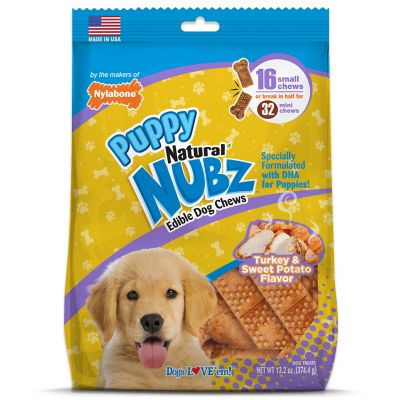
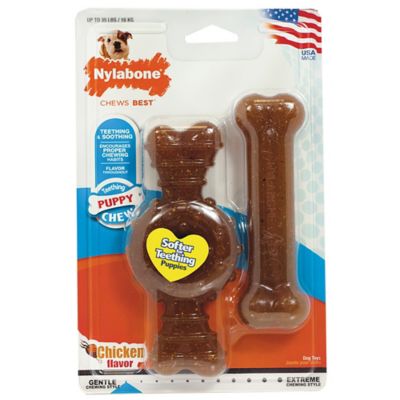
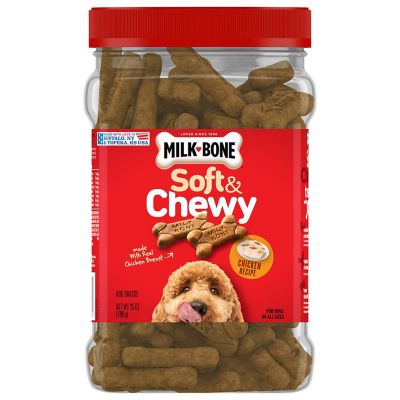
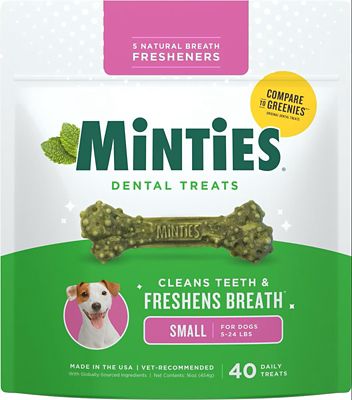
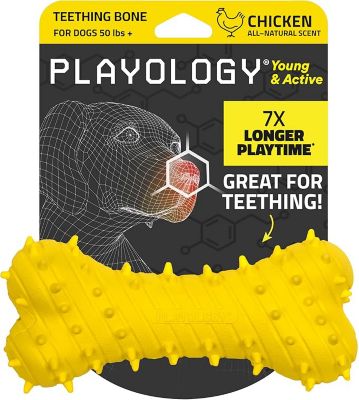
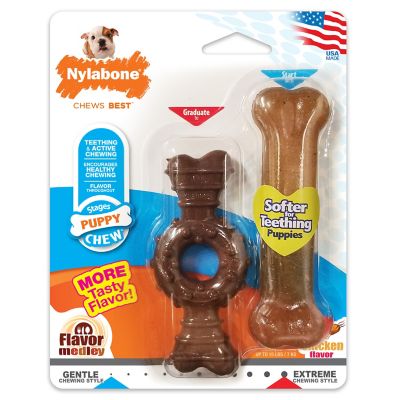
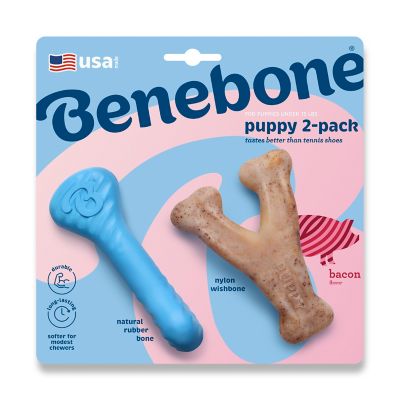
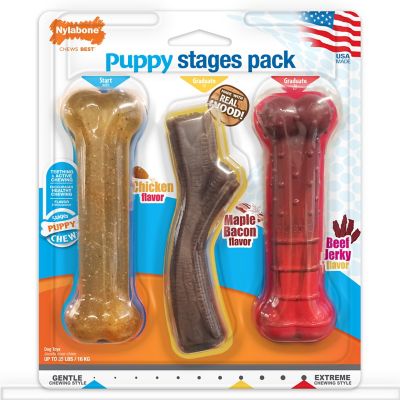
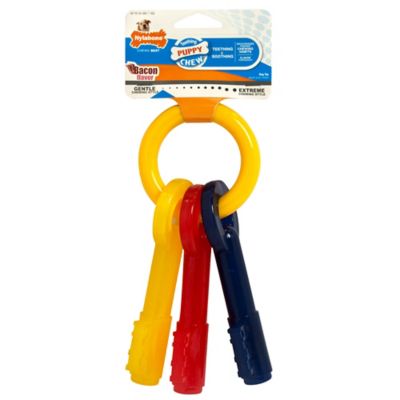
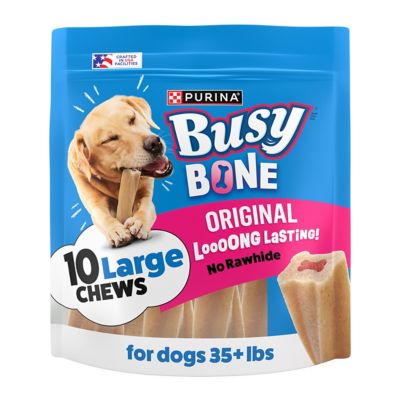
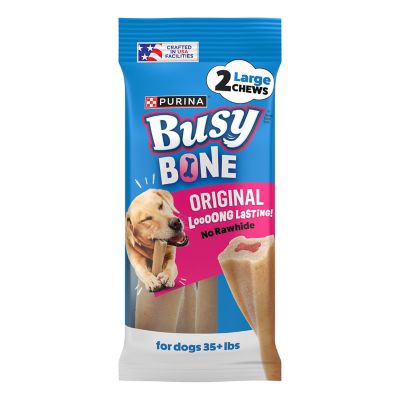
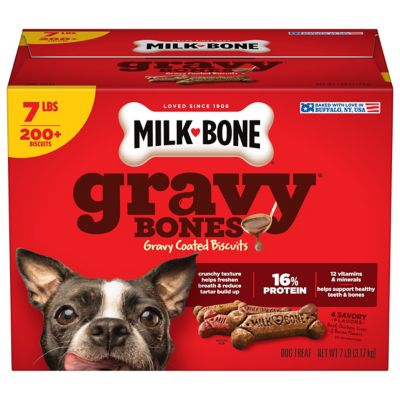
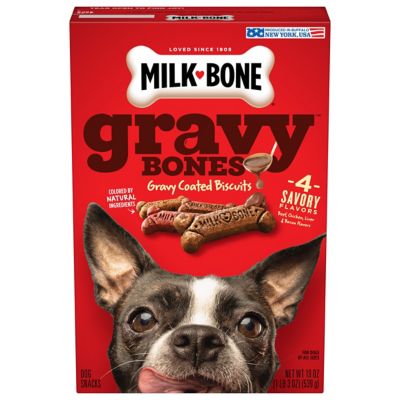
Puppy chewing is a normal part of growing up, but the right dog bone can make a big difference in your pup’s comfort, safety and daily routine. Young dogs often chew while their baby teeth are coming in, and they may also use their mouths to explore nearly everything around the house—from boot laces and chair legs to the edge of a favorite blanket. Puppy dog bones and chew toys give that busy mouth a more suitable outlet while offering a little relief for tender gums. Look for products made specifically for puppies, since a young dog’s teeth and jaw are still developing. Softer rubber, flexible nylon and other puppy-formulated materials are generally better suited to baby teeth than very hard adult chews. A good chew should have some give when pressed with a fingernail and should be large enough that your puppy cannot fit the entire item in their mouth. Size matters for every breed, including small dogs that may need petite chews and large-breed puppies that grow quickly but still need a puppy-appropriate texture. Always match the chew to your dog’s current age, weight and chewing style rather than choosing only by the size your pup may reach later. A product that is too small can become a choking hazard, while one that is too hard can put unnecessary pressure on developing teeth. Puppy bones can be useful for families bringing home a new dog, for households working through teething, or for anyone trying to keep a young pup occupied during crate time, travel or a quiet afternoon on the porch. They also make a practical gift for new puppy owners, especially when paired with a collar, training treats or a cozy bed.
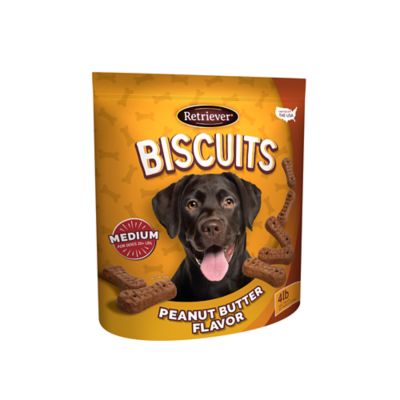
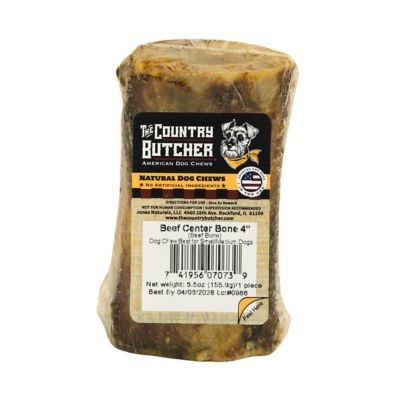
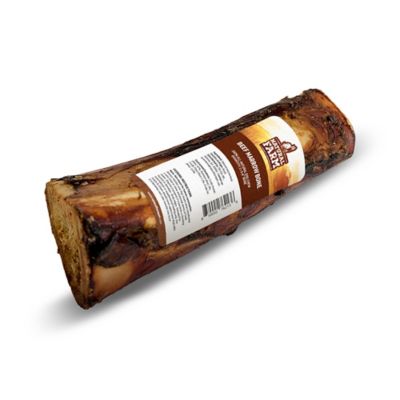
Not every bone is a safe puppy bone. Real cooked bones should not be given to puppies because cooking can make them brittle, allowing sharp pieces to splinter and cause injuries in the mouth, throat or digestive tract. Dense weight-bearing bones can be too hard for a puppy’s developing teeth and may lead to cracked or fractured teeth, even when the bone looks sturdy. Raw bones carry their own concerns, including bacteria, sharp edges and pieces that can break off, so speak with your veterinarian before offering any animal bone. If you are considering natural options, browse
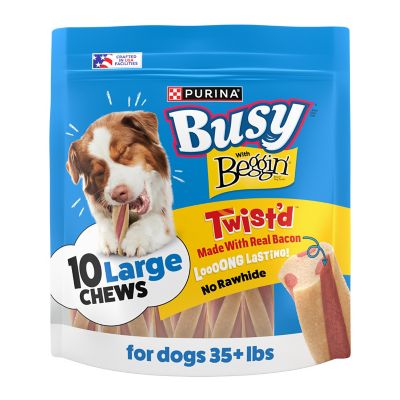
Natural Dog Bones and read the package directions closely. Standard rawhide may be difficult for some puppies to digest, particularly when a determined chewer tears off and swallows large pieces. Rawhide-free alternatives and digestible chews may be gentler choices, but no chew is right for every dog, and “digestible” does not mean it can be eaten quickly or without supervision. Some natural chews can be rich, calorie-dense or more suited to older dogs, so consider your puppy’s sensitive stomach, food allergies and regular diet. A veterinarian can help you decide whether a particular type is appropriate, especially if your puppy has a history of digestive trouble, tends to gulp treats or has a breed-related tendency to chew aggressively. For puppies that are actively teething, a rubber chew designed to be soft and flexible may offer soothing pressure without the hardness of an adult chew. Some can be chilled according to the manufacturer’s instructions, which may feel especially comforting during warm-weather play or after a busy romp outdoors. Avoid freezing products unless the label says it is safe, since extreme hardness can defeat the purpose of a puppy chew.
Supervision is the most important part of using dog bones for puppies. Stay nearby the first several times you offer a new chew, and watch how your dog handles it. Take it away if it develops sharp edges, cracks, becomes small enough to swallow or starts shedding pieces. Inspect it regularly, just as you would check a fence gate or a favorite piece of farm equipment for wear before putting it to work. Puppies can be surprisingly powerful chewers, and a toy that lasts for one dog may not hold up for another. Offer the chew on a clean surface and keep fresh water close by, particularly during the warmer season when puppies can become thirsty after playing. During cooler months, a puppy bone can help provide a calm indoor activity after outdoor exercise, muddy walks or time spent helping around the yard. Use chew time alongside training rather than as a substitute for exercise, socialization or attention. Praise your puppy for choosing the bone, and gently trade for a treat when it is time to put the chew away; this helps teach a pleasant “drop it” response without turning the item into something worth guarding. Keep an eye out for warning signs such as coughing, gagging, repeated vomiting, trouble passing stool, blood, mouth bleeding or unusual tiredness, and contact a veterinarian promptly if they appear. With the right size, a puppy-friendly texture and steady supervision, dog bones can be a useful part of raising a happy young dog—giving teething pups something safe to work on while helping protect shoes, furniture and the other tempting treasures around home.