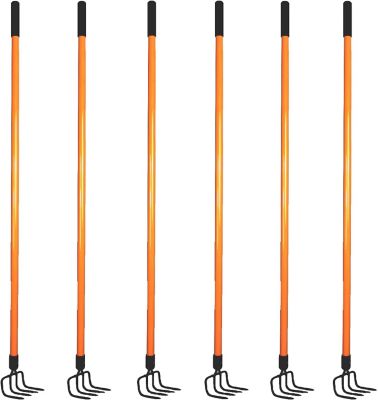
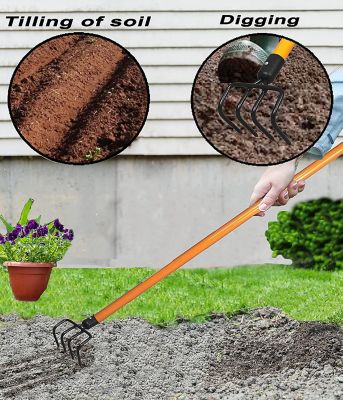
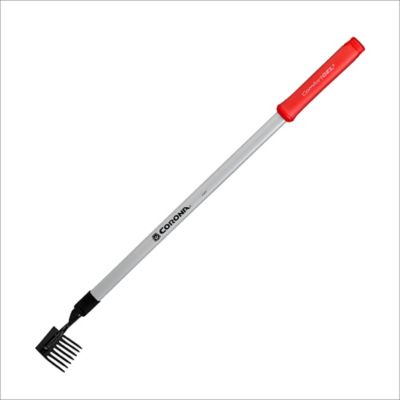
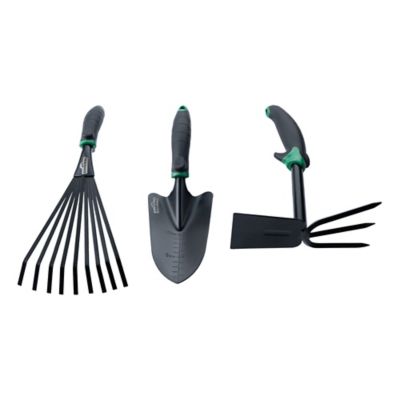
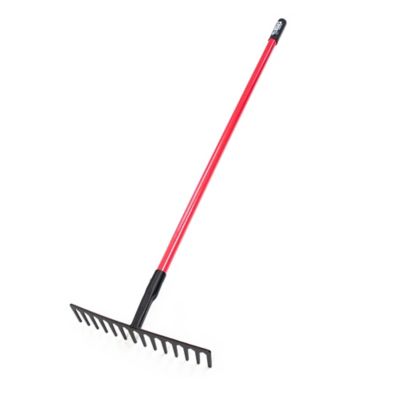
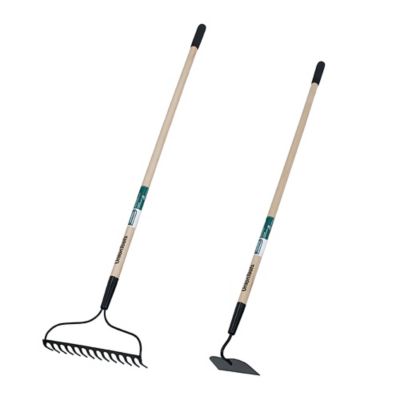
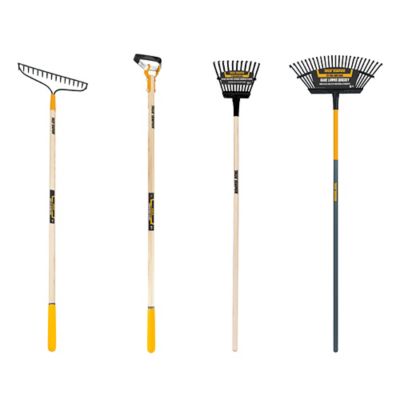
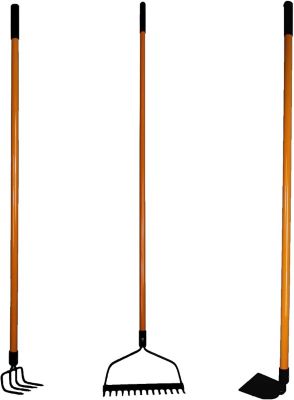
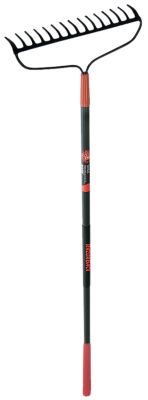
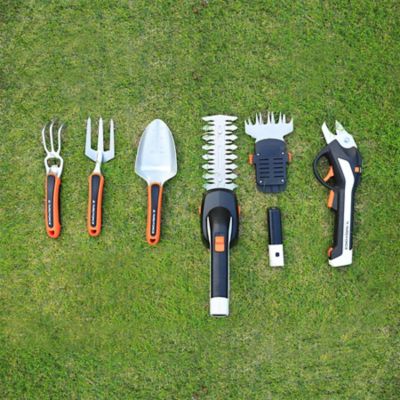
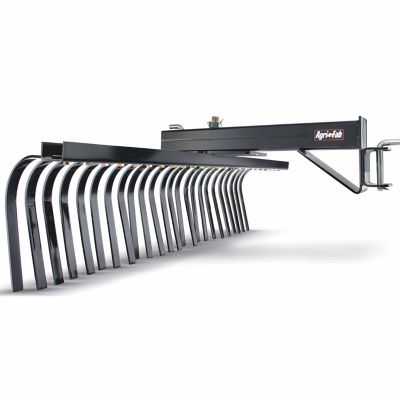
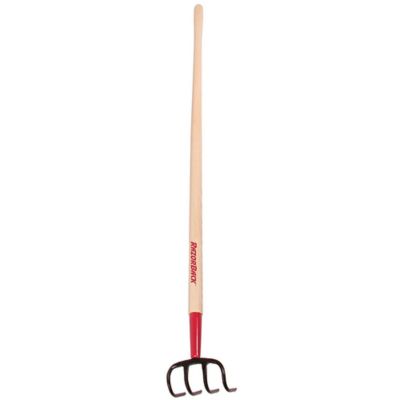
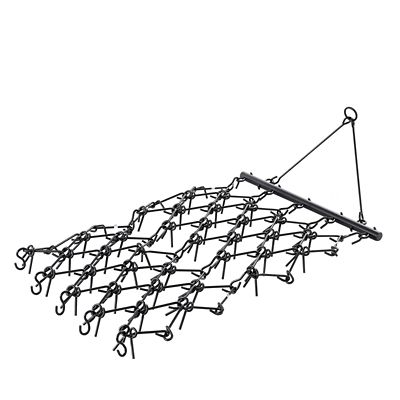
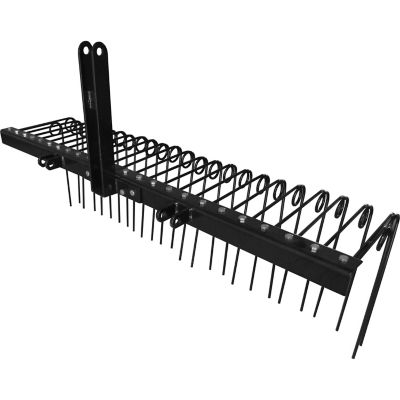
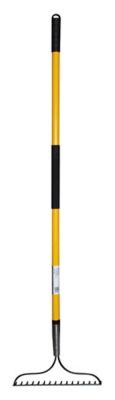
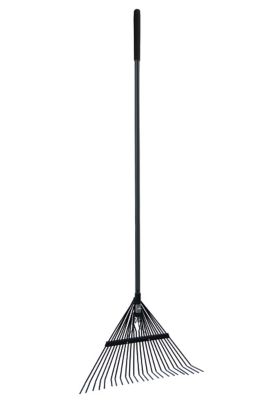
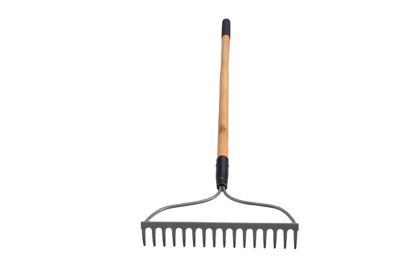
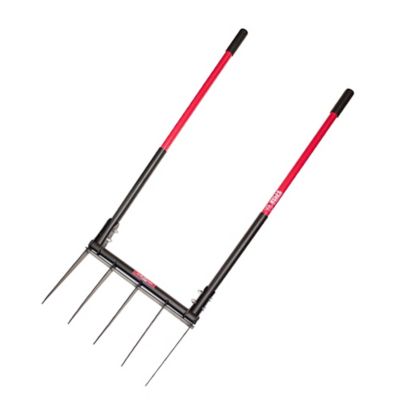
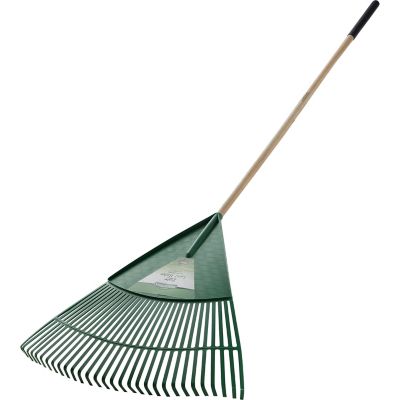
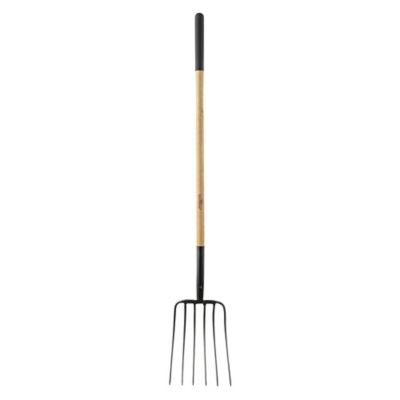
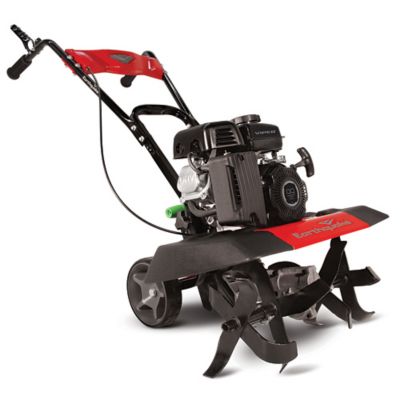
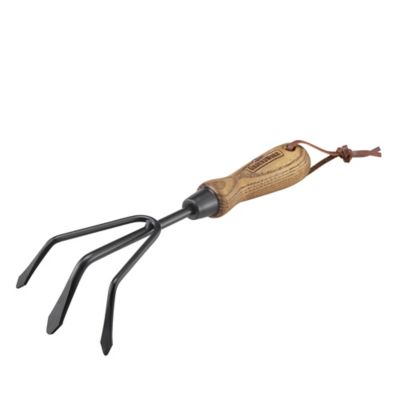
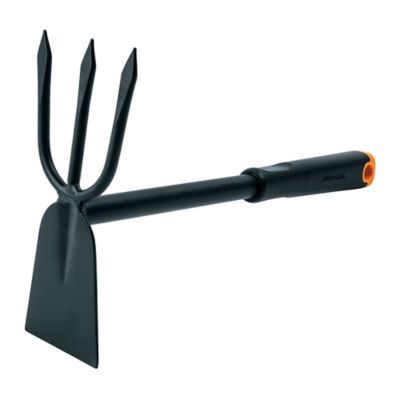
Cultivator rakes are garden tools with firm tines that loosen surface soil, break apart small clods, lift shallow weeds, and work compost into planting beds. Their sturdy teeth reach into the ground rather than simply skimming across it, making them useful for keeping vegetable rows, flower beds, and other cultivated spaces in working shape. Depending on the head design, a cultivator rake may also help spread loosened soil and smooth small patches before planting. It fills a different role than a leaf rake, whose flexible tines gather lightweight material, and it generally works closer to the surface than a digging fork or spade. For a gardener tending beans along a fence or keeping the spaces between pepper plants clear, that combination of loosening and gathering can make a familiar chore more manageable. Head width, tine spacing, and tine shape all affect where a tool fits and how it moves through the earth. A narrow head can slip between closely spaced plants, while a wider head covers more ground in an open bed. Widely spaced tines leave more room for small clods and plant matter to pass through; closer spacing can help gather finer debris but may collect fibrous roots more readily. Curved tines tend to pull through loosened soil, while pointed tips help enter a firm surface. These tools are suited to shallow cultivation, not breaking through thick sod, digging planting holes, or tackling deeply compacted ground. Around established plants, a light touch matters because vegetable and flower roots often spread just beneath the surface. The practical match is a head that reaches the intended strip of soil without crowding stems or dragging across neighboring plants. Gardeners working around irrigation lines, bed edging, or closely planted rows also benefit from considering the full width of the head, not just the space between its outer tines. For general bed maintenance, the best fit comes down to the soil, the planting layout, and how much room there is to move.
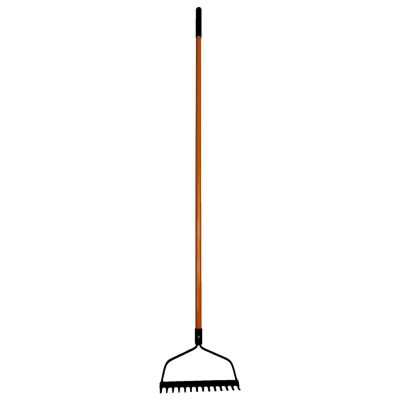
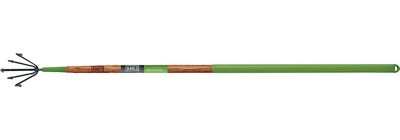
Handle length makes a noticeable difference in how a cultivator rake feels over the course of a job. Long handles give gardeners reach across broader beds and allow much of the work to happen from a standing position. That can be handy along a long vegetable row or beside a bed where stepping into the soil would pack it down. The
Long Handled Cultivators category is worth a look for those standing-height tasks. Short-handled cultivator rakes bring the head closer to the hand, offering control around seedlings, in containers, and in raised beds reached from a seat or kneeling position. Neither handle style fits every space: a long shaft can feel awkward under low branches, while a hand tool may require too much bending for an open garden plot. Handle fit involves more than length, too. Grip diameter, surface texture, overall weight, and balance influence how comfortably the tool rests in the hand and how much effort each pull takes. A handle that feels oversized can make a secure grip harder to maintain, especially with gloves, while a tool that feels heavy at the head may take more effort to steer through tight spaces. Wood handles offer a familiar feel and may absorb some vibration, while fiberglass and metal handles have their own weight and handling characteristics. Molded grips can add cushioning or a shaped holding surface, though their usefulness depends on hand size and personal preference. An upright working posture with relaxed shoulders is a better match than reaching far forward or repeatedly lifting the elbows high. For shared garden sheds, the likely users matter as much as the bed dimensions. A manageable tool for one person may feel cumbersome to another. Home gardeners, small-acreage growers, and neighbors helping tend a shared plot may all favor different combinations of reach and control. Someone who spends most of their time tending waist-high beds will likely want a different handle arrangement than someone maintaining rows at ground level.
Materials and construction help determine how a cultivator rake handles resistance and how much attention it needs between jobs. Steel tines provide the stiffness needed to pull through soil, while the head’s thickness, shape, and connection to the handle influence its strength under load. Forged heads and welded assemblies have different construction methods, but either still needs sound joints and a secure handle attachment. A protective finish can help limit corrosion; it does not eliminate the need to remove soil and store the tool dry. Stainless steel resists rust, although soil residue can still cling to it and make the next job harder. Wooden handles benefit from a smooth surface without cracks or splinters, and fiberglass shafts need attention if the outer surface becomes damaged. Loose fasteners, shifting heads, and bent tines are signs that a tool needs attention before more work. Cultivator rakes generally perform best in soil that crumbles rather than smears into sticky clumps or resists every pull. Forcing the head through stones, thick roots, or stubborn obstructions can bend tines and strain the connection, so these tools are not substitutes for pry bars. A quick removal of packed soil and tangled roots after garden work helps keep the tine spacing clear, and drying the head before storage helps protect metal surfaces. Hanging the tool with its tines away from walkways also keeps it from becoming a tripping hazard in a busy shed. For gardeners who appreciate practical gifts, a cultivator rake matched to their bed layout and preferred working position can earn a regular place beside the hoe and spade. Whether the job is loosening a narrow planting strip, gathering small weeds, or blending compost into the top layer of a bed, a well-matched cultivator rake offers straightforward control for hands-on garden work.