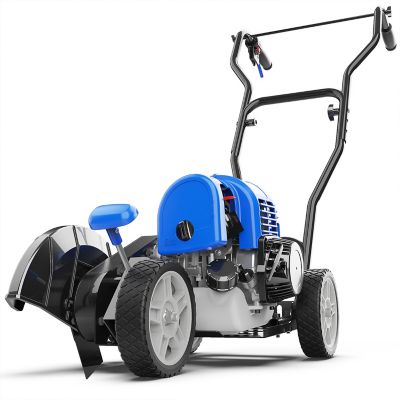
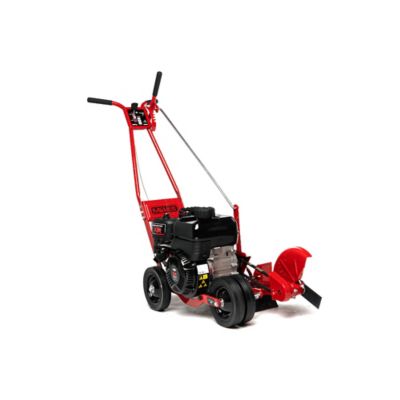
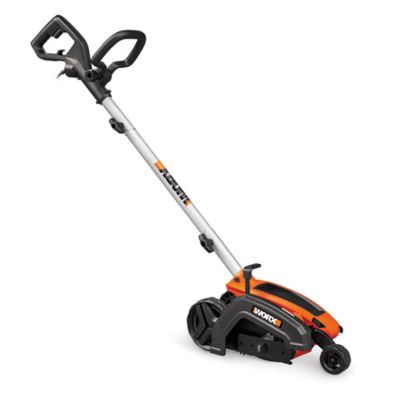
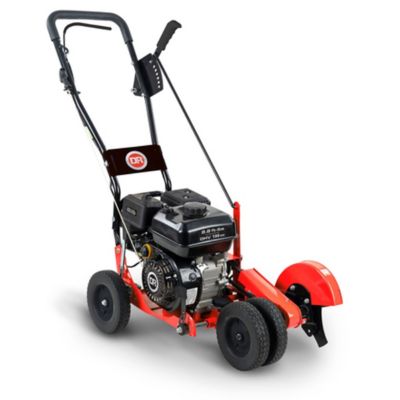
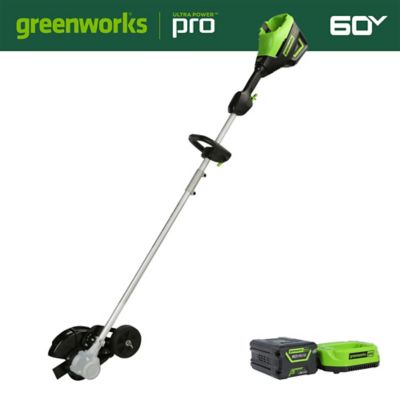
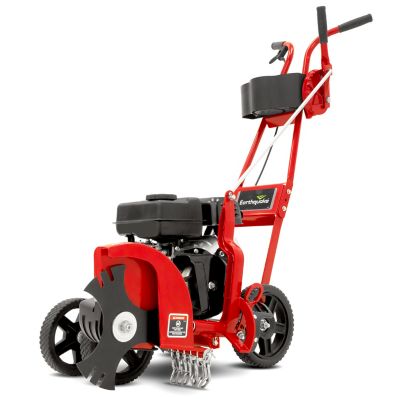
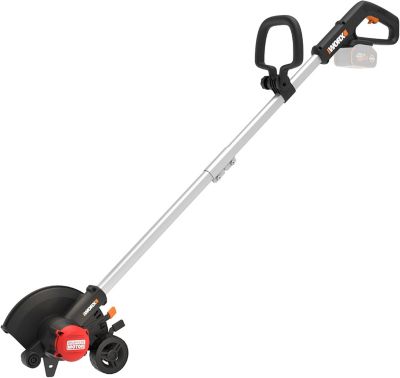
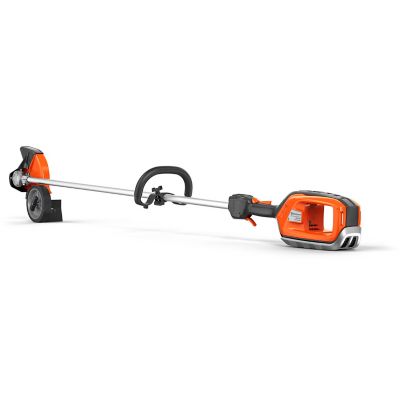
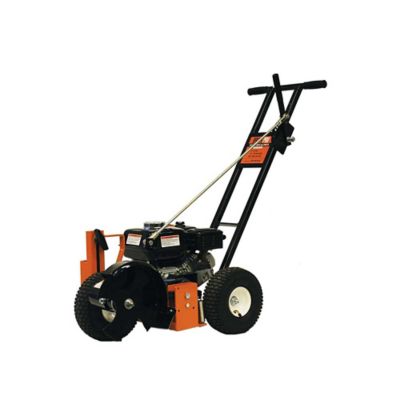
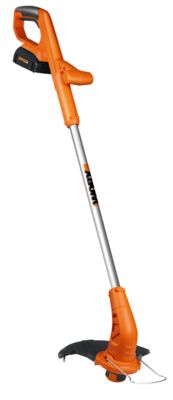
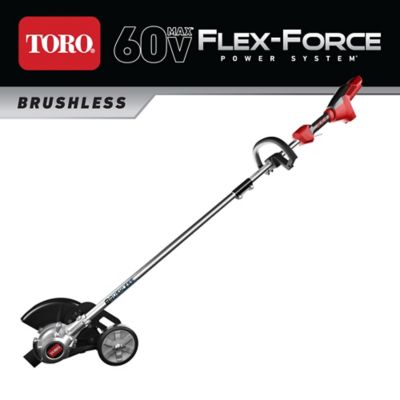
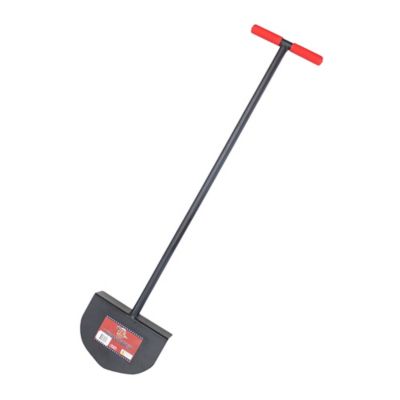
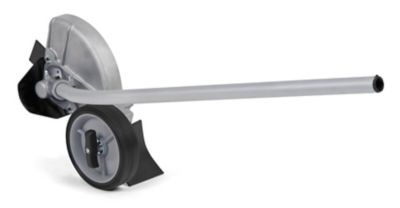
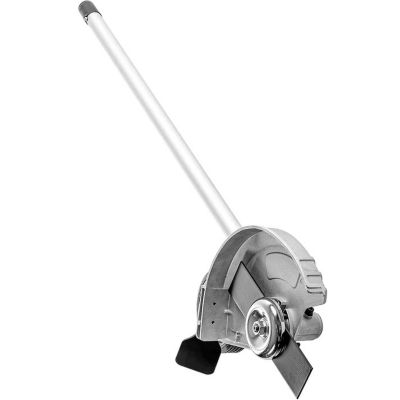
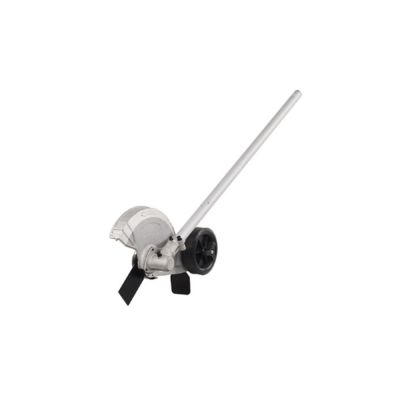
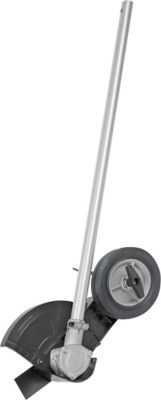
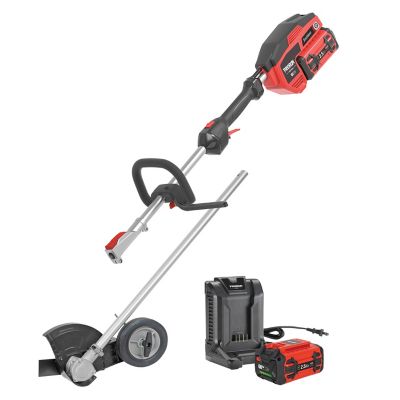
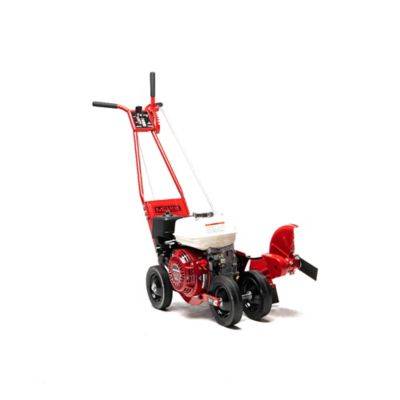
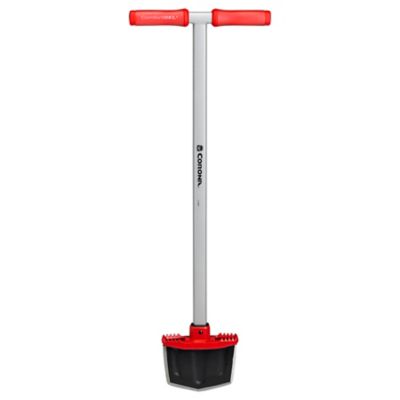
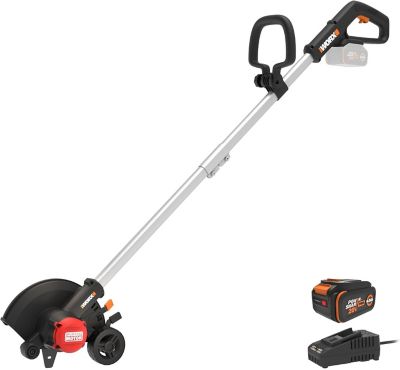
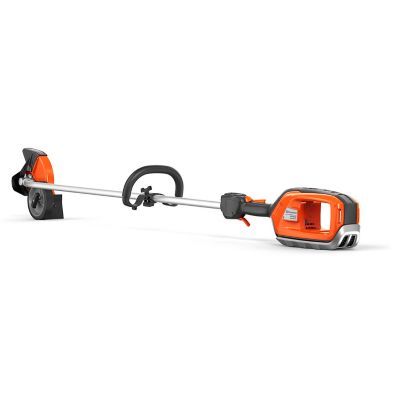
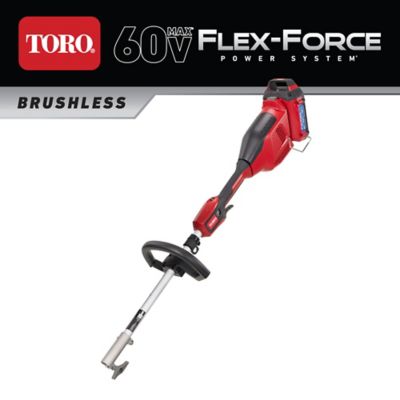
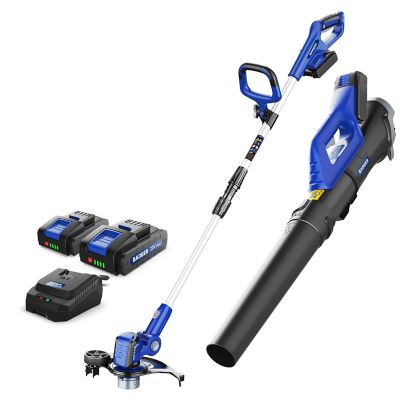
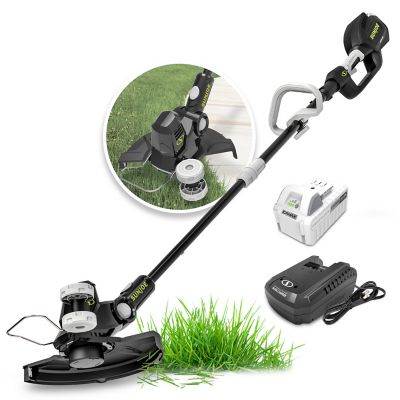
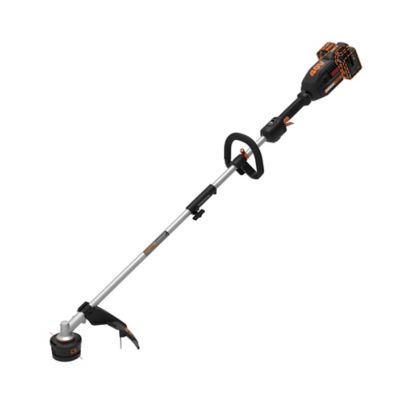
Commercial edgers are powered lawn care tools built for repeated edging work along sidewalks, driveways, curbs, and other defined turf borders. Their vertically rotating blades cut through encroaching grass and shallow soil to leave a clear separation between the lawn and the adjoining surface. That crisp boundary gives a property a finished look that mowing alone cannot provide, especially where runners spread across concrete or a thick layer of turf hides the edge of a walkway. For landscape crews, groundskeepers, and property maintenance teams, a commercial lawn edger fits into regular work at office grounds, apartment properties, schools, and roadside green spaces. Acreage owners with long paved drives or several buildings to maintain may also appreciate equipment suited to longer stretches of work. Handheld stick edgers keep the cutting head at the end of a shaft, with a guide wheel that helps support the tool and manage cutting depth. Their relatively compact layout makes them practical for moving between properties, working around curved paths, and reaching short sections near steps or planting beds. Walk-behind edgers carry the engine and blade assembly on a wheeled frame, giving the operator a grounded platform for extended straight runs and more demanding turf edges. Depending on their construction and cutting capacity, these machines can suit jobs where grass has crept over pavement and the original boundary needs to be brought back into view. Mower-mounted edging equipment is another option for compatible machines, although attachment requirements and operating procedures vary by setup. The right format depends less on property size alone than on how much edging the job involves, how frequently the border receives attention, and how easily the operator can move through the space. A broad sidewalk around a business park presents a different workload from a narrow, winding walk between a farmhouse and an outbuilding. Both benefit from a controlled cut, but each calls for a different balance of reach, weight, maneuverability, and cutting strength.
Power source, blade configuration, and working depth help determine how a commercial edger fits the day's work. Gas-powered edgers offer operation independent of charging access, with refueling arrangements and engine maintenance forming part of the routine. Engine requirements vary: some call for a specified fuel-and-oil mixture, while others have separate lubrication systems, so the manufacturer's instructions matter. Battery-powered commercial edgers eliminate exhaust at the tool and can reduce engine noise, though the blade still makes noise as it cuts and hearing protection may still be necessary. Runtime depends on battery capacity, turf density, cutting depth, and workload; a lightly maintained edge places different demands on the tool than rooted grass spreading over an old driveway. Battery compatibility, charging time, and the weight of the complete working setup deserve attention alongside motor output. Across power types, cutting depth adjustment helps match the blade to the border without digging farther into the ground than the task requires. A deeper cut is not automatically a better cut, particularly near irrigation lines or other shallow installations. Blade diameter, blade shape, and rotation requirements must match the machine, and replacement blades should meet the manufacturer's specifications. Steel cutting blades take the wear where turf meets soil, while blade guards help limit exposure to moving parts and thrown debris. On walk-behind equipment, frame construction, wheel placement, and axle support affect how steadily the machine tracks beside pavement. Some designs offer wheel adjustments for working along raised curbs; that capability should be confirmed rather than assumed. For handheld equipment, shaft length, grip position, and overall balance influence how naturally the operator can keep the blade aligned. A tool that feels manageable for a few feet may feel quite different after edging several parking islands. Comfortable control placement and a clear view of the cutting path can matter as much as raw power when the work involves frequent turns, uneven ground, or repeated loading and unloading.
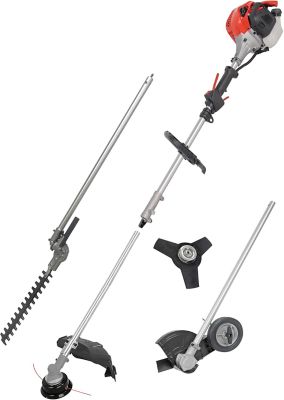
Commercial edging equipment earns its place through repeat work, so service access and upkeep are worth considering alongside cutting performance. Soil buildup around the guard, worn blades, loose hardware, and grass wrapped near the cutting head can all interfere with operation. Equipment with accessible service points and clearly specified replacement parts makes routine care easier to plan around a busy route. Blade wear gradually reduces reach, and an edge that takes extra passes may signal that the blade needs inspection rather than a deeper setting. Cleaning, adjustments, and blade changes belong with the power shut off and the equipment secured against accidental starting, following the manufacturer's procedures. Gas engines have fuel, filter, and lubrication needs specific to their design, while battery tools require proper charging and storage within the temperature limits listed for the battery system. During cooler months, wet clippings and packed soil can cling to the housing, making cleanup before storage especially worthwhile. A dry, protected storage space helps limit corrosion, and secure transport keeps the cutting assembly from knocking against other equipment in a trailer or truck bed. For operations built around a compatible attachment-capable powerhead,
Edger Attachments offer another way to add edging capability without a separate dedicated power unit. Connections are not universal, so the powerhead, coupler, shaft arrangement, and approved attachment list need to line up. Whatever the equipment format, the work setting still shapes the demands on it. Gravel beside a walkway, broken concrete at a curb, and sprinkler heads close to the lawn boundary require room for controlled operation rather than a hurried pass. Eye protection, appropriate footwear, hearing protection as directed, and clearance from bystanders remain important around a rotating edging blade. A commercial edger is intended for defined turf boundaries, not brush clearing or deep trenching. Matched to the job and kept in working order, it helps maintain a clean line from the front entrance to the far end of the drive, leaving less grass hanging over the pavement and a tidier finish across the property.