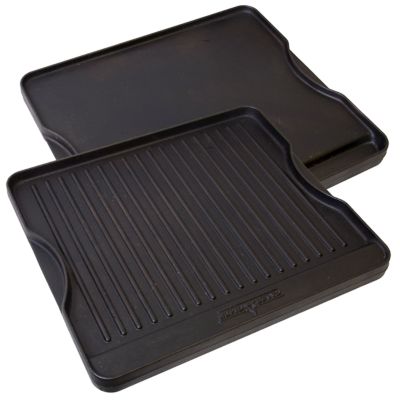
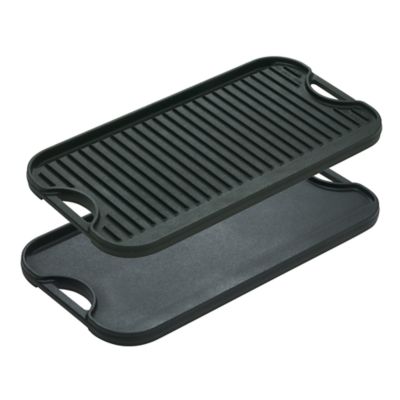
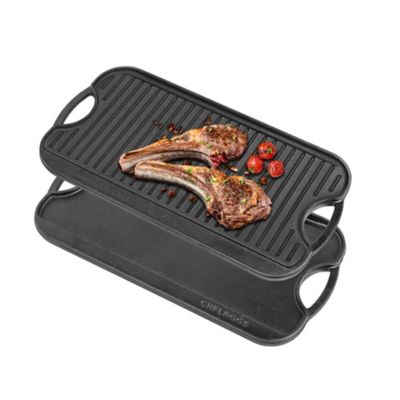
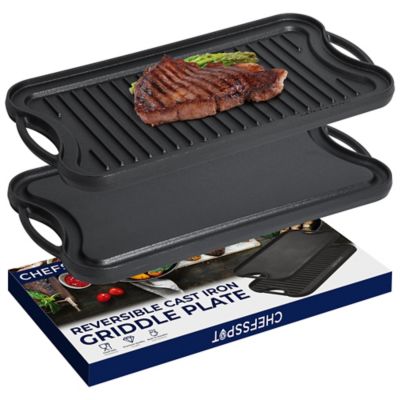
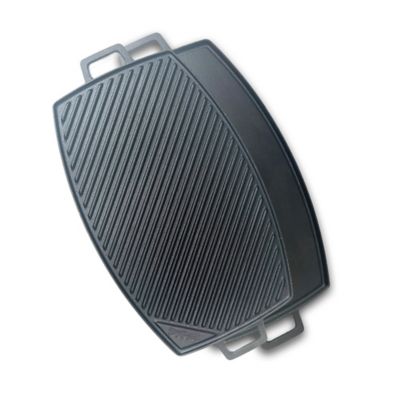
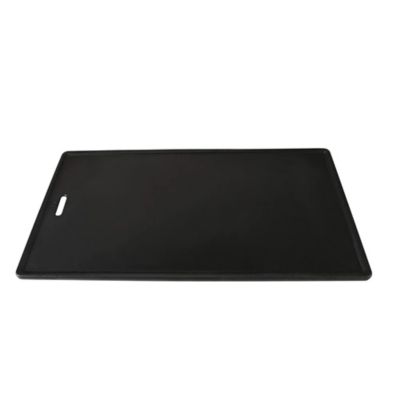
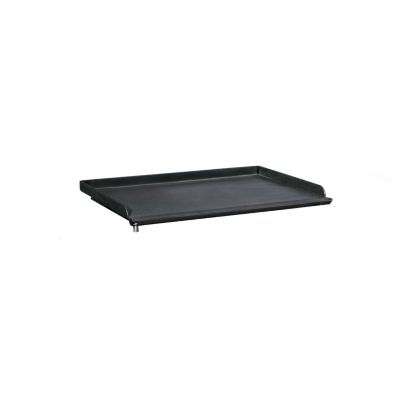
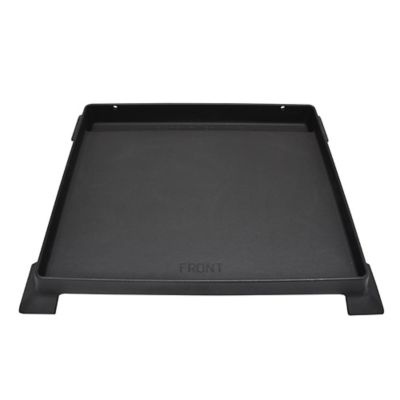
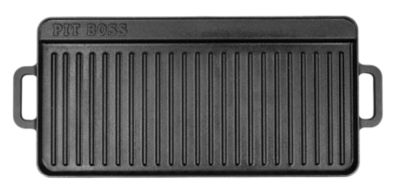
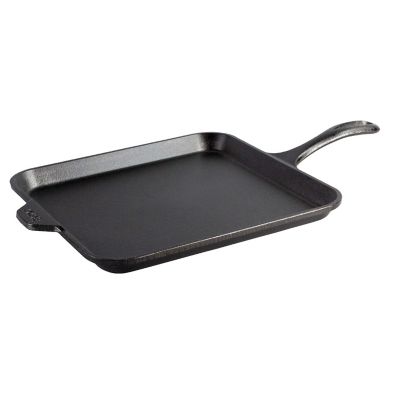
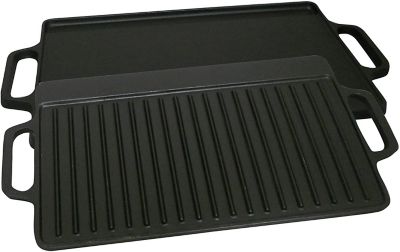
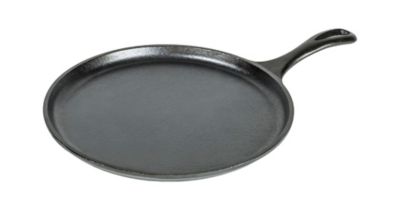
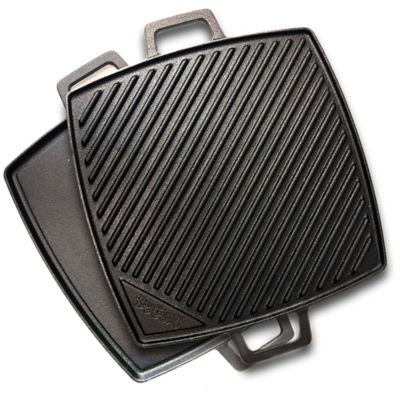
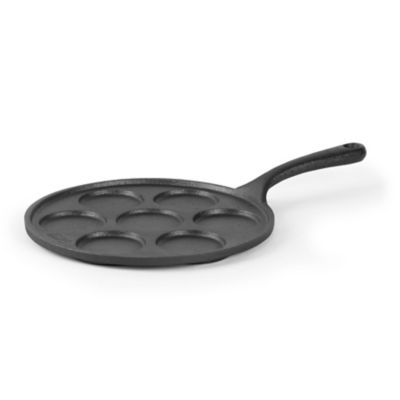
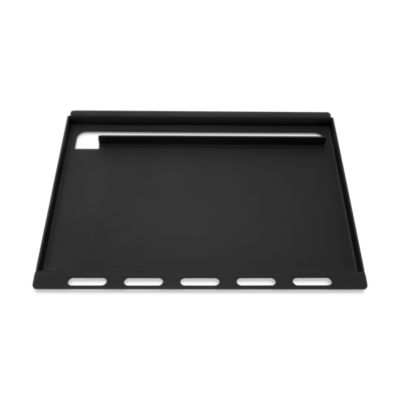
Cast iron griddles for gas stoves bring a broad cooking surface and steady heat retention to everyday meals, from pancakes and eggs to smash burgers and toasted sandwiches. Their heavy iron construction holds heat well once preheated, helping food brown when it meets the cooking surface. Gas burners allow direct flame adjustment, though cast iron takes time to heat up and cool down after a change. Shapes range from compact, single-burner designs to longer griddles intended to span two burners, so the right fit depends on the stove and the amount of food going on at once. A smooth surface gives pancake batter room to spread and keeps a spatula close beneath fried eggs, hash browns, and thin burger patties. Ridged surfaces create raised contact lines on meat and vegetables while allowing some fat to settle between the ridges. Reversible designs may offer both cooking surfaces, with each side serving a different job. For a household feeding a breakfast crew before chores, extra room can mean fewer batches of French toast or sausage patties. For one or two people, a smaller griddle can leave another burner open for coffee or a saucepan. Low sides make it easier to turn food than the tall walls of a skillet, while a raised rim or grease channel can help contain drippings. Rim height and grease capacity matter most with foods such as bacon, which release more fat as they cook. A griddle is best suited to foods that benefit from direct contact with a hot surface rather than dishes that need deep liquid or frequent stirring. Enough space between portions also helps moisture escape instead of collecting around crowded food. That mix of cooking room, heat retention, and easy spatula access makes cast iron a practical choice for kitchens where breakfast, lunch, and supper all put the stovetop to work.
Fit is just as important as cooking area when comparing cast iron griddles for a gas stove. Overall length and width include more than the space available for food; handles, pour spouts, and raised edges can affect how a griddle sits between nearby cookware and stove controls. A two-burner griddle needs stable support from the stove grates, with its intended heating areas positioned over the burners. Not every gas range permits oversized cookware or griddles that bridge burners, so the stove manufacturer’s directions take priority. A cooking surface that rocks, crowds the controls, or extends beyond the appliance’s permitted cookware area is not a good match. Weight deserves a close look, too, especially when the griddle must be lifted from a low cabinet or carried to the sink. Integral handles offer a firm place to grip, but they get hot along with the rest of the iron and need suitable heat protection. A larger surface does not automatically heat evenly from edge to edge. Cast iron retains heat well but spreads it relatively slowly, and the space between burners can remain cooler than the areas directly above the flames. Gradual preheating over low to medium heat helps reduce sharp differences, while burner adjustments allow some control over separate cooking zones. Flames should stay beneath the cooking surface rather than climb around its edges. These details matter whether the job is browning tortillas for supper or keeping several rounds of pancakes moving on a busy morning. Bare cast iron and enameled cast iron also call for different expectations. Seasoned bare iron has an oil-bonded finish that needs regular care, while enamel is a coating with its own utensil and heat limits. For either type, the manufacturer’s cooking and cleaning directions help protect the surface. Oven or outdoor cooking suitability should be confirmed separately rather than assumed from the material alone.
Care habits have a lot to do with how a cast iron griddle holds up over years of meals. Seasoning on bare cast iron is a thin layer of oil bonded to the metal through heat, not a thick coating of leftover cooking grease. It helps protect the iron and can make food release more readily, though eggs and other delicate foods may still need added fat and careful heat control. A factory-seasoned finish provides a starting surface, and regular cooking with proper cleaning helps maintain it. After cooking, the griddle needs time to cool enough for safe handling before cleaning; plunging hot iron into cold water can cause thermal shock. Warm water, a little mild dish soap, and an appropriate brush or scraper can remove food without making cleanup a major chore. Thorough drying and a very light coat of cooking oil help protect bare iron from rust. Long soaking, dishwasher cycles, and storage while damp work against that protection. Enameled surfaces follow different care requirements and do not need the same seasoning routine, so the finish matters when choosing cleaning tools. Dry storage also makes a difference, particularly when cookware is stacked in a cabinet. A liner between pieces can help keep cooking surfaces from rubbing together. With sensible heat control and routine care, cast iron can stay in regular service for many years, making it appealing to home cooks who prefer cookware they can keep tending rather than frequently replace. It can also make a thoughtful housewarming or wedding gift for someone who enjoys cooking, provided the recipient’s stove dimensions and cookware preferences are known. The most useful choice is the one that fits both the kitchen and the meals being made, not simply the largest cooking surface. For a separate grill setup, shoppers can also explore
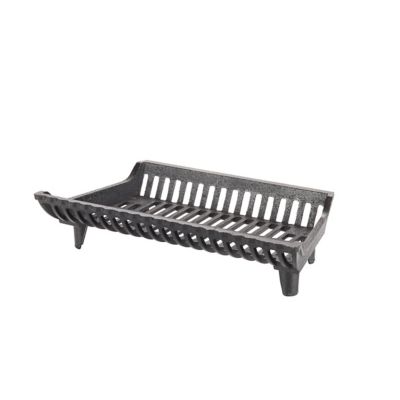
Cast Iron Grates Grills, keeping each cooking surface matched to its intended appliance and heat source.