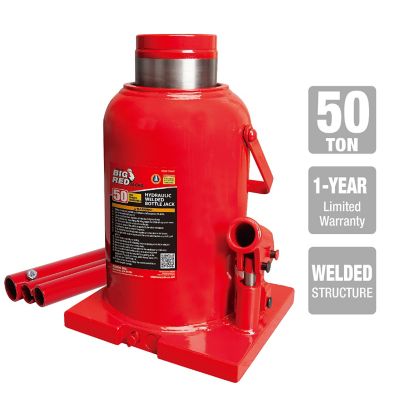
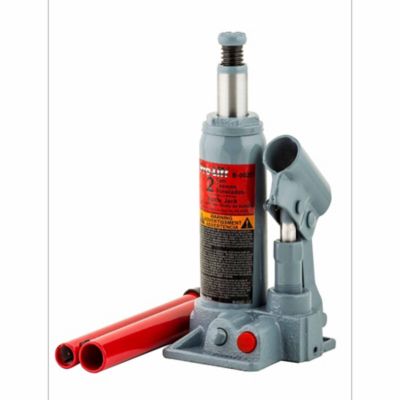
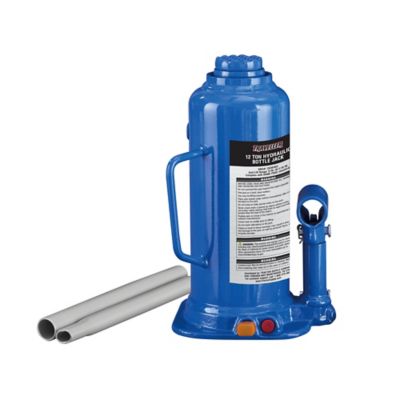
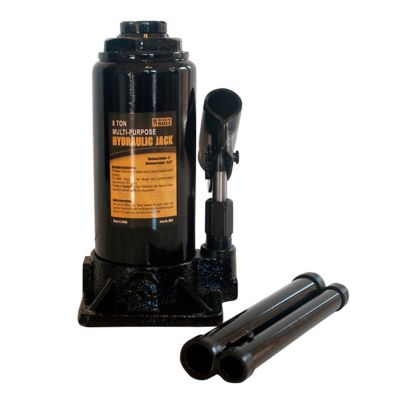
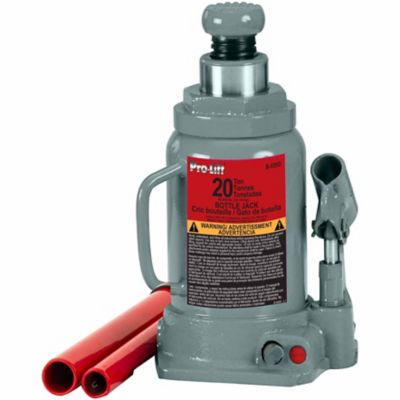
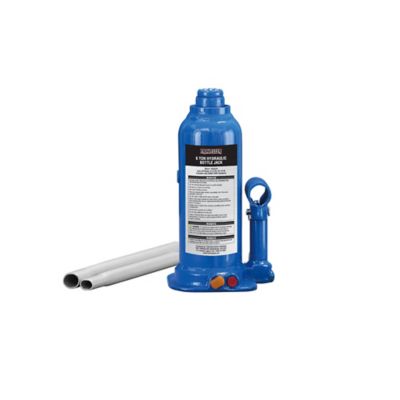
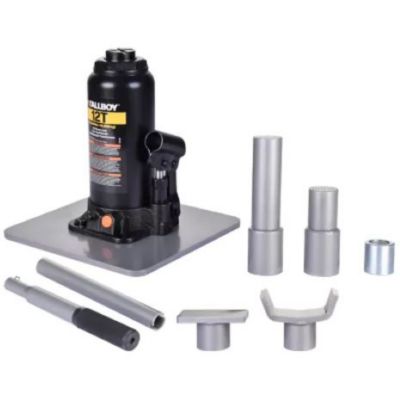
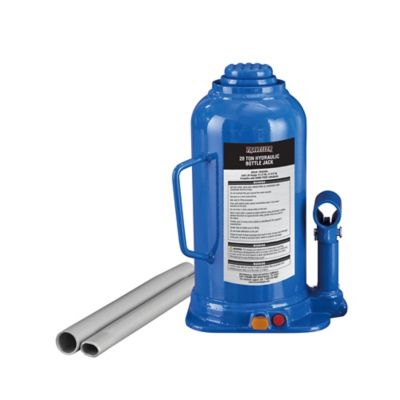
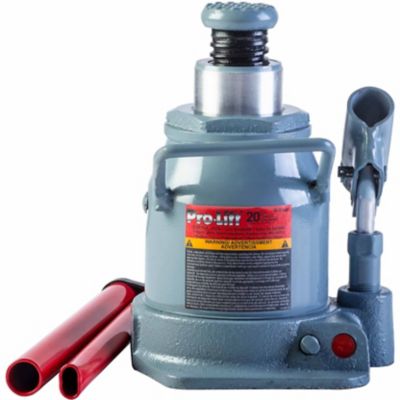
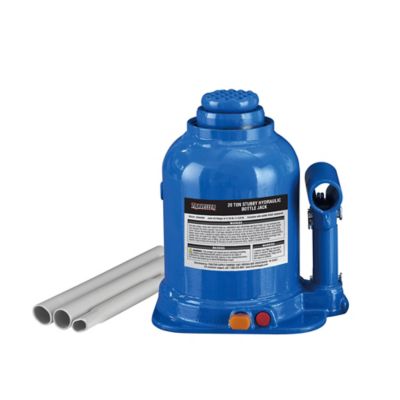
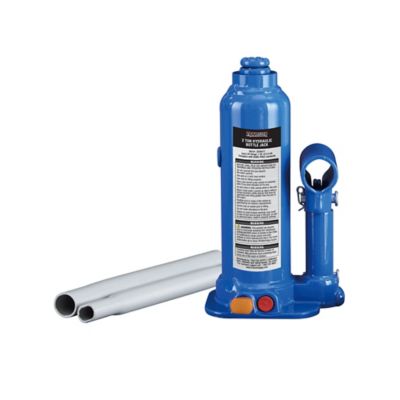
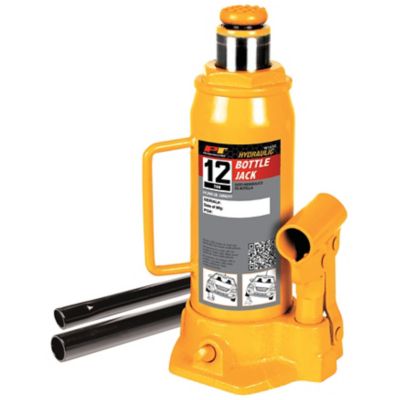
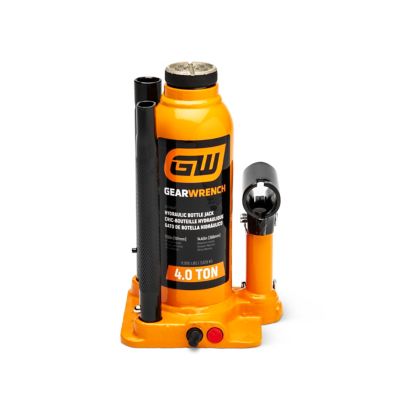
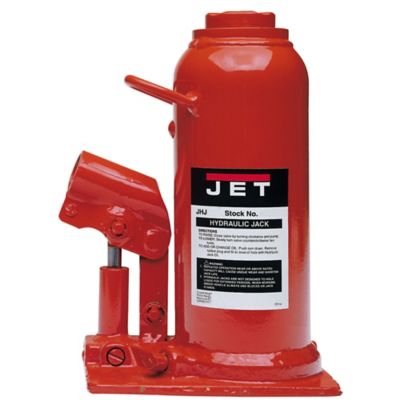
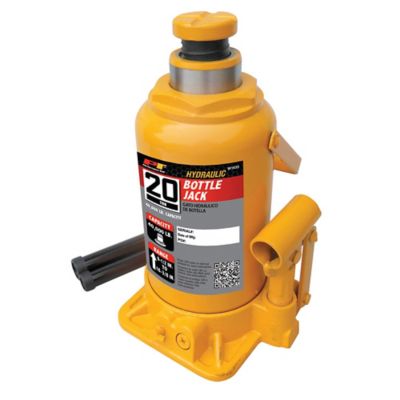
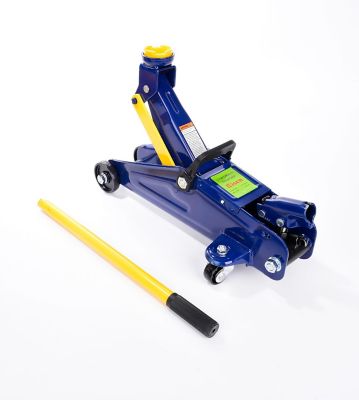
Bottle jacks are compact hydraulic lifting tools with an upright cylinder, a sturdy base and a saddle that contacts the load. Their bottle-shaped bodies hold a hydraulic system that turns movement at the pump handle into upward force at the lifting ram. Pumping the handle moves oil under pressure into the main cylinder, raising the ram; opening the release valve in a controlled manner allows the oil to return and the ram to lower. That simple operating principle makes hydraulic bottle jacks useful around farm shops, equipment sheds and home garages where heavy lifting calls for more than muscle. They can serve truck owners, mechanics, trailer owners and folks maintaining farm equipment, provided the jack matches the equipment’s designated lifting points and required capacity. Compared with a long-bodied floor jack, a bottle jack generally takes up less storage space, though its upright shape can require more clearance beneath the load. Common construction features include steel bodies, cast or forged metal components, broad bases and textured lifting saddles. Those details matter when a tool spends its working life around concrete floors, toolboxes and machinery. The saddle provides the contact surface, while the base spreads the jack’s force across the supporting surface. Neither feature replaces the need for proper placement. Capacity ratings describe the maximum load the jack is designed to lift under the manufacturer’s stated conditions, not the weight it can safely handle in any position. Matching capacity to the actual load at the lifting point, along with the equipment manufacturer’s instructions, matters more than choosing by appearance or cylinder size. A truck’s empty weight also tells only part of the story when tools, cargo or attached equipment add weight. For occasional tire service or regular shop work, a bottle jack’s appeal comes from straightforward operation and substantial lifting force in a relatively small package. The best fit depends on the work, the space beneath the lifting point and the support equipment that will hold the load after lifting.
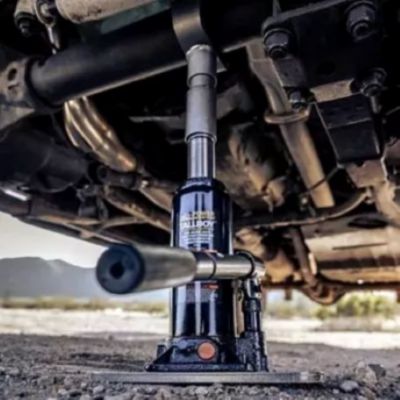
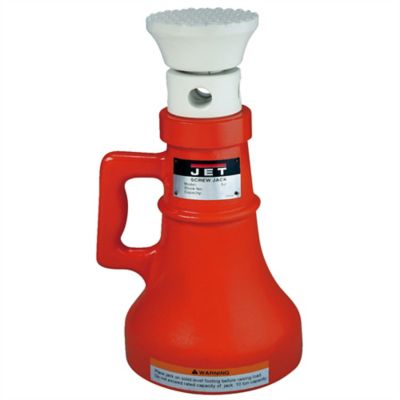
Fit involves more than the tonnage stamped on the jack. Collapsed height determines whether the saddle can reach beneath an approved lifting point before lifting begins, while maximum height determines how far the jack can raise that point. Hydraulic stroke is the ram’s lifting travel, and an adjustable screw extension, where provided, helps close the initial gap without adding hydraulic stroke. Low-profile bottle jacks have a shorter starting height for tighter spaces, but their lift range still needs to suit the job. A pickup with generous ground clearance presents a different fit problem than a vehicle sitting low after a flat tire. Likewise, a trailer frame and an equipment axle may call for different approved contact locations, even when the loads seem similar. Measurements should account for the equipment’s condition when the jack will actually be needed, not just its normal parked height. Handle clearance deserves attention, too: the operator needs room to pump without reaching beneath an unsupported load or working against a tire, frame rail or nearby obstacle. Saddle shape and contact area must suit the manufacturer-approved lifting point; improvised extensions, loose blocks and makeshift adapters can create an unstable setup. Bottle jacks belong on a firm, flat, level surface, with the load centered over the saddle and the jack positioned as directed by its manufacturer. A broad base does not make loose gravel, soft ground or a sloping driveway suitable for lifting. Wheel chocks help prevent rolling, and vehicle lifting procedures may also specify parking brake and transmission settings. A bottle jack is a lifting device, not a substitute for properly rated jack stands or other manufacturer-approved support. Never place any part of the body beneath a load supported only by a jack. Support ratings, placement and compatibility matter just as much as the jack’s own capacity. Around farm machinery, attachments and moving components may also need separate securing under the equipment manufacturer’s procedures. These considerations help distinguish a practical shop tool from one that has the right lifting rating but cannot safely fit the task.
Manual hydraulic bottle jacks make sense for work where a hand-operated pump fits the pace and frequency of lifting. For shops equipped with a suitable compressor,
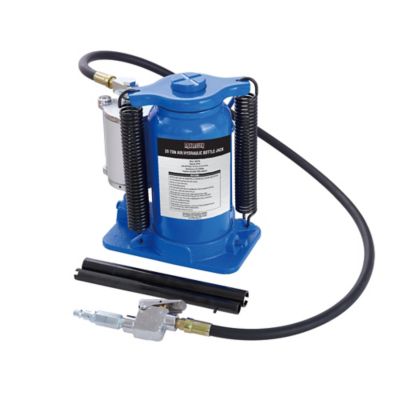
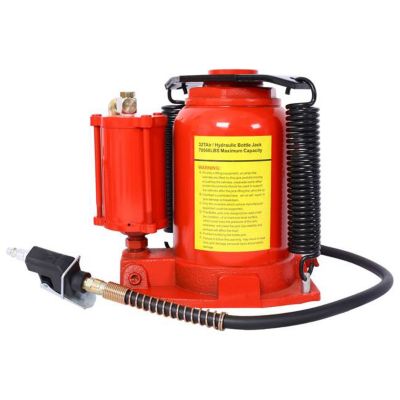
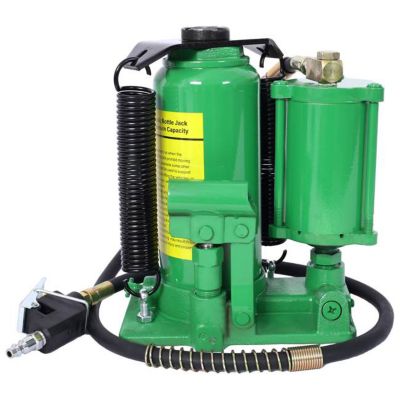
Pneumatic Jacks offer another lifting option to consider. Air/hydraulic bottle jacks use compressed air to operate a hydraulic pump, reducing repeated handle strokes during lifting; compressor pressure, airflow, hose connections and operating requirements must match the jack manufacturer’s specifications. Air assistance changes how the pump operates, not the need for correct capacity, stable placement or separate load support. For either operating style, service life depends in part on keeping the ram and hydraulic system in good condition. Dirt on an extended ram can damage sealing surfaces as it retracts, while dents, corrosion or a bent component can interfere with smooth movement. Manufacturer-directed cleaning, inspection and lubrication help keep wear points from becoming bigger problems. Hydraulic fluid type and fill level are also model-specific, so engine oil, brake fluid and other substitutes do not belong in the reservoir unless expressly specified by the manufacturer. Air in the hydraulic system may cause erratic movement, and any bleeding procedure should follow the tool’s manual. Fluid leaks, damaged parts, unexpected settling or a ram that will not operate normally are reasons to take the jack out of service for evaluation. Storage with the ram lowered, the extension retracted as directed and the tool protected from moisture and dirt helps protect exposed surfaces between jobs. A secure storage spot also keeps the jack and its handle from rolling around in a truck bed or knocking against other tools. Weight and carrying provisions matter when the jack travels between the shop and equipment parked elsewhere on the property. A bottle jack that fits the lifting point, works with the available clearance and pairs with the right supports earns its place beside the wheel chocks, stands and other tools that keep maintenance moving.