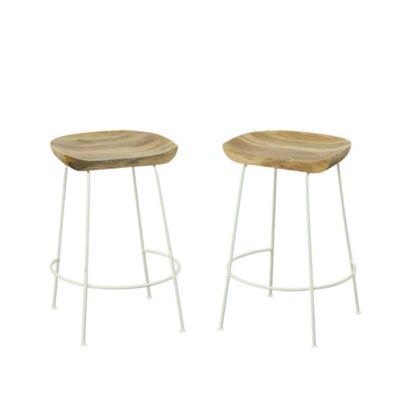
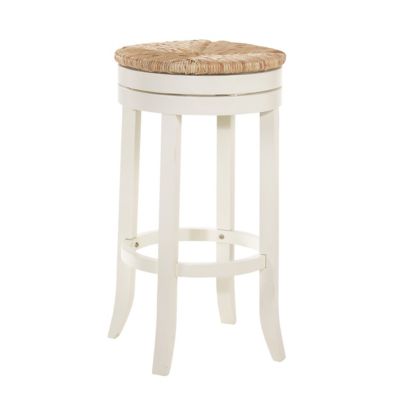
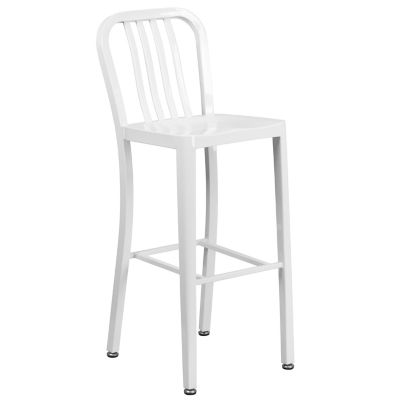
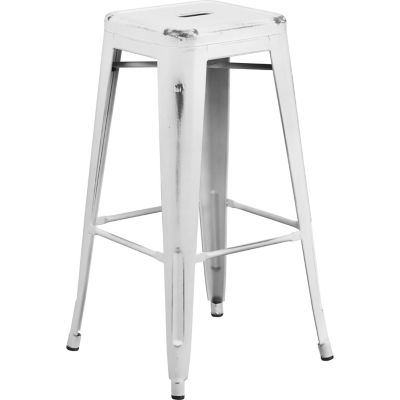
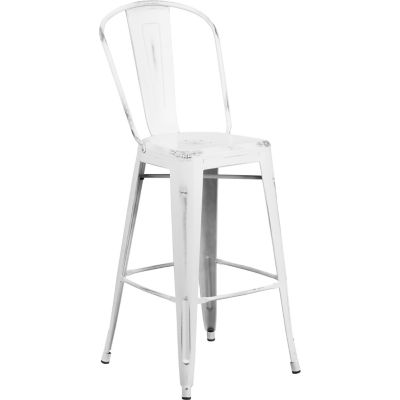
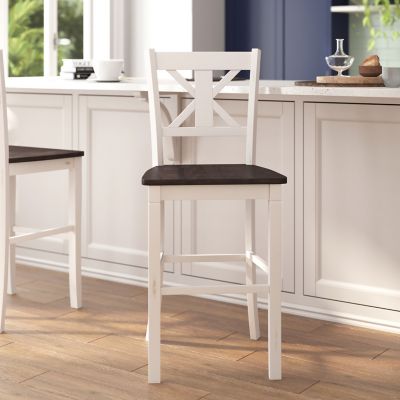
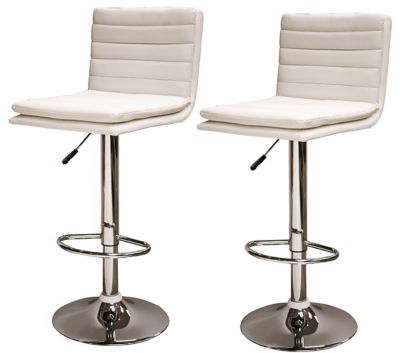
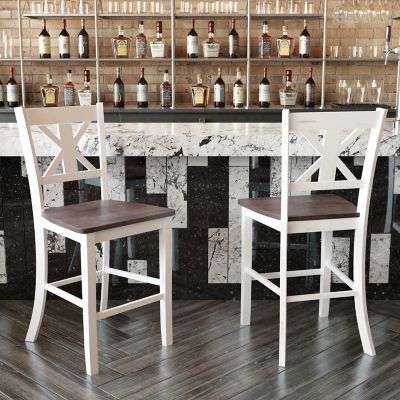
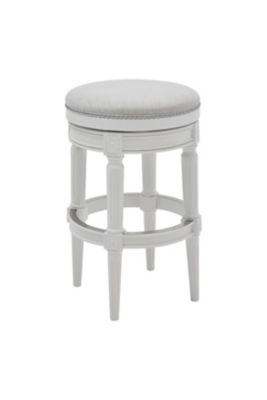
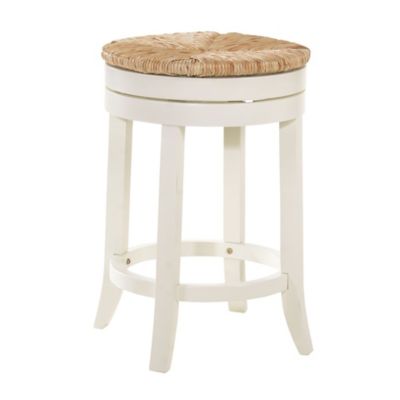
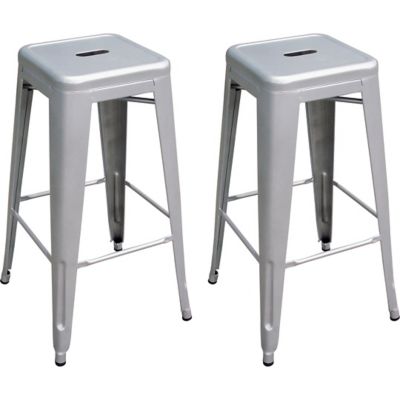
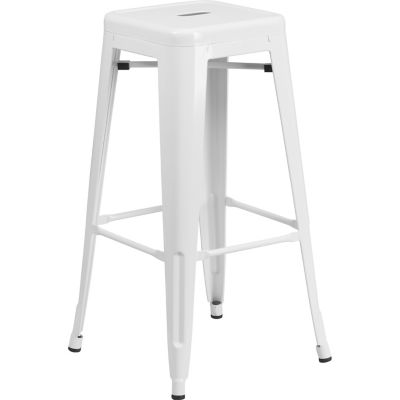
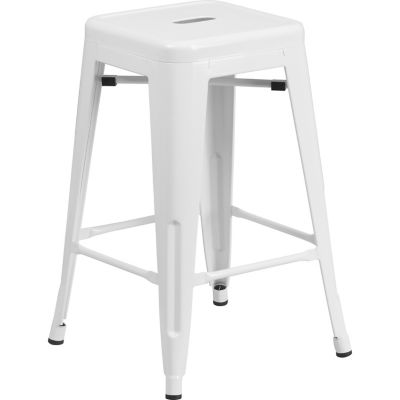
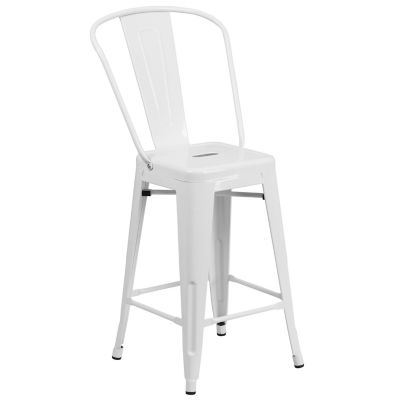
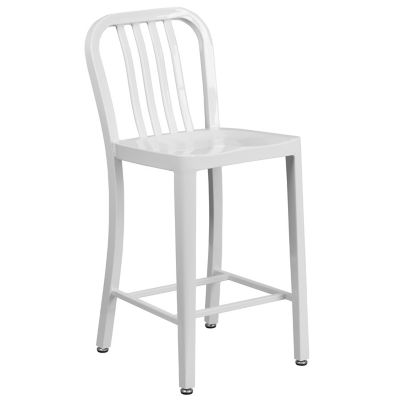
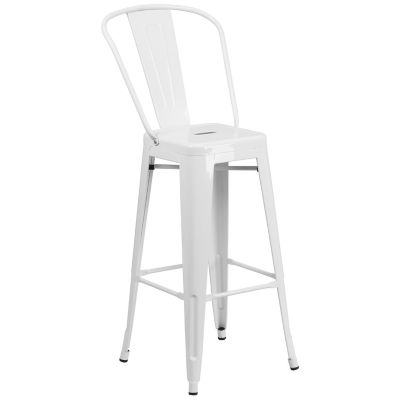
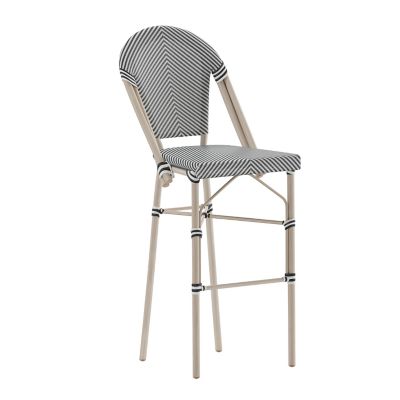
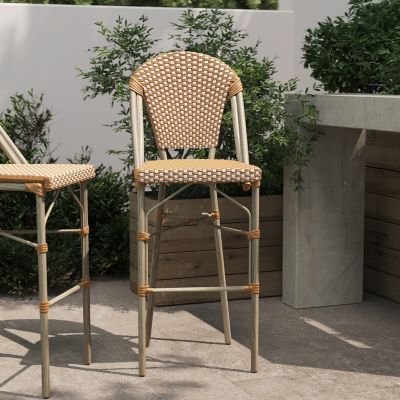
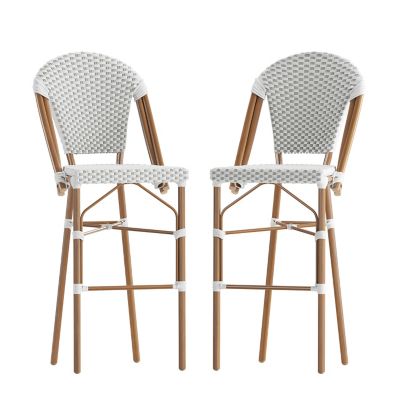
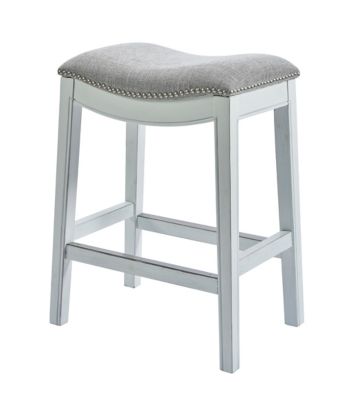
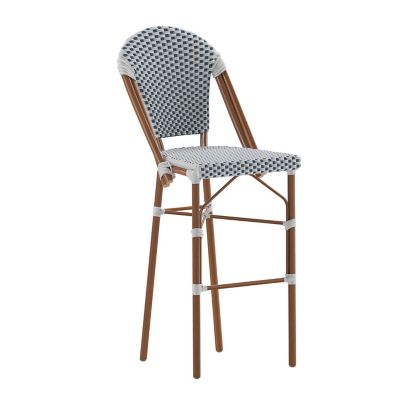
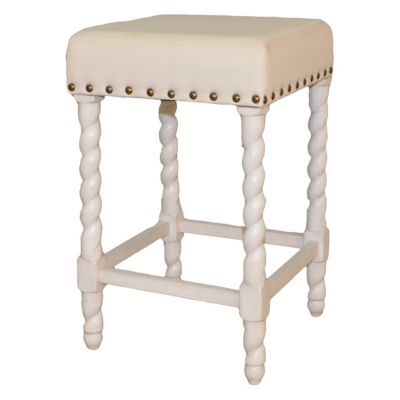
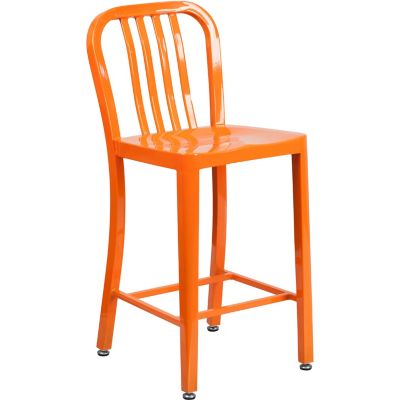
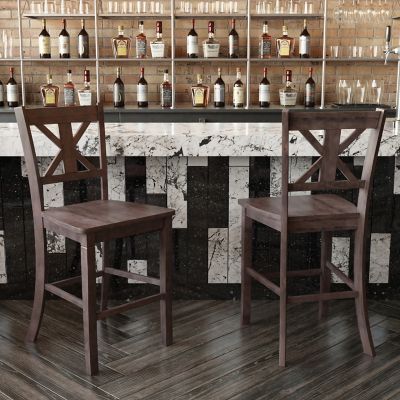
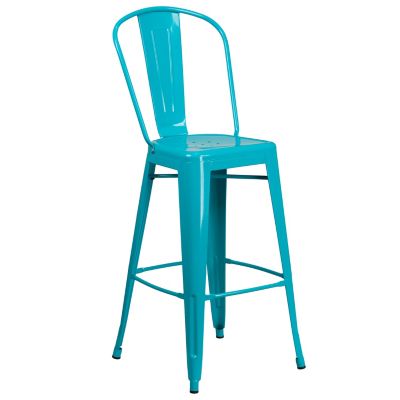
Modern white bar stools bring a bright, uncluttered look to kitchen islands, raised breakfast bars, and indoor gathering spots without making the room feel too formal for everyday life. Their clean lines sit comfortably alongside wood cabinets, stone countertops, exposed beams, and dark hardware, making them a natural fit for both a farmhouse kitchen and a more streamlined home. White seating can lighten the look of a substantial island or stand out against a dark countertop, while a slim frame leaves more of the surrounding room in view. The shade of white matters, too: a warm ivory finish generally pairs well with honey-colored wood, while a cooler white can complement gray stone and stainless steel. Materials shape both the appearance and the upkeep of these stools. Painted wood brings visible structure and a familiar feel, with straight legs or gently curved backs keeping the profile simple. Metal frames can provide a slimmer outline, and powder-coated surfaces help protect the underlying metal when the finish remains intact. Molded plastic seats often have smooth contours and fewer seams to catch crumbs, though their weight limits and care requirements still deserve attention. Upholstered white bar stools add softness for lingering over coffee or supper, with woven fabric, leather, and synthetic upholstery offering different textures and cleaning needs. A smooth faux leather seat may be easier to wipe after a small spill than a textured fabric seat, but neither should be treated as stainproof. Mixed-material designs, such as white seats on wood legs or metal bases, connect a light seating area with other finishes already in the room. For a space that needs a little more contrast,
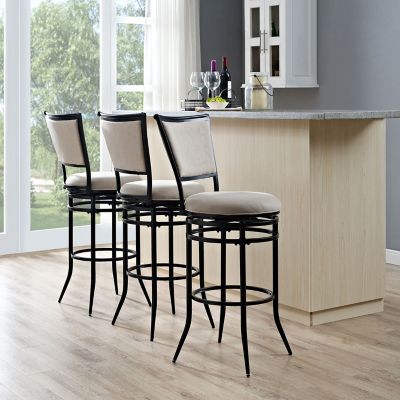
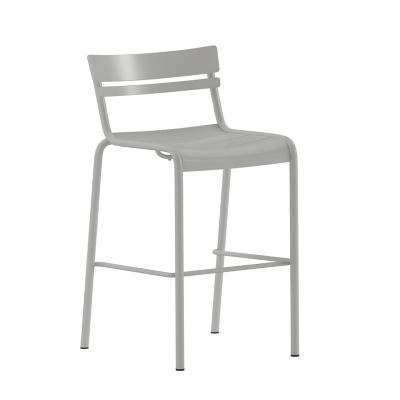
Gray Modern Bar Stools offer another neutral direction alongside white cabinetry or pale counters. The most practical choice balances the look of the seat with how it feels, how it fits, and the amount of attention its finish needs through the week.
Seat height is one of the biggest differences between bar stools and counter stools, even when the two look much alike. Counter-height seats commonly measure about 24 to 27 inches from the floor and suit many counters around 34 to 36 inches tall. Bar-height seats commonly measure about 28 to 32 inches and suit many raised surfaces around 40 to 42 inches tall. These ranges are starting points rather than a guarantee of fit; a comfortable setup generally leaves about 10 to 12 inches between the seat and the underside of the countertop. A thick countertop edge, support apron, or shallow overhang can reduce knee room, so the usable opening matters as much as the overall counter height. At a kitchen island where someone shells peas while another person sorts the mail, enough elbow room makes the seating feel welcoming instead of crowded. Allowing roughly 26 to 30 inches from the center of one stool to the center of the next is a common starting point, with wider seats and armrests needing more space. The stool’s full footprint also counts, especially when angled legs extend beyond the seat. Walkways should stay clear when people are seated, and nearby drawers, cabinet doors, and appliances need room to open. Backless white bar stools tuck neatly beneath a suitable overhang and keep sightlines open across the kitchen. Stools with backs offer more support for longer meals, conversation, or an evening spent looking through seed catalogs. Armrests can add comfort, but their height may prevent the stool from sliding under the counter. A swivel seat makes turning toward the room easier, provided there is clearance to avoid bumping the island or neighboring chairs. Adjustable-height stools can accommodate different users or compatible surfaces, though the listed adjustment range, base dimensions, and weight capacity should all match the intended setting. A well-placed footrest helps keep feet supported rather than dangling, particularly during a longer sit.
Everyday comfort and long-term performance come down to more than a padded cushion or a substantial-looking frame. Seat width, depth, edge shape, and back angle all influence how a stool feels after the first few minutes. A slightly contoured seat can offer support without much padding, while a rounded front edge may feel gentler behind the knees. Secure joints, sound welds, and a stable base matter in a kitchen where seats get pulled out several times a day. Published weight limits and assembly requirements provide a better basis for judging suitability than appearance alone. White finishes make crumbs, scuffs, and some clothing dye transfer easier to notice, which can be helpful for keeping a breakfast spot tidy but calls for prompt attention to marks. A soft cloth and a cleaner approved for the particular material are sensible starting points; abrasive pads, strong solvents, and excess water can damage certain paints, coatings, fabrics, or upholstery. Spills on fabric usually call for blotting rather than scrubbing, while seams and stitching may need extra attention to keep food particles from settling in. Painted wood should not stay wet around joints, and a chipped metal coating deserves care according to the manufacturer’s directions. Floor protectors suited to the flooring help reduce scratches when stools move across wood, tile, or vinyl, and grit tracked in on work boots should be cleared away before it gets dragged beneath the legs. Checking fasteners periodically can help keep assembled seating steady through daily use. Most indoor bar stools belong in a dry, sheltered room; a covered porch still exposes furniture to moisture and temperature changes, so outdoor placement calls for an explicit outdoor rating. In family spaces, stable footing and clear paths are especially important, and tall stools are not substitutes for age-appropriate child seating or step stools. With the right dimensions and materials, modern white bar stools can serve as a comfortable place for a quick breakfast before chores, a neighbor’s visit, or a bowl of soup during the cooler months, keeping everyday seating light in appearance and practical in use.