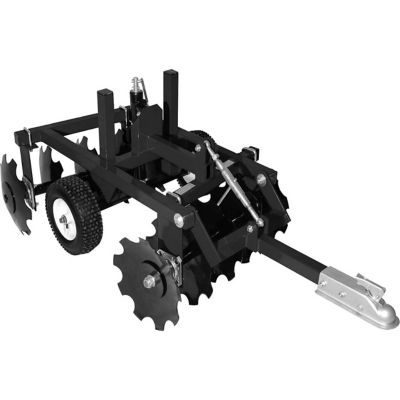
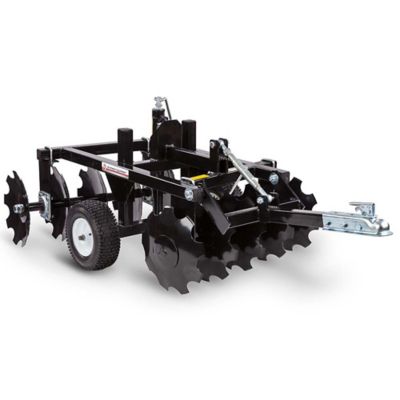
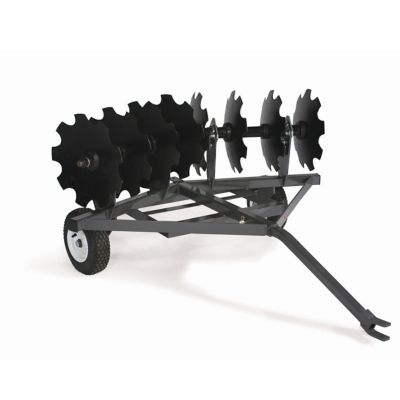
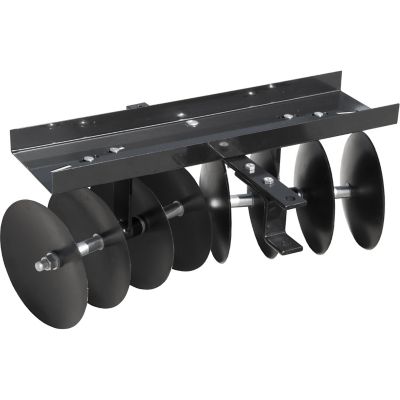
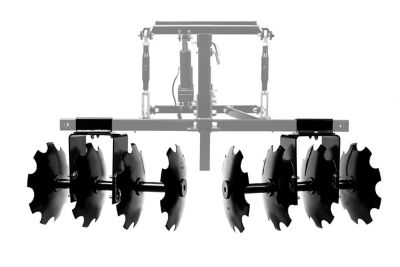
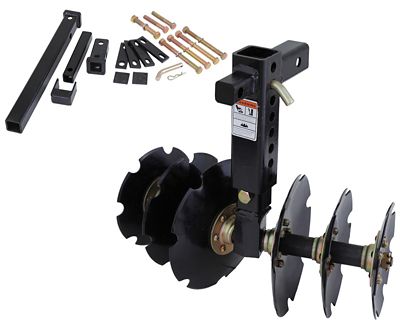
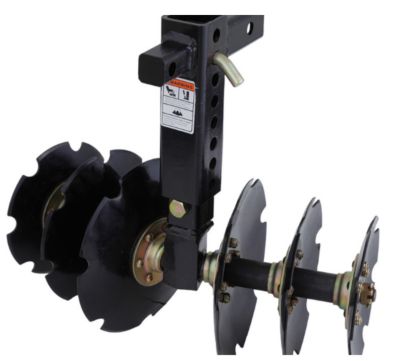
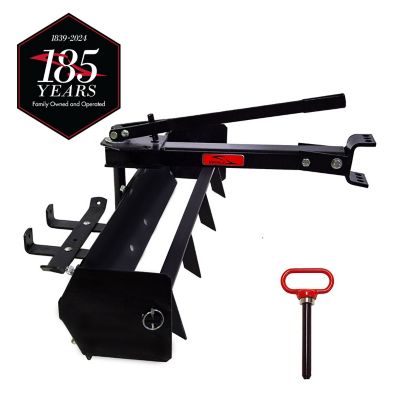
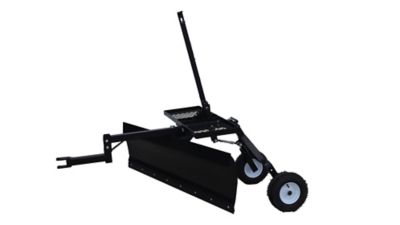
An ATV disc harrow is a soil-working attachment that uses rotating, concave steel discs to cut into the ground, loosen the surface, and mix plant residue into the upper layer of soil. These attachments help prepare seedbeds for wildlife food plots, garden patches, and other small-acreage planting projects where a full-size tractor may be more machine than the job calls for. For a landowner tending a clearing beyond the barn or a hunting lease manager planting along a field edge, an ATV disc harrow brings ground-working capability to a vehicle already doing chores around the property. As the attachment moves forward, its discs roll through the soil, slicing shallow vegetation and shifting dirt sideways to break apart clods. The result depends on soil moisture, ground conditions, disc angle, attachment weight, and the number of passes. Previously worked ground generally takes less effort than thick sod or a hard-packed lane, and a disc harrow is not a substitute for removing stumps, large rocks, or buried debris. Notched disc edges can help bite into surface residue, while smooth-edged discs also cut and turn soil; blade shape alone does not determine how deeply an attachment will work. Disc diameter, spacing, and frame clearance all influence how it handles clods and leftover stems. A rough patch with tall grass may need mowing before soil preparation, and
Mowers For ATVs serve that separate vegetation-cutting role. Disc harrows do their part after the site is ready for ground contact, helping turn manageable surface growth and loosened dirt into a planting area. During the cooler months, that might mean preparing suitable ground for a locally appropriate planting or tending a garden after harvest, provided the soil is neither frozen nor too wet. Small-property owners, gardeners, and folks maintaining wildlife habitat can benefit from an attachment sized for these tasks, especially where access lanes and planting areas leave little room for larger equipment. These tools suit repeat maintenance on established plots better than major land-clearing work.
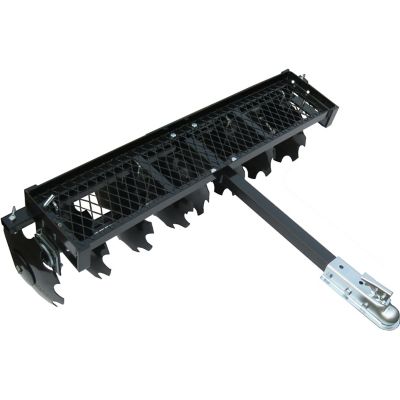
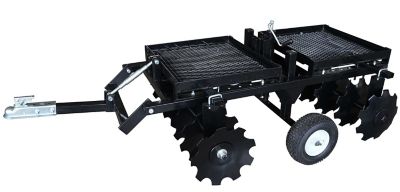
Fit starts with the ATV and its approved attachment requirements, not just engine size. ATV disc harrows may connect through a tow-behind hitch arrangement, a compatible implement frame, or a mounting system that transfers load differently from a trailer-style connection. Those setups are not interchangeable, and some require separate mounting or lifting components. The vehicle manual and attachment specifications should agree on hitch type, towing limits, allowable tongue or vertical load, and operating conditions. A ball coupler needs the matching ball size, while other connections require their specified pins, brackets, or receivers. Clearance around tires and rear components also matters, particularly when turning or raising the attachment. Working width deserves the same attention. A wider disc harrow covers more ground with each pass, but it also places more demand on the ATV and needs more space between trees, fence lines, and plot entrances. A narrower attachment may fit a tucked-away garden or woodland opening more comfortably, although it can take additional passes to cover the area. The width that works on loose sandy ground may be too demanding for the same vehicle in dense clay. Steel frames, supported axles, and secure disc assemblies carry the strain as the attachment crosses uneven ground, while welds, hardware, and bearing protection contribute to how well it holds up over repeated seasons. Adjustable disc gangs, where fitted, change the angle at which groups of discs meet the soil. A more aggressive setting generally moves more dirt and increases pulling resistance; a gentler setting may suit lighter finishing work. Some designs include a weight tray, but added ballast must stay within both attachment and vehicle limits and be secured as directed. Lift arrangements and transport wheels, when included, can make travel between working areas more practical. A gravel approach, narrow gate, or firm barnyard crossing is worth considering alongside the planting patch itself, since exposed discs should not drag across surfaces they are not intended to work.
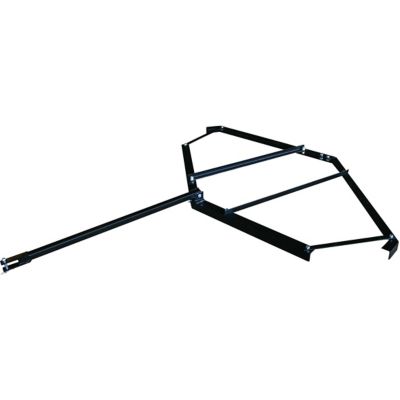
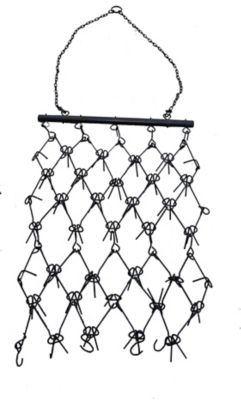
Soil conditions make a noticeable difference in the finish an ATV disc harrow leaves behind. Ground that crumbles when squeezed is generally more workable than clay that sticks in a heavy ribbon or dry soil that feels like brick. Working wet ground can smear and compact it rather than produce a loose seedbed, while parched, tightly packed ground may resist penetration even with added attachment weight. On an established food plot, several shallow passes may break up clods more evenly than trying to force the discs deep in one trip. A second pass from a different direction, where terrain and operating instructions permit, can help reduce ridges. Discing alone does not always leave the firm, even surface required for planting, particularly for small seeds that need shallow placement and close soil contact. Final preparation depends on the crop and soil, and some sites need leveling or firming afterward. Attachment depth and travel speed should follow the manufacturer's directions; extra speed is not a dependable shortcut to better ground preparation. Rocky spots, slopes, and sharp turns deserve particular care because an engaged attachment changes the load on the ATV and can affect handling. Keeping people and animals clear of the work area is also part of the job. Between projects, straightforward care helps keep the implement ready for another season. With the vehicle shut down and the attachment safely lowered or supported as directed, packed soil and wrapped vegetation can be cleared away before inspection. Disc edges, axle hardware, hitch connections, bearings, and frame joints deserve a look for damage, looseness, or wear. Bearings may be sealed or may have lubrication points, so maintenance should match the particular design rather than assume every assembly needs grease. Cleaning off mud, allowing components to dry, and protecting exposed metal according to the care instructions help limit corrosion. Covered storage keeps rain and snow off working parts, and a stable parking spot keeps sharp discs away from busy footpaths. For landowners balancing planting chores with fence checks and feed runs, the best fit is an ATV disc harrow matched to the vehicle, the ground, and the amount of work ahead.