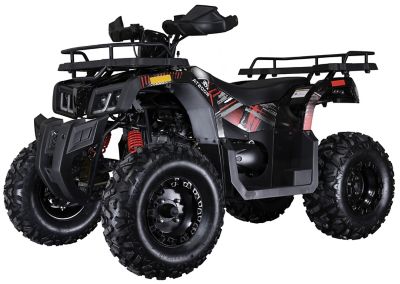
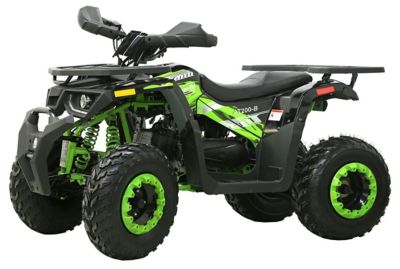
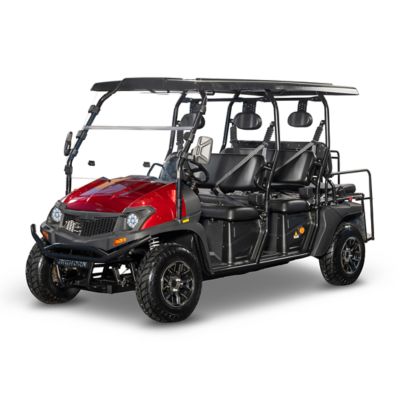
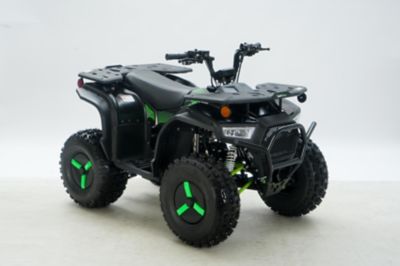
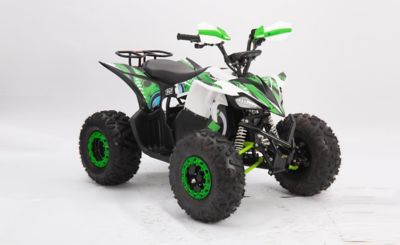
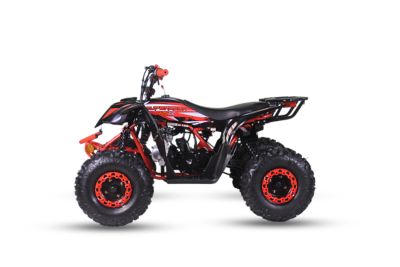
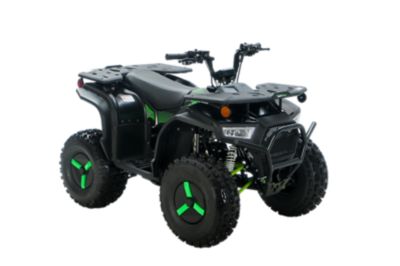
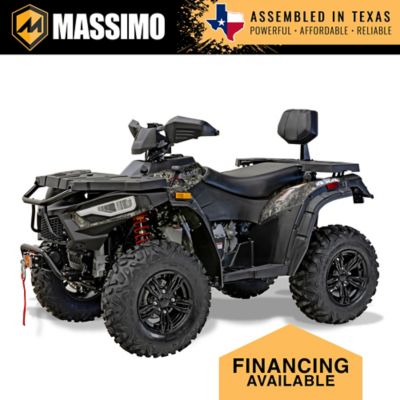
A four-wheel ATV for adults is an off-road machine that can carry fence tools out to the back pasture, make the rounds on a stretch of acreage or take the long loop on a designated trail. Often called a quad or four-wheeler, an ATV has a seat the rider straddles and handlebars for steering. That setup is different from a side-by-side, which has seats the riders sit in and a steering wheel. Utility ATVs tend to put the emphasis on steady pulling power, room for gear and control at low speeds. A trail-oriented ATV may put more emphasis on steering feel, suspension travel and how readily it changes direction. There’s plenty of overlap: A machine that carries supplies to the far end of a property can still be a good fit for a ride on the local trail system. Four wheels don’t necessarily mean four-wheel drive. A two-wheel-drive ATV can suit firm lanes and maintained trails, while four-wheel drive can offer more traction on loose dirt, rocky climbs and deeply rutted routes. Selectable four-wheel drive gives the rider a choice as the ground changes, though extra traction doesn’t make a steep slope or an eroded crossing safe. Ground clearance matters when rocks or ridges stick up between the wheel tracks, and overall width and turning room count when the route goes through narrow gates or around closely spaced trees. Engine size is only one part of how a machine feels. A smooth throttle and predictable transmission can matter more than extra power when the day’s work involves easing up to a gate, stopping to move it and then making a tight turn on the other side. An automatic transmission can simplify stop-and-go riding, reverse can save room when backing out of a tight spot, and low range, where equipped, is meant for slow work within the manufacturer’s limits. The best match starts with the ground the ATV will cover most often and the work it will do there.
Fit on an adult ATV has as much to do with reach and room to move as it does with seat height. With boots planted on the footrests, the rider should be able to reach the throttle and brakes comfortably and turn the handlebars without having to lean forward or squeeze a knee out of the way. There should also be room to shift position as the terrain changes. That’s worth considering when more than one adult will ride the same machine: A setup that feels easy to handle for a tall rider may leave someone with a shorter reach stretching for the controls. Adult sizing doesn’t mean an ATV is built for two people. A long seat can give a solo rider room to move without being rated for a passenger. For chores, the layout of the cargo racks can make a real difference. For instance, on a run out to repair a fence, having room to tie down a coil of wire without blocking the handlebars or crowding the seat makes for a more manageable trip. Front and rear racks may have different load limits, and those ratings aren’t the same as the ATV’s total payload or towing capacity. Rider weight, cargo and mounted equipment all matter when figuring what the machine can carry. For towing, hitch compatibility, trailer tongue weight and the manufacturer’s limits matter just as much as having enough power to get the load moving. Steel is common in ATV frames and can also be found in racks, where stout mounting points matter if loads regularly rattle over rough ground. Molded plastic body panels help keep weight down, while tire tread and construction affect how the ATV handles everything from packed lanes to loose rock. When comparing
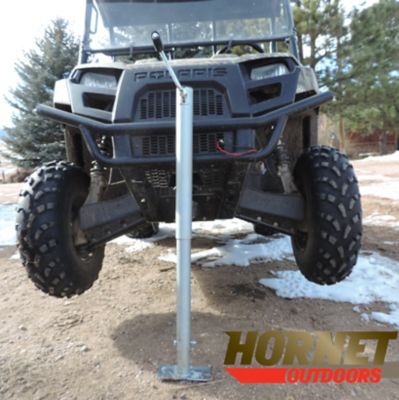
Universal ATV accessories, look at the measurements, mounting points and load ratings. A part that fits the rack still needs to leave room for the rider, the controls and the rest of the load.
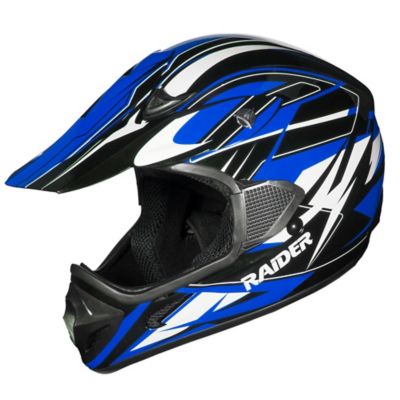
Hard miles on an ATV don’t always show up on the odometer. A short route with repeated stops, rough crossings and loaded trips can put more wear on tires, brakes and suspension than a longer run on a smooth trail. A quick look before heading out can catch a soft tire, a loose tie-down or a brake lever that feels different than it did on the last ride. Tire pressure belongs at the setting specified for the machine; by eye, a low-pressure ATV tire can look fine even when it needs air. After a run through gritty ground, clearing buildup from around the footrests, brakes and underbody makes it easier to spot wear or damage. The owner’s manual lays out the routine for oil, filters and lubrication, including whether hard service calls for shorter intervals. It’s also worth paying attention to how easily the normal service points can be reached. On a four-wheeler that makes the rounds most days, an air filter that’s easy to get to is one less reason to put off a regular check. Comfort counts over those repeated trips, too. A suspension that takes the edge off a washboard lane and controls that don’t tire out the rider’s hands can make the last stretch back to the shed feel a lot more like the first. An adult ATV is designed for off-road travel, so local rules and trail restrictions matter, especially where a route meets a public road. A properly fitted helmet, eye protection, gloves and over-the-ankle boots belong on the rider for a quick chore run as much as for a day on the trail. Whether the job is checking the far fence line or following a marked loop through the woods, a four-wheeler earns its place when it fits the rider, handles the terrain and carries what the trip calls for without being pushed past its limits.