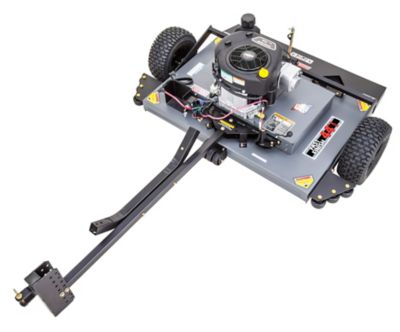
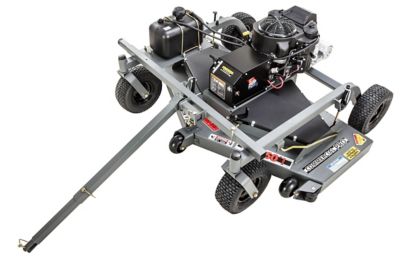
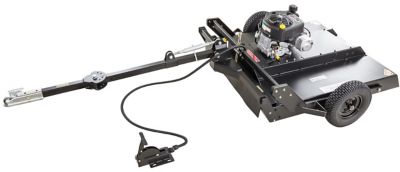
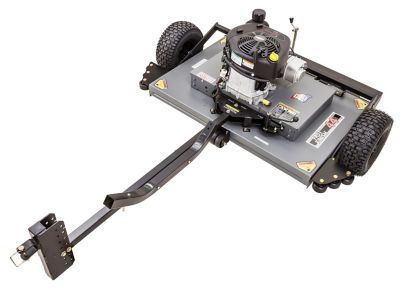
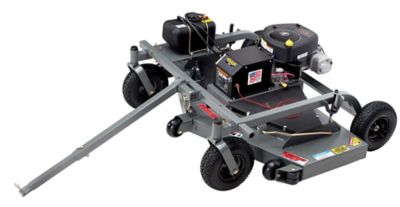
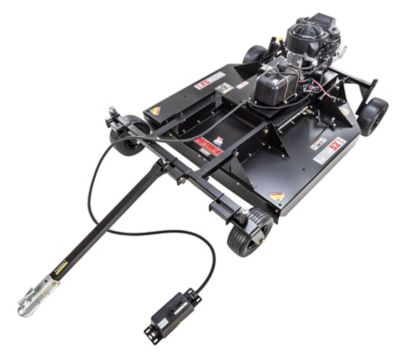
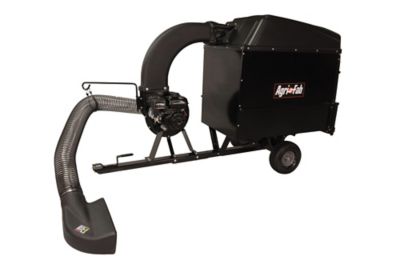
Mowers for ATVs pair an all-terrain vehicle with a mowing attachment to cut grass, weeds, or brush across larger properties. Most tow-behind ATV mowers have their own engine to power the blades, while the ATV provides the pulling power. That setup gives acreage owners, hobby farmers, and property caretakers another way to maintain open ground without relying on a tractor-mounted mower. The right type depends on what grows there and how the finished area needs to look. Finish mowers are intended for maintained grass on relatively smooth ground, such as a broad stretch beside the house or a grassy lane between outbuildings. Their blade arrangements and decks favor an even appearance rather than clearing woody growth. Rough-cut mowers handle taller grass and heavier weeds, with some models rated for brush or small saplings up to a stated diameter. Those cutting limits matter: a mower meant for grass is not a substitute for equipment rated for woody material. Flail mowers use multiple cutters attached to a rotating horizontal rotor, and their capabilities vary with the cutter style, power, and overall construction. Some are suited to grass maintenance, while others handle heavier vegetation within the manufacturer's specifications. For a property with both a tidy yard and an overgrown back lot, those differences are more important than choosing by cutting width alone. A finish mower can leave the area around a picnic spot looking neat, while a rough-cut machine fits work along permitted field margins or neglected access lanes. Neither type makes hidden wire, rocks, or stumps safe to mow over. These attachments are practical tools for folks who already have a suitable ATV and enough open space to put a tow-behind mower to work. The broader range of
All Terrain Lawn Mowers provides another place to consider mowing equipment for different property layouts and ground conditions. Across these categories, the useful comparison is the match between the vegetation, the terrain, the towing vehicle, and the finish expected after each pass.
Fit starts with the ATV's towing specifications, not simply its engine size. A mower's weight, tongue load, hitch requirements, and operating demands must fall within the limits stated for both the vehicle and the attachment. A ball coupler and a pin-style connection are not interchangeable, and hitch height affects whether the mower sits and operates as intended. Many tow-behind designs connect at the rear, while specialized front-mounted systems require mounting hardware and vehicle compatibility of their own. An attachment described as suitable for ATVs should still be checked against the particular vehicle's manual. Cutting width also means more than the amount of grass covered in a straight line. The mower's overall width, including wheels and protruding components, determines whether it can pass through a pasture gate or fit along a narrow lane. A wide deck can reduce passes across an open field, but a smaller footprint may be easier to maneuver around fence corners, orchard rows, or scattered trees. Offset towing, where the design allows it, lets the deck track to one side of the ATV for reaching along edges while keeping the vehicle on a clear path. That arrangement still requires room for turns and clearance from posts, trunks, and other obstacles. Cutting-height adjustment helps match the machine to maintained grass or taller field growth, though it does not increase its brush-cutting rating. Wheel placement, tire size, and deck movement influence how an attachment follows changes in the ground; no mower should be assumed suitable for steep slopes just because an ATV can reach them. The combined equipment must stay within both manufacturers' slope and operating restrictions. Engine power, blade design, and travel speed work together, too. Dense vegetation may call for a slower pace within the mower's instructions rather than forcing a faster cut. For long stretches between gates, accessible controls and a starting arrangement that suits the operator can make routine mowing less of a chore, provided every control is operated from its designated position.
Construction and upkeep play a big part in how an ATV mower holds up to repeated work. Steel decks are common, with deck thickness, reinforcement, welds, and protective finishes all worth considering alongside the machine's intended duty. A substantial frame helps support the engine, deck, and running gear, but added weight also counts against the ATV's towing limits. Skids, guards, discharge shields, and other protective components serve different purposes depending on the design, and they need to remain installed and in working order. Belt covers and service-access points can affect how straightforward inspections and maintenance feel after a long run around the property. Replaceable blades, belts, bearings, and tires are worth checking for service compatibility before choosing an attachment, especially when mowing is a regular part of keeping lanes and fields manageable. Sharp, properly fitted cutting parts help the machine perform as intended; bent, cracked, or excessively worn parts need attention according to the manufacturer's instructions. Flail cutters also require inspection for wear or damage, with replacement and balancing procedures followed as specified. Routine care generally includes checking engine oil, servicing the air filter, inspecting belts and fasteners, and lubricating designated points on the schedule in the manual. Before clearing tangled grass or reaching near the deck, the engine and moving parts must be fully stopped and the machine secured against accidental starting as directed. Grass buildup around the deck and engine can interfere with operation and create a fire hazard, so cleaning belongs in the regular routine rather than waiting until performance drops. Fuel handling, storage, and engine service should follow the attachment's instructions as well. Out on the property, a walk-through of the mowing area helps spot loose fencing, discarded rope, holes, and other trouble that tall growth can hide. People and animals need to stay outside the specified safety distance because mowing equipment can throw debris. With a sound match between the mower and ATV, these attachments give property owners a practical way to keep working spaces accessible, grassy areas managed, and the route from the barn to the back acreage easier to maintain.