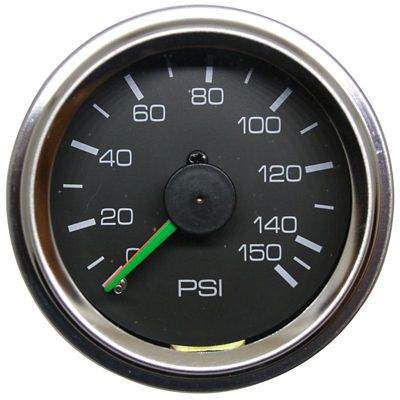
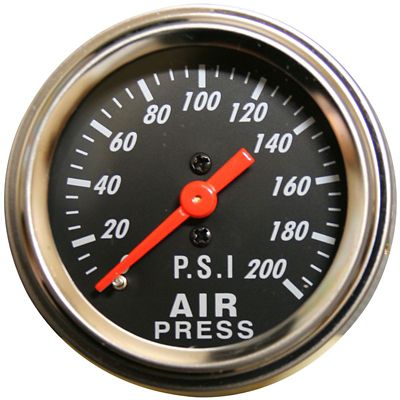
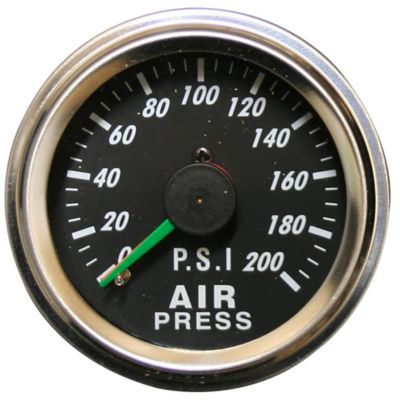
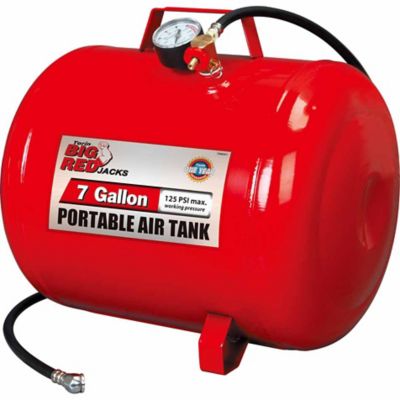
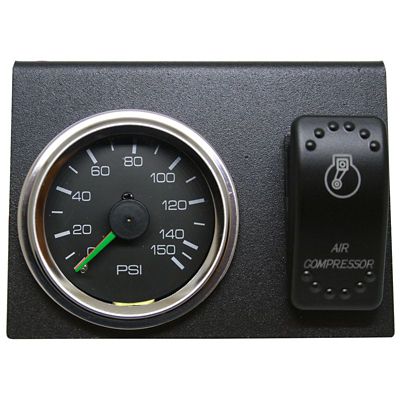
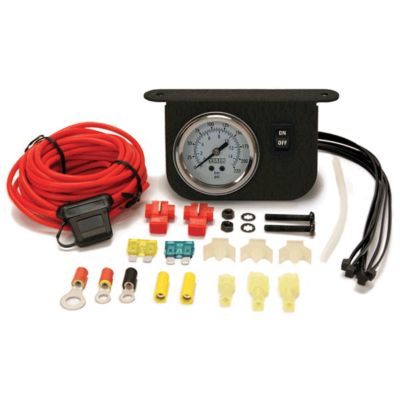
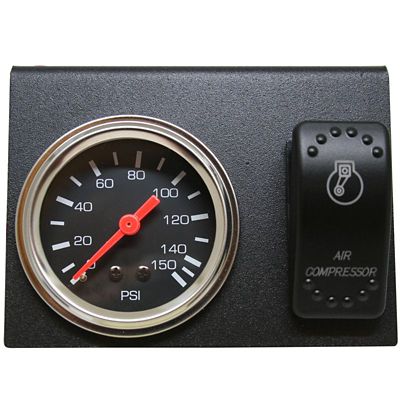
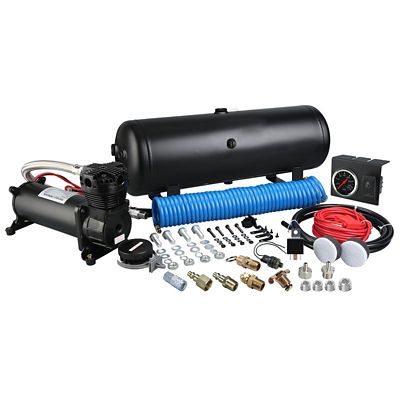
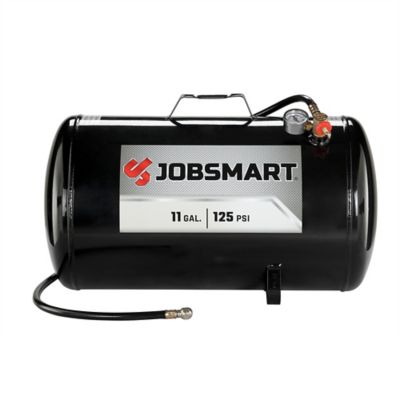
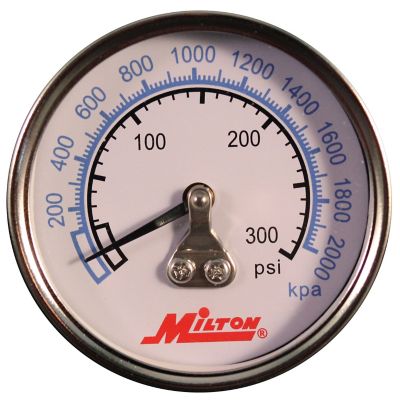
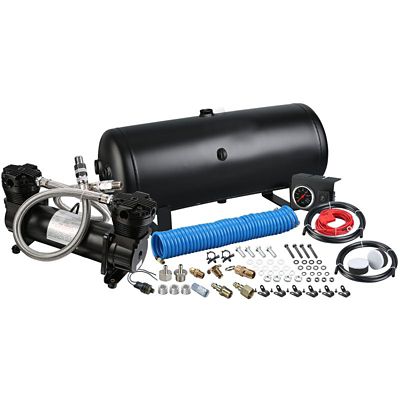
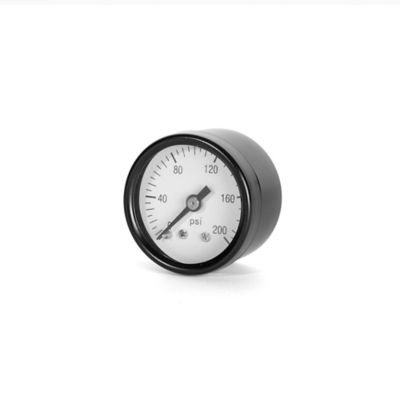
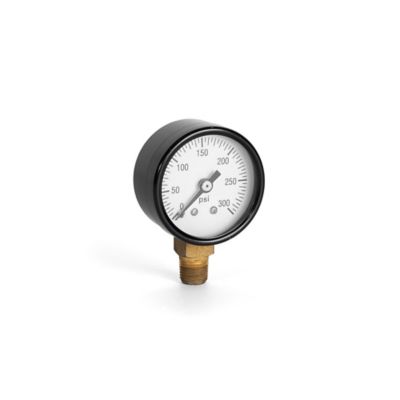
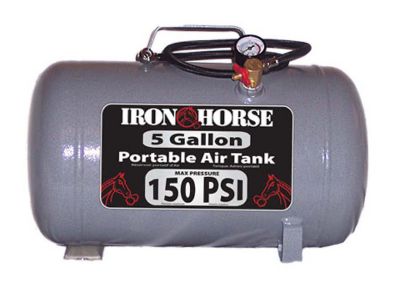
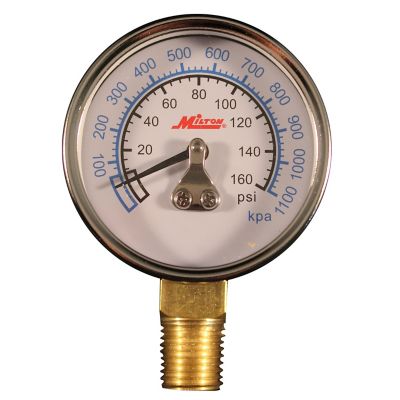
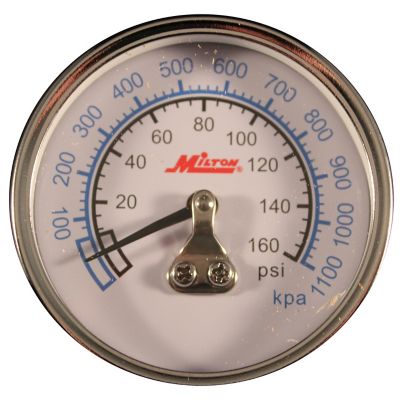
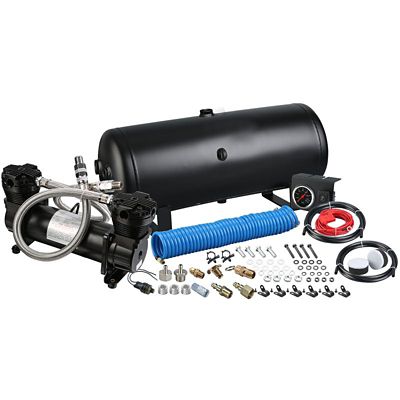
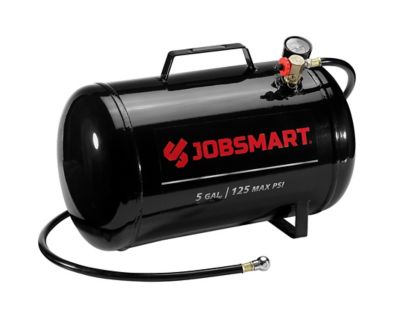
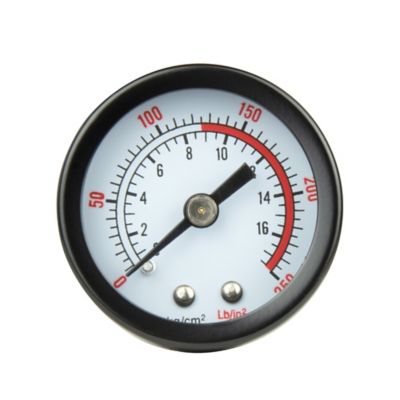
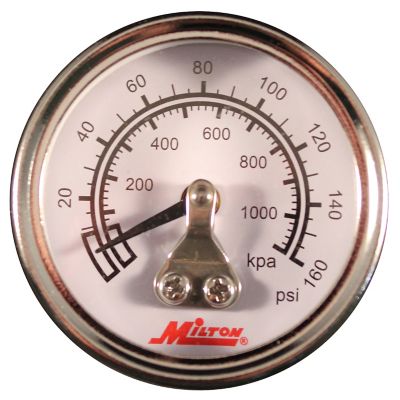
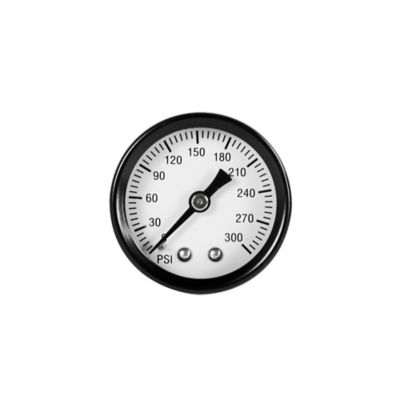
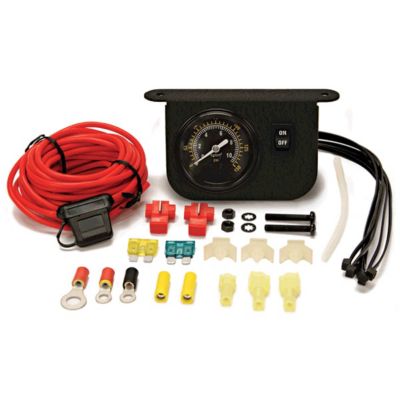
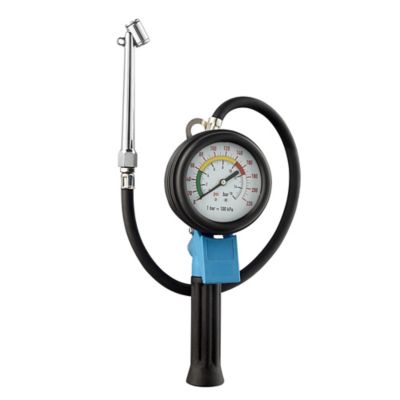
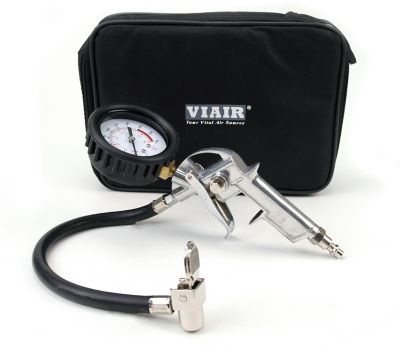
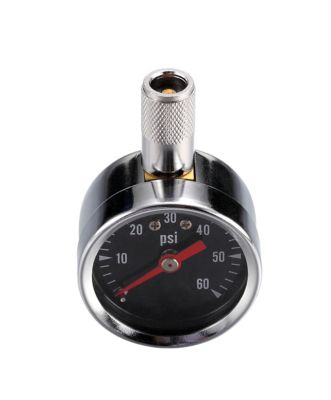
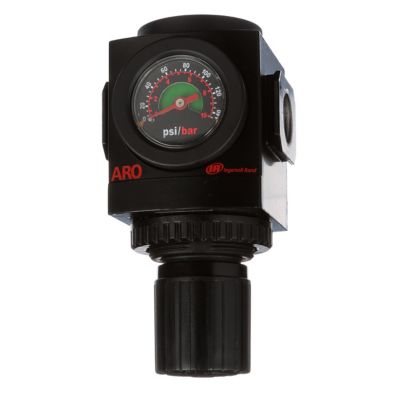
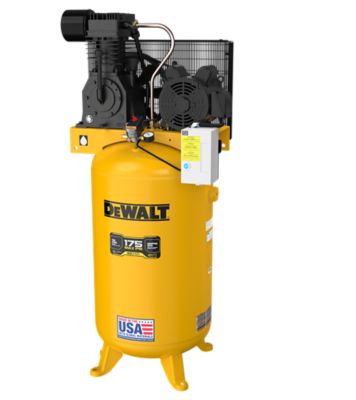
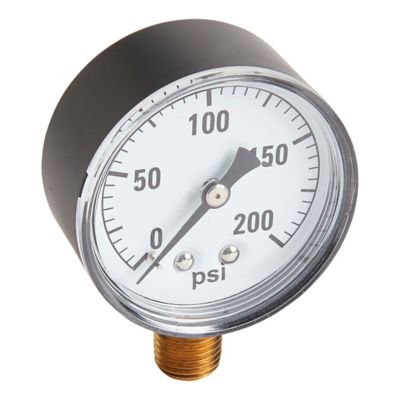
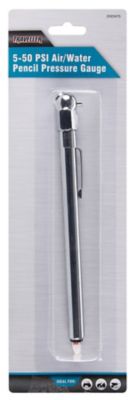
Air tank gauges display the pressure inside an air storage tank, giving a clear reference for filling, checking the air supply and keeping equipment within its specified operating limits. They belong on portable carry tanks, compressor receivers and other compatible compressed-air systems around the farm, garage or workshop. Most familiar dial gauges show pressure in pounds per square inch, or PSI, while some faces also include bar or another pressure scale. That reading tells a different story from tank capacity: two tanks can show the same PSI and still hold different amounts of compressed air. For someone topping off implement tires beside the equipment shed or running an air tool at the workbench, both pressure and tank size matter. A tank pressure gauge also serves a different purpose from a regulator gauge. The tank gauge shows stored pressure, while a gauge on the regulated outlet shows pressure on the delivery side of the system. Keeping those roles straight helps explain why two gauges on the same compressor may show different readings without either one having a problem. A clear dial makes those checks easier, especially when the tank sits below a bench or behind a hose reel. Large numerals, distinct scale markings and a pointer that stands out against the face can be more useful than an oversized gauge squeezed into an awkward spot. Digital displays offer another way to read pressure, though their power source and suitability for the installation deserve attention. Whether the setup serves a busy repair shop or an occasional tire-filling job, the gauge should make pressure easy to check without leaning across moving equipment or tugging on a hose. A steady, readable indication is useful during filling and operation, but it does not measure airflow, predict exact tool runtime or replace the tank’s pressure rating and safety devices.
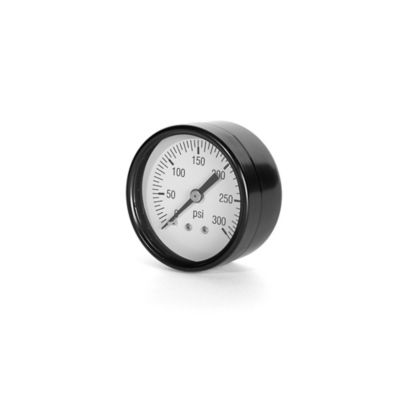
The right fit involves more than finding a dial that looks like the old one. Air tank gauges vary in connection size, thread standard, mounting position, pressure range and overall dimensions. A lower connection places the threaded stem beneath the dial, while a back connection extends behind it; that difference affects whether the face points toward the operator or disappears against the tank. Connection clearance matters around handles, valves and protective frames, especially on a portable tank that gets carried from the shop to a trailer. Pipe-thread designations refer to nominal sizes, so the outside diameter alone does not establish compatibility. NPT and other thread standards are not interchangeable just because they appear close in size. Matching the equipment’s specified connection helps avoid strained fittings, leaks and an unreadable mounting angle. The gauge’s pressure range also needs to suit the system. A scale that barely covers normal operating pressure leaves little room for expected variation, while an unnecessarily broad scale can make smaller changes harder to read. The equipment manufacturer’s requirements should determine the suitable range, with the tank’s maximum allowable working pressure remaining a separate limit that must not be exceeded. Materials affect how the gauge handles its surroundings, too. Brass connections are common in compressed-air applications, and metal cases can help protect the mechanism from everyday contact around a workbench. Stainless steel housings may suit installations where moisture exposure and corrosion are concerns. Lens materials vary, with glass and plastic offering different characteristics for visibility, scratching and impact. Dry gauges suit many everyday applications, while compatible liquid-filled designs can damp pointer movement where vibration or pulsation makes a dial difficult to follow. No housing makes a gauge immune to a dropped tank or a hard strike. A mounting position that keeps the face visible while shielding the stem and lens is often more practical than a larger, more exposed dial.
Care and intended use help determine how well an air tank gauge holds up over time. A portable tank carried across a gravel lot faces different handling than a receiver that stays beside a shop compressor, even when both operate at similar pressures. On portable equipment, a protected gauge location helps keep the dial away from truck-bed cargo, gate posts and other hard surfaces. On stationary equipment, access for reading and inspection matters, along with clearance from belts, pulleys and hot machinery. When comparing equipment in the
Air Tank Compressors category, consider how the gauge, tank, regulator and outlet connections work together rather than treating the dial as an isolated part. A gauge face that stays clean and legible makes routine pressure checks simpler; cleaning methods should follow the manufacturer’s directions so the lens, markings and seals are not damaged. Cracked lenses, loose fittings, a sticking pointer or a reading that does not return to zero after complete depressurization call for attention before the equipment goes back into service. Moisture management matters for the larger compressed-air system as well, with tank draining and maintenance following the equipment instructions. Any gauge replacement requires shutting down the equipment, isolating it from its air source and fully relieving pressure before a fitting is loosened. Thread sealants and installation methods must match the connection and manufacturer’s requirements, and the tank itself should never be drilled or altered to make a gauge fit. The gauge is an indicator, not a pressure-relief valve or an automatic shutoff. Keeping those separate functions intact is essential whether the job involves lawn equipment tires, trailer maintenance or air-powered tools in the barn shop. A well-matched air tank gauge brings together a readable display, the proper connection and a suitable pressure range, making stored air easier to monitor through everyday work.