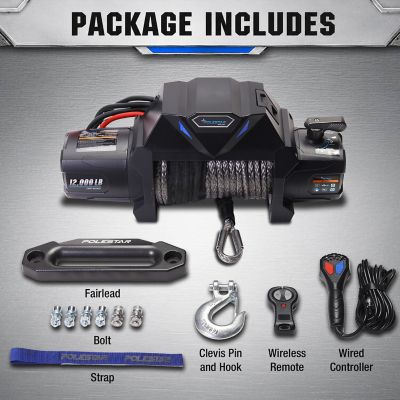
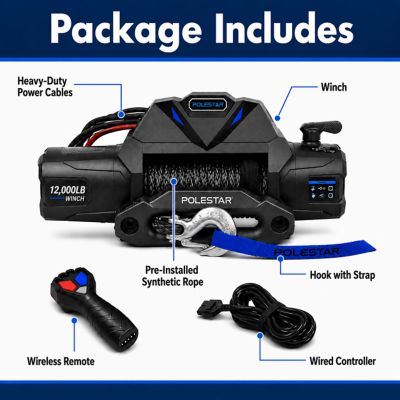
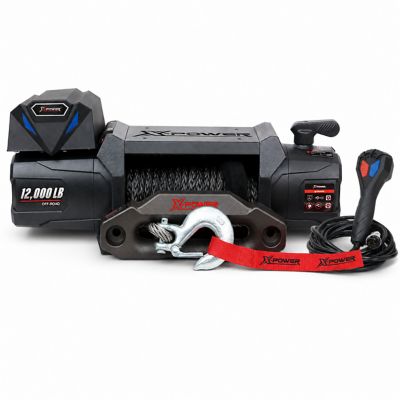
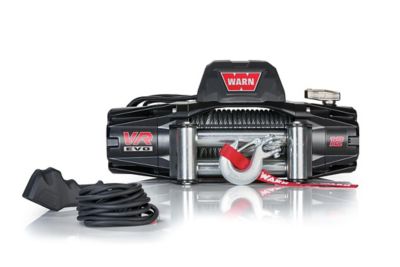
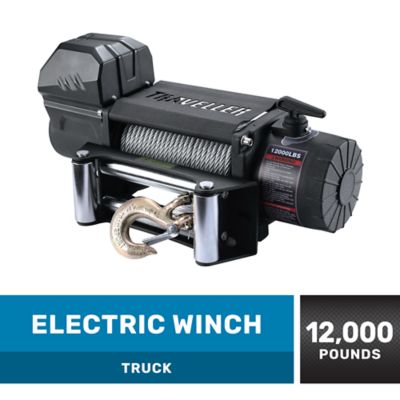
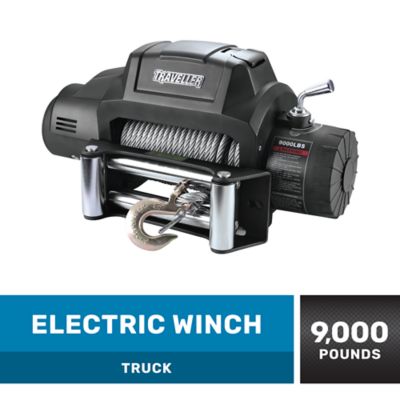
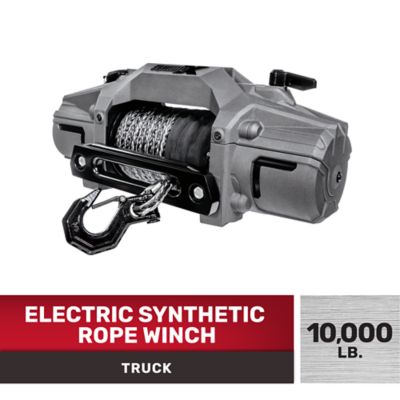
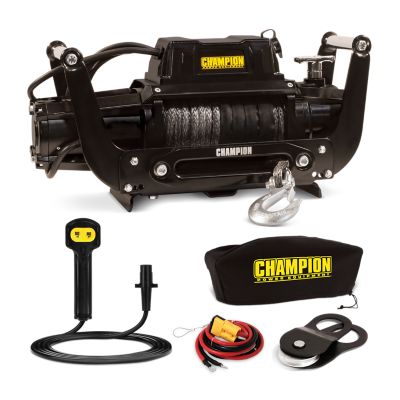
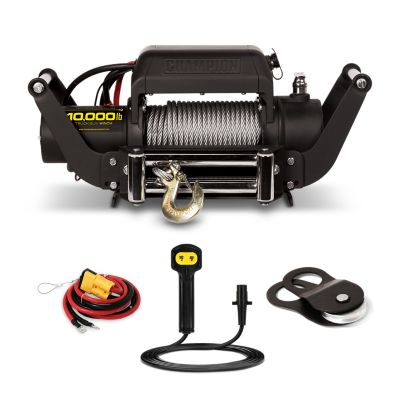
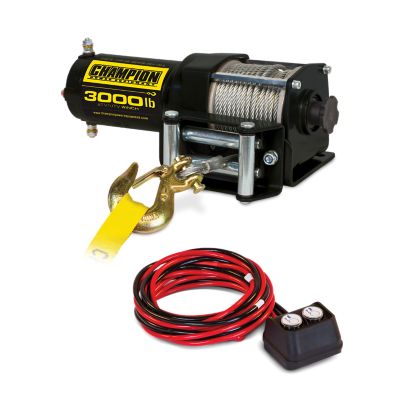
A 12,000 lb. winch provides powered pulling force for vehicle recovery and other horizontal pulling jobs within the manufacturer’s stated limits. This capacity is common on full-size pickups, larger SUVs and recovery rigs, though the right match depends on the vehicle’s loaded weight, mounting system and expected work. Many 12,000 lb. winches run on a 12-volt electrical system, making them a practical consideration for ranch trucks, trail vehicles and compatible vehicle-loading trailers. The capacity number deserves a close look: it generally represents maximum rated line pull on the first layer of rope around the drum, under specified conditions. It does not mean the winch can recover a 12,000 lb. vehicle in every situation, and it is not a trailer towing rating or an overhead-lifting rating. As rope builds up on the drum, pulling capacity typically decreases. A common starting point for vehicle recovery is a winch rated for at least 1.5 times the vehicle’s fully loaded weight, including passengers, cargo and added equipment. That rule of thumb is only a starting point, since steep grades, deep ruts, soft ground or wheels that will not roll can increase the force a recovery requires. For someone heading down a two-track to check fence or hauling a disabled vehicle onto a suitable trailer, those differences matter more than the number on the winch housing alone. Vehicle size is only part of the picture, too. An added bumper, toolboxes and a bed full of gear all affect the working setup. A larger rating can provide useful capacity, but it does not compensate for an undersized mount, a weak attachment point or an unsuitable anchor. Matching the whole system helps make a 12,000 lb. winch a practical piece of working equipment rather than extra weight on the front bumper.
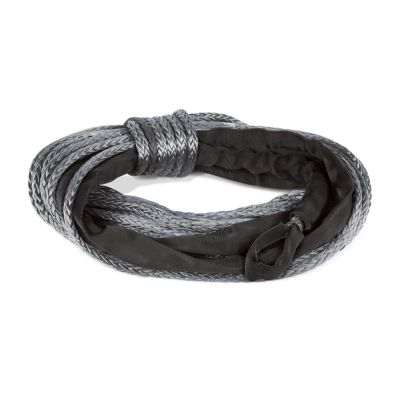
Rope material affects handling, upkeep and the way a winch fits into everyday work. Steel cable generally tolerates abrasion and heat better than synthetic rope, but it weighs more and needs close attention for kinks, flattened sections, corrosion and broken strands. Synthetic rope is typically lighter and easier to carry out to an anchor, which can be welcome when the attachment point is well away from the truck. It still needs protection from sharp edges, abrasive surfaces, excessive heat and prolonged sunlight. Neither material removes the hazards of a tensioned line, and both require inspection and care according to the manufacturer’s directions. Rope length also matters, but more footage is not automatically better. A longer line can reach a more distant anchor, while extra layers on the drum affect pulling force and take up space. The minimum number of wraps that must remain on the drum depends on the winch and line, so usable reach is less than total rope length. Fairlead compatibility belongs in the same comparison. Roller and hawse designs guide the line onto the drum, but the correct choice depends on the rope, mounting arrangement and manufacturer’s specifications. A rough or damaged fairlead can quickly harm a replacement line, especially when changing from steel cable to synthetic rope. Hooks, shackles, recovery straps and pulley equipment also need ratings and configurations suited to the complete pulling system. A properly rated pulley arrangement may increase pulling force, but it changes loading at attachment points and does not raise the winch’s own rating. Suitable recovery points matter on both ends of the pull; a trailer hitch ball is not a recovery anchor. Between jobs, removing grit, checking the line and its connections, and keeping the rope evenly wound help protect the equipment. Frayed fibers, broken wires, damaged hardware or a slipping brake call for attention before another pull.
Fit and power requirements deserve the same attention as pulling capacity when comparing options in the
Truck Winches category. A vehicle-mounted winch needs a mounting plate or winch bumper rated for the application, with a bolt pattern, opening and load path that match the equipment. Overall width, drum position, fairlead location and access to the clutch lever can determine whether a setup works on a particular truck. Clearance around the grille, cooling system and other vehicle equipment matters as well. A compatible mount is not necessarily included with a winch, and the vehicle manufacturer’s requirements still apply. On a trailer, the mounting structure must handle winching forces rather than simply provide a flat place for bolts. Electrical demands are another major consideration. A 12-volt winch can draw several hundred amps during a heavy pull, so battery condition, charging-system capability, cable size and secure connections all affect performance. Manufacturer-specified wiring and circuit protection help keep the installation suited to the load. Motor design, gearing and line speed influence how the winch feels in operation, but no-load speed tells only part of the story; line speed usually drops as resistance increases. Duty-cycle limits matter for repeated pulls because an electric winch is not intended to run continuously without the prescribed cooling breaks. Controls can make a difference around a long truck or trailer. A wired remote offers a physical connection, while a wireless remote can allow more flexibility in positioning where the operator has a clear view and can remain outside the line’s path. Wireless operation does not replace safe positioning, and controller batteries need attention. Free-spool controls help with paying out line, while braking systems manage the load as specified for the winch; neither feature turns recovery equipment into lifting gear or replaces proper trailer tie-downs. Protective finishes, sealed components and accessible service parts can also influence how well the equipment handles repeated work. For a truck that earns its keep around the property or travels beyond maintained roads, the strongest match brings together suitable capacity, sound mounting, adequate electrical support and controls that fit the job.