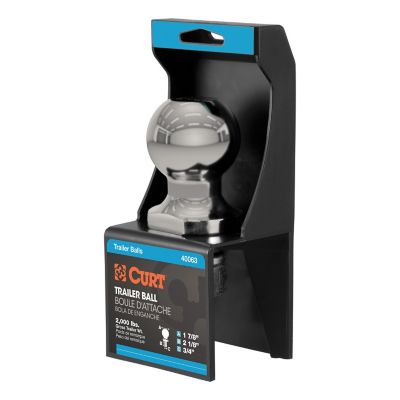
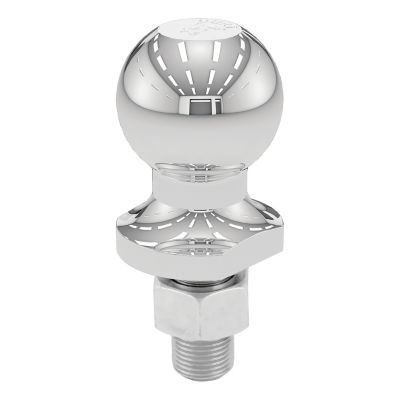
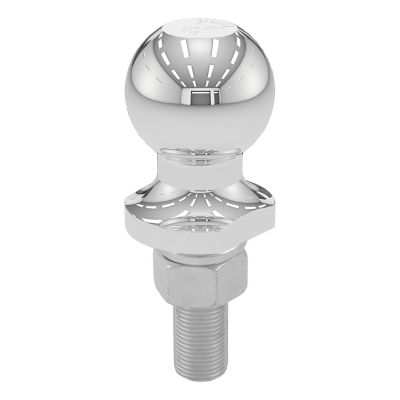
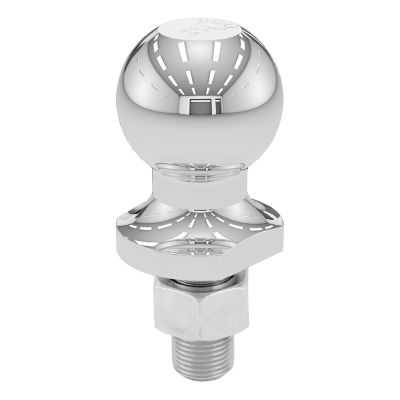
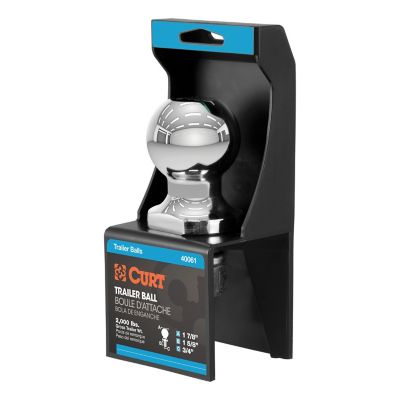
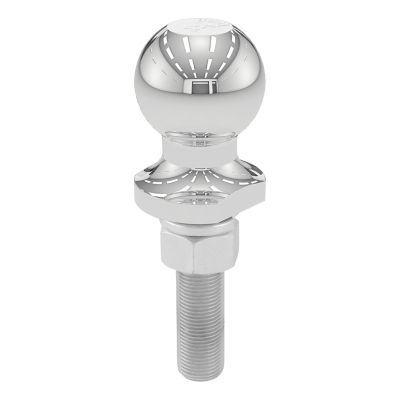
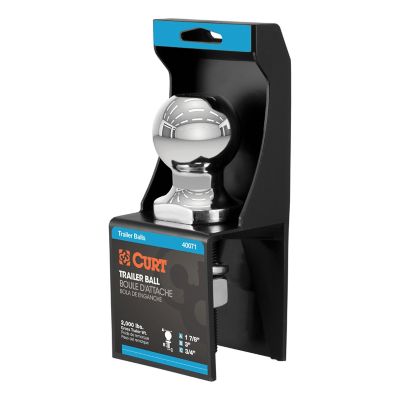
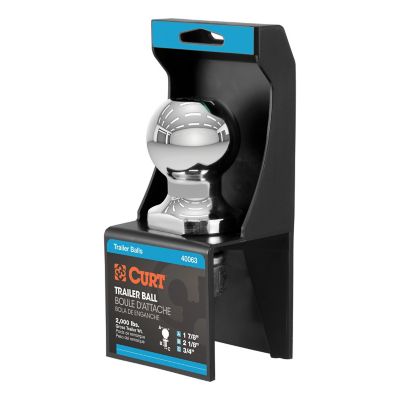
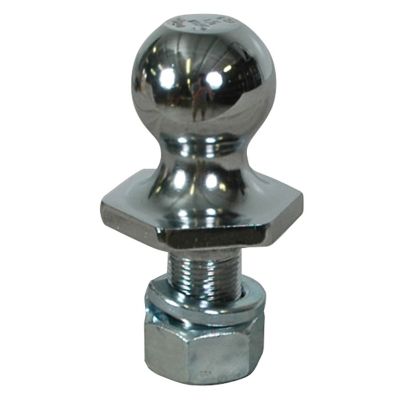
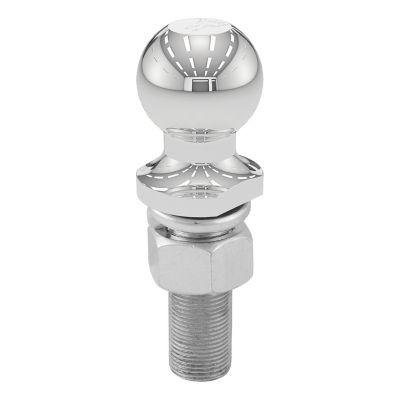
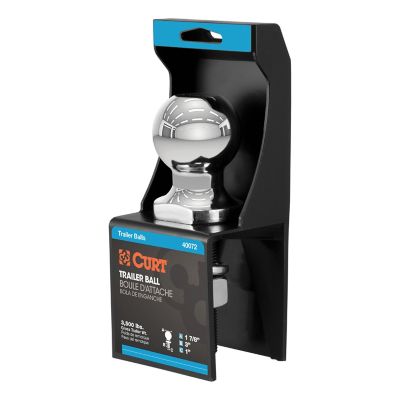
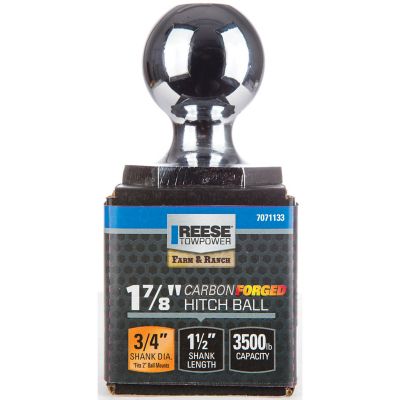
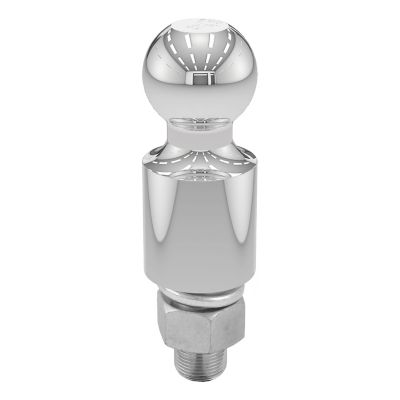
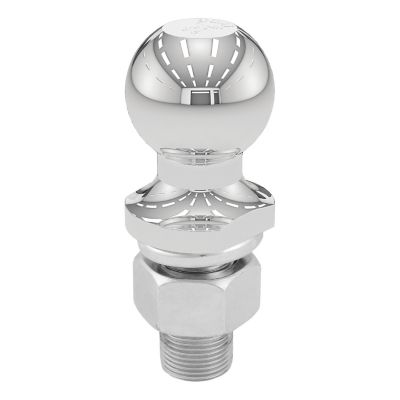
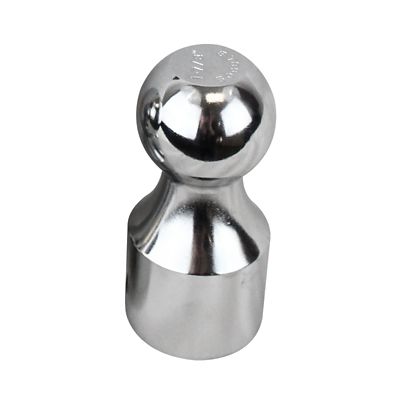
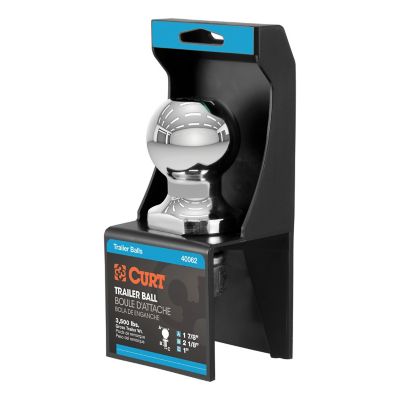
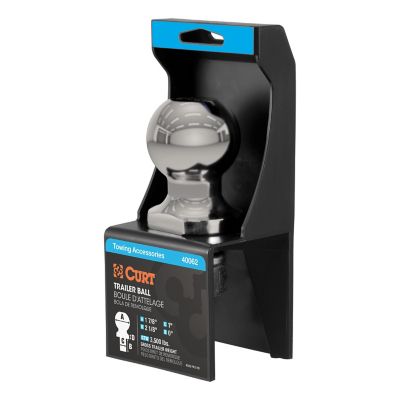
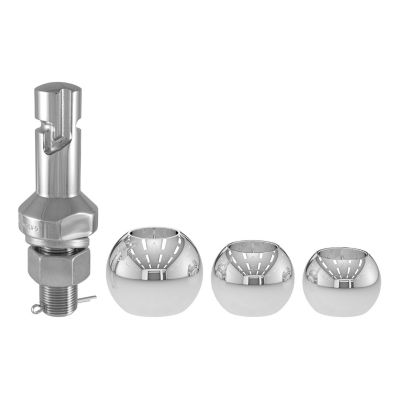
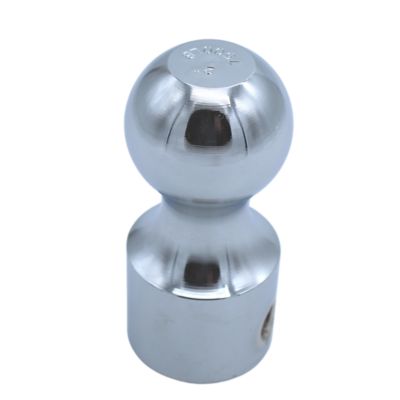
1-7/8-inch trailer balls connect a matching trailer coupler to a vehicle’s ball mount for light-duty towing. Common applications include small utility trailers, lightweight boat trailers, and personal watercraft trailers, as long as the loaded trailer stays within the limits of the entire towing setup. Many balls in this size carry a gross trailer weight rating of 2,000 pounds, while some designs carry ratings up to 3,500 pounds. The rating stamped on the ball or stated by its manufacturer is what matters; ball diameter alone does not establish towing capacity. Around a small acreage, these hitch balls may handle a trailer carrying a push mower, fencing supplies, or tools headed to another part of the property. They can also suit a compact trailer hauling fishing gear to the boat ramp or bagged feed back from town. Even a small trailer can gain weight quickly once equipment, supplies, and other cargo are aboard, so its empty weight tells only part of the story. Gross trailer weight includes the trailer itself and everything riding on it. Tongue weight, the downward load applied at the hitch, must also stay within the applicable limits. A higher-rated ball does not raise the ratings of the vehicle, receiver, ball mount, or trailer coupler; the lowest applicable limit still governs the setup. The 1-7/8-inch measurement refers to the rounded ball that fits inside the coupler, not the threaded shank or the receiver opening on the vehicle. A coupler marked for a 2-inch ball is not a match, even if it appears to close over a smaller ball. Matching the marked coupler size gives the connection the fit it was designed to have, with room to pivot through turns and changes in driveway grade. For shoppers replacing a missing or worn hitch ball, the coupler marking and towing requirements provide a better starting point than the appearance of the old hardware.
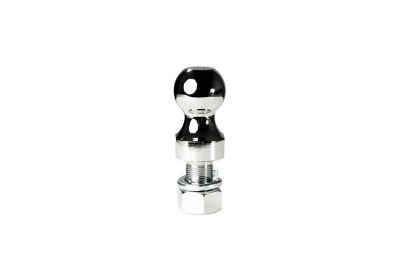
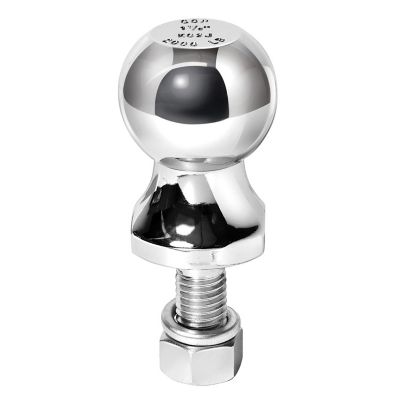
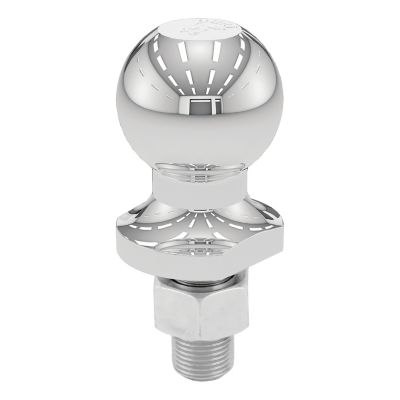
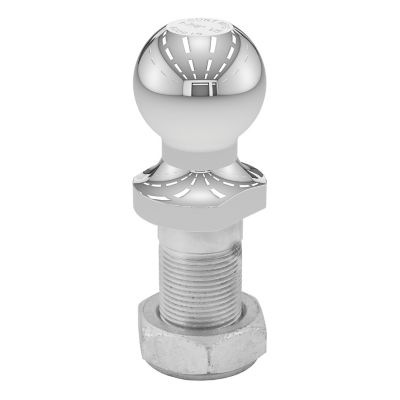
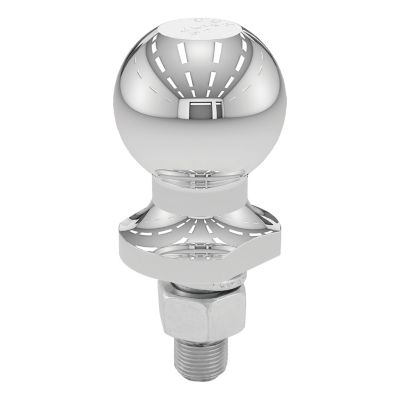
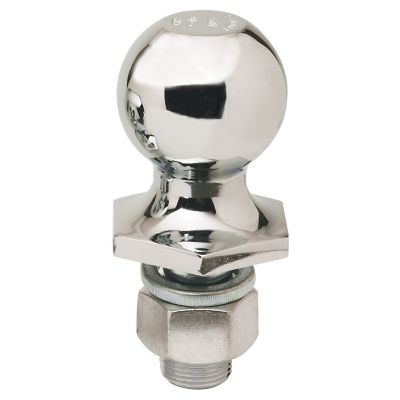
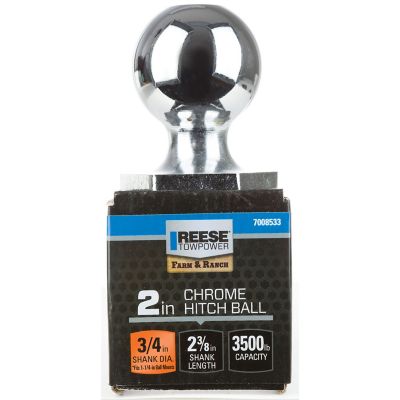
Fit at the ball mount matters just as much as fit inside the coupler. The ball’s diameter determines which coupler it fits; the shank’s diameter determines which mounting hole it fits. Depending on the design, 1-7/8-inch trailer hitch balls may have shank diameters such as 5/8 inch, 3/4 inch, or 1 inch. Shank lengths also vary, with dimensions such as 1-3/4 inches, 2-1/8 inches, and 3 inches appearing across different configurations. Those measurements are not interchangeable, and neither a longer shank nor a wider shank automatically makes a ball suitable for a particular mount. The mounting hole, platform thickness, required hardware, and manufacturer’s specifications all belong in the comparison. A shank needs enough usable length to pass through the mounting platform and accommodate the specified washer and nut with the required thread engagement. Extra length cannot make up for an oversized mounting hole, and a loose-fitting shank is not a substitute for the correct diameter. Any adapter or reducing sleeve needs approval for that application rather than an improvised fit. Materials and finishes offer another practical point of comparison. Steel is common, including forged-steel construction, while chrome plating and zinc plating help protect the underlying metal from corrosion. Stainless steel provides another material option, although its care requirements and towing rating still depend on the particular design. No finish makes a hitch ball maintenance-free. The rounded surface carries repeated contact as the coupler moves, while the base, threads, and hardware must support a properly secured connection. A smooth contact surface and sound threads matter more than shine alone. Installation requirements also vary, especially the specified tightening torque. Manufacturer instructions establish the correct hardware arrangement and torque rather than a general rule based on ball size. For a ball mount that already has the proper rise or drop, matching these mounting details helps preserve a setup that holds the trailer at the recommended towing attitude.
Care is mostly about keeping the connection clean, properly secured, and free of damage that could affect its fit. Dirt and grit trapped between the ball and coupler can contribute to wear, particularly when a trailer spends time on gravel lanes or around dusty equipment sheds. Cleaning away buildup makes the contact surface easier to inspect and keeps damage from hiding under a layer of grime. Lubrication belongs to the requirements of the coupler system: many conventional couplers call for grease at the ball, while some specialized designs have different instructions. Following those requirements avoids treating every towing connection the same way. Deep scoring, cracks, significant corrosion, damaged threads, or a ball that has worn out of round deserve attention before the next trip. A coupler that feels loose or will not latch properly may point to a size mismatch, wear, adjustment needs, or another problem; a closed latch by itself does not prove that the connection is correct. The hitch ball is also only one part of the trailer hookup. Safety chains, the coupler latch and its retaining device, lighting connections, and any required braking or breakaway equipment have their own jobs. On a trailer shared between a pickup and another tow vehicle, the same coupler may fit both balls, but each vehicle’s mount dimensions, towing limits, and trailer height still matter. Keeping those details straight is helpful when several trailers are parked beside the barn and their couplers do not all take the same ball size. When comparing
Tow Hitch Balls, the most useful distinctions are the marked ball diameter, rated load, shank dimensions, construction, and mounting requirements. Those details help narrow the choice for everyday hauling without treating similar-looking hardware as interchangeable. A properly matched 1-7/8-inch ball belongs in a light-duty towing setup where the coupler fits, the mounting hardware seats as intended, and every component stays within its stated limits.