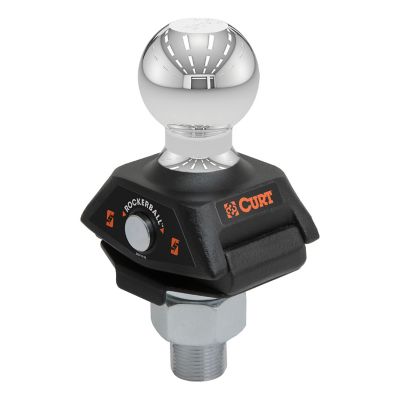
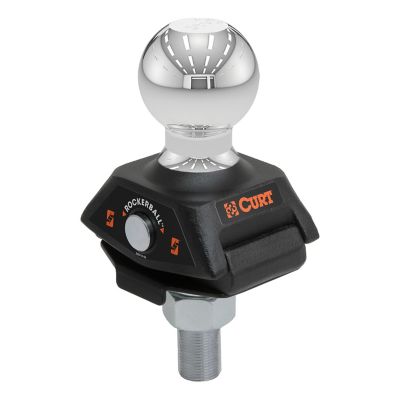
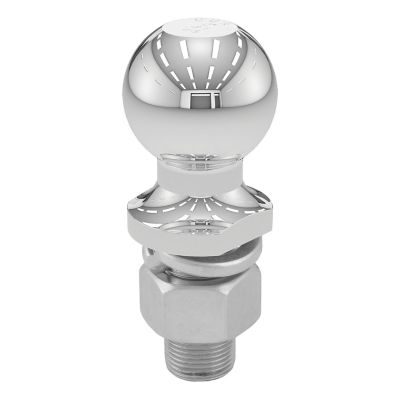
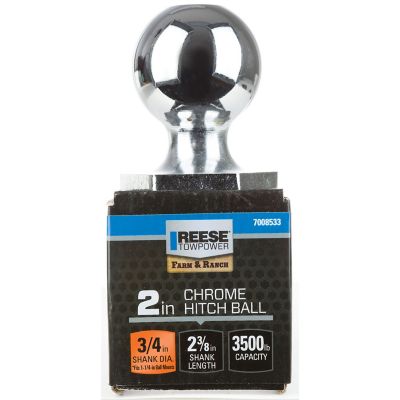
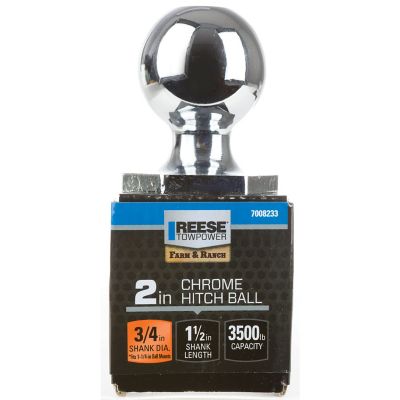
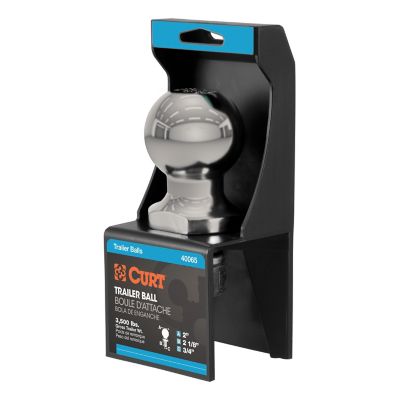
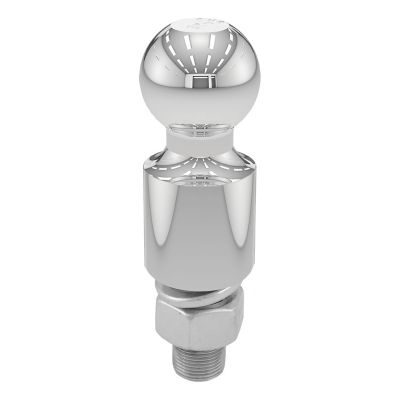
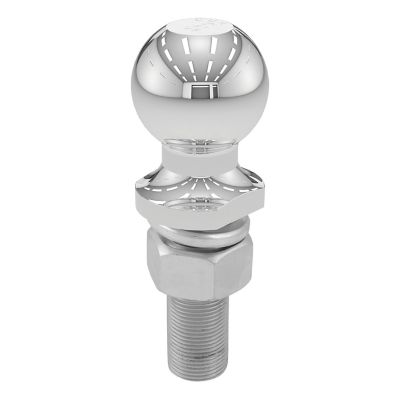
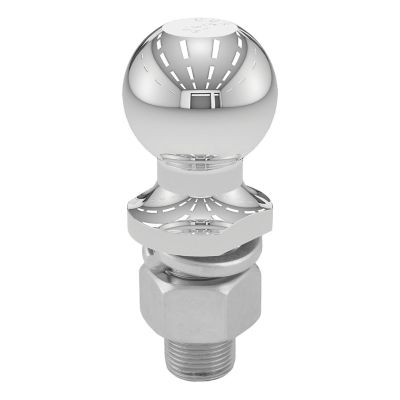
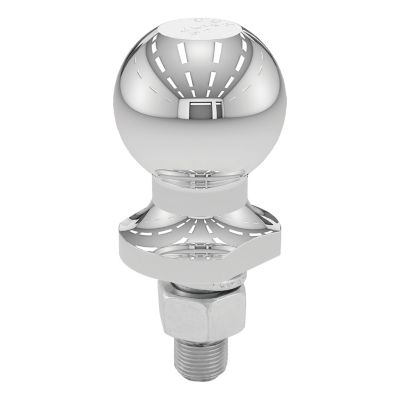
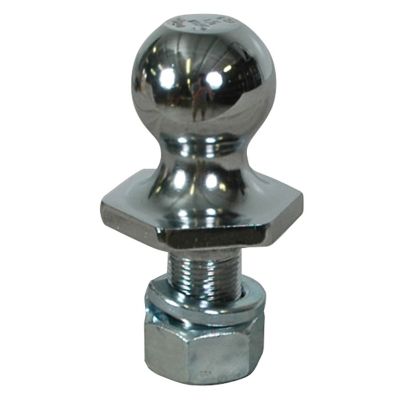
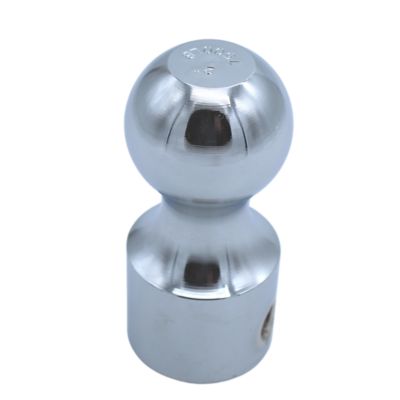
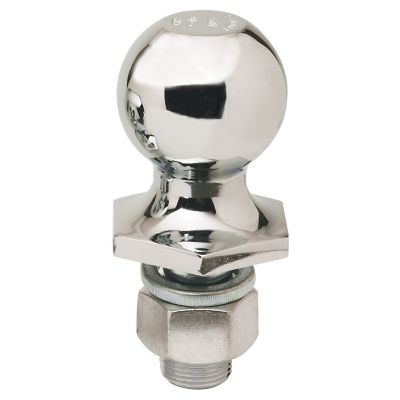
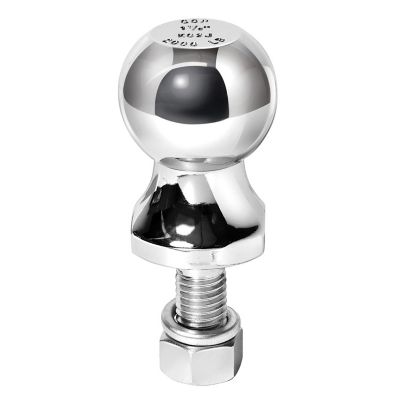
A 2 inch trailer hitch ball is a towing connection with a round head that measures 2 inches in diameter and fits a trailer coupler marked for a 2 inch ball. That measurement describes the ball itself, not the hitch receiver opening, the mounting hole or the threaded shank underneath. It is a common size for many utility trailers, boat trailers, small campers and equipment trailers, though the coupler marking is what determines the correct match. Around a farm or acreage, that might mean hauling fencing supplies to a back pasture, taking a mower between properties or pulling a trailer loaded with feed and bedding. For a contractor or landscaping crew, it may be the connection between a work vehicle and the trailer carrying tools to the next job. The ball diameter alone does not establish how much weight the setup can pull. Two hitch balls with the same 2 inch head can have different weight ratings, shank dimensions and mounting requirements. A suitable match accounts for the trailer’s fully loaded weight, its tongue weight and the ratings of the vehicle, receiver, ball mount, hitch ball and coupler. The lowest applicable rating limits the setup, so a higher-rated ball does not increase the capacity of the truck or other towing components. That distinction matters when an empty trailer becomes a load of lumber, bagged feed or shop equipment. Cargo placement matters, too, because moving weight forward or backward changes the load carried at the tongue. A properly matched ball is one part of a towing system that also depends on suitable loading, secure tie-downs and any required braking equipment. For everyday hauling, clear size markings and legible capacity information make it easier to verify the connection before a trailer leaves the barnyard or driveway.
Fit below the ball deserves just as much attention as the 2 inch head above it. The threaded shank passes through the ball mount, and both its diameter and length need to suit that mounting point. Shank diameter must match the mounting hole as specified by the equipment manufacturer; a loose fit is not something to overlook because the nut tightens down. Shank length needs to accommodate the mounting platform’s thickness along with the specified fastening hardware and required thread engagement. A platform that is thicker than expected can leave too little thread for proper installation, while an unnecessarily long shank may create clearance issues underneath. These measurements are separate from the ball mount’s rise or drop, which helps establish the trailer’s towing height. A ball that fits the coupler can still belong to a setup that needs a different ball mount to keep the trailer at its manufacturer-recommended towing attitude. Materials and finishes also play a role in everyday service. Steel construction provides the strength needed for the ball’s stated rating, while finishes such as chrome plating or zinc coatings help protect exposed surfaces from corrosion. Stainless steel construction offers another approach to corrosion resistance, but appearance alone never establishes towing capacity. Contact with the coupler, dirt from a gravel lane and water around a boat launch can all affect exposed surfaces over time. A smooth ball surface and clean threads help make condition checks more straightforward. The mounting nut, washer and any other specified hardware belong to the approved assembly, with installation torque determined by the manufacturer rather than a general rule. An impact wrench setting or a tight-by-feel approach is no substitute for the required torque. A properly equipped shop can help when installation calls for a torque wrench or socket larger than what is on the workbench.
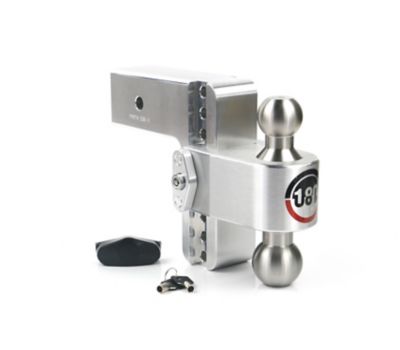
Different towing routines can call for different hitch arrangements, even when the trailer couplers all take a 2 inch ball. A fixed ball mount may suit a vehicle that regularly pulls the same trailer, while an adjustable assembly can accommodate trailers with different coupler heights when its design and ratings allow. Some systems have interchangeable balls or multiple ball sizes, but those components need to remain within the manufacturer’s approved system rather than being mixed because they look similar. The
Tow Hitch Balls collection provides a place to compare related sizes and mounting configurations when more than one towing setup is part of the routine. A farm truck pulling a small utility trailer and a vehicle headed to a boat ramp may share a ball diameter without sharing every other requirement. Coupler clearance, mounting dimensions, loaded trailer weight and fastening details still deserve a separate look for each setup. Ongoing care helps keep those details visible. Dirt and grit can collect where the coupler rides on the ball, and lubrication should follow the coupler and hitch manufacturers’ recommendations, especially with specialized coupler designs. Some call for grease at the contact surface; others have different requirements. Cleaning away buildup allows a closer look for excessive wear, cracks, deep pitting, damaged threads or a loose mounting connection. Those signs call for evaluation and, where required, replacement before the next tow—not a heavier coat of grease. The coupler should seat fully and latch as its manufacturer specifies, with any required latch pin or lock in place. Safety chains, electrical connections and a breakaway system where required remain separate parts of the towing connection. Whether the trailer carries fence posts, a fishing boat or equipment for a day’s work, a correctly sized and properly maintained 2 inch hitch ball helps keep the setup ready for the job at hand.