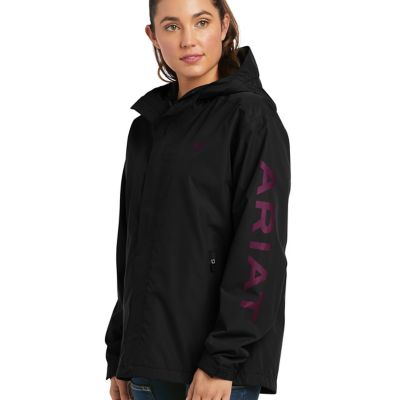
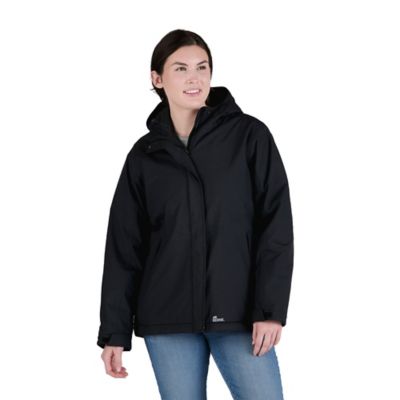
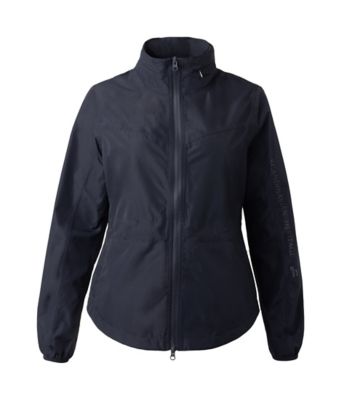
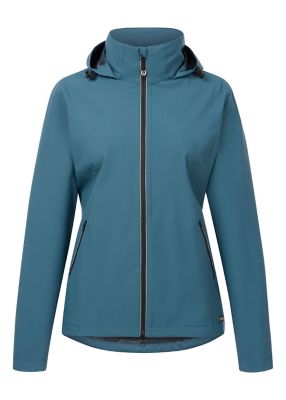
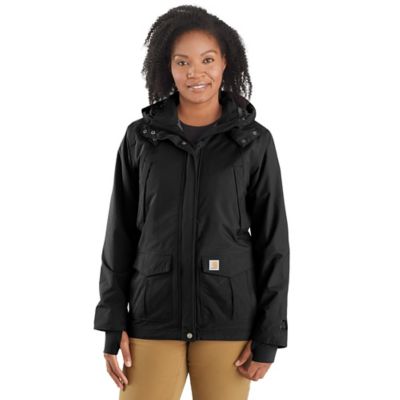
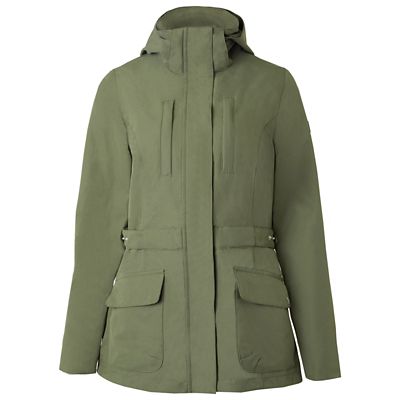
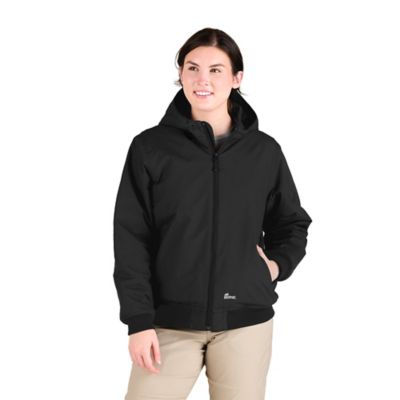
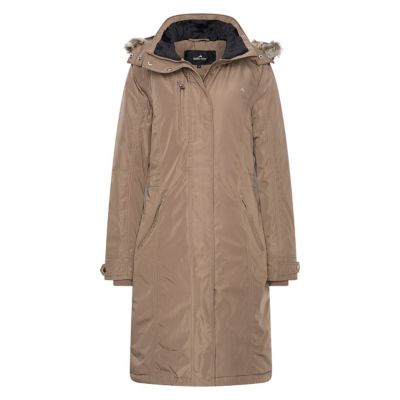
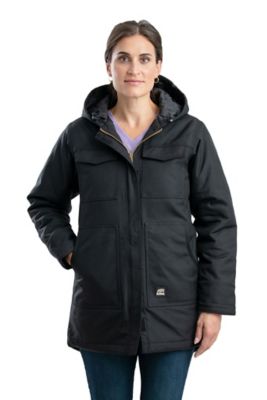
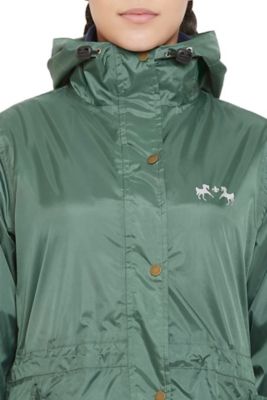
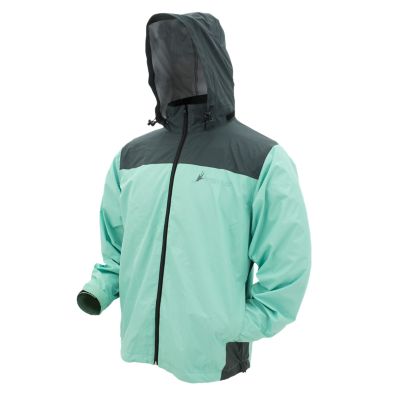
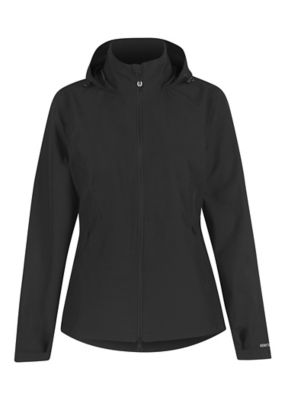
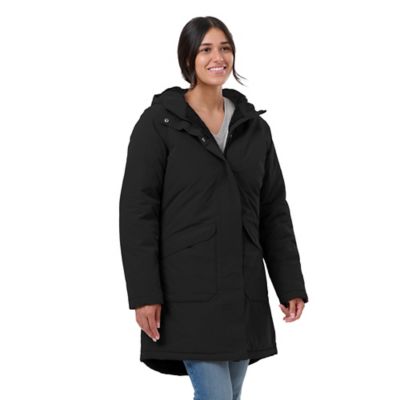
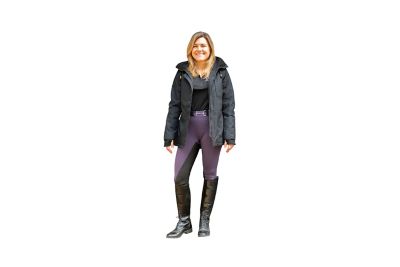
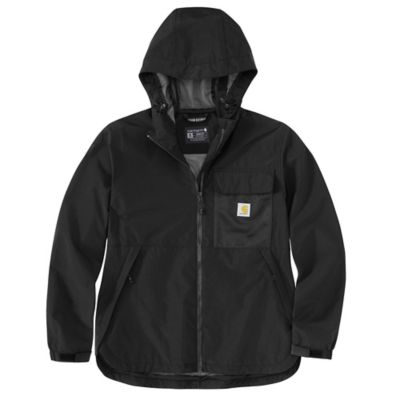
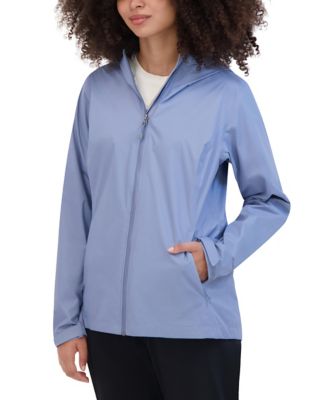
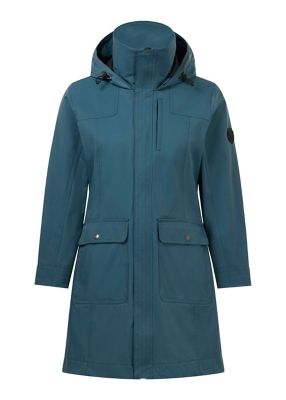
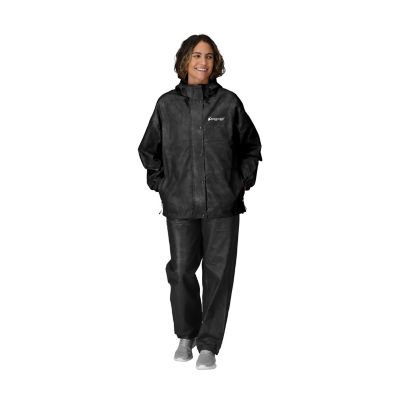
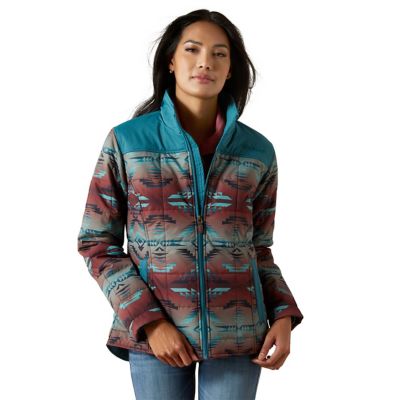
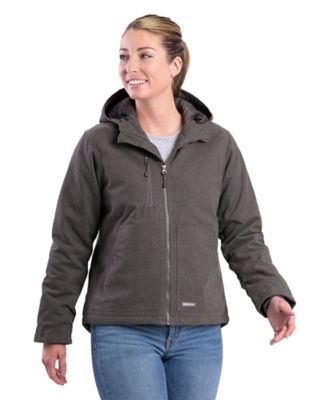
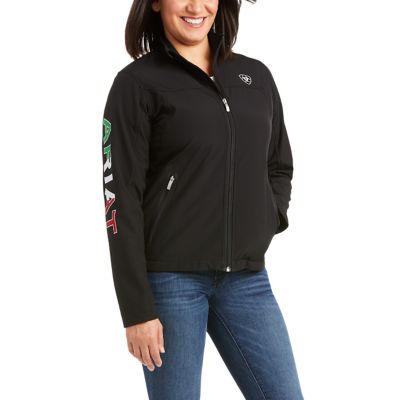
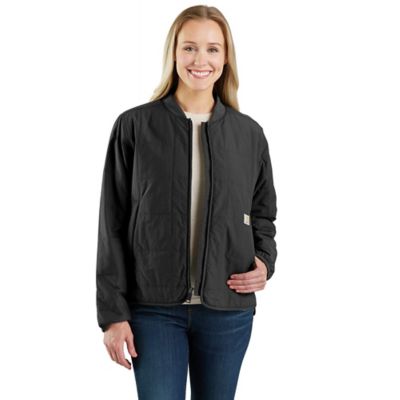
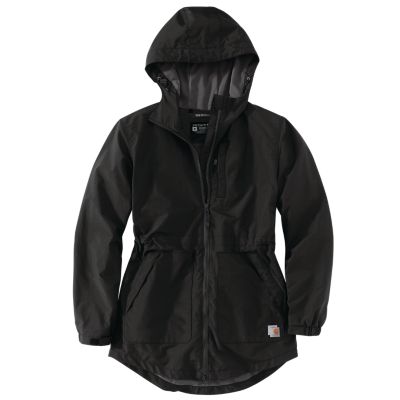
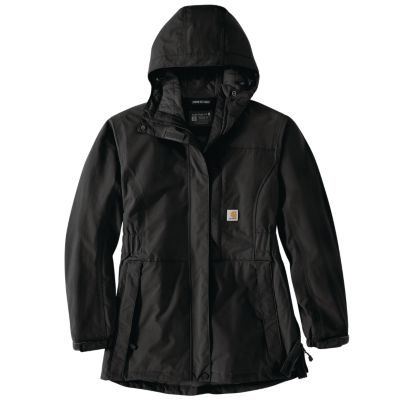
Women's weatherproof jackets include lightweight rain shells, packable outer layers, and insulated coats designed for wet, windy conditions. The right match depends on how long the jacket will be outside, how hard the work gets, and what goes underneath. A light shell makes sense for walking the property, running errands, or keeping rain off during a quick round of chores. A lined or insulated jacket adds warmth for longer stretches outdoors, whether that means feeding livestock before daylight or standing along a fence line while the wind picks up. Weatherproof is a broad description rather than a single level of protection, so waterproofing, seam construction, and wind resistance matter more than the name alone. Waterproof jackets typically combine a protective coating or membrane with construction that limits water entry. Fully sealed seams help block rain at the stitching, while storm flaps and protected zippers help cover other openings. Water-resistant jackets generally handle light rain or brief exposure but may not keep water out through a steady downpour. For that lighter level of coverage,
Womens Water Resistant Jackets are another category to consider. Breathable construction also matters when carrying feed, stacking firewood, or walking uphill, since moisture can build up inside even when rain stays outside. Ventilation openings and breathable fabrics help that moisture escape, though comfort still depends on activity, humidity, and layers. A water-repellent outer finish encourages droplets to bead and roll away; it serves a different purpose from the waterproof layer beneath it. When the outer fabric becomes saturated, a jacket can feel clammy even if its waterproof barrier remains intact. Lightweight shells generally offer less warmth on their own, while insulated styles combine weather protection with a layer that holds body heat. Those differences make women's weatherproof jackets useful for everything from a muddy walk to the mailbox to a full morning of outdoor work, without treating every damp day like the same job.
Fit makes a noticeable difference once a jacket has to move through a real workday. Women's weatherproof jackets should leave room for the layers that match the job without hanging so loosely that sleeves catch on gates or extra fabric gets in the way. Shoulder and upper-back room help with reaching for a latch, lifting a bucket, or pulling a hay bale closer. Shaped elbows, underarm panels, and a little stretch can make those movements easier, while a longer back hem helps maintain coverage when bending. Hip-length jackets offer freedom around the legs; longer cuts add coverage across the seat and thighs but need enough room for a comfortable stride. A two-way front zipper can ease sitting or climbing into a truck without bunching the whole coat at the waist. Sleeve length matters with arms extended, not just resting at the sides, and adjustable cuffs help close the gap around gloves. A hood should stay put in wind without blocking side vision, with enough adjustment to work over a knit cap when needed. A shaped brim can help direct dripping water away from the face. For chores around the barn or equipment shed, pocket placement deserves a close look, too. Hand pockets feel different when wearing gloves, and zippered storage helps keep keys from slipping out while bending or climbing. Pocket flaps add coverage, but no pocket should be assumed waterproof unless its construction is described that way. Fabrics also bring different strengths to the job. Nylon and polyester shells can keep weight down and dry relatively quickly, while heavier woven fabrics may offer more resistance to rubbing against rough surfaces. Reinforced elbows and shoulders can help in high-contact areas. A compact shell is easier to tuck into a day pack, while a heavier work jacket may be a better match for repeated contact with wood, fencing, and tools.
Care plays a big part in how women's weatherproof jackets hold up through repeated wear. Mud around the cuffs, dust across the shoulders, and grime along the collar are ordinary parts of outdoor work, but buildup can interfere with a jacket's water-repellent finish and moisture management. The garment's care label is the starting point because shells, insulated jackets, and coated fabrics do not all need the same treatment. Some allow machine washing on a gentle setting; others call for different handling. Fabric softener, bleach, and unsuitable cleaners can affect certain finishes or membranes, so laundry products should match the garment's directions. Thorough rinsing matters when detergent residue remains in the fabric. Heat can refresh some water-repellent treatments, but only when the label permits it; other jackets may need an appropriate treatment applied according to its directions. A finish that stops beading does not automatically mean the entire jacket has lost its waterproof protection. Hanging outerwear where air can circulate helps it dry between outings, and letting it dry completely before storage helps prevent musty odors. Packing a damp shell into a tight pocket for days can leave a mess to deal with later. Small tears, loose stitching, and worn closures are worth addressing before the next long stretch outdoors, with repair methods suited to the fabric and waterproof construction. For a jacket that spends time around gates, brush, or stacked lumber, abrasion resistance and repair options can matter as much as packability. For daily trips between the house, truck, and barn, easy movement and handy pockets may carry more weight. These jackets can also make practical gifts for women who tend animals, garden, walk dogs, or spend their weekends outside. Knowing the recipient's usual size, preferred jacket length, and layering habits helps narrow the fit. A coat that works over a sweatshirt and leaves room to reach, bend, and sit comfortably is more likely to earn a regular spot by the door.