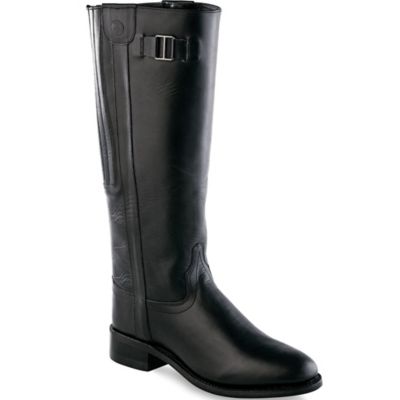
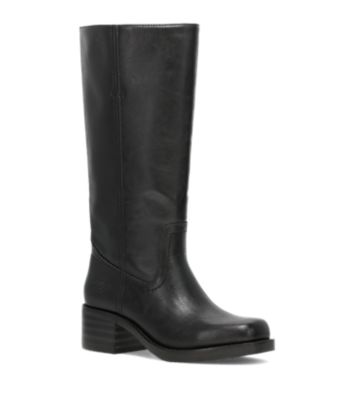
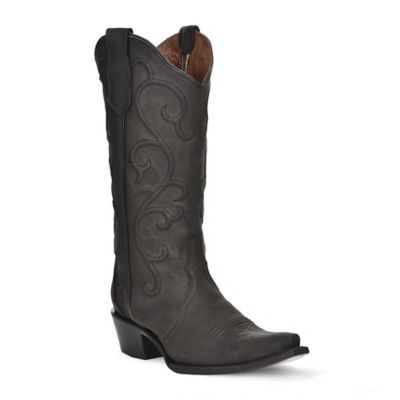
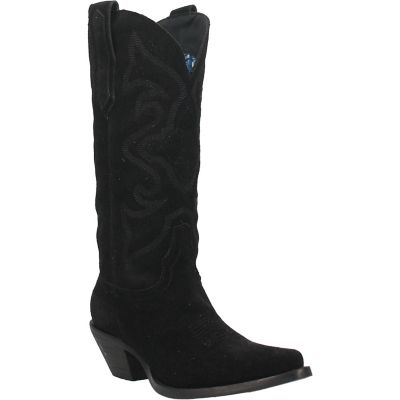
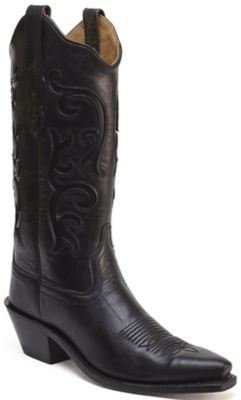
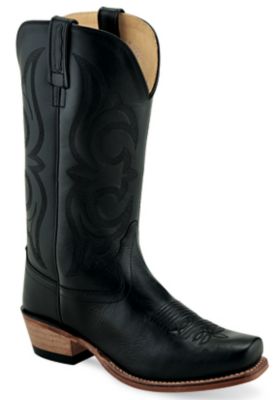
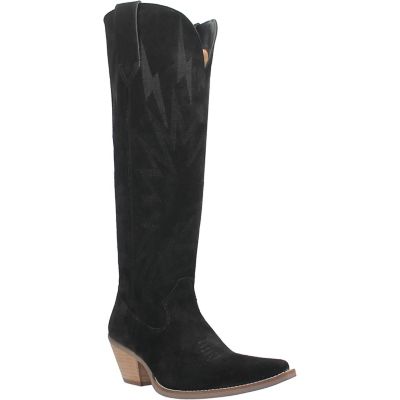
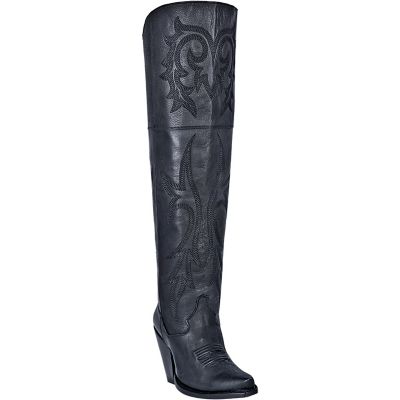
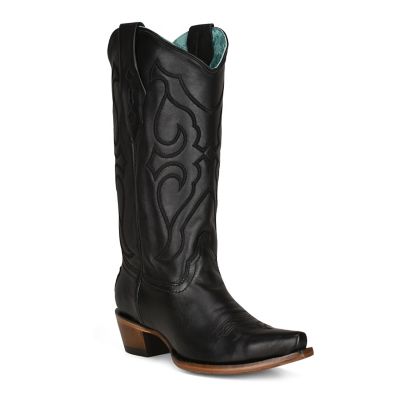
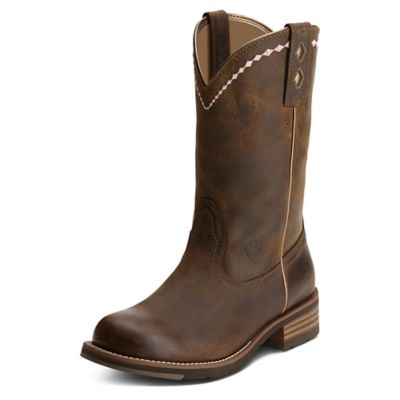
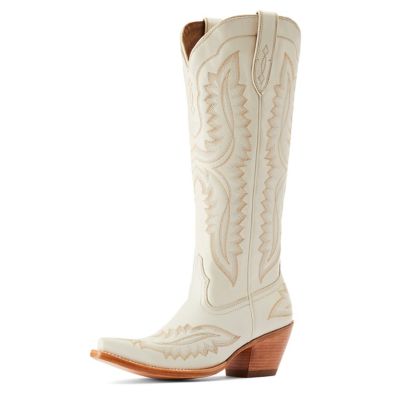
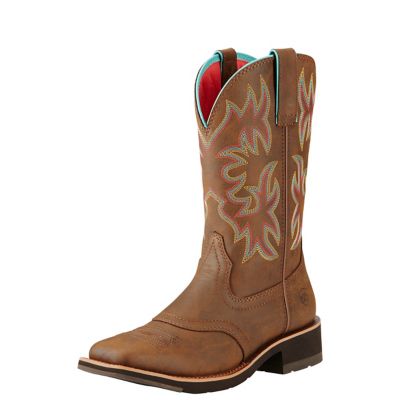
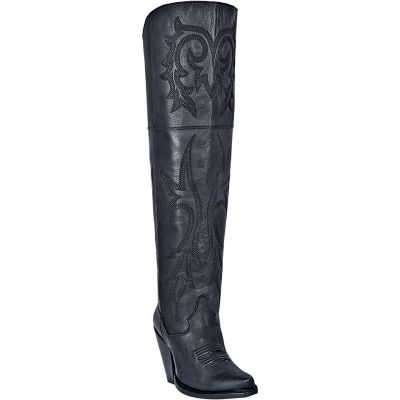
Women's tall black cowboy boots combine an extended Western shaft with a dark finish that pairs easily with denim, skirts, and dresses. Tall styles often have shafts around 14 to 17 inches, though measurements vary, and some reach close to the knee. Shaft height is generally measured from the arch area to the top of the boot, without including the heel; the listed measurement and measuring method help tell the full story. Where a boot lands on the leg also depends on the wearer's height and proportions. Compared with shorter cowgirl boots, a tall pair puts more emphasis on the shaft, whether that means clean leather, rows of Western stitching, or contrasting embroidery. Black keeps those details grounded and gives the boots a place alongside everything from faded jeans to a dress for a dance at the county fairgrounds. Smooth leather has a different look and feel from brushed suede, while synthetic materials bring their own texture and care requirements. Genuine leather can develop creases and soften with wear, giving the foot and ankle a more familiar feel over time. The finish matters, too: a matte surface looks understated, while a polished surface adds a little shine without changing the boot's Western character. Toe shape and heel height help set the overall look. A pointed or snip toe gives the boot a tapered profile, while a square or round toe creates a different outline under a jean hem. Tall shafts can stand out with tucked-in slim jeans or sit beneath a skirt with enough room to move freely. For a wider view of the style,
Women's Black Cowgirl Boots brings the focus to the same easy-to-pair color. The appeal of a taller pair is that extra stretch of Western detail, whether the rest of the outfit stays plain or leans into the rodeo look.
Fit involves more than finding the right shoe size, especially when the shaft extends well up the calf. Foot length, forefoot width, instep height, and calf circumference all affect how women's tall black cowboy boots feel once they're on. A tall shaft should leave enough space for comfortable movement without pressing hard behind the knee or pinching the calf when seated. If jeans will be tucked inside, their fabric takes up room that bare-leg measurements don't account for. Measuring the calf near the expected top of the shaft, then checking the stated shaft opening and size notes, gives a clearer picture than judging from a photograph alone. The foot should feel supported through the instep, with room to move the toes rather than pressure across them. A little heel movement can be normal in a new pull-on Western boot, but pronounced lifting, rubbing, or a foot that slides forward deserves another look at the fit. Leather may relax through wear, but a boot that's too short won't gain the length needed for comfortable toes. A pointed profile also doesn't automatically mean cramped toes; the shape of the toe box and the fit through the ball of the foot matter more than appearance alone. Trying boots with the socks intended for regular wear helps account for thickness and cushioning. Pull tabs, pull holes, and zipper closures can affect how easily a tall shaft goes on, particularly over a higher instep. Underfoot, cushioning, arch support, and heel shape influence comfort while standing along a fence rail, walking across fairgrounds, or spending an evening on the dance floor. A higher heel changes posture and pressure, while a lower heel may feel more familiar for everyday walking. Short stretches of wear can help a well-fitting leather pair settle in, but ongoing pain isn't something to push through. The best match feels secure without making every step a chore.
Intended use deserves just as much attention as appearance. A pair chosen for concerts, gatherings, or trips into town may call for different features than boots meant for time in the saddle or chores around the property. Sole material, tread, heel shape, and construction all influence where a boot makes sense. Leather outsoles and rubber outsoles feel different underfoot, and tread patterns vary in how they handle different surfaces. For riding, the heel and sole need to suit the stirrup and the activity; a Western silhouette alone doesn't establish that a boot is appropriate for horseback use. Likewise, a tall shaft doesn't make a fashion boot protective work footwear. Any job requiring a safety toe, electrical-hazard protection, or other rated features calls for footwear specifically labeled for that purpose. Construction details such as secure stitching, firmly attached heels, and sound sole attachment matter for repeated wear, while care helps keep the material from drying out or becoming caked with grime. Smooth leather generally benefits from having loose dirt brushed away, followed by cleaning and conditioning with products suited to its finish. Too much conditioner can change the appearance, so a small test spot is worthwhile. Suede needs a different approach, usually with a suede brush and cleaners intended for that surface, while synthetic materials should follow their own care directions. Letting boots dry naturally away from direct heat helps protect their shape and finish. Storing tall shafts upright with boot shapers can limit deep folding, and checking heel caps and soles for wear makes it easier to address repairs before footing changes. Tall black cowboy boots can also make a thoughtful birthday or graduation gift for someone who enjoys Western dressing. Knowing the recipient's usual boot size, calf fit, preferred toe shape, and comfortable heel height makes that choice more personal. A pair that fits both the wearer and the way she'll wear it earns its place well beyond a single outfit.