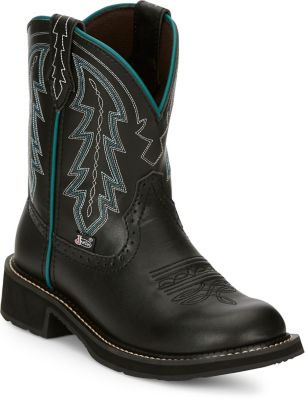
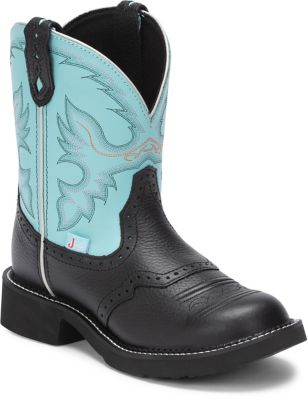
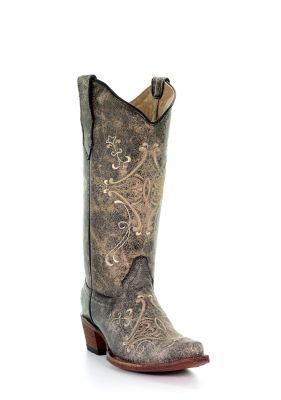
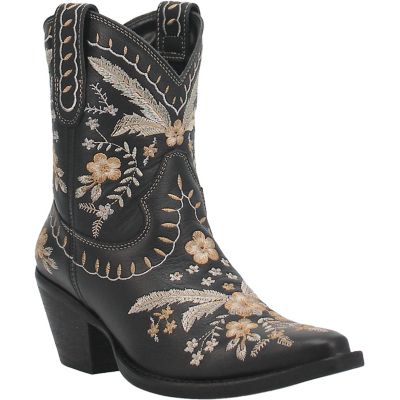
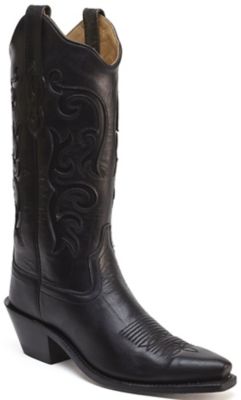
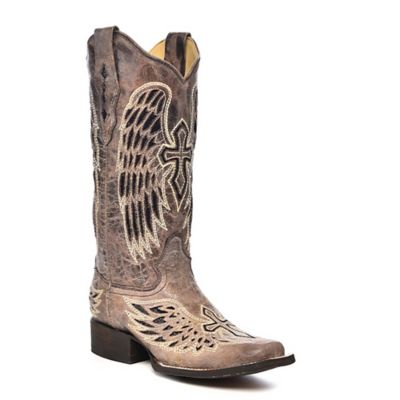
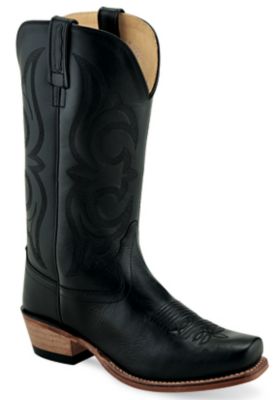
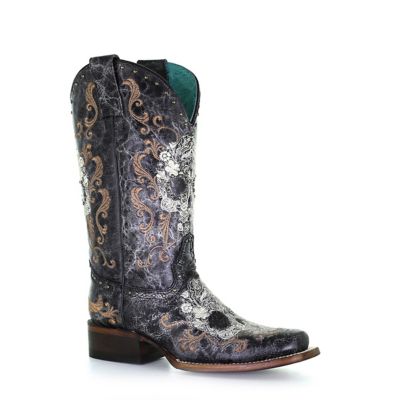
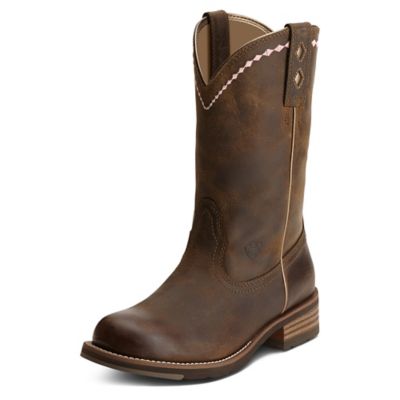
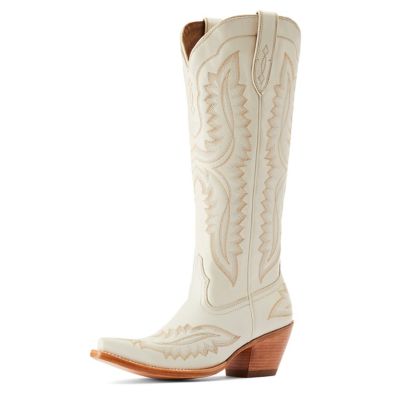
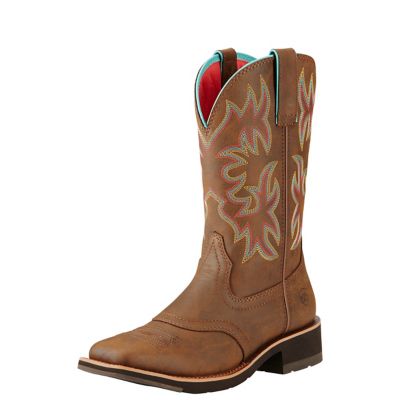
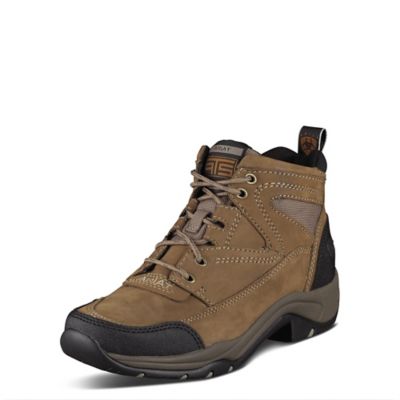
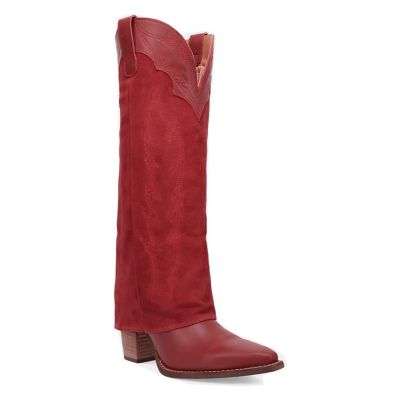
Women's black cowgirl boots bring a familiar Western look to everything from straight-leg jeans and a tucked-in shirt to a dress headed for the dance floor. Black gives traditional boot details a little more contrast: stitched shafts, shaped heels, pointed toes, and polished leather all stand out without needing bright color. The category covers plenty of ground, from plain pull-on styles with subtle stitching to taller silhouettes with contrasting embroidery, inlays, or metal accents. A smooth black finish keeps the look simple, while distressed leather has a more broken-in appearance from the start. Full-grain leather retains the hide's natural surface and can develop creases and character with wear. Suede has a softer, napped texture that calls for different cleaning methods, while synthetic uppers offer another option with their own care requirements. The lining matters, too, since it sits against the foot and lower leg through hours of walking, standing, or sitting in the saddle. Toe shape makes a noticeable difference in both appearance and feel. Round toes have a traditional profile, square toes create a broader-looking front, and snip or pointed toes give the boot a sharper outline. A square shape does not automatically mean a wide fit, though; the width designation and the shape of the boot's interior still matter. Shaft height changes how much of the boot shows beneath a hem and where it rests against the calf. Shorter shafts work well with many everyday outfits, while taller shafts make stitching and other details more visible when worn with skirts or dresses. Heel height also changes the overall look, with lower profiles lending themselves to walking and taller, angled heels making a stronger Western statement. Whether the day involves a county fair, a concert, or supper in town, the right combination of shape, material, and detail helps black Western boots feel like part of the outfit rather than an afterthought.
Fit is where women's black cowgirl boots earn their place in a regular rotation. Pull-on construction needs enough room for the foot to pass through the throat of the boot, but the instep should feel comfortably secure once the foot is seated. A small amount of heel movement can be normal in a new Western boot, especially before the sole becomes more flexible; heavy slipping, pinched toes, or a foot sliding forward point to a fit worth reconsidering. Toes need space to move without pressing into the end, and the widest part of the foot should line up with the widest part of the boot. Leather can soften with wear, but a boot that hurts from the beginning should not be counted on to become comfortable later. Trying boots with the socks intended for regular wear gives a better sense of the fit than switching between thin dress socks and thick boot socks. Calf room deserves the same attention as foot width. The shaft should allow comfortable movement without cutting into the leg, and any stretch panels or adjustable features should be evaluated according to the individual design. Underfoot construction becomes especially noticeable on a long day. Cushioned footbeds can soften the feel of standing, while supportive insoles and a stable heel can help the boot feel more settled underfoot. Rubber outsoles may provide more grip on some surfaces, depending on tread design, while leather soles have a different feel and are common in traditional Western footwear. Neither material alone establishes suitability for a particular task. Boots intended for riding need construction appropriate for the stirrup and saddle, not just a Western silhouette. Jobs with protective-footwear requirements call for a separate look at features such as safety toes and designated slip or electrical hazard ratings. For that kind of job,
Women's Black Work Boots offer a related category to consider, with each pair's stated features guiding the choice rather than color or styling alone.
Everyday wear and good care go hand in hand with keeping black cowgirl boots looking sharp. Dust caught along stitching, sole edges, and the crease across the forefoot can take away from the finish, so a soft brush or cloth is a useful starting point after wear. Smooth leather generally calls for a leather-safe cleaner and occasional conditioning according to the maker's directions. Too much conditioner can change the appearance or leave residue, and any unfamiliar treatment is best tested on an out-of-the-way spot first. Suede needs a brush and care products meant for its surface rather than the same treatment applied to smooth leather. Synthetic materials have different needs again, making the care label more helpful than a one-method-fits-all routine. If boots get damp, letting them dry naturally away from direct heat helps protect their shape and materials. Storing them upright with shaft supports can limit deep folds, while giving a pair time to air out between wears helps manage moisture inside. Checking heel edges, sole wear, and stitching now and then can catch small problems before they turn into bigger repairs; whether a sole can be replaced depends on how the boot is built. That attention pays off in a pair that stays ready for familiar plans, from a Saturday auction to a family gathering. Black boots pair easily with dark denim for a clean line or faded jeans for more contrast. Bootcut hems can fall over the shaft without bunching, while a dress or skirt leaves the stitching and shaft shape in view. For a gift, foot size is only part of the picture. The recipient's usual width, calf fit, preferred toe shape, and comfort with heel height all help narrow the choice. Someone who spends hours on her feet may put cushioning first, while a frequent concertgoer may care more about a striking shaft and an easy match with favorite outfits. The best match comes down to how the boots feel, where they will go, and the details she will enjoy wearing again and again.