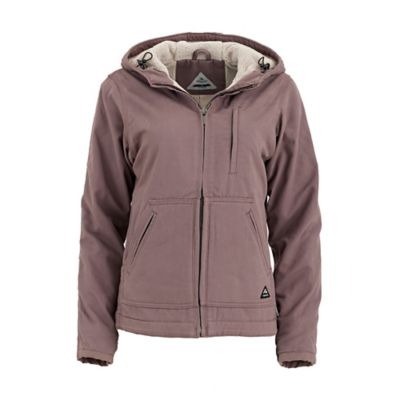
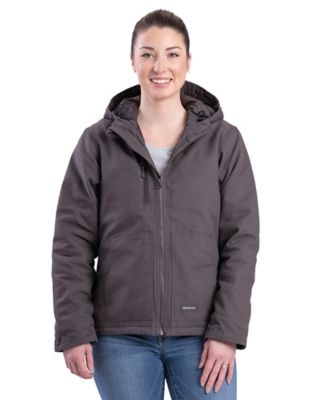
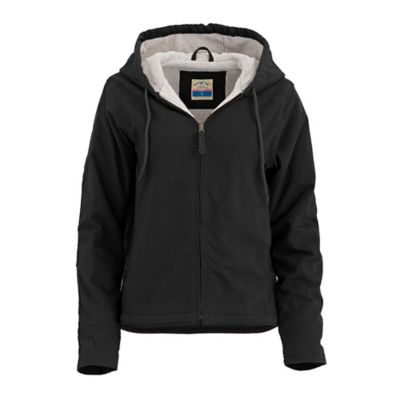
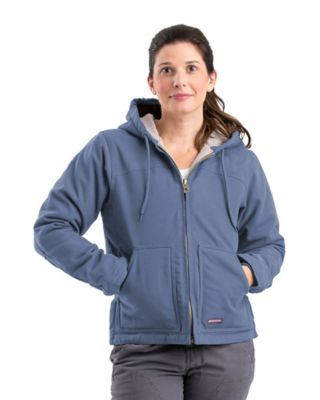
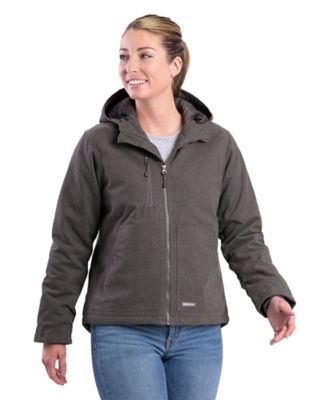
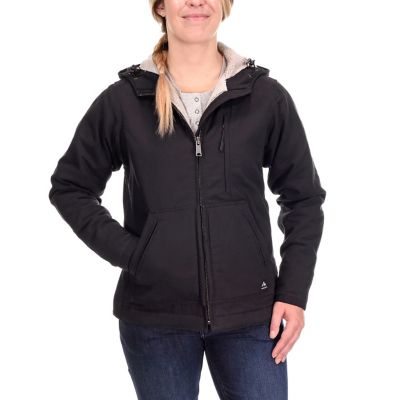
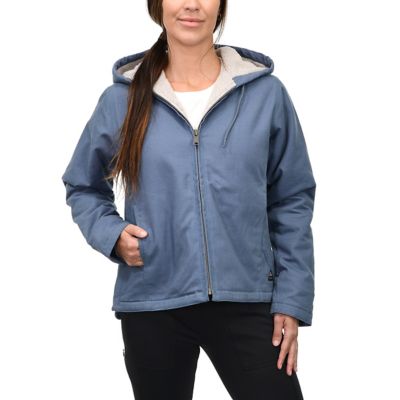
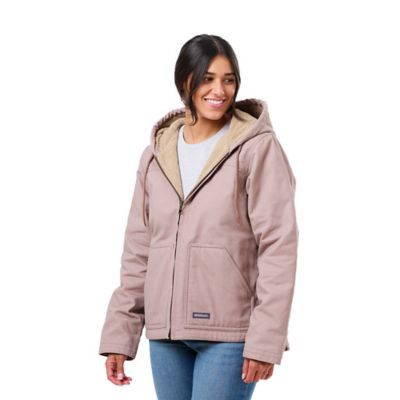
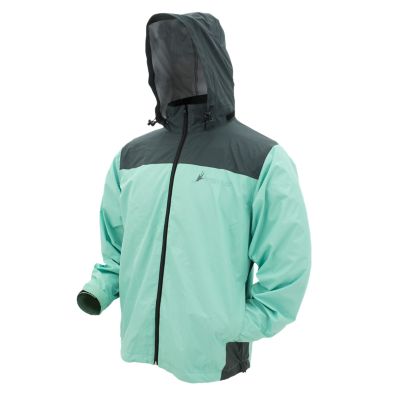
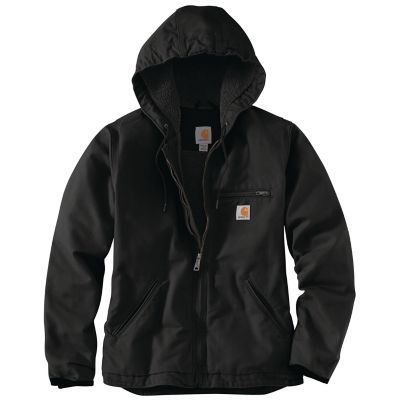
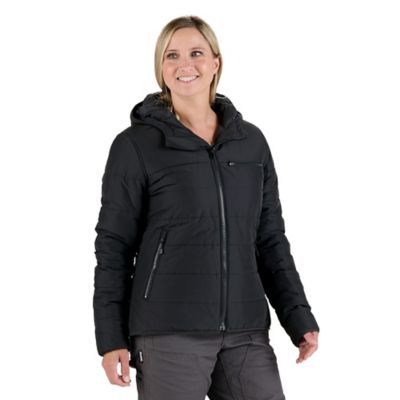
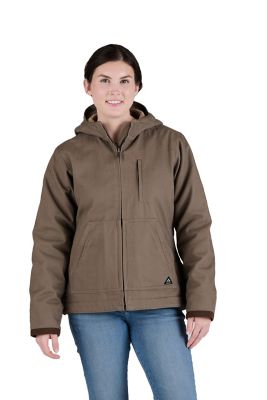
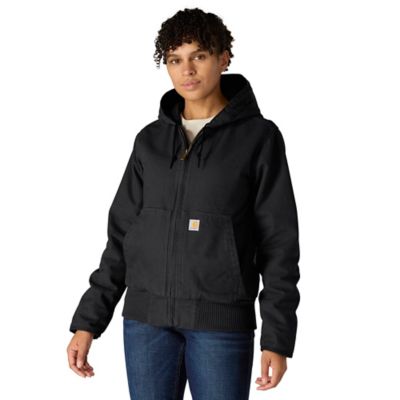
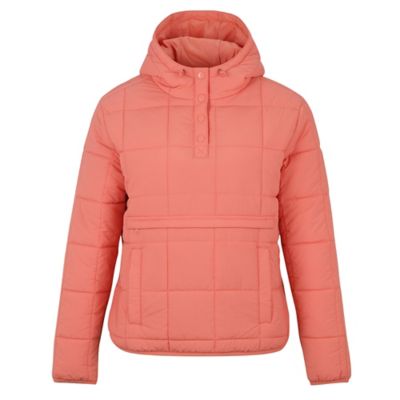
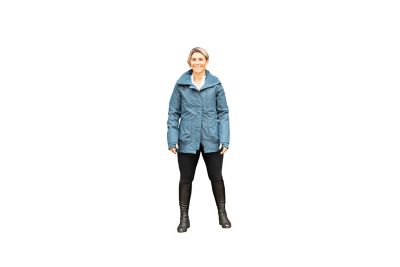
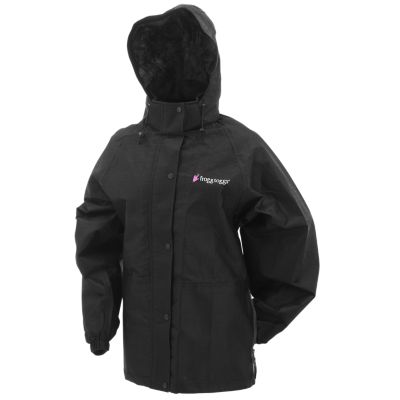
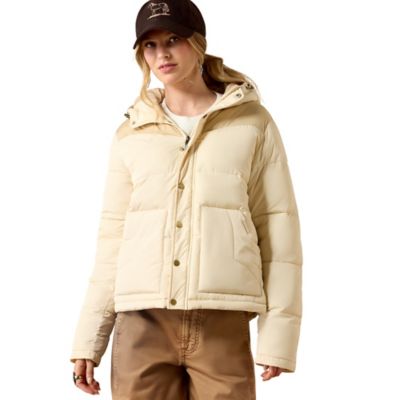
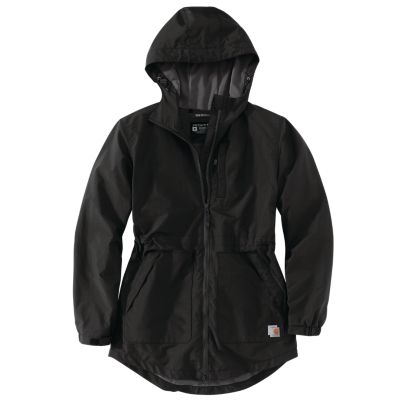
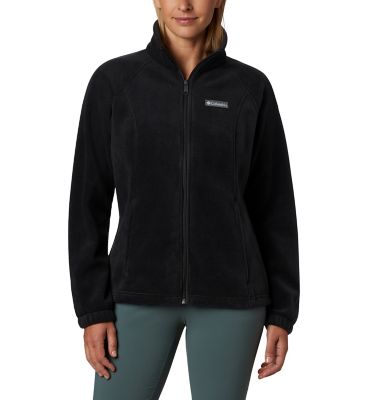
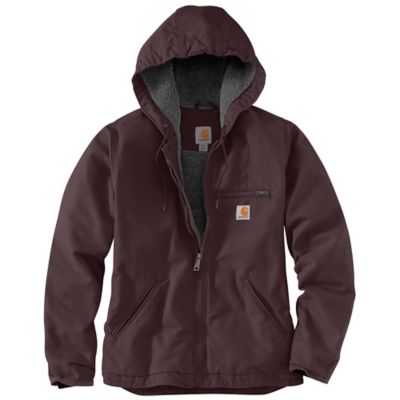
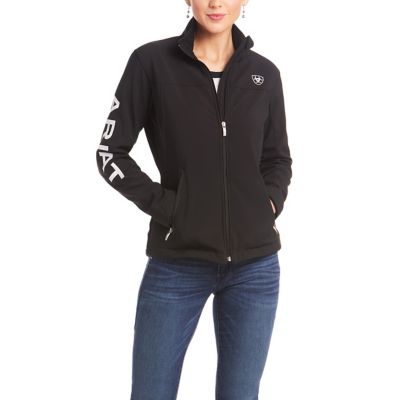
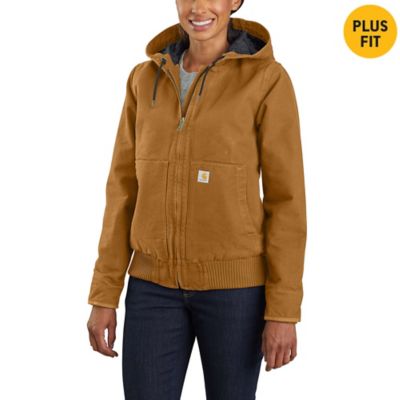
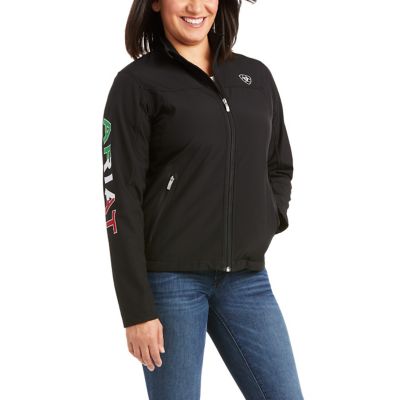
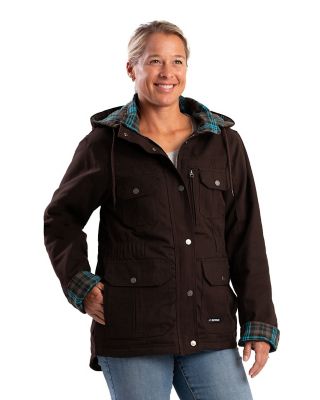
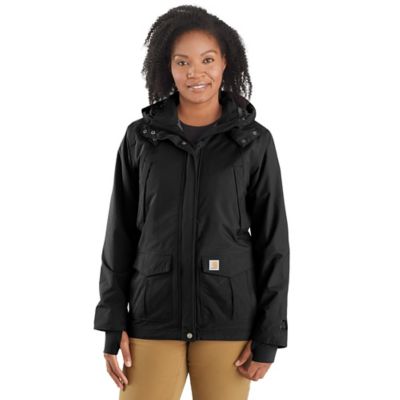
Women's long hooded jackets combine coverage below the hips with a hood that helps shield the head and neck from wind and precipitation. Lengths can range from mid-thigh to below the knee, with each offering a different balance of coverage and freedom to move. That extra length can make a difference while walking across an open pasture, standing along a fence line or heading from the parking lot to work. The fabric and construction matter just as much as the hemline. A lightweight rain shell is built for a different job than an insulated parka, even when both have a similar shape. Water-resistant fabric can shed light moisture, but it is not the same as waterproof construction intended for steadier rain. For extended exposure, a waterproof barrier and sealed seams help keep water from working through the fabric and stitching. A water-repellent finish helps droplets bead on the surface, though that finish alone does not make a jacket waterproof. Breathability also matters when a walk turns into a brisk climb or a few chores stretch into an afternoon outside. Fabric that allows moisture vapor to escape helps limit that clammy feeling under a closed jacket, especially when paired with layers suited to the activity. Woven polyester and nylon shells are common options for outerwear because they can provide coverage without excessive weight. Fabric weight, weave and surface treatment affect how a shell feels and performs; fiber content alone does not tell the whole story. A smoother shell may slip easily over a fleece, while a more textured fabric can have a substantial feel for everyday wear. Wind protection depends on construction, too. A close weave, a covered front closure and snug cuffs can help block drafts at places where cold air tends to sneak in. For time spent outside in wet conditions, coverage works best as a complete system: the shell, seams, hood and closures all have a part to play.
Fit is where a long hooded jacket starts to feel right for everyday life. A straight cut leaves a different amount of room through the waist and hips than a shaped silhouette, and an adjustable waist can bring the body closer without requiring a close fit everywhere. Room for a sweatshirt or sweater is handy, but excess fabric can bunch under the arms or pull awkwardly when carrying a feed sack. Shoulder reach, sleeve length and space through the hips all affect comfort when lifting, bending or settling into a truck seat. The hem deserves the same attention. Mid-thigh coverage often allows an easy stride, while knee-length and longer jackets may benefit from side openings or a two-way front zipper. Opening the lower portion of a two-way zipper can create more room for sitting or taking a larger step while keeping the upper body covered. A hem that stays clear of the ground is easier to manage on muddy paths and around porch steps. The hood should offer coverage without dropping into the line of sight. Adjustment at the face opening and back of the hood can help it move with the head instead of staying put when the wearer turns. A shaped brim may help keep rain off the face, and a higher collar can add coverage at the throat. Detachable or stowaway hoods offer flexibility, depending on the jacket's design;
Women's Jackets Without Hoods offer another option for anyone who prefers a separate hat or less fabric around the neck. Small details make a noticeable difference through a full day. Zipper pulls that are easy to grasp with gloves, pocket openings that allow a comfortable hand position and cuffs that adjust over a sleeve all add convenience. Covered pockets can help shield belongings from light precipitation, although a pocket should not be treated as waterproof unless its construction is specifically rated for that purpose.
Insulation determines much of a jacket's warmth, but the right amount depends on activity, exposure and the layers underneath. An uninsulated long hooded jacket offers an outer barrier without much added warmth, making it useful over different layers. Synthetic insulation can retain some insulating ability when damp, while down offers warmth with relatively little weight and packs down well. Down needs protection from soaking moisture, and neither insulation type replaces a shell suited to the conditions. Fill amount, overall construction and fit also affect warmth, so insulation names alone are not a temperature rating. A fleece-lined body may feel cozy over a shirt, while smooth sleeve linings can make it easier to pull a jacket on over knitwear. Someone standing at a livestock show may appreciate more insulation than someone walking quickly between buildings, even on the same day. For everyday wear, comfort also comes from details that hold up to repeated handling: secure stitching at pocket corners, firmly attached fasteners and a zipper that runs smoothly without catching the lining. Care helps preserve those features and the jacket's weather protection. The care label is the starting point, especially for waterproof fabrics, down fill and removable trim. Brushing away dried dirt, treating small marks as directed and closing fasteners before washing can help protect the fabric and hardware. Technical outerwear may call for a particular cleaner, and fabric softeners can interfere with some performance finishes. Thorough drying matters for insulated jackets; any dryer setting or method for restoring loft should follow the garment's instructions. Hanging a jacket where it can dry fully before storage helps keep trapped moisture from lingering in the lining. As a gift, a long hooded jacket makes sense for someone who spends time tending animals, walking country roads or commuting on foot. Knowing the recipient's usual size, preferred length and layering habits helps make that everyday usefulness part of the gift.