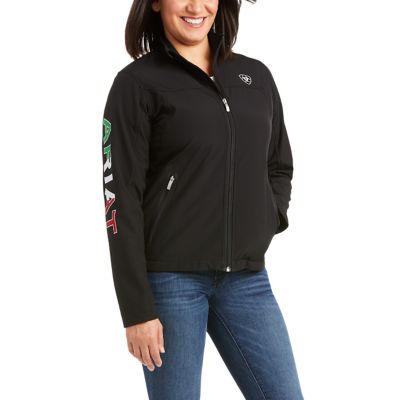
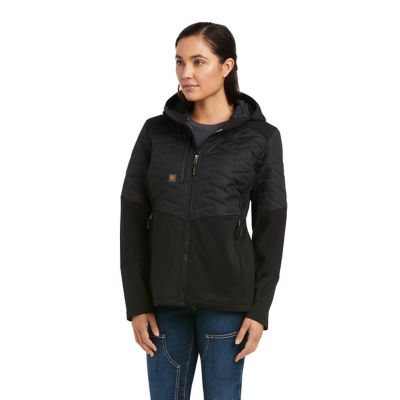
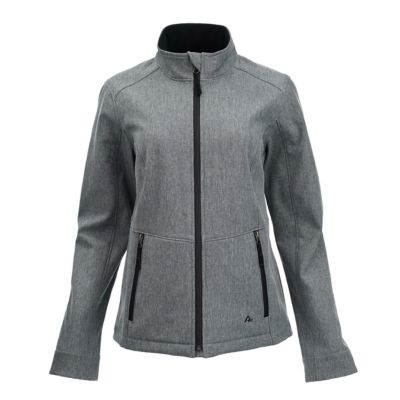
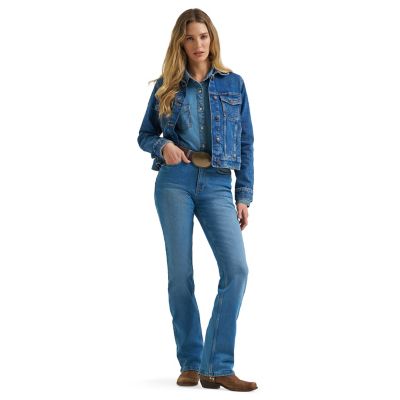
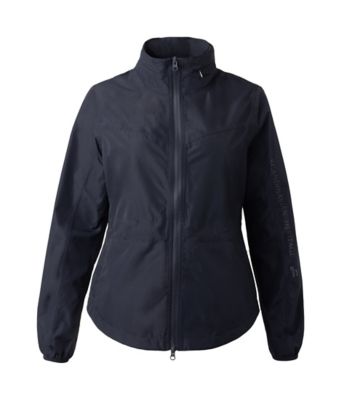
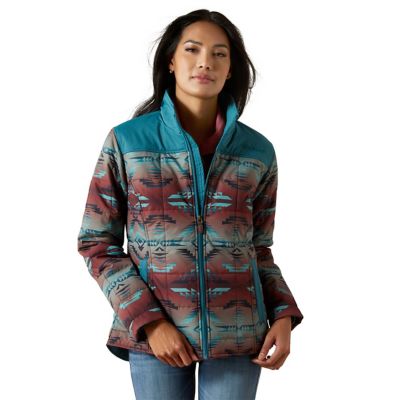
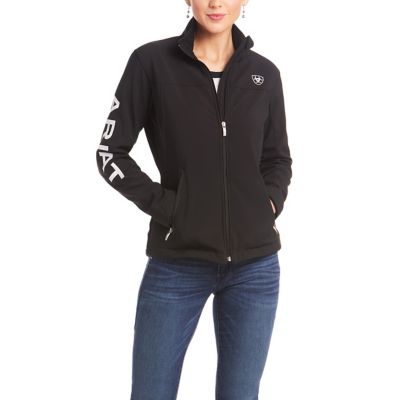
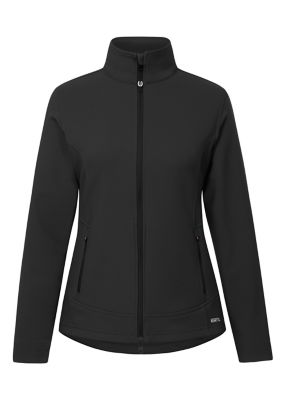
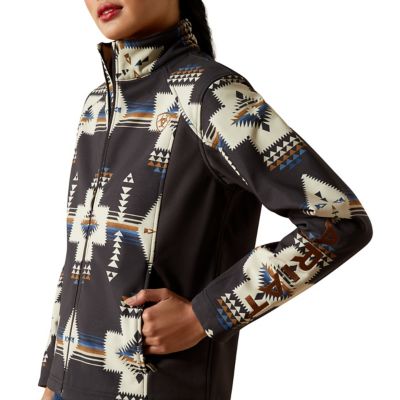
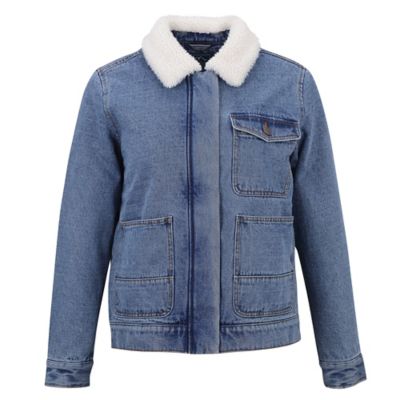
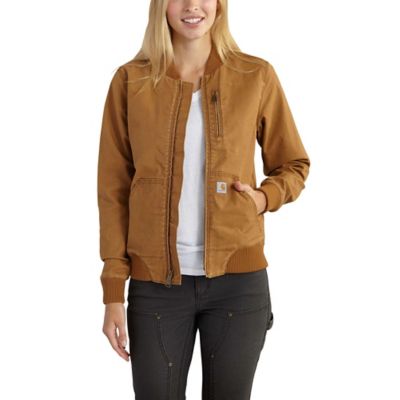
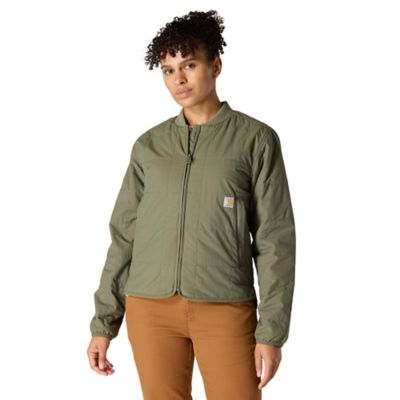
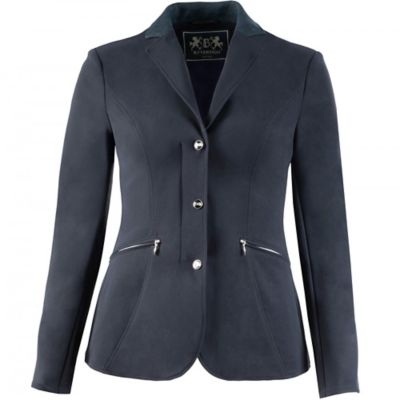
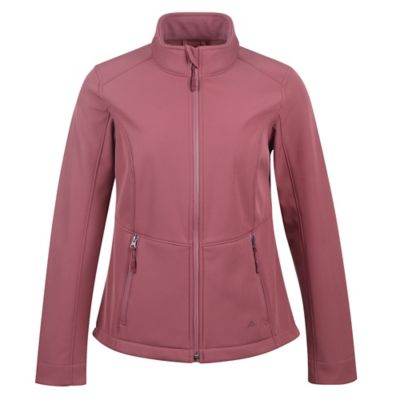
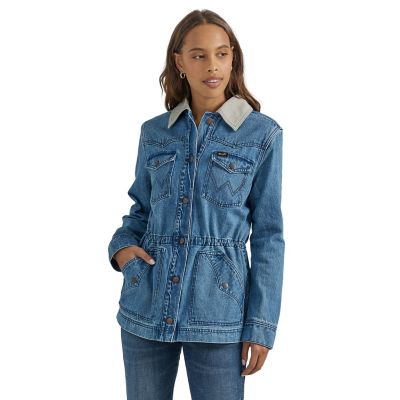
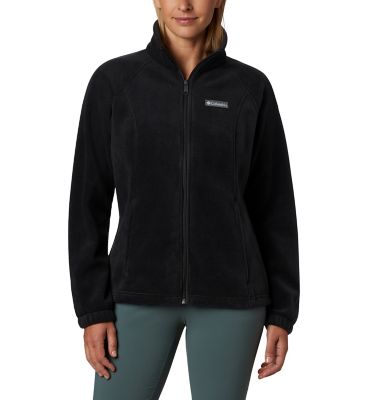
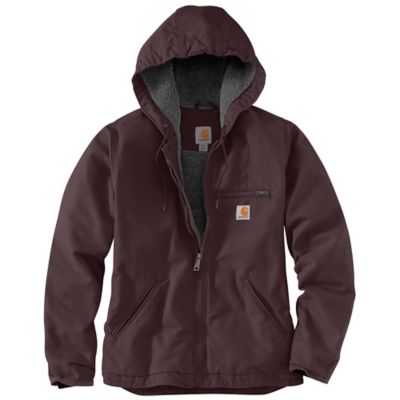
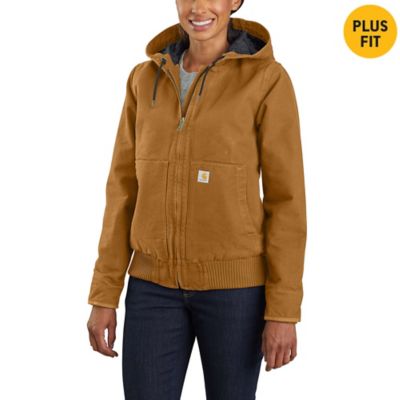
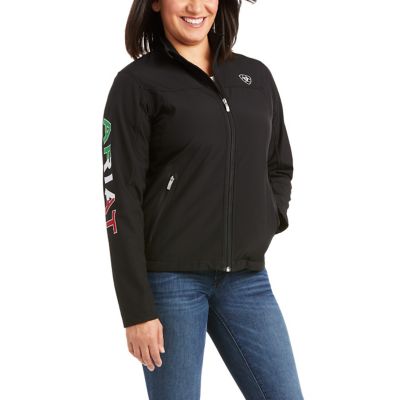
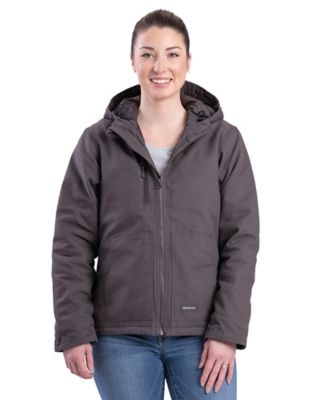
Women’s jackets without hoods include fleece, denim, canvas, softshell, lightweight insulated and tailored styles, with options for chores, everyday wear and trips into town. A hoodless jacket keeps the neckline simple and leaves less fabric gathered behind the neck when sitting in a truck, leaning against a seat or wearing a collared shirt underneath. It also pairs easily with a favorite cap without an attached hood competing for space. The right style depends on what a typical day calls for. Fleece has a soft feel and a flexible shape that suits walking the property, riding along on errands or pulling on over a T-shirt. Denim brings a more structured feel, with a familiar look that works with jeans, work pants or a casual dress. Canvas and duck fabrics have a firm hand and can stand up to rubbing against fence rails, stall doors and other rough surfaces, though fabric weight and construction make a difference. Softshell jackets generally have a smooth outer face and some flexibility, making them worth considering for days that involve plenty of reaching and bending. Quilted jackets hold insulation in stitched sections, while lightly filled styles add cushioning without necessarily creating a bulky shape. More tailored jackets offer defined seams and a neater outline for appointments, dinner out or a day split between work and town. Collar shape matters, too: a stand collar frames the neck, a fold-down collar lies over a shirt, and a collarless neckline leaves room for a scarf or a button-front layer. None of these styles needs a hood to feel complete. Their appeal comes from a straightforward shape, useful coverage and the freedom to build an outfit around the day’s plans. A jacket that feels right for checking on livestock may have a different weight, length and pocket arrangement than one meant mainly for the drive to work, even when both share the same hood-free design.
Fit makes a big difference in how a women’s hoodless jacket feels after several hours, especially when the day includes carrying feed, loading groceries or getting in and out of a vehicle. Shoulder seams should sit comfortably without pulling across the upper back, and sleeves need enough room for bent elbows rather than fitting well only with arms hanging straight down. A jacket worn over a substantial sweatshirt needs more room through the chest, upper arms and waist than one worn over a thin knit top. Stretch fabric can help with movement, but it does not replace the right size or enough room through the shoulders. Seams shaped around the elbows and extra fabric through the back can also make reaching easier. A waist-length cut leaves less fabric around the hips when seated, while a longer hem gives more coverage over the seat and upper legs. Side openings, adjustable hems and two-way zippers can help a longer jacket move more comfortably, depending on its construction. Cuffs deserve a close look because sleeves that hang over the hands can get in the way of everyday tasks. Rib-knit cuffs sit close to the wrist, adjustable tabs let the opening change, and plain cuffs offer a simple finish over a shirt sleeve. Closures affect daily convenience as well. A full zipper makes a jacket easy to open and close, while snaps and buttons bring a different feel and may be easier to manage for some wearers. Pockets are most useful when their size and placement match what needs carrying. A phone pocket should hold a phone without making sitting awkward, and a secure inside pocket can keep keys from slipping out when bending over. Reinforced pocket corners, even stitching and firmly attached fasteners are practical construction details. Those details matter most at spots that take repeated tugging, such as pocket openings, cuffs and the bottom of a zipper.
Materials and care requirements help determine whether a jacket suits life around the house, at the barn or on the road. Cotton-rich denim and canvas often have a substantial feel, while polyester fleece is softer and generally less structured. Nylon or polyester shells can keep the outer surface smooth, and blends with stretch fibers may offer more give through the body and sleeves. A lining changes the feel against clothing: a slick lining can slide over shirt sleeves more easily, while a brushed interior feels softer against the arms. Fabric weight alone does not tell the whole story, since the lining, insulation and cut all contribute to how substantial a jacket feels. Care should follow the sewn-in label rather than assumptions based on appearance. Some jackets allow machine washing, while others call for spot cleaning or professional care. Fastening zippers and snaps before laundering can help limit snagging, and checking pockets keeps a forgotten pen or loose hardware out of the wash. Fleece may benefit from washing with similar fabrics instead of rough garments that can rub its surface. Insulated jackets need the drying method listed on the label so their filling stays evenly distributed. Denim and cotton canvas may soften with wear, but unnecessary washing and excessive dryer heat can affect their fit and finish. Small repairs to a loose button or an opening seam can keep everyday wear from turning into a bigger problem. For a gift, a familiar jacket’s measurements and the recipient’s usual layers offer a better starting point than guessing from a shirt size alone. A practical hoodless style can suit someone who spends the day tending animals, driving between stops or balancing work with family errands. For a separate look at outerwear with attached head coverage,
Women's Winter Coats & Jackets With Hood offers a related category. Without a hood, the focus stays on a comfortable collar, an easy-moving fit and details that earn their place through everyday wear.