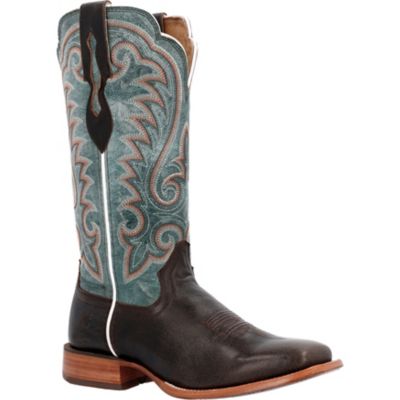
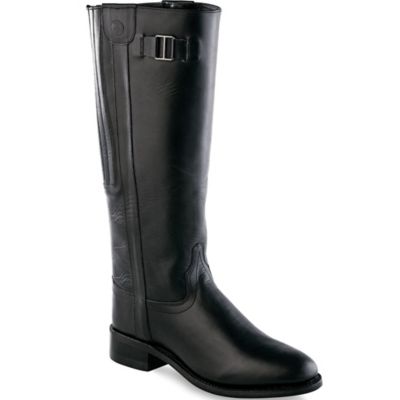
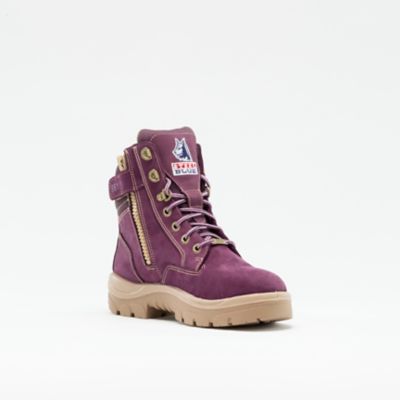
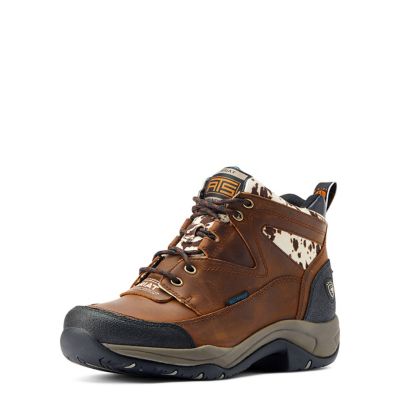
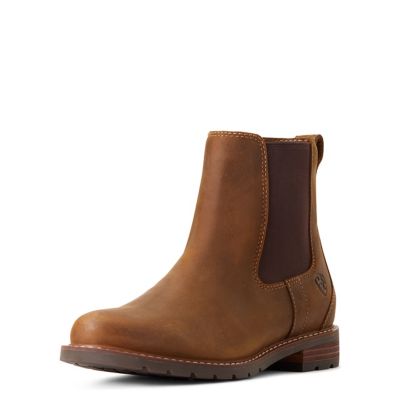
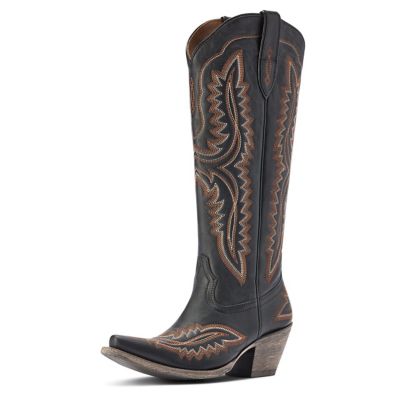
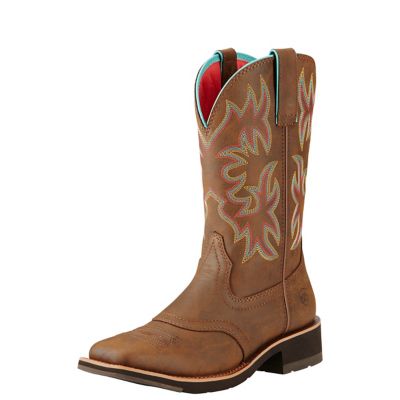
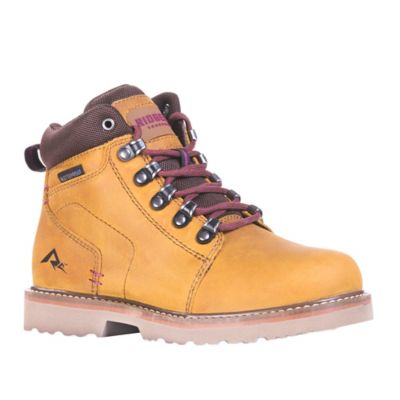
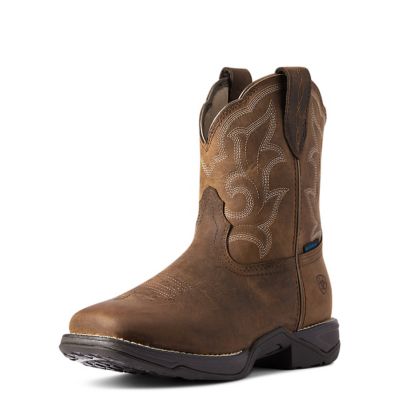
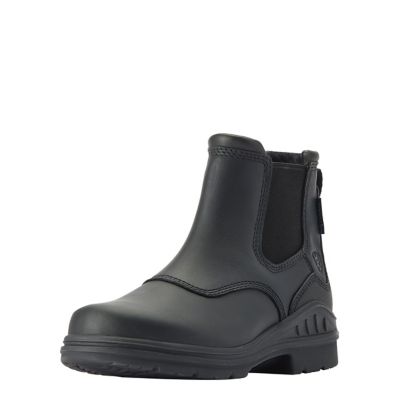
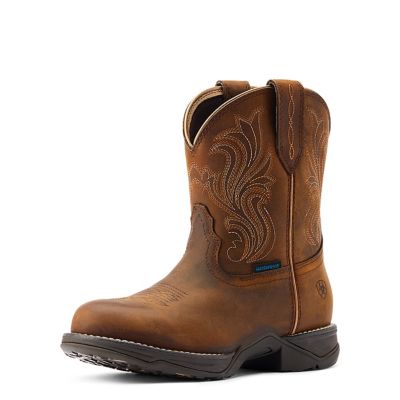
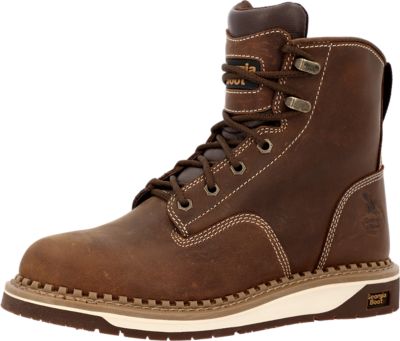
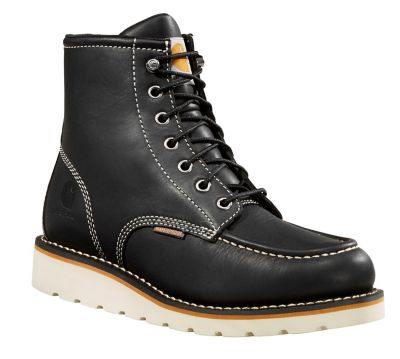
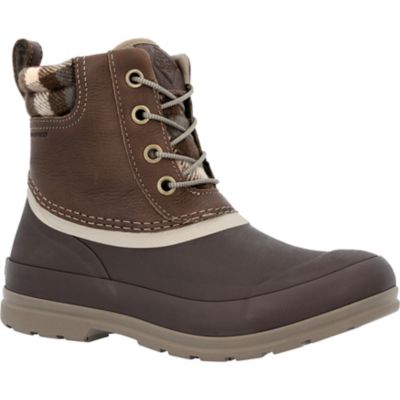
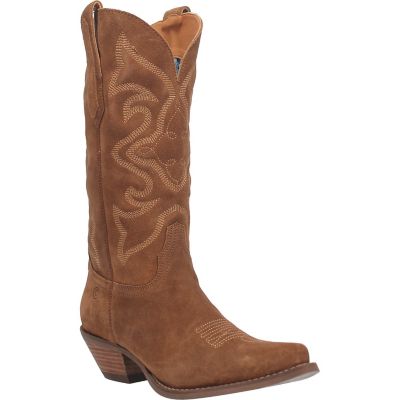
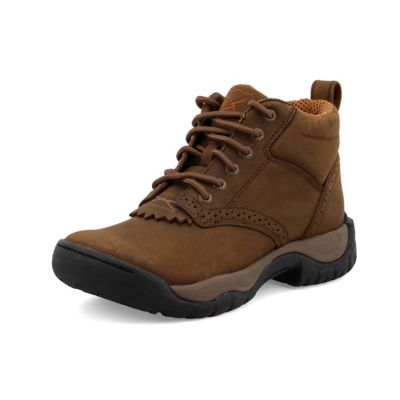
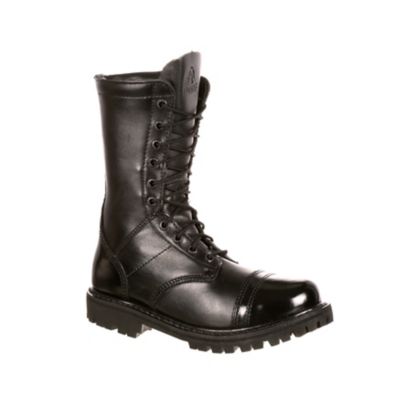
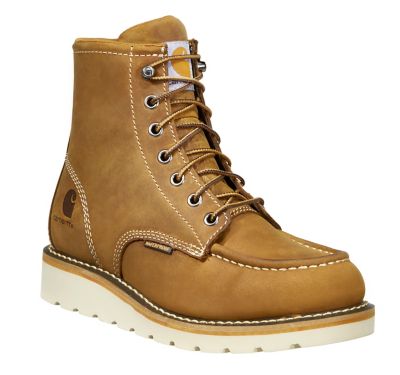
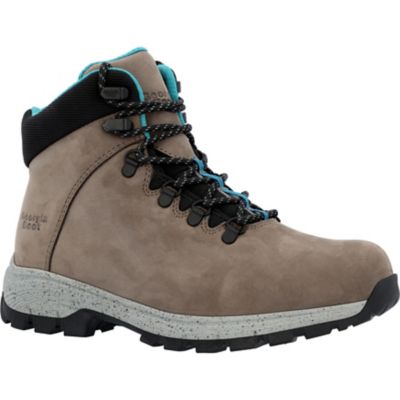
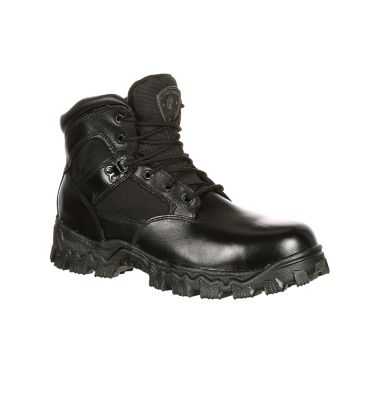
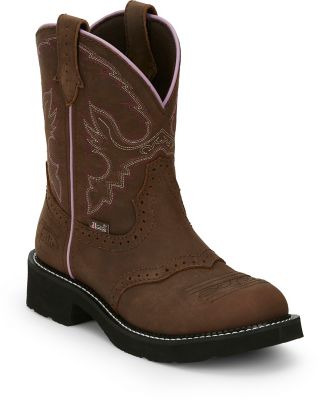
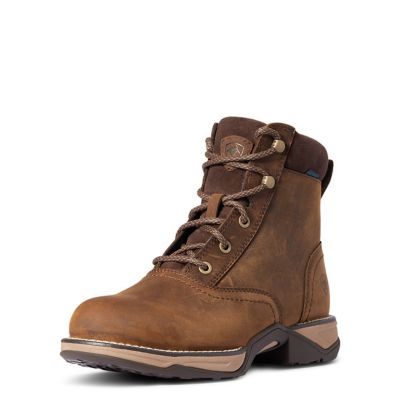
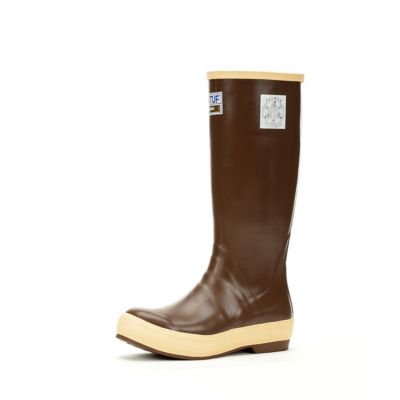
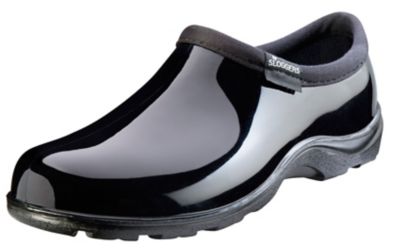
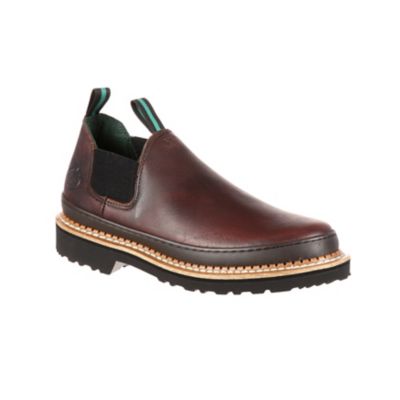
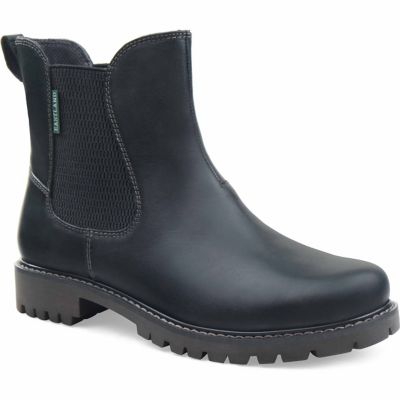
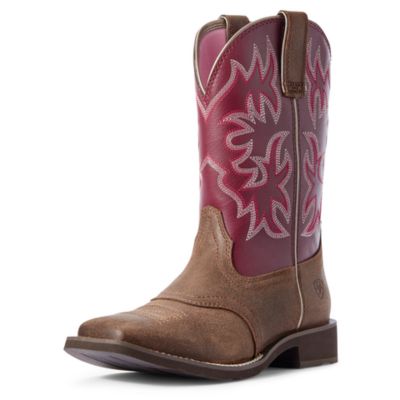
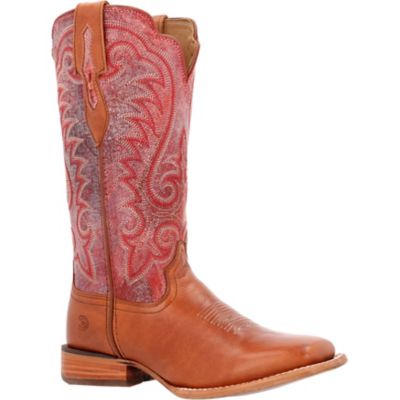
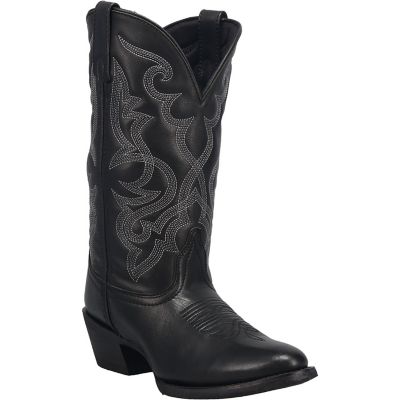
Women’s leather boots bring together a familiar country look, a comfortable fit and the right amount of support for whatever fills the day. The category covers ankle booties, elastic-sided Chelsea boots, lace-up boots, Western boots and taller styles that reach toward the knee. Each shape has its own feel and purpose. Ankle boots sit neatly beneath straight-leg jeans and pair easily with a skirt for dinner in town, while Chelsea boots keep things simple with stretch panels that help them pull on and off. Lace-up styles offer more adjustment across the instep and around the ankle, which can make a difference when feet need a little extra room in one spot and a closer fit in another. Western leather boots have recognizable details such as shaped heels, stitched shafts and rounded, square or pointed toes. Tall leather boots offer more leg coverage and a strong, clean line with tucked-in pants or dresses. Riding-inspired fashion boots may share that tall silhouette, but actual horseback riding calls for footwear designed for the saddle, with a suitable heel and sole for the stirrup. For errands, casual gatherings and days spent moving between home and town,
women’s casual leather boots offer an easygoing direction without leaning into specialized work footwear. A low heel generally feels steadier for extended walking, while a taller heel changes both the look and how weight rests on the foot. Black leather can feel understated or dressy, brown leather pairs naturally with denim, and lighter shades show off stitching and grain. Smooth uppers, simple seams and restrained hardware fit easily into an everyday wardrobe; more pronounced stitching, buckles or textured leather bring a stronger Western feel. Whether the wearer spends the day at a farm office, heads to a local concert or wants something a little more polished than everyday chore footwear, the intended setting helps narrow the style.
Leather type and construction do much of the work behind a boot’s appearance and feel. Full-grain leather retains the hide’s natural surface, including variations in grain, and often develops a deeper, more broken-in character with wear. Top-grain leather has been refined at the surface for a more even appearance and can offer a smooth finish that suits everyday and dressier styles alike. Suede has a soft, napped surface rather than a smooth face, so it needs different brushing and cleaning methods. A leather upper does not necessarily mean the lining, footbed or outsole is leather, too; those parts may combine several materials to balance flexibility, structure and underfoot comfort. Thicker leather can feel firm at first, while softer leather may bend more readily, but neither description alone tells the whole story about comfort or service life. Seams, sole attachment, reinforcement around stress points and the way the boot fits all matter. Welted construction can make resoling possible, depending on the boot and the repair needed, while other sole attachments may produce a lighter or more flexible feel. Rubber outsoles often suit everyday walking and time on gravel paths, though grip depends on the compound, tread and surface. Deep tread can collect dirt from a barn aisle, while a smoother sole is easier to wipe down but may offer less traction in some settings. Leather outsoles give certain Western and dress boots a traditional feel, with different traction and care needs than rubber. Cushioned footbeds soften the feel underfoot, and removable insoles leave room for compatible replacements when the boot has enough interior space. For women handling farm chores or working around equipment, a leather boot’s appearance is not a substitute for task-specific protection. Safety toes, electrical hazard protection and slip-resistance claims should be checked against the demands of the job. A casual boot can be just right for a trip to the feed store without being the right footwear for moving heavy materials or spending hours on a shop floor.
A good fit gives women’s leather boots their everyday staying power. The toes need room to rest naturally without crowding at the front or along the sides, and the widest part of the foot should line up with the widest part of the boot. A pointed toe extends beyond the toes rather than asking them to squeeze into its tip. Pull-on Western boots often allow a small amount of heel movement at first, with the instep helping hold the foot in place; pronounced sliding or a foot that lifts freely inside the boot suggests a fit worth reconsidering. Lace-up boots offer adjustment, but tight lacing should not be necessary to keep an oversized boot on the foot. Shaft height and calf circumference matter just as much for taller styles, particularly when jeans will be tucked inside. The top edge should not dig into the leg while sitting, and the ankle should have enough freedom for a natural stride. Trying boots with the socks intended for everyday wear gives a more useful sense of fit than testing them with a much thinner pair. Leather may soften and give a little across flex points, but break-in should not be expected to fix pinched toes, numbness or a boot that is too short. Care helps preserve both the leather and the fit over time. Loose grit can be brushed away before it works into seams, and smooth leather generally benefits from a suitable cleaner and occasional conditioning according to the maker’s directions. Too much conditioner can change the finish or leave leather overly soft, so a small test in a hidden spot is worthwhile. Suede calls for a suede brush and products intended for its surface rather than ordinary leather cream. Boots that become damp should air-dry away from direct heat, with their shape supported and their interiors allowed to dry fully. Upright storage helps prevent tall shafts from folding into deep creases, and timely attention to worn heel caps or separating soles can keep minor wear from becoming a larger repair. As a gift, leather boots feel especially thoughtful when the recipient’s usual size, preferred toe shape, calf fit and everyday plans are already known. Those details help turn a good-looking pair into footwear that gets reached for again and again.