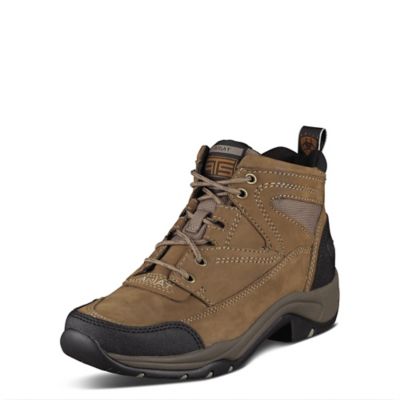
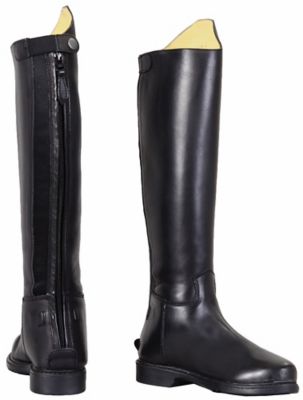
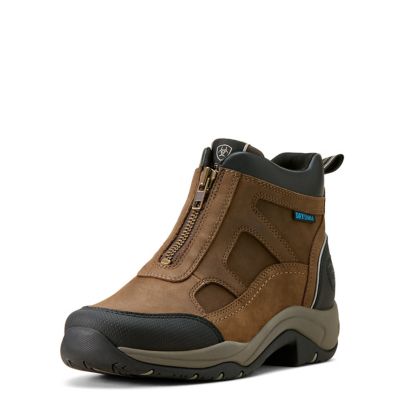
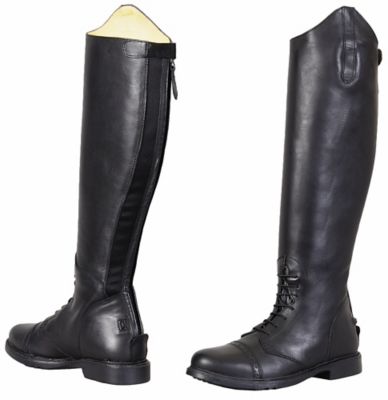
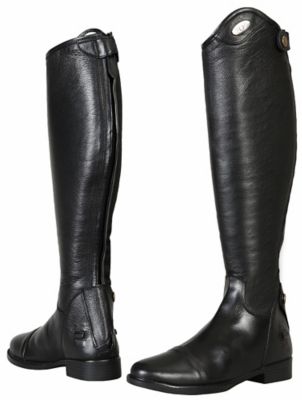
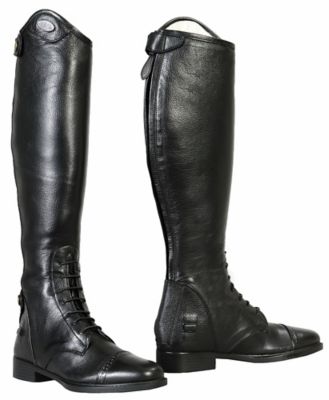
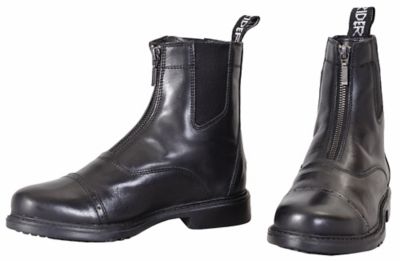
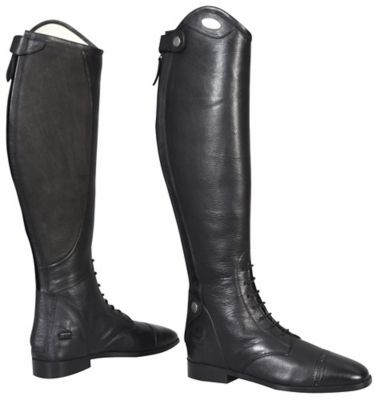
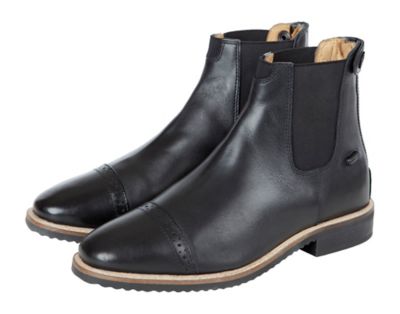
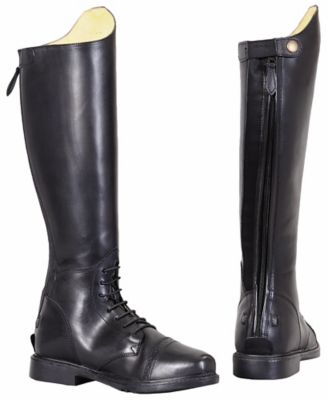
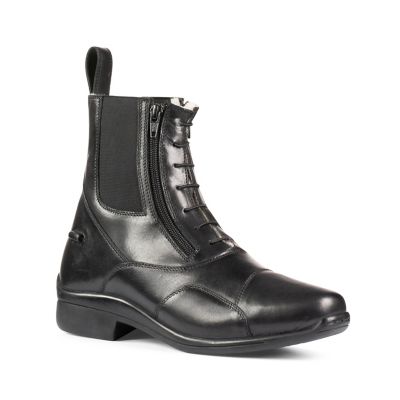
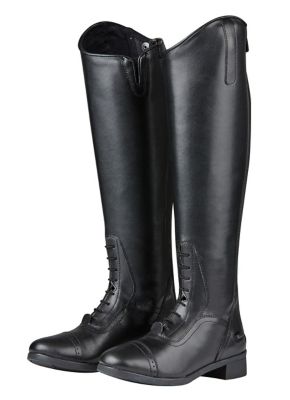
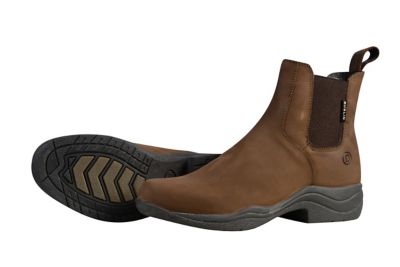
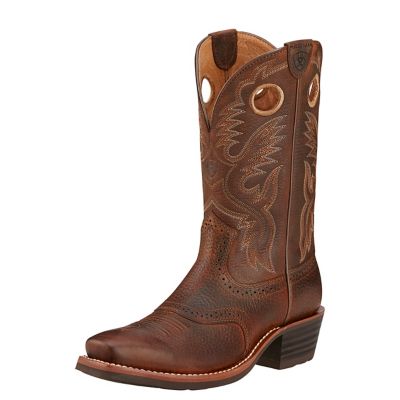
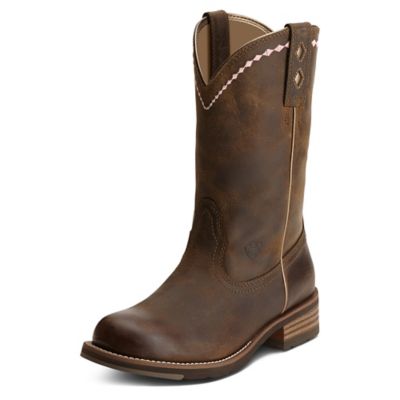
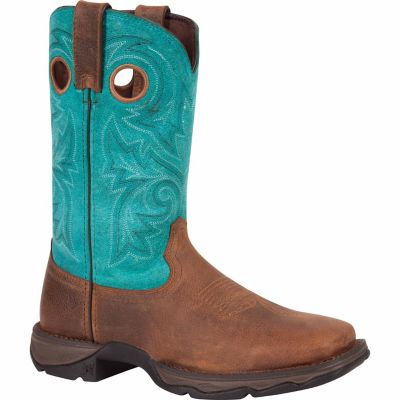
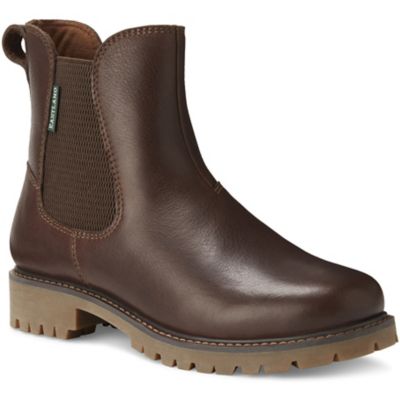
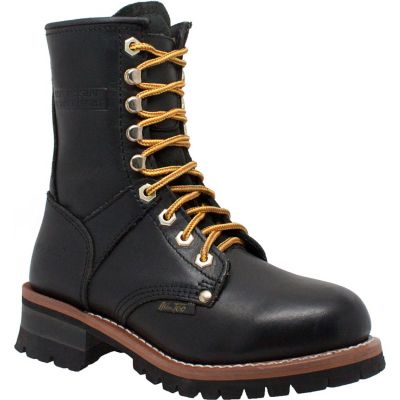
Women's leather riding boots range from equestrian footwear made for time in the saddle to riding-inspired styles meant for everyday wear. That distinction matters: a tall leather shaft and a low heel can give a boot a familiar horse-country look without making it suitable for horseback riding. Boots intended for riding have a heel, sole shape, and profile suited to the stirrup, along with a fit that supports steady foot placement. English styles include ankle-height paddock boots and tall field or dress boots, while Western riding boots generally have pull-on shafts, shaped heels, and toe profiles that vary by design. Paddock boots are often paired with half chaps, which cover the lower leg and help reduce rubbing against stirrup leathers. Tall boots provide that coverage in one piece, while Western shafts offer coverage beneath a jeans leg. For someone heading to lessons, spending an afternoon on the trail, or moving between the tack room and the arena, the intended activity should come before appearance. Fashion riding boots can work well with jeans, leggings, or a skirt for a trip into town, but their soles, hardware, and heels may not be appropriate around stirrups. Leather also gives these styles much of their character. Full-grain leather retains the hide's natural surface and often develops creases and a deeper patina with wear. Top-grain leather has a more refined surface, with its feel and appearance depending on the finish. Smooth leather tends to wipe clean more easily than suede or other napped finishes, which need different brushes and care products. Linings can affect how a boot feels against the foot and leg, while reinforced areas can help it handle repeated flexing and contact. These details matter on a boot that bends at the ankle, brushes against saddle leather, and gets pulled on before the rest of the day's chores are finished. The right balance comes down to whether that day centers on riding, walking, or a little of both.
Fit deserves just as much attention as the leather, especially with women's tall riding boots. Foot length is only part of the picture; width, instep height, calf circumference, and shaft height all affect comfort. A boot that feels fine across the toes may still press behind the knee or pull too tightly across the calf. Measurements taken over the pants and socks normally worn with the boots give a more useful starting point than measurements over bare skin. English tall boots should feel close through the leg without cutting off circulation or forcing the zipper, and the shaft needs enough clearance behind the knee for a comfortable riding position. Some tall leather boots settle at the ankle during break-in, so their initial height may differ from how they sit after regular wear. The amount of settling depends on construction and leather stiffness. Pull-on Western boots usually hold the foot through the instep, and a small amount of heel movement can be normal at first; excessive slipping or a foot that slides forward calls for a closer look at the fit. Toes need room to rest naturally rather than curl or crowd together. Leather can soften and mold with wear, but it will not make a boot that is too short become the right length. Closures matter, too. Rear or side zippers can simplify getting tall boots on and off, while elastic panels allow some movement around the calf. Laces on paddock and field styles offer adjustment across the ankle or instep. Underfoot, cushioning and arch support can make a difference during long stretches of standing, but riding suitability still depends on the entire sole and heel design. Deep, aggressive tread that feels useful around a barn may not release easily from a stirrup. A defined heel and suitable tread help with foot position, but no boot eliminates riding risk. An instructor can help assess footwear for a particular discipline, lesson program, or stirrup setup before a new pair goes into the saddle.
Regular care helps women's leather riding boots keep their shape, flexibility, and finish through repeated wear. Dirt and grit collect around seams, welts, and zipper tracks, where a soft brush can lift them away before they grind against the leather. Smooth leather generally benefits from a wipe with a lightly damp cloth, followed by a cleaner and conditioner suited to its finish and the manufacturer's directions. More conditioner is not always better; heavy applications can leave leather overly soft or change its appearance. Testing a care product on an inconspicuous area helps avoid an unexpected color change across the toe or shaft. Suede and nubuck call for products intended for those surfaces rather than the routine applied to smooth leather. If boots get damp during washing or barn work, drying them at room temperature away from direct heat helps protect the leather from stiffening or cracking. Boot trees or shaft supports help tall styles stand upright instead of folding sharply at the ankle, and a boot jack can make removing pull-on boots easier without stepping on the heel. Zippers last longer when dirt is brushed out and the shaft is brought together before the zipper is drawn upward. Sole wear, loose stitching, and worn heel edges deserve attention before they affect footing; repair options depend on how the boots are built. For riders, keeping a separate pair of chore boots can also spare riding leather from manure, cleaning chemicals, and repeated soaking. Leather riding boots can make a thoughtful gift for a rider, a horse owner, or someone who likes an equestrian look, provided the recipient's size, calf measurements, and intended activity are known. For styles beyond the saddle,
Women's Leather Boots brings the broader category into view. Whether the pair is headed to a riding lesson or a family gathering, comfortable proportions, suitable construction, and straightforward care matter more than appearance alone. A well-fitting pair should let the wearer focus on the ride or the day's plans rather than pinched toes, a slipping heel, or a shaft that catches behind the knee.