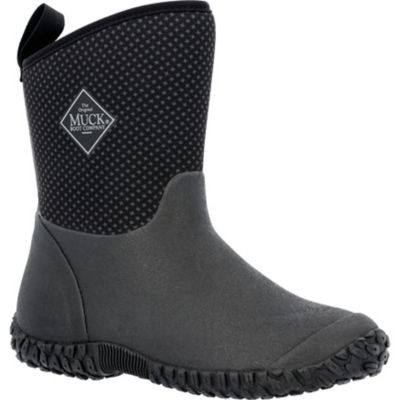
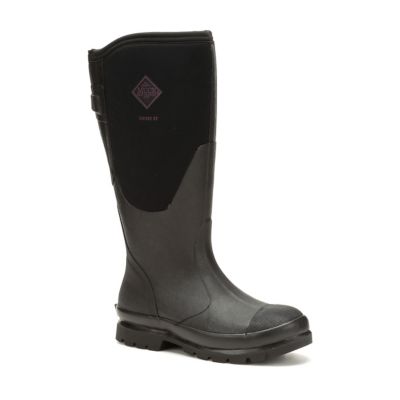
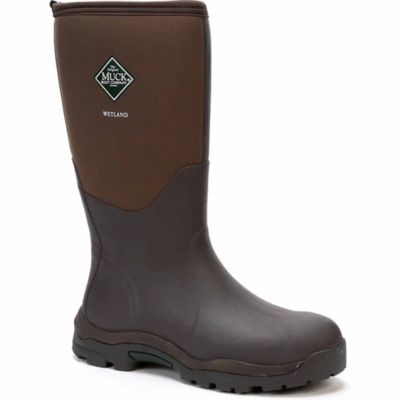
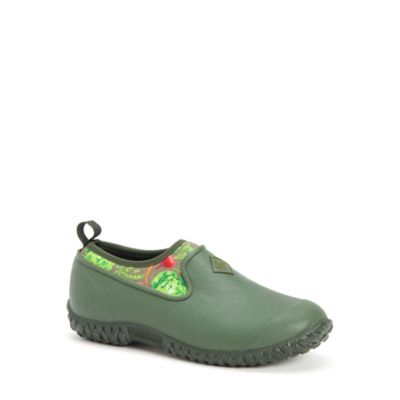
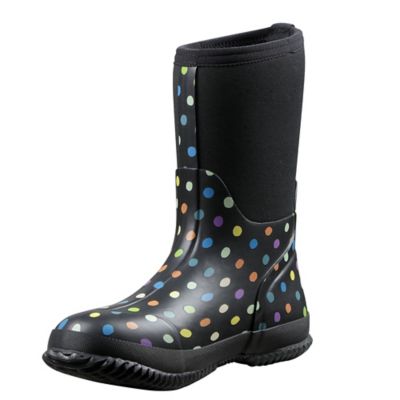
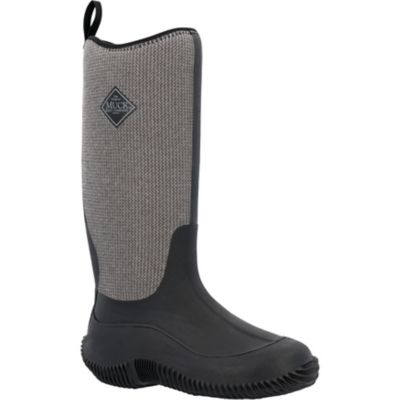
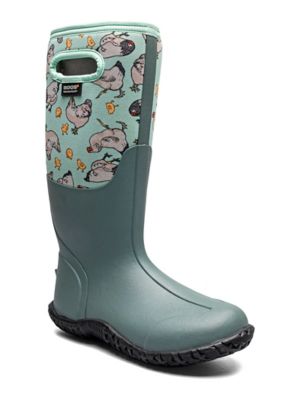
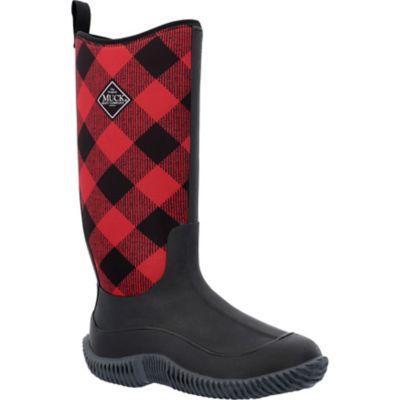
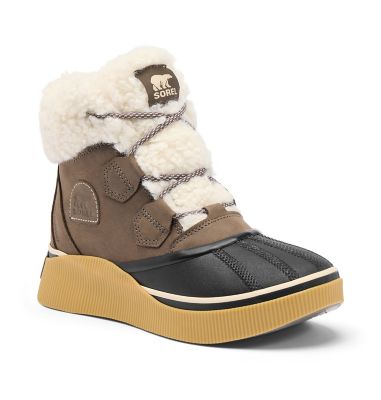
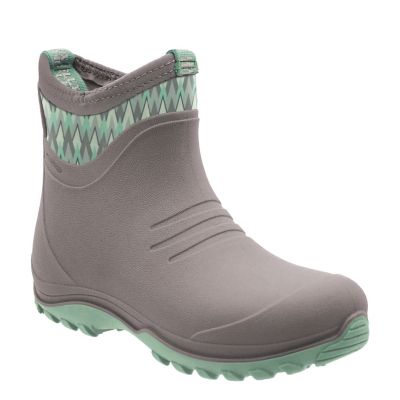
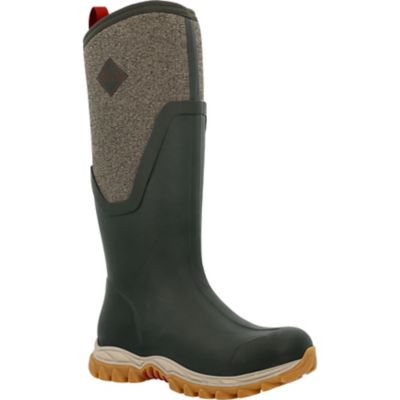
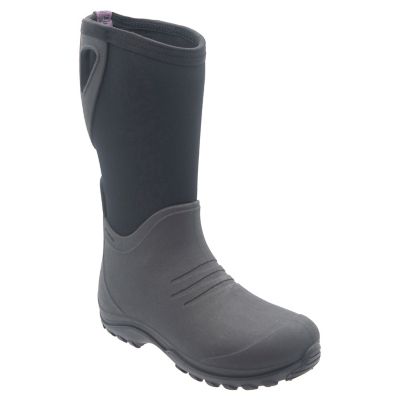
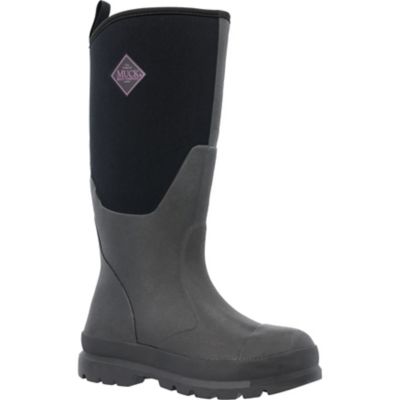
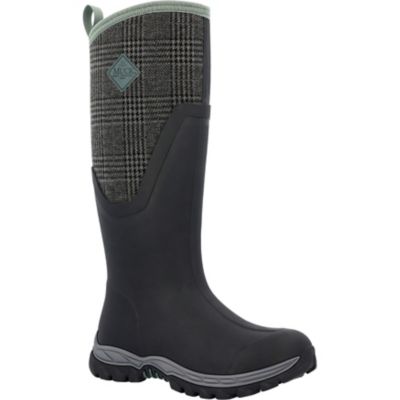
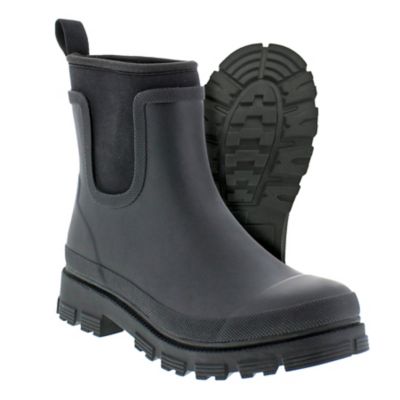
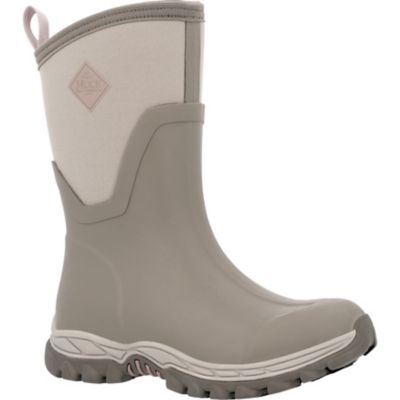
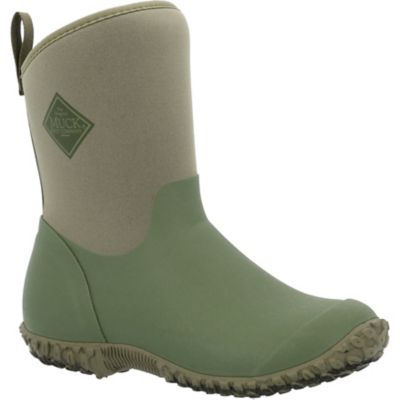
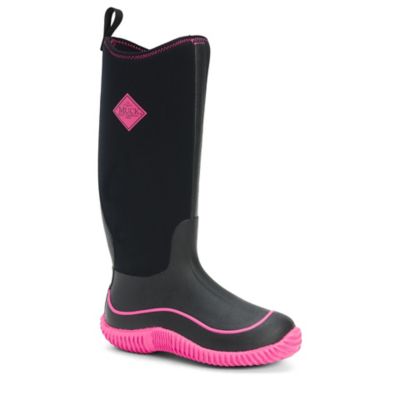
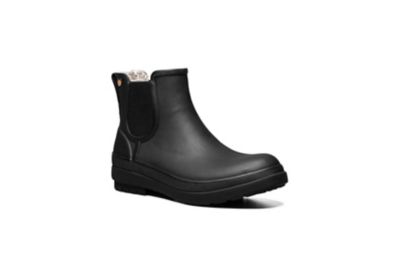
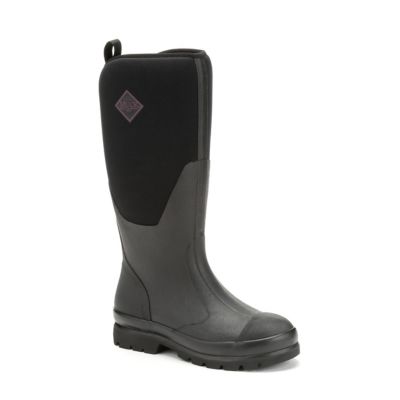
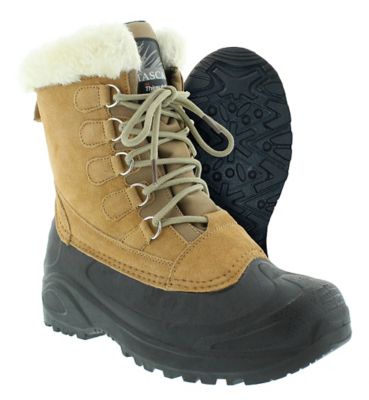
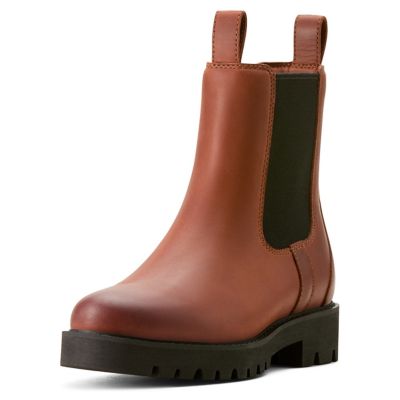
Women’s insulated rain boots combine waterproof coverage with insulation to help keep feet warm and dry in cold, wet conditions. They’re a practical fit for feeding horses before daylight, walking the fence line after a soaking rain, or crossing a muddy yard with a feed scoop in hand. Rubber shells help block water and rinse clean after barn chores, while neoprene uppers add flexibility and help hold warmth around the foot and lower leg. Some constructions combine both materials, with rubber covering the foot and extending partway up a stretchy shaft. Others have a full rubber exterior with insulation tucked inside. The amount of rubber coverage, placement of seams, and height of the waterproof section all affect how a boot handles puddles and splashing. Water can still enter over the opening, so shaft height matters when chores involve standing water or deep mud. Insulating layers may include neoprene, fleece, or synthetic fills, and each construction has its own feel. A soft lining can make a boot more comfortable against the leg, while thicker insulation adds warmth but may feel too warm during steady walking or strenuous chores. Insulation weight alone doesn’t tell the whole story; the shell, footbed, socks, and room around the toes also influence comfort. Temperature ratings offer a general reference rather than a promise, since standing beside a gate for an hour feels different from hauling hay or walking briskly across a pasture. Waterproof construction keeps outside moisture from getting in, but perspiration can still leave feet damp inside a boot. Moisture-managing socks and a lining that dries between outings help address that part of the job. For women who spend time around livestock, garden beds, drainage ditches, or muddy dog runs, insulated rain boots bring warmth and wet-weather coverage together in footwear that’s easy to pull on when there’s work waiting outside.
Fit makes a noticeable difference when a quick walk to the coop turns into a full morning of chores. Women’s insulated rubber boots should leave enough toe room for a comfortable sock without allowing the foot to slide around inside. Toes need room to move, and squeezing thick socks into a snug boot can reduce comfort and warmth instead of improving them. A slight amount of heel movement may occur in pull-on footwear, but repeated rubbing or a heel that lifts excessively can become troublesome over a long day. Calf room deserves just as much attention as foot length, especially when jeans or work pants are tucked inside. A flexible shaft can make kneeling and stepping easier, while an adjustable opening can accommodate different leg shapes and clothing layers. Taller shafts offer more coverage against splashes and muddy grass; shorter shafts take less effort to pull on and can feel less restrictive during errands or light chores. Neither style replaces attention to water depth. Underfoot, cushioning helps soften time on concrete barn aisles, while a supportive footbed can make walking across a large property more comfortable. A removable footbed also makes airing out the interior easier, provided the replacement fits without crowding the foot. Outsoles matter on mixed ground: tread with space between the lugs can shed mud more readily than tightly packed grooves, and heel edges can offer purchase on loose surfaces. Deep tread doesn’t guarantee traction on ice, wet boards, or slick concrete, so footing still calls for care. Boot weight is another everyday consideration. A substantial pair may feel reassuring around a muddy barnyard but tiring on a long walk. For a gift recipient who handles daily animal care or spends weekends tending a small acreage, familiar sizing, calf fit, and typical chores are more useful starting points than color alone.
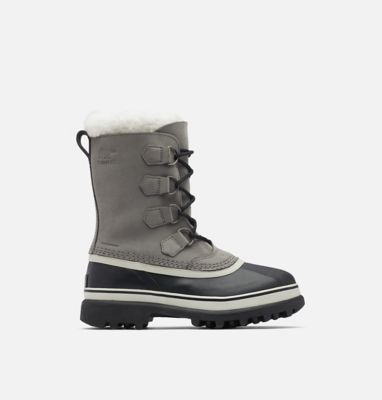
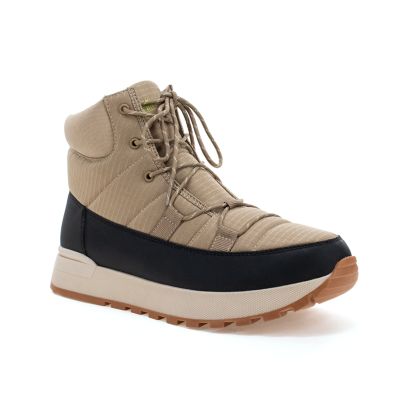
The right construction depends on where the boots will spend their time. Women’s insulated rain boots suit wet chores, muddy paths, and repeated trips between the house and outbuildings, while extended trail walking can call for a different balance of ankle support, foot hold, and flexibility. For longer walks over uneven ground,
Womens Insulated Waterproof Hiking Boots offer another footwear category to consider alongside pull-on rain boots. Around the farm, rain boot life depends on both materials and treatment. Flexing at the ankle, scraping against rough edges, and exposure to manure or other substances can gradually wear down shells, seams, and soles. Reinforced toe and heel areas can help with everyday scuffs, though ordinary rain boots shouldn’t be mistaken for footwear with rated impact or puncture protection. A quick rinse after muddy chores helps remove grit before it settles into tread and creases. Manure and other residue are worth washing off promptly with mild soap and water, following the care directions for the material. Harsh cleaners, solvents, and heavy scrubbing can damage rubber or bonded sections. Drying takes a little patience: open shafts, removable liners where provided, and room-temperature airflow help moisture escape without overheating the boot. Radiators, woodstoves, and strong direct heat can harm rubber, adhesives, and lining materials. Storage matters, too. Boots hold their shape better upright or supported rather than folded at the ankle, and a cool spot away from direct sunlight helps limit cracking and fading. An occasional check of seams, flex points, and tread can reveal wear before a puddle finds its way inside. With a comfortable fit and care suited to their materials, insulated rain boots can earn a regular place by the back door, ready for a muddy gate latch, a water trough check, or one last trip to settle the animals for the night.