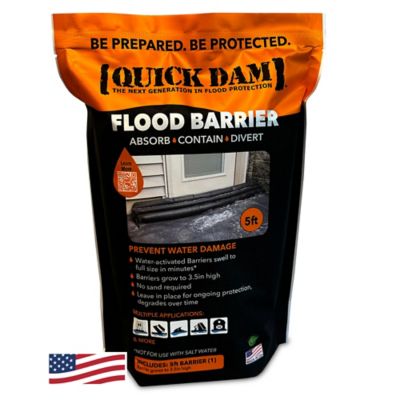
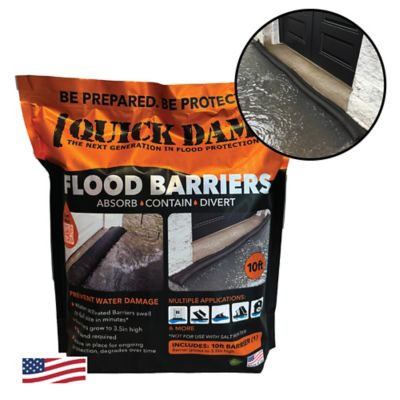
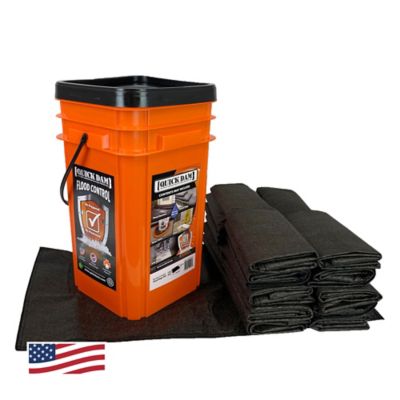
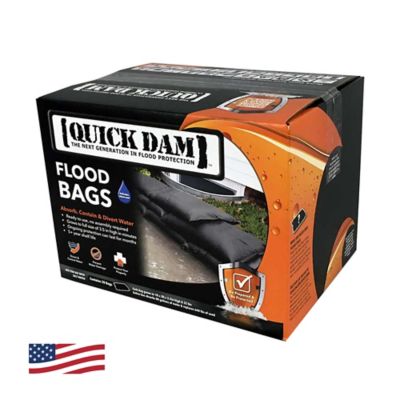
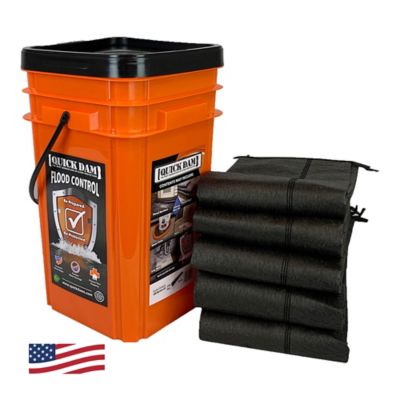
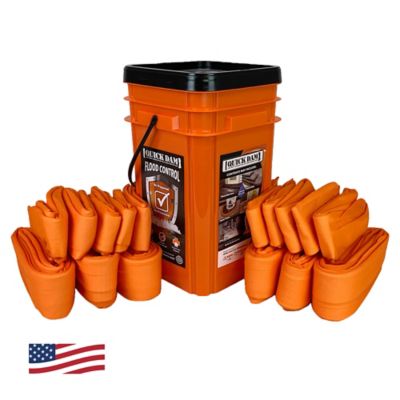
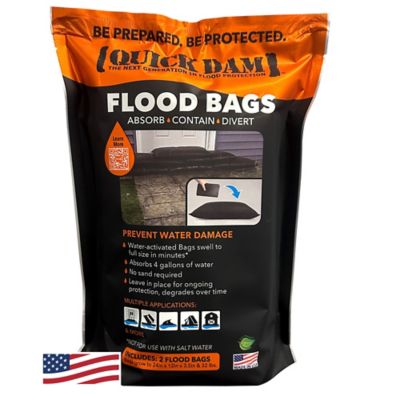
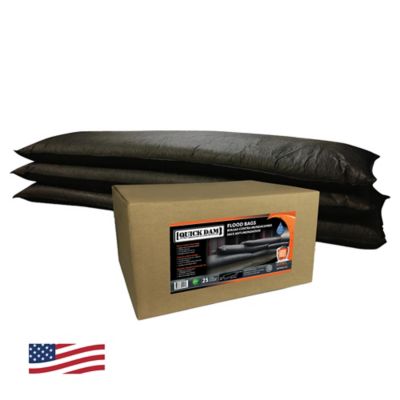
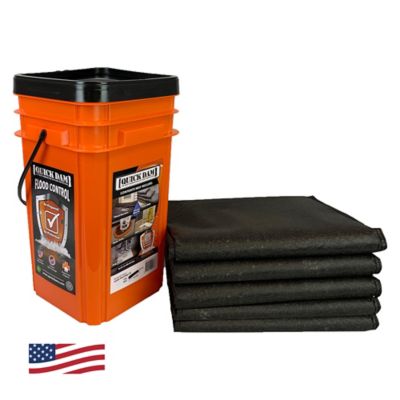
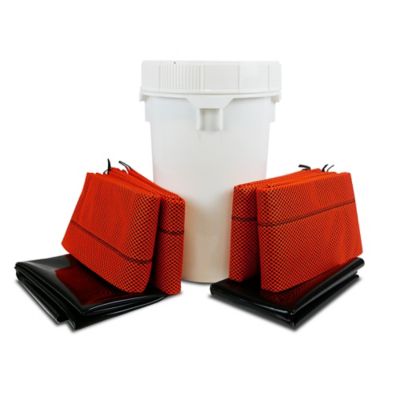
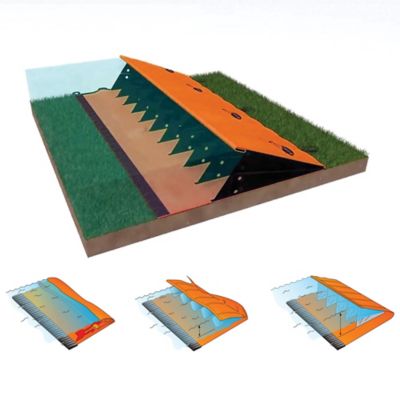
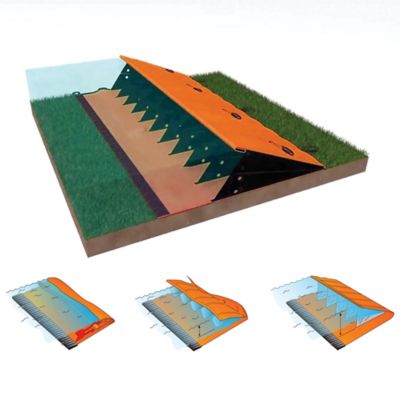
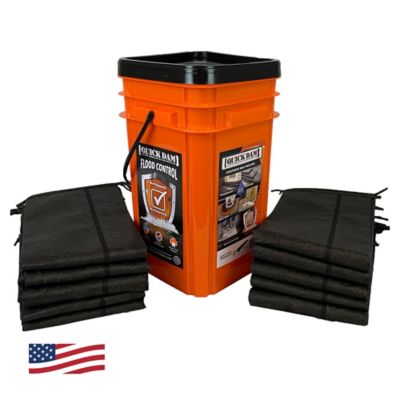
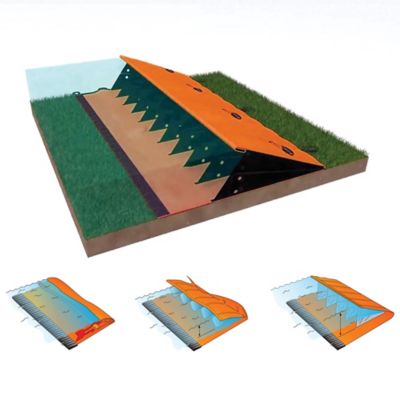
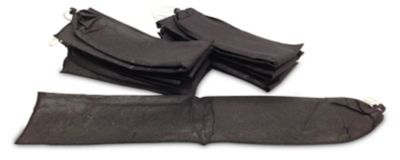
Water-activated flood barriers are absorbent bags, tubes, and similar low-profile barriers that swell when they contact fresh water, helping block or redirect shallow runoff. They offer a sand-free option for protecting vulnerable spots around a home, barn, garage, or workshop, especially where water tends to creep across a slab or collect near a doorway. Inside the outer fabric is a superabsorbent material, often a polymer, that takes in water and forms a gel. As that filling expands, the barrier gains both height and weight, turning a relatively flat package into a water-filled obstacle. Some designs expand to about 3.5 inches high within 10 to 15 minutes, though activation time and finished dimensions depend on the construction, water conditions, and directions for that design. That distinction matters: the dry package size is not the same as the working size, and a barrier does not reach its full height the instant rainwater touches it. For a homeowner dealing with runoff under a garage door or a shop owner watching water travel toward an entrance, these barriers can provide a manageable way to address a shallow-water problem without hauling sand or filling bags. Their compact shape before activation also makes them practical for properties with limited storage space. Water-activated flood barriers are intended for specific conditions, not every flooding situation. Most are designed for fresh water rather than saltwater, which can interfere with the absorbent filling. They are not a substitute for engineered flood protection, evacuation, or repairs to a drainage problem, and they should not be expected to hold back deep, fast-moving water. Their best fit is a location where the expected water depth, flow, and ground surface fall within the stated limits. Around a rural property, that might mean a concrete shop entrance, a low patio edge, or the approach to a basement stairwell where runoff follows the same troublesome path after heavy rain.
The shape, length, and outer material of a flood barrier all affect how it fits that location. Long tubes can cover a broad opening or follow a stretch of pavement, while shorter bags can suit tighter spaces and changes in direction. The important measurement is the complete path water can take, not just the width of the door itself. A garage opening may need coverage beyond both jambs, and an exterior stairwell may have corners where separate sections must meet. Finished height deserves just as much attention as length because water can spill over a barrier once it rises above the top. Flexible fabric can settle against small surface irregularities, but it does not automatically create a watertight seal over loose gravel, deep cracks, or uneven ground. A smooth slab generally presents a different fit than a rutted driveway or a rough barn threshold. Outer fabrics are commonly synthetic materials selected to contain the expanding filling while allowing water to enter. Fabric strength, seam construction, and resistance to abrasion matter wherever the barrier rests against coarse concrete or other rough surfaces. Some designs have a wider base, paired chambers, or a wedge-like profile that helps them resist rolling as water approaches. Stacking suitability varies, so a taller arrangement should never be assumed simply because individual sections can sit on one another. Once activated, barriers can become substantially heavier and harder to reposition, another consideration for anyone working alone or managing several entrances. Vehicle traffic is a separate concern: water-activated barriers generally should not be driven over, and a run across a driveway can interrupt access to equipment, trailers, or the road. Placement also affects neighboring spaces. Redirecting runoff away from a workshop does little good if it sends water toward a feed room, another doorway, or an adjoining property. A suitable layout works with the property's drainage route while leaving room for people and animals to move safely.
Storage and care help determine whether water-activated flood barriers are ready when a shallow-water problem develops. Before activation, the absorbent filling needs protection from moisture, so sealed packaging and a dry storage location matter more than simply finding an empty shelf. A spot away from leaks, damp floors, sharp tools, and chewing animals helps protect both the wrapping and the barrier fabric. Shelf life varies by design and storage conditions; the stated storage period is a better reference than assuming every barrier will last the same number of years. The package also explains whether a barrier can remain in place for extended protection, dry out and activate again, or serve only a limited number of deployments. Some designs can stay expanded for months when kept saturated, but that does not mean every barrier can be left outdoors indefinitely. Sun exposure, abrasion, contamination, and repeated handling can affect the fabric and filling. Activation and storage requirements may also differ in freezing conditions, so temperature limits deserve attention wherever winter runoff or snowmelt is a concern. After contact with floodwater, a barrier may carry mud, sewage, chemicals, or other contaminants even if it looks fairly clean. Appropriate handling and disposal depend on that exposure as well as the manufacturer's directions; contaminated barriers should stay away from animal feed, drinking-water sources, and areas where children or pets play. For basement concerns,
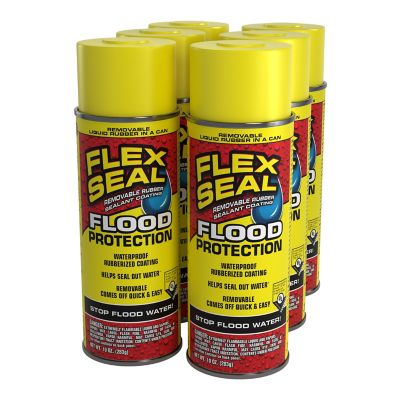
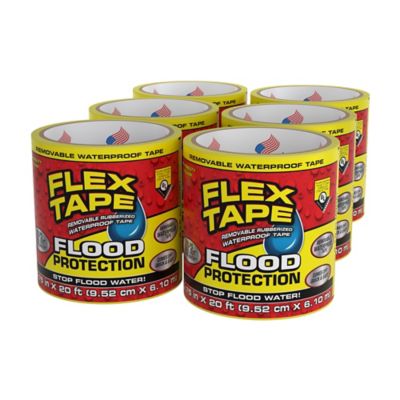
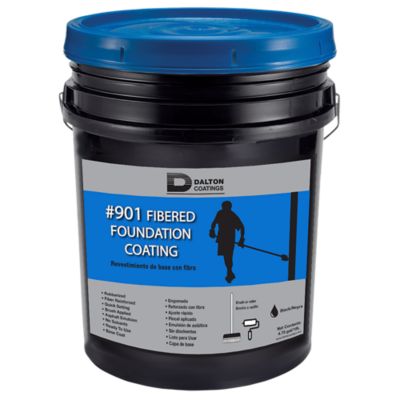
Basement Flood Solutions can help put doorway barriers in context alongside other approaches to water control. A barrier at an outside entrance addresses a different problem from water seeping through foundation cracks or backing up through a drain. Matching the product's purpose to the source of the water keeps expectations realistic. For homeowners, acreage owners, and folks looking after outbuildings, the strongest fit comes down to a few practical details: enough length for the exposed area, suitable working height, a stable surface, and care requirements that make sense for the property.