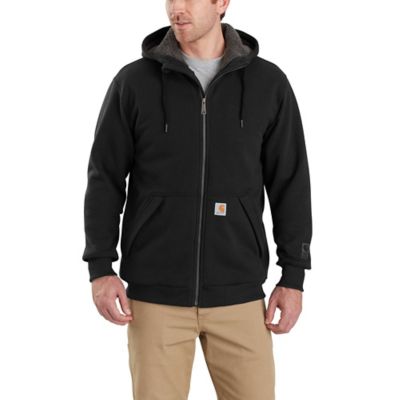
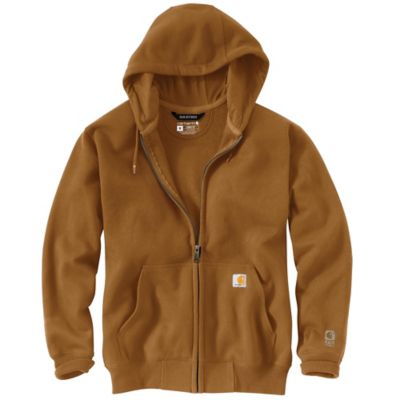
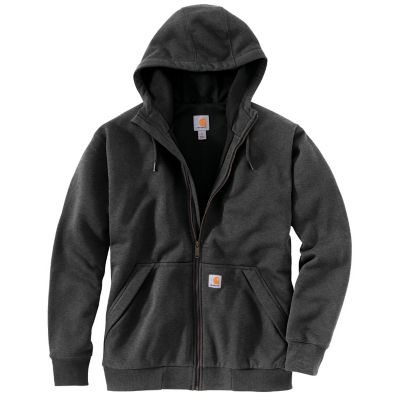
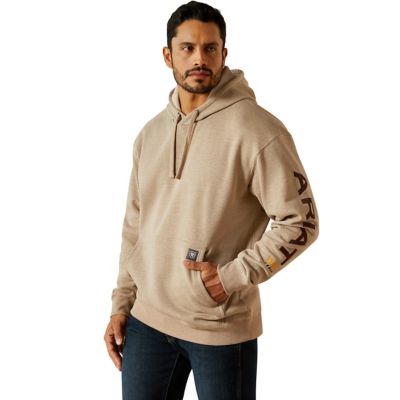
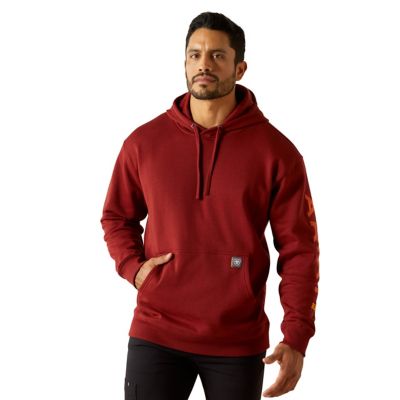
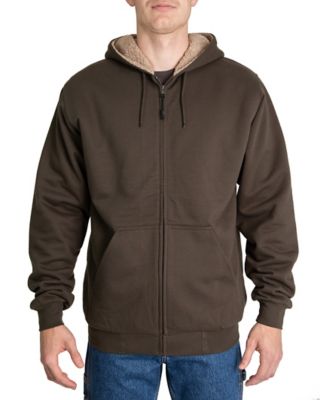
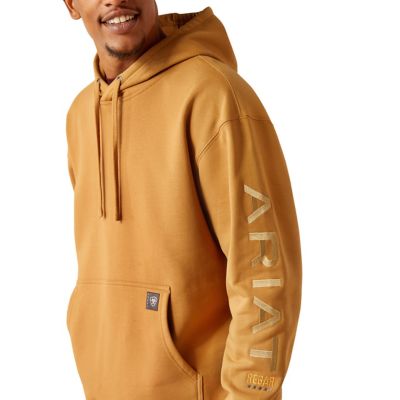
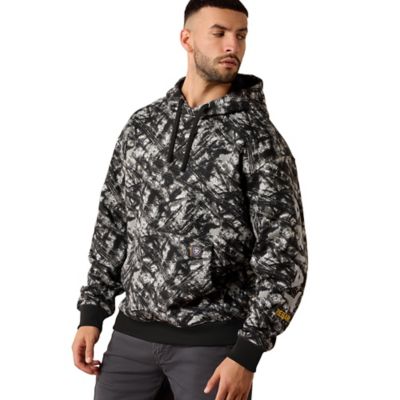
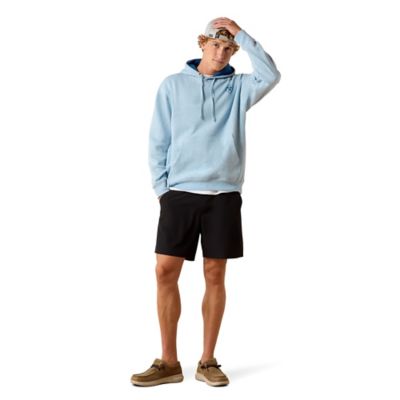
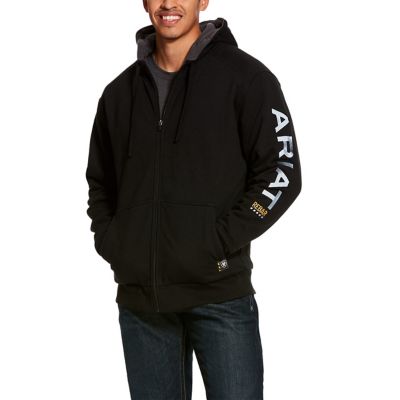
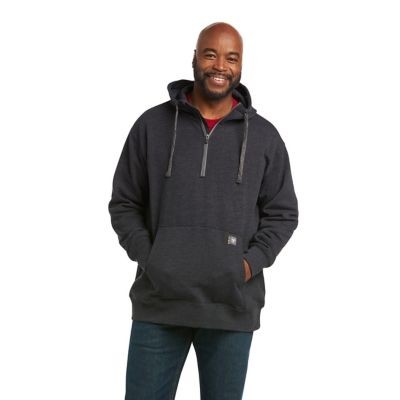
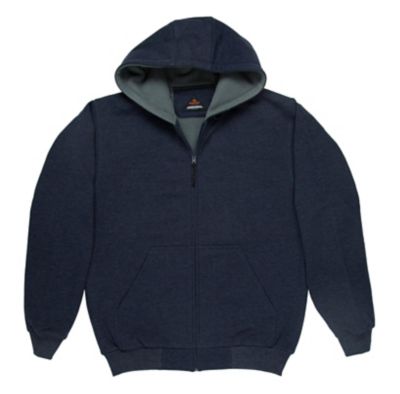
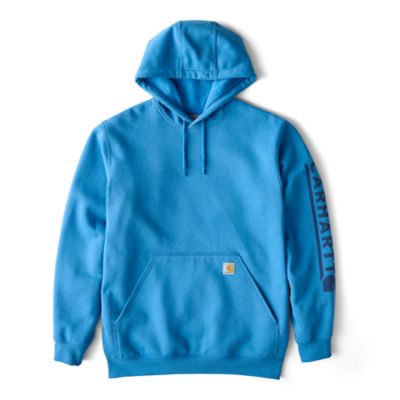
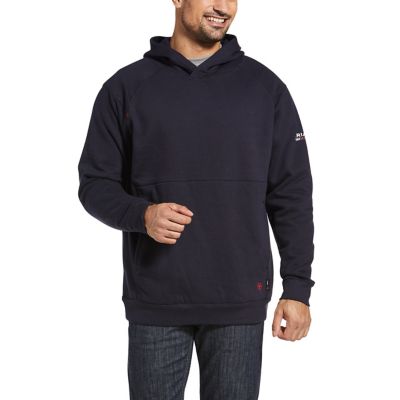
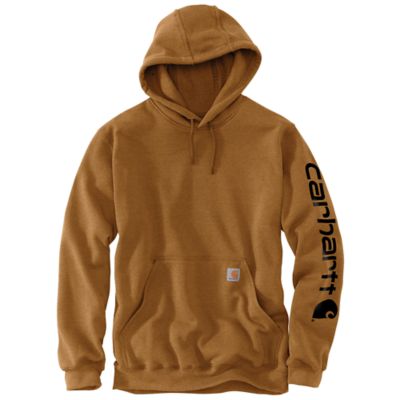
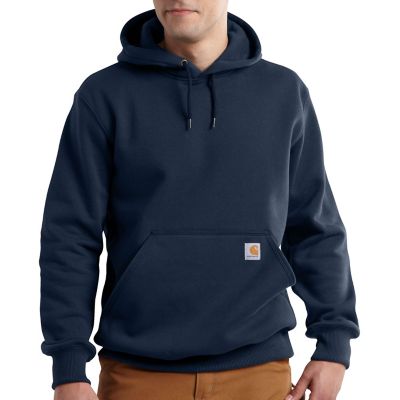
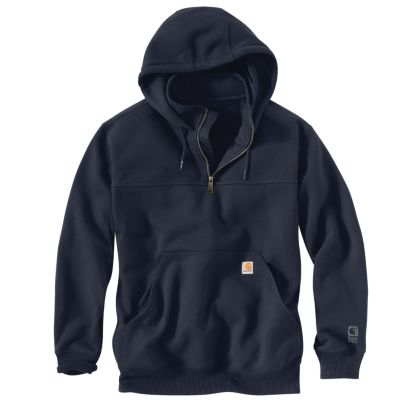
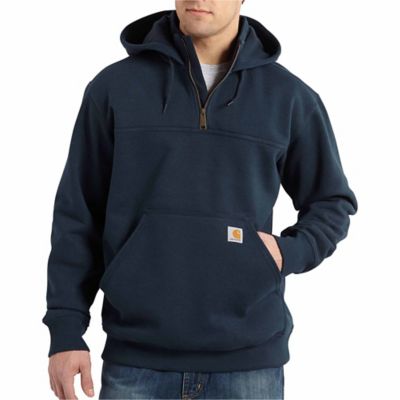
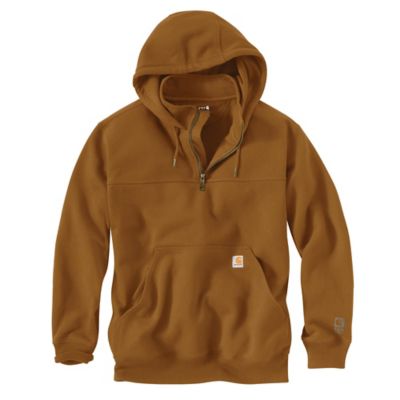
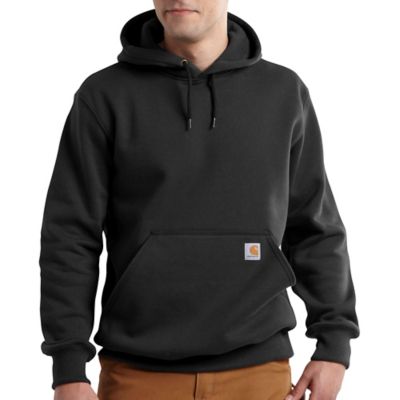
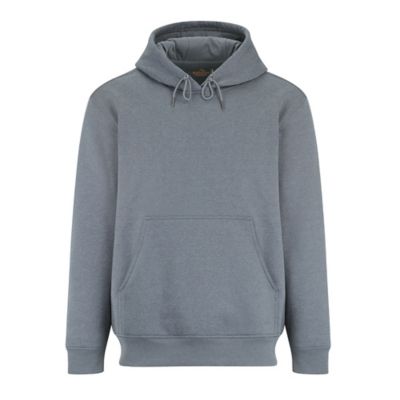
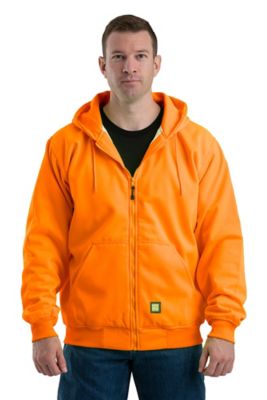
Warm hoodies for men bring together insulating fabrics, easy-moving fits and practical details for cold mornings, outdoor chores and time off the clock. A brushed fleece interior holds warm air close to the body, while a smooth outer face slides more easily beneath a work jacket. Cotton-rich fabrics tend to have a soft, familiar feel, and cotton-polyester blends balance that comfort with shape retention and faster drying than many all-cotton fabrics. Polyester fleece generally holds less moisture than cotton, which can make a difference when a feed run turns into a longer stretch of work. Fabric weight matters, but thickness alone does not tell the whole story. A dense heavyweight sweatshirt, a lighter fleece layer and a lined hoodie can feel quite different in the same conditions. Thermal-knit linings add another layer without always creating a bulky feel, while sherpa-style linings have a lofty texture that holds insulating air. The lining may cover the body, hood and sleeves differently, so its placement affects both warmth and freedom of movement. For someone walking a fence line or watching a game from the bleachers, a substantial lining can help take the edge off a long spell outdoors. Someone moving between a heated truck cab and a barn may be more comfortable with a medium-weight layer that does not feel stifling inside. Most sweatshirt fabrics still allow some wind through, and an ordinary hoodie is not a substitute for a rain shell. In gusty or wet conditions, a suitable outer layer helps protect the warmth underneath. That makes a hoodie useful as part of a clothing system rather than just a stand-alone top: a comfortable base layer next to the skin, fleece through the middle and a weather-appropriate jacket over it. The right combination depends on how hard the wearer is working, how long he will be outside and how much shelter the job provides.
Fit makes a real difference in how a warm hoodie feels through a full day. A regular cut can sit comfortably over a T-shirt, while a roomier fit leaves space for a thermal shirt without pulling across the shoulders. Too much extra fabric can bunch beneath a coat or catch on things around the work area; too little room can make reaching for a gate latch or carrying a feed pail awkward. Shoulder seams, sleeve length and body length all play a part. Sleeves should allow a comfortable reach, and the hem should provide coverage when bending without hanging so low that it gets in the way. Rib-knit cuffs help keep sleeves in place, while a ribbed waistband can limit drafts around the waist. Taller men may appreciate added length through the body and arms rather than simply sizing up and gaining width everywhere. Pullover hoodies offer a continuous front with no zipper opening, along with the familiar feel of a kangaroo pocket. Full-zip hoodies make it easier to release heat or take off a layer without pulling it over the head, especially when moving between indoor and outdoor work. A zipper that opens smoothly and a pull that is easy to grip can be welcome details when fingers are cold. Pocket placement matters, too: side-entry pockets offer a resting spot for hands, while a separate secure pocket can help keep small belongings contained. A roomy hood should sit comfortably without pushing down over the eyes or limiting the view to either side. Around rotating equipment or other moving machinery, loose hoods and drawstrings need particular attention, and worksite clothing rules take priority. For everyday wear away from those hazards, an adjustable hood offers flexible coverage at the neck and head. Under a coat, its shape also matters; a thick hood can bunch at the collar, while a flatter one may layer more comfortably.
Construction and care help determine how a hoodie holds up to repeated wear, whether it spends most of its time on the farm, in the garage or beside the back door for quick trips outside. Even stitching, neatly finished seams and reinforcement at pocket openings help support areas that get tugged throughout the day. Stretch recovery at the cuffs and hem helps those edges keep their shape instead of becoming loose after repeated pulling and washing. A smooth-operating zipper and securely attached pocket seams also matter when the garment becomes a regular part of the morning routine. Fabric texture can change with friction from jacket linings, seat belts and everyday movement, and some fleece develops surface pills over time. Washing according to the care label helps protect the fabric, lining and fit. Cold or warm water may be appropriate depending on the garment, while high dryer heat can shrink some cotton fabrics and affect elastic fibers or printed details. Turning a hoodie inside out and closing its zipper before laundering can reduce rubbing against other garments. Mud and feed dust are easier to manage when loose dirt is brushed off before washing, with stains treated as the care instructions allow. The hoodie should dry completely before being folded away, especially when it has a thick lining. As gifts,
men's warm winter hoodies suit men who appreciate clothing that fits into an ordinary day, from dads handling morning chores to sons heading to class or friends spending weekends outdoors. A familiar size, a preferred pullover or zip-front shape and a color that works with his usual jeans and work pants make the gift more personal without guessing at a whole new style. For the wearer, the appeal is straightforward: enough warmth for the task, enough room to move and a comfortable layer that feels just as natural at the kitchen table as it does on the walk out to the barn.