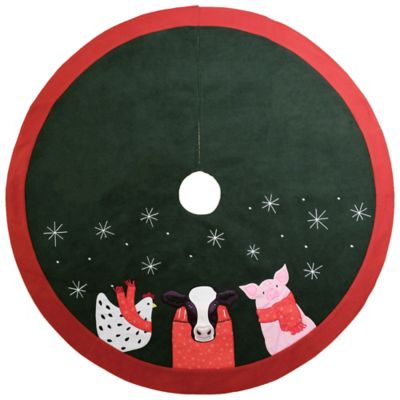
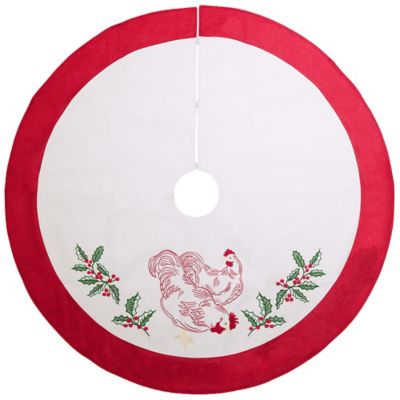
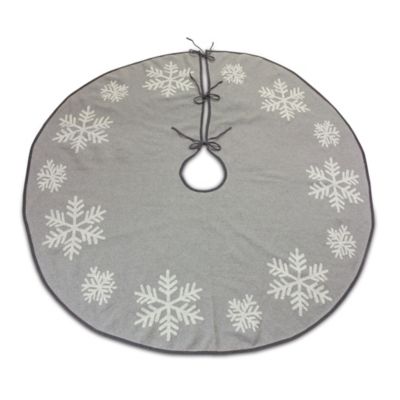
Christmas tree skirts bring color, texture, and a little personality to the spot where the tree meets the floor. They soften the look of a stand, give wrapped presents a welcoming place to land, and help the whole Christmas display feel pulled together, even before the first gift goes under the branches. For a country home, that might mean red-and-black buffalo check against a wood floor, a burlap-style weave beside a basket of firewood, or patchwork that echoes a favorite family quilt. A cable-knit skirt gives the base of the tree a sweater-like finish, while faux fur creates a snowy look beneath green branches and warm white lights. Velvet offers a softer sheen, and sequins or stitched stars catch the light without needing much else around them. Playful patterns featuring snowmen, nutcrackers, woodland animals, or elf-inspired details bring a different kind of cheer, especially in a family room where children gather on Christmas morning. The strongest match is often a skirt that picks up one or two colors already on the tree rather than competing with every ornament. A simple cream skirt can settle a busy mix of keepsake ornaments, while a bold plaid can give a tree with plain glass balls a more down-home feel. Texture matters just as much as pattern: quilted fabric looks warm and familiar, a loose natural weave feels right at home with pinecones, and a smooth velvet surface makes ribbon and wrapping paper stand out. Christmas tree skirts also make thoughtful gifts for someone setting up a first home, a couple starting holiday traditions, or a family replacing a well-loved seasonal piece. When the recipient’s ornament collection changes from year to year, a straightforward pattern or neutral shade leaves plenty of room for different looks. A colorful border can add character while keeping the center fairly simple, which is handy once packages begin covering most of the fabric.
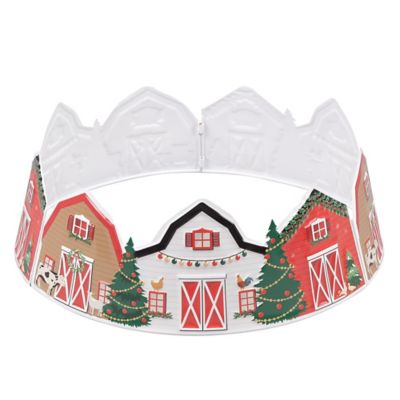
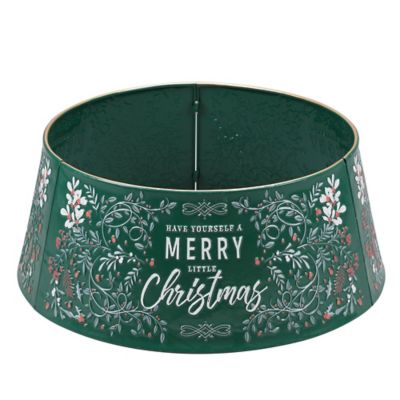
Fit makes a big difference in how a Christmas tree skirt looks and works around the house. The listed diameter generally describes the skirt spread flat across the floor, not the size of the opening at its center. A good fit covers the stand and leaves a visible border beneath the lower branches without spilling into a doorway, walkway, or hearth area. Tree height offers a starting point, but branch spread and stand width tell more of the story. A tall, narrow tree may need less floor coverage than a shorter tree with broad lower branches. In a snug living room, a smaller skirt can keep the display neat beside a chair or end table; in an open gathering space, a wider skirt gives larger gift boxes more room. The center opening should sit comfortably around the trunk or pole, and a split opening lets the fabric wrap around a tree that is already standing. Ties, buttons, or hook-and-loop closures can help bring the edges together, though their placement affects how easily the skirt opens again. With a real Christmas tree, access to the water reservoir matters throughout the season. Fabric should stay clear of the reservoir opening, and the skirt should lift or open without shifting the stand. A fabric skirt is not a waterproof barrier, so spills still need prompt attention and any floor protection should be suitable for the flooring beneath it. For an artificial tree, the skirt can hide the stand while leaving electrical connections accessible and following the tree manufacturer’s safety directions. Flat construction is helpful where gift boxes need a steady resting place, while thick knits, gathered edges, and raised accents create a fuller outline when fewer presents are underneath. Square, scalloped, and round shapes each frame the base differently. A rigid tree collar gives a more structured finish than a soft skirt, but it takes different measurements and does not offer the same spread of fabric for presents.
Materials and care deserve a little attention because the base of a Christmas tree can become a busy spot. Children kneel there to read gift tags, pets investigate unfamiliar packages, and fallen needles can settle into the fabric. Cotton and cotton-blend skirts can have a soft, familiar feel, while polyester styles vary from smooth woven surfaces to plush piles and textured knits. Fiber content alone does not tell the whole story: backing, stitching, trim, and the care label all affect how a skirt holds up through repeated seasons. Quilted construction adds body, and a well-finished hem helps edges stay tidy when the skirt is unfolded, arranged, and packed away. Open knits and looped details can catch on claws or rough package corners, while sequins, fringe, and small attached accents call for extra care around pets and young children. A flatter weave with firmly attached trim can be a practical match for a lively household. Faux fur gives the tree a cozy base, but its pile may hold needles and lint more readily than a smooth fabric. Burlap-style materials have a rustic texture, though some shed fibers or need gentle handling along folded edges. Velvet may show pressure marks, making careful storage worth the effort. Washing instructions vary, especially on skirts with multiple fabrics or stitched embellishments; a piece labeled for spot cleaning should not automatically go into the washing machine. Gentle shaking outdoors or careful cleaning as directed can help remove loose debris before storage. Any damp areas should dry fully, and the skirt belongs in a clean, dry storage spot away from moisture and pests. Folding along fewer lines or loosely rolling a suitable fabric can help limit deep creases. The finished look can carry beyond the living room, too, with
Christmas Tree Inflatables bringing a related holiday theme to the yard. Indoors, a tree skirt with the right proportions, an appealing texture, and manageable care needs becomes a familiar part of unpacking Christmas, ready for another season of lights, family photos, and presents tucked under the branches.