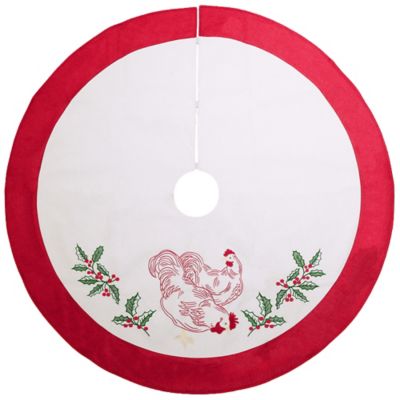
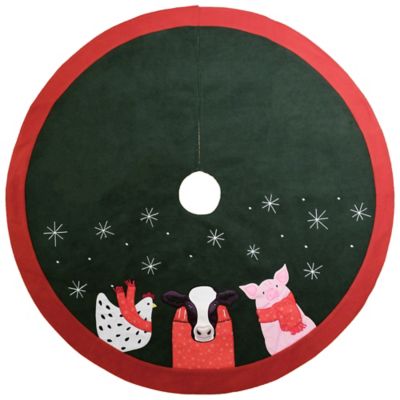
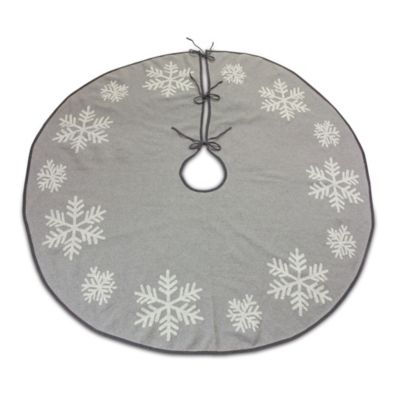
Farmhouse Christmas tree skirts bring country character to the foot of the tree while covering the stand and giving wrapped presents a finished place to land. The look usually comes from familiar fabrics, simple patterns and colors that feel at home beside wood floors, painted furniture and a well-loved rocking chair. Black-and-cream buffalo check makes a bold frame beneath green branches, while red-and-black plaid brings in a traditional Christmas feel. Smaller checks and narrow stripes offer a quieter pattern, especially in a room that already has patterned curtains or cushions. Solid cream, oatmeal and natural tan let ornaments and gift wrap take the lead. Texture matters just as much as color: burlap and jute have a coarse, earthy appearance, cotton gives a softer woven finish, and cable-knit fabric adds the look of a favorite winter sweater. Quilted construction brings stitched detail and a little body, helping the skirt hold its shape around the base. Linen and linen blends offer a relaxed surface with visible weave, while polyester blends can provide different levels of softness, wrinkle resistance and ease of care, depending on their construction. Fiber content alone does not tell the whole story; fabric weight, backing, stitching and edge finishing all affect how a skirt sits and wears. A lightweight woven skirt may settle easily into folds, while a thicker quilted style creates a fuller outline. Neither approach needs a perfectly matched room. A cream skirt beneath a tree filled with red ornaments can work just as well as plaid beside a collection of wooden keepsakes. For farmhouse Christmas tree skirts, choosing one or two details that echo the room often feels more natural than repeating the same pattern everywhere. A check that picks up the color of a nearby throw, or a tan weave that complements a wood bench, can tie the Christmas setting together without making it feel too planned.
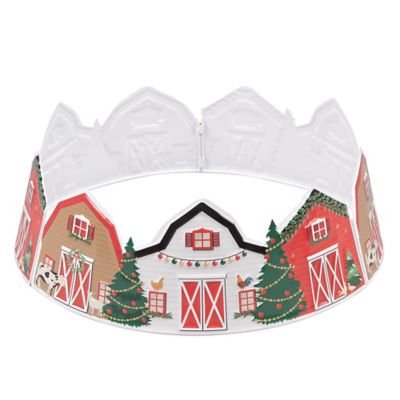
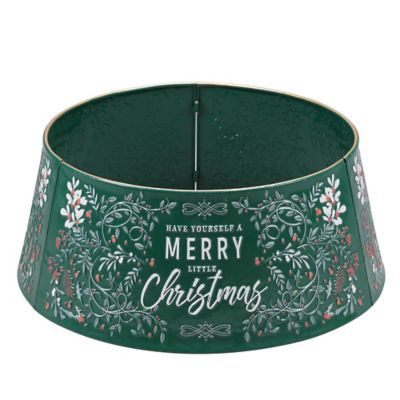
Fit starts with the tree stand and the floor space around it, not the height of the tree alone. Measure the stand at its widest point, then consider how far the skirt should extend beyond it. A skirt needs enough coverage to hide the stand without crowding a walkway, catching beneath a door or bunching against nearby furniture. For a balanced appearance, the outer edge can sit near the reach of the lower branches, though a narrower skirt may suit a tight corner and a wider one may leave more visible space around gifts. A tall, slim tree and a broad, full tree can need very different skirt diameters even when they share the same height. Check the listed dimensions and shape, along with the center opening, to make sure the fabric can settle around the trunk and stand. A slit with ties, buttons or hook-and-loop fasteners makes it possible to wrap the skirt around an assembled tree rather than lifting the tree into place. Closures should meet comfortably without pulling the fabric into deep ridges. With a fresh-cut tree, leave a clear path to the water reservoir so daily checks do not mean shifting every package. A fabric skirt is not a waterproof barrier, so keep watering spills off the floor and follow the stand manufacturer’s directions for floor protection. Around an artificial tree, keep electrical connections accessible and avoid pinching cords beneath the stand or furniture. In a busy living room, flatter edges and shorter trim may be easier to manage than long tassels or loose fringe. Leave enough clearance that nobody has to step over the skirt on the way past. A structured tree collar offers a different silhouette, but unlike a soft skirt, its fixed opening and height must fit around the stand and clear the lowest branches.
Care instructions deserve a close look before choosing a skirt, especially in a home where muddy boots, pets and visiting kids are part of Christmas gatherings. Some cotton and synthetic fabrics allow machine washing, while other constructions call for spot cleaning or professional care. Knit textures, quilted layers, attached trim and mixed fibers can each change the cleaning method, so follow the label rather than assuming that every fabric skirt can go through the same wash cycle. Burlap and jute can shed fibers and may react poorly to soaking, making prompt, gentle attention to small spills especially helpful. Pale shades show tracked-in dirt more readily, while a patterned surface can make small marks less noticeable between cleanings. A backed skirt may feel more substantial, but backing does not automatically mean it will grip a smooth floor. Neat seams, firmly attached closures and well-finished edges are useful details for a piece that gets unfolded, arranged and packed away year after year. Keep pet bowls away from the fabric, and choose trim with the household in mind; dangling ties and tassels can tempt a playful cat or curious puppy. Keep every fabric skirt clear of candles, fireplace sparks and other heat sources. After the celebration, remove stray needles and crumbs, clean the skirt as directed and let it dry fully before storage. Fold it loosely in a clean, dry container, away from damp floors and sharp ornament hooks that could snag the surface. For a broader look at fabric styles and finishes, browse
Tree Skirts for Christmas. A thoughtfully chosen farmhouse skirt can also make a welcome housewarming or Christmas gift for someone setting up a first home, especially when the tree size and room colors are already known. Whether it frames a small tree in a farmhouse dining room or anchors the family tree beside the living room window, the right skirt brings together practical coverage, comfortable texture and a look that feels right at home.