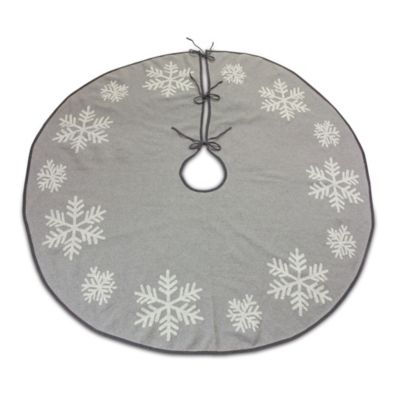
Christmas tree skirts are fabric coverings that wrap around the base of a Christmas tree, hiding the stand and giving wrapped gifts a finished place to sit. They also catch some fallen needles from a real tree, helping keep those little bits gathered near the trunk instead of scattered across the floor. A skirt works with either a live-cut or artificial tree, though the right fit depends on more than tree height. The width of the lowest branches, the spread of the stand’s feet, and the space around nearby furniture all matter. A broad tree in an open living room can carry a wider skirt, while a slim tree tucked beside a chair may call for a smaller footprint. The skirt should cover the stand without stretching into a walkway or bunching against a wall. Its listed size generally refers to the diameter across the fabric when it lies open, not the distance around the edge. The center opening and the slit running out to the edge let the fabric wrap around the trunk or pole after the tree is standing. Ties, buttons, snaps, or hook-and-loop closures can help bring those edges together, although closure styles vary. For a real tree, easy access to the water reservoir matters throughout the Christmas season; fabric that folds back neatly makes checking the water less of a chore. The tree stand still needs to sit firmly on a stable, level surface, rather than on folds of fabric. A skirt can soften the look of a metal or plastic stand, but it does not steady the tree or serve as a waterproof barrier. On hardwood floors, a separate floor-safe protective layer may be worth considering beneath the stand. Leaving some of the skirt visible beyond the presents keeps its pattern from disappearing entirely once the gift pile grows.
Materials give Christmas tree skirts much of their character, from a simple woven surface to a thick, soft finish. Cotton and cotton blends can bring a relaxed look, while polyester fabrics may offer easy-care options depending on their construction and care label. Felt and fleece have a soft, casual appearance; quilted fabrics add stitched texture and a little body that helps the skirt hold its shape. Velvet catches the light with a gentle sheen, and faux fur creates a plush border that stands out beneath dark green branches. Burlap and coarse woven fabrics bring a rougher texture that sits comfortably alongside wood furniture, baskets, and a stone hearth. Those open weaves can also hold onto needles and shed fibers, so their feel and upkeep deserve a look, not just their color. A lined skirt can conceal the underside of embroidery or stitching, while a neatly finished edge helps limit fraying where the fabric meets the floor. For a room with wood floors, checked throws, and well-loved furniture,
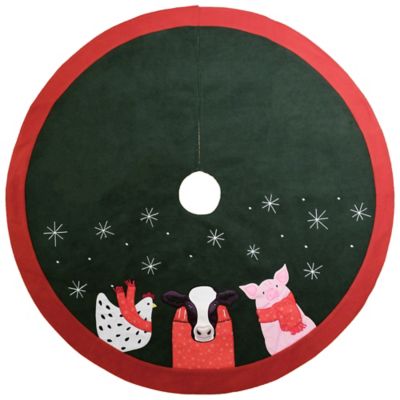
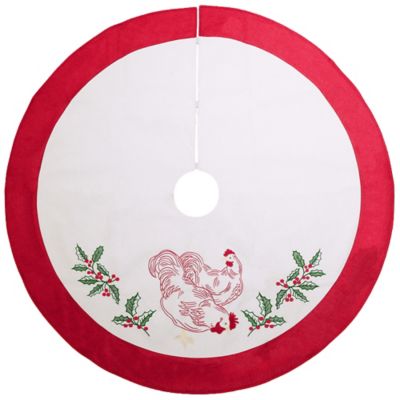
Christmas tree skirts for farmhouse settings can tie familiar textures together without making the tree feel overly dressed up. Red and black buffalo check brings a bold pattern, cream and natural tones keep things quieter, and stitched stars, evergreen shapes, or farm animal motifs add a playful touch. A plain skirt gives busy ornaments and colorful wrapping paper room to stand out; a patterned one can carry more of the Christmas look when the tree has simple lights and a few favorite keepsakes. Fabric weight matters here, too. A lightweight skirt is easy to fold and tuck around a small tree, while a heavier textile may settle more smoothly beneath a full-size one. Neither needs to match every ornament. Repeating one color from the tree or a nearby blanket is often enough to make the whole corner feel pulled together.
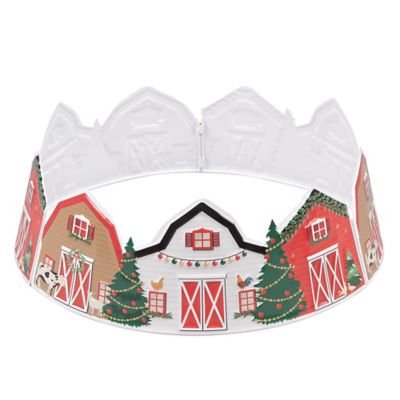
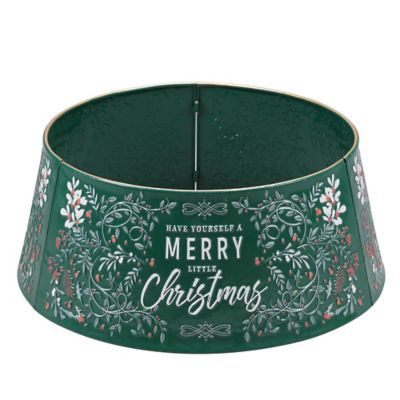
Everyday life around the tree is worth keeping in mind, especially in a house with children, pets, or plenty of Christmas visitors. A skirt near a busy doorway may see muddy boot marks, while one beneath a real tree can collect sap along with needles. Washable fabrics can make sense for these spots, but cleaning directions vary: some textiles tolerate a gentle machine cycle, while others need spot cleaning or professional care. Embroidery, fringe, faux fur, and sewn-on accents may require more attention than a flat woven surface. Shaking out loose debris before cleaning helps keep needles from working farther into the fabric, and stains are easier to address when the care label’s directions are followed promptly. A thick pile can hold onto pet hair, while loose tassels and ties may tempt a curious cat or a puppy that treats everything at floor level as a toy. Keeping those details tucked close to the trunk leaves less dangling within reach. Tree skirts also belong away from fireplace sparks, space heaters, and other heat sources, and they should not cover electrical connections or interfere with the watering area. For households that put the tree in the same spot each Christmas, reinforced seams, secure closures, and well-finished edges are useful details for repeated setup, cleaning, and storage. Letting the fabric dry completely before packing it away helps prevent musty smells, and a roomy storage container limits hard creases in thicker materials. A fabric skirt folds down more easily than a rigid tree collar, which surrounds the stand with a structured wall rather than spreading across the floor. That difference can matter when storage space is shared with ornaments, lights, and wreaths. A thoughtfully chosen skirt can also make a practical Christmas gift for someone setting up a first home or starting a family tree tradition. With a comfortable fit and a fabric that suits the household, it can become a familiar part of unpacking Christmas year after year.