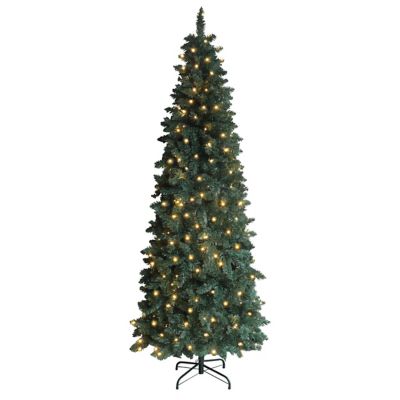
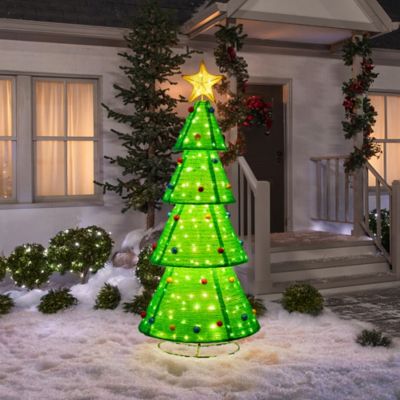
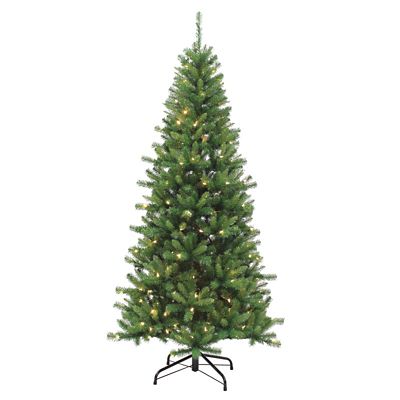
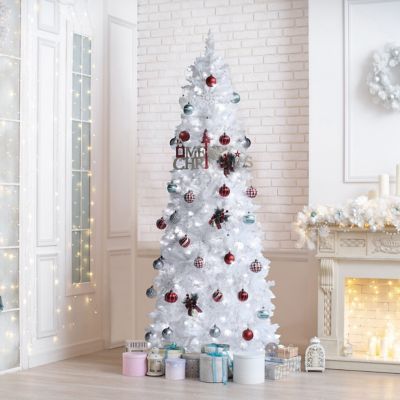
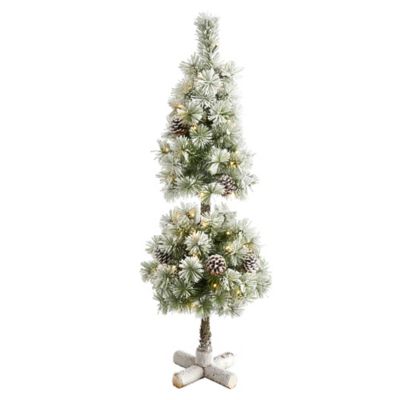
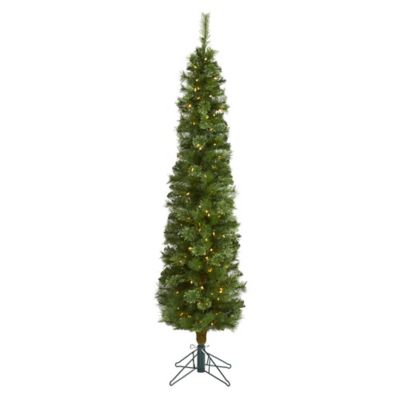
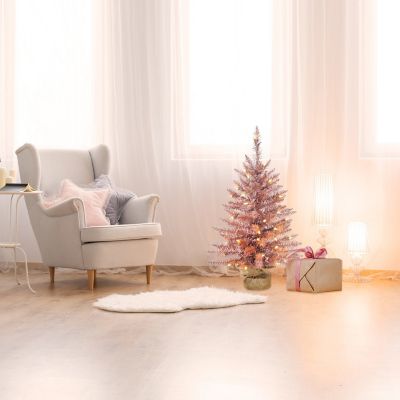
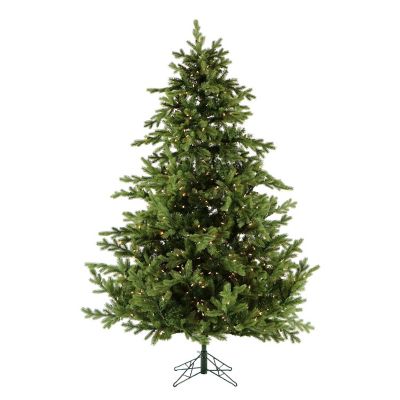
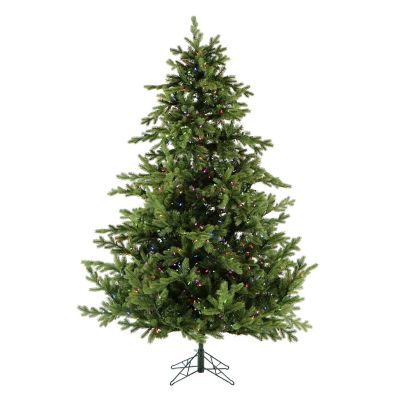
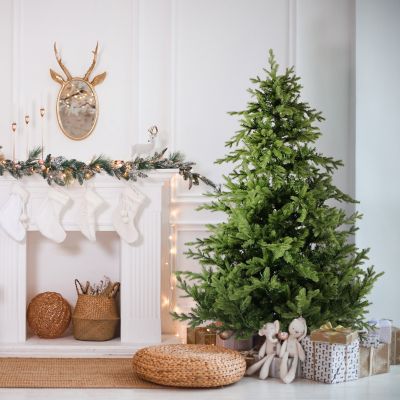
Christmas light trees bring the shape and sparkle of a Christmas tree to living rooms, front porches, walkways and open yards, with styles ranging from full, pre-lit artificial evergreens to slim frames outlined in lights. A branch-filled tree has the familiar look of a holiday centerpiece, while a cone, spiral or open-frame tree makes its statement through glowing lines and a lighter silhouette. That difference matters when planning a display: a full tree can anchor a room and hold ornaments, while an illuminated frame can stand out across a broad lawn without needing a thick covering of branches. Size makes just as much difference as shape. Compact trees around 2 feet tall can suit an entryway or walkway when rated for that setting, while 7.5-foot and 9-foot trees need enough ceiling height and floor space to keep their tops and outer branches clear of nearby surfaces. Listed height does not tell the whole story; base width, branch spread and room for a topper all affect the fit. A narrow tree can tuck beside a farmhouse hearth or into a smaller family room, provided it stays clear of heat, while a broad tree needs more breathing room around furniture and doorways. For a familiar evergreen centerpiece, a
Christmas tree with lights combines the tree shape and lighting in one arrangement. Open light trees offer a different effect, especially where their outlines can be seen against a dark yard or an uncluttered wall. Warm white lights give porches and gathering spaces a soft glow, cool white lights create a crisp outline, and multicolor lights bring a cheerful look that pairs well with family ornaments and playful Christmas displays. The best visual fit depends on the space around the tree, whether that is a quiet sitting room, a wide front lawn or a porch where neighbors stop to visit.
Materials and construction help determine where Christmas light trees belong and how they hold their shape through repeated seasonal setup. Artificial evergreen branches commonly feature PVC needles, molded polyethylene tips or a blend of the two. Molded tips can give outer branches a more lifelike shape, while layered branch arrangements create depth and provide places to hang ornaments when the tree is designed to support them. Hinged branches can simplify assembly, although they still need spreading to fill gaps and reveal the tree’s intended outline. Metal trunks, center poles and frames provide structure, and the base needs to suit both the tree’s height and its setting. A tall, narrow frame on an exposed lawn has different support needs than a short tree beside an indoor bench. Ground stakes, tethers or other anchoring parts matter only when they are included or approved for that design, and frozen ground or a hard porch surface can affect whether a particular anchoring method makes sense. Outdoor placement also calls for an outdoor rating on the tree and its lighting components; a covered porch does not automatically make an indoor-only tree suitable for damp air, windblown rain or snow. Power access deserves a little space in the plan, too. A tree near the driveway may look inviting from the road, but its cord should not cross a walking path or sit where vehicles can reach it. Outdoor-rated cords and connections, along with a GFCI-protected outlet, are important for exterior electric displays. Battery-powered designs can offer more placement flexibility, though battery access and operating conditions still matter. Inside the house, a sturdy stand and a location away from fireplaces, heaters and busy door swings help a tree settle comfortably into everyday family traffic. These practical details keep the focus on the Christmas lights rather than a crowded entry or an awkward cord run.
Lighting features influence both the look of a Christmas light tree and the attention it needs throughout the holiday season. LED lights generally draw less electricity and produce less heat than incandescent lights, though either type still needs to be operated according to its instructions. Steady lights suit a calm porch display or a room where the tree stays in view through the evening; twinkling, fading or color-changing effects create more movement. Controls vary, so details such as timer functions, lighting modes, plug locations and whether settings carry over after shutoff can make a noticeable difference in daily use. On a pre-lit tree, section-to-section connections and access to light strings matter when assembling the tree or checking a dark section. Replacement bulbs, fuses and power adapters need to match the manufacturer’s specifications rather than simply look similar. Care is mostly about protecting branches, wiring and connections from strain. Gentle dusting helps indoor branches keep their appearance, and outdoor trees need time to dry before packing so moisture does not stay trapped in the storage container. Light strings should not be pinched beneath frame sections, and tightly compressed branches can take more reshaping the next time the tree comes out. Storage space is worth considering alongside display size: a tall tree that separates into manageable sections may be easier to tuck onto a garage shelf than a wide frame that remains largely assembled. A fitted storage bag or appropriately sized box can help keep the parts together, especially small connectors, stand hardware and approved anchors. Christmas light trees can also make a thoughtful gift for a household starting its own holiday traditions, provided the recipient has room to display and store one. A smaller tree may suit grandparents who prefer a manageable setup, while a larger silhouette can become the bright focal point of a family’s front yard. From a pair of glowing trees beside the porch steps to a full evergreen in the room where everyone gathers, the right scale, lighting and construction help a Christmas display feel at home.