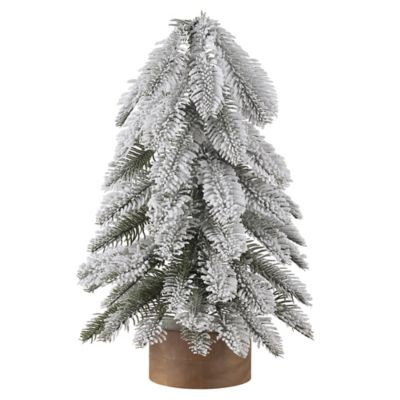
Artificial tabletop Christmas trees bring a little Christmas cheer to the spots where a full-size tree would be a tight squeeze. A kitchen counter, entryway table, bedroom dresser or desk can hold a small tree while leaving room for the things that belong there every day. In a farmhouse kitchen, that might mean a tree beside the recipe box rather than in the middle of the supper dishes. In an apartment, it might mean a holiday centerpiece that still leaves a clear path through the living room. Their smaller size also makes tabletop trees a good fit for a second Christmas display, especially when the main tree stands in another room. Height matters, but so does the spread of the branches and the footprint of the base. A slender tree can tuck into a narrow corner of a sideboard, while a fuller shape needs more breathing room to show off its outline. Measurements that include the stand and top branch give a better sense of how a tree will sit beneath a shelf or cabinet. Branch construction affects the look up close: molded polyethylene tips can resemble individual evergreen needles, while flexible PVC foliage often creates a fuller outline. Some designs combine materials, and wire-supported branches may allow gentle shaping after storage. Green foliage offers a familiar Christmas look, while flocked branches suggest fresh snow without bringing melting flakes indoors. A sparse, open shape leaves space for small ornaments; closely packed branches can make a pleasing display with very little added. Bases also play a part in the finished look and fit. A pot, wrapped base or stand changes the overall height, weight and amount of tabletop space a tree needs. On a wooden surface, a protective mat beneath the base can help prevent scuffs, provided it does not make the tree wobble. The best fit leaves the tree steady, the branches clear of nearby objects and enough open surface for everyday life to carry on around it.
Lighting and ornaments give artificial tabletop Christmas trees their personality, whether the setting calls for a quiet glow or a brighter splash of Christmas color. Prelit designs keep lights arranged among the branches, while unlit trees leave the lighting choice open or work well without lights at all. Warm white light can sit comfortably beside wood furniture and woven textiles, and multicolor light brings a familiar, playful feel to a family gathering space. Power requirements deserve a little attention on a tabletop. A plug-in tree needs access to an outlet without a cord stretching across a walkway or the edge of a busy counter. Battery-powered lighting can offer more freedom in placement, though the battery compartment still needs to be reachable. Controls, timers and lighting modes vary by design, so their operation matters as much as the appearance of the lights. On a dining table, a low profile keeps the centerpiece from blocking conversation across the meal. On a desk, a compact shape leaves elbow room and keeps branches away from paperwork and equipment. Small ornaments generally suit these trees better than heavy pieces that pull down slender branch tips. A few lightweight bells, simple ribbon or family keepsakes can add plenty of character without hiding the greenery. Trees with open branch spacing give hanging ornaments room to show, while denser foliage suits accents tucked closer to the tips. A topper also adds height, which can matter beneath cabinets or shelving. For homes with curious cats, wagging tails or little hands reaching over the table edge, placement is part of the decision. A stable base and a spot away from the edge help reduce the chance of a tumble, but ornaments, loose flocking, cords and batteries still need to stay out of reach. Artificial branches also belong away from candles, woodstoves and other heat sources. Most tabletop arrangements make sense indoors; a covered porch or other exposed spot calls for a tree and lighting specifically rated for that setting.
Easy handling and sensible storage help a small artificial Christmas tree keep its shape for more than one holiday season. Unlike a cut tree, it does not need water, but its foliage can collect dust, and its branches may need a little attention after time in a box. Material-specific care directions matter, especially for flocking, painted finishes and built-in lights. A soft, dry cloth or gentle dusting may suit some surfaces, while moisture or vigorous brushing can affect others. Electrical parts should stay dry, and lighting should be disconnected before cleaning or packing. Branches that bend for shaping need gentle handling rather than repeated twisting at the same point. Supporting the base when moving the tree helps keep strain off the upper branches and any attached ornaments. For storage, a container with enough room around the foliage can limit crushing; a dry location away from excessive heat helps protect the tree and its electrical components. Removable ornaments and loose accessories are easier to keep track of when packed separately, and batteries should be removed before extended storage in keeping with the lighting instructions. These practical details make a tabletop tree especially appealing for someone who wants a Christmas display without rearranging furniture or handling a large tree. It can be a thoughtful gift for a college student with limited room, a relative who prefers a smaller holiday setup or someone settling into a first home. The recipient’s available space, access to power and ability to lift and store the tree all help shape a useful choice. For spaces that fall somewhere between a tabletop display and a room-size tree,
Small Artificial Trees offers another way to consider the scale of the holiday greenery. Whether the tree holds treasured miniature ornaments or stands with just a few lights, its appeal comes from fitting neatly into the home. A modest tree on the right table can make a familiar corner feel ready for Christmas while still leaving room for coffee cups, supper plates and the folks gathered around them.